CELESTIAL TOWER
Supplies for this course: everything this course asks you to gather, by level, lives on the Celestial Studies supplies page.
Course SuppliesVisit Professor Glimmerwick's OfficeBookstore Shelf
Come in, come in, little scholars, and welcome to the Celestial Tower. I am Professor Vesper Glimmerwick, and I will be your guide to the sky.
I am a Brazilian free-tailed bat, which means the night has always been my country. When I was young, I flew out with my colony each evening into a sky going purple at the edges, and I could not stop looking up. The stars were old friends long before I knew a single one of their names. But as I flew, I began to listen to the people below, and I found they had stories about every light I loved. I wanted the stories as much as the stars.
Years of wandering brought me north to Evershade, where I found an observatory standing empty, its instruments asleep under dust and its shelves full of old star charts nobody was reading. I began to wake the instruments and copy the charts, meaning only to satisfy my own curiosity. Somewhere along the way, without quite deciding to, I became a professor. Curiosity does that, if you let it.
This course is how humanity learned the sky: first by watching it, then by understanding it, then by arguing for centuries about what it all meant. We will do all three. We will begin with your own two eyes and nothing else, and by the end you will walk outside at night and recognize what you are seeing. That is the whole of it, and it is everything.
A Note from Professor Glimmerwick
Watch for my seal as you read. It closes every note I leave in these lessons: a parchment box like this one, my mark upon it, my words inside. The lessons will teach you the sky as it is, and as it was understood. My notes are where I speak to you directly: what to look for on your first night out, which old stories to hold lightly, and where the wonder actually lives.
Both kinds of reading belong to an astronomer.
PROFESSOR VESPER GLIMMERWICK
Celestial Studies
Astronomer & Celestial Historian
A Note on Safety
The night sky is generous, but it has rules. Always observe after dark with an adult, in safe and familiar places. Never look directly at the sun, not ever: solar viewing is done only with viewers certified to ISO 12312-2, or indirectly with a pinhole projector. These are not suggestions. They are the standing laws of this tower.
Come and look up with me, little scholars. The sky has been waiting for you longer than you know, and it rewards everyone who pays attention.
PROFESSOR VESPER GLIMMERWICK
Celestial Studies
Astronomer & Celestial Historian
What You Will Need
Keep at hand:
- A notebook for your Sky Log
- Pencils
- A dim flashlight and red cellophane
- Warm clothes and something to sit on
- A clock, watch, or phone
- A compass or phone compass
For Level One, nothing but your eyes: the entire course works with no equipment at all. You will want a notebook for your Moon Journal and Sky Log, a pencil, and an adult to accompany you whenever you observe after dark. Level Two adds binoculars or a small telescope for those who have them, but they are never required.
THE OBSERVER'S WHEEL
The Tower's planisphere, alive. The Wheel computes the real sky for your place and hour — the turning stars, the Sun's road and the Moon's, her phase drawn true, the zodiac ring with the signs as tradition drew them and the constellations as they actually stand.
Drag the hour and watch the night wheel. Ask it any constellation, any sign: it answers from the sky itself.
Open the WheelPROFESSOR VESPER GLIMMERWICK · CELESTIAL TOWER
Course Learning Objectives
By the end of this course, scholars will be able to:
- Observe and record the night sky systematically, keeping a Moon Journal through one complete lunation and a Sky Log of their own observations.
- Explain the mechanisms behind day and night, the seasons, moon phases, eclipses, and tides, correcting the most common misconceptions about each.
- Trace how humanity learned to read time and position from the sky, from ancient observatories and world calendars to the longitude problem.
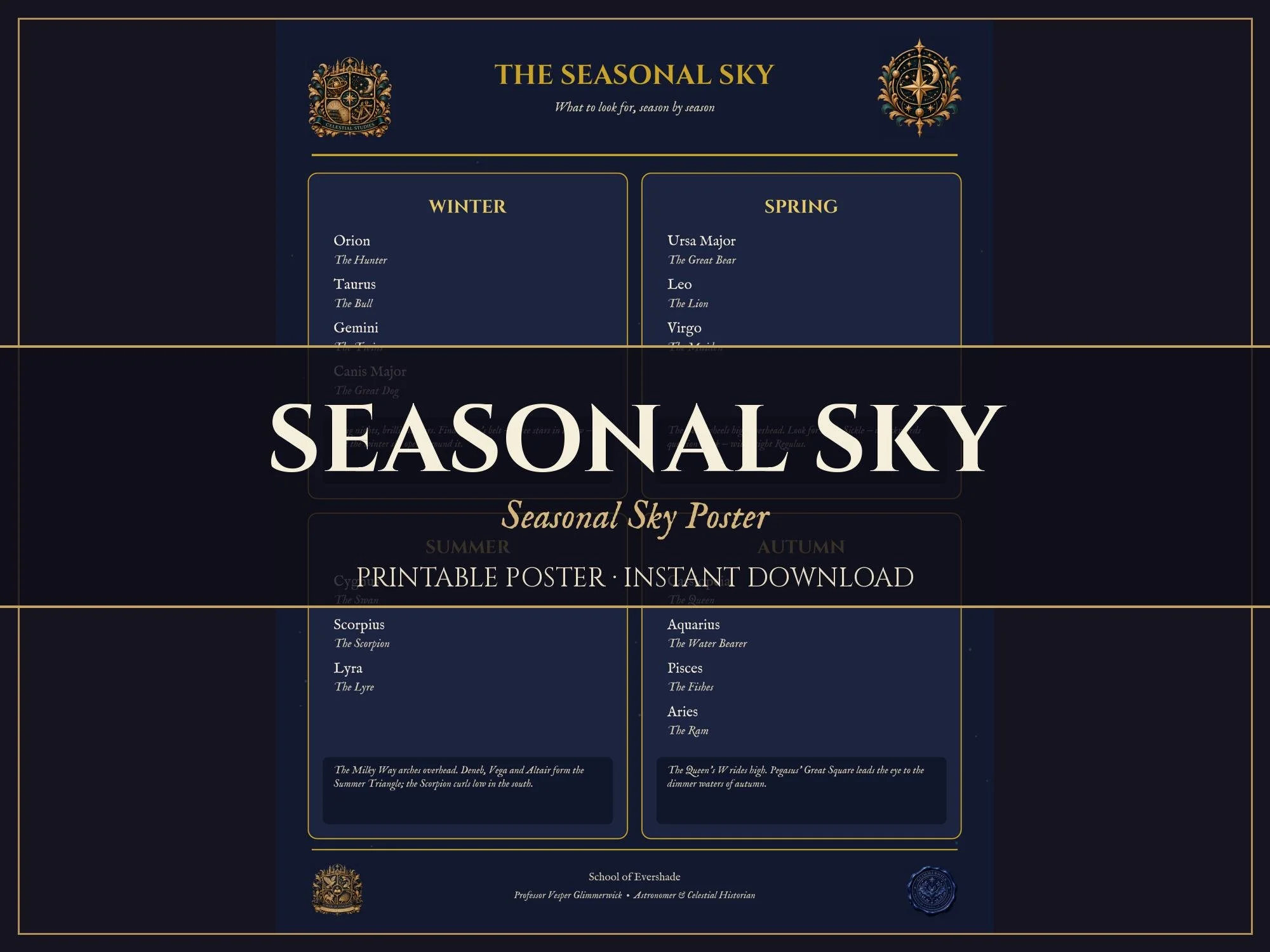
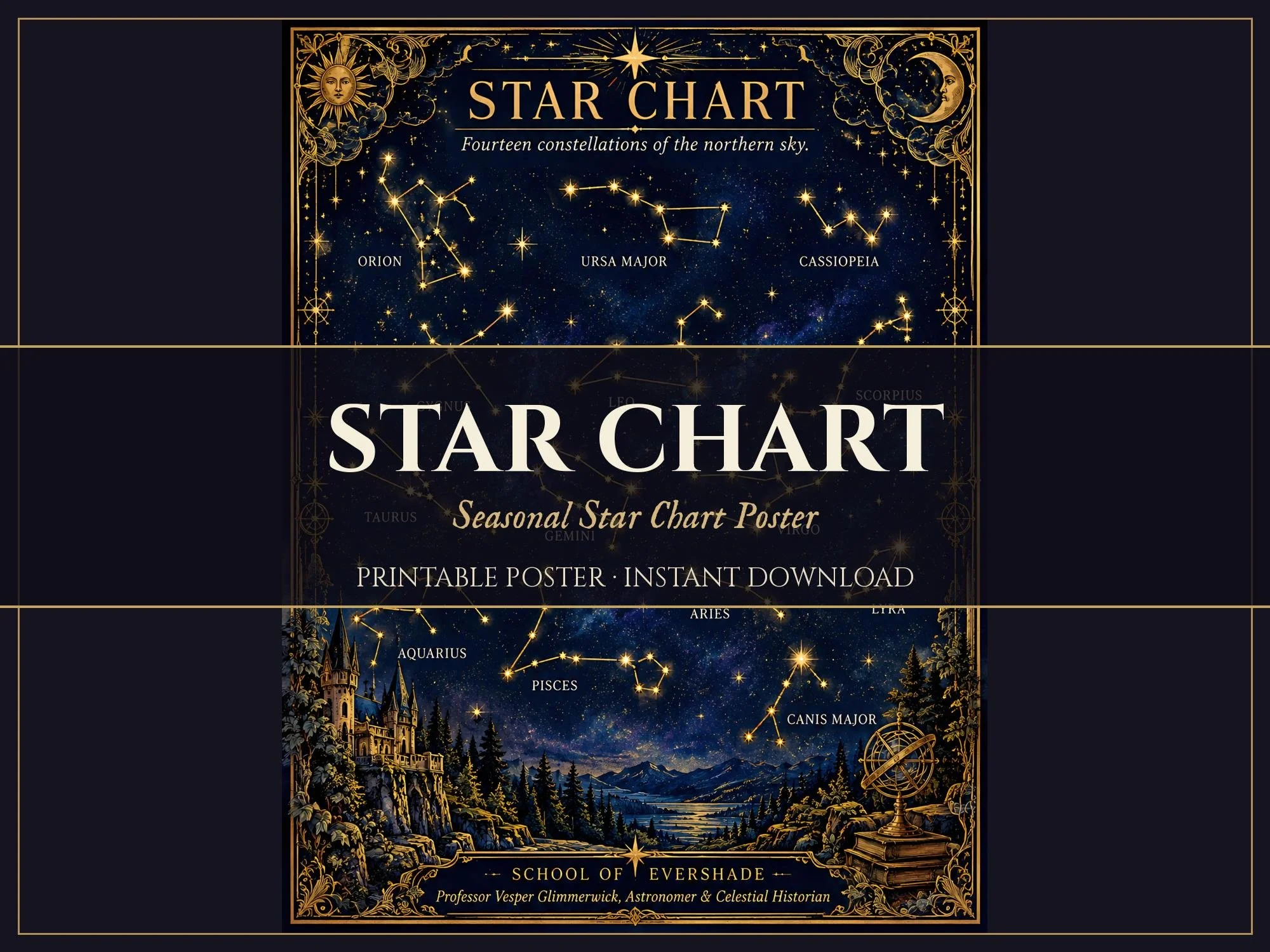
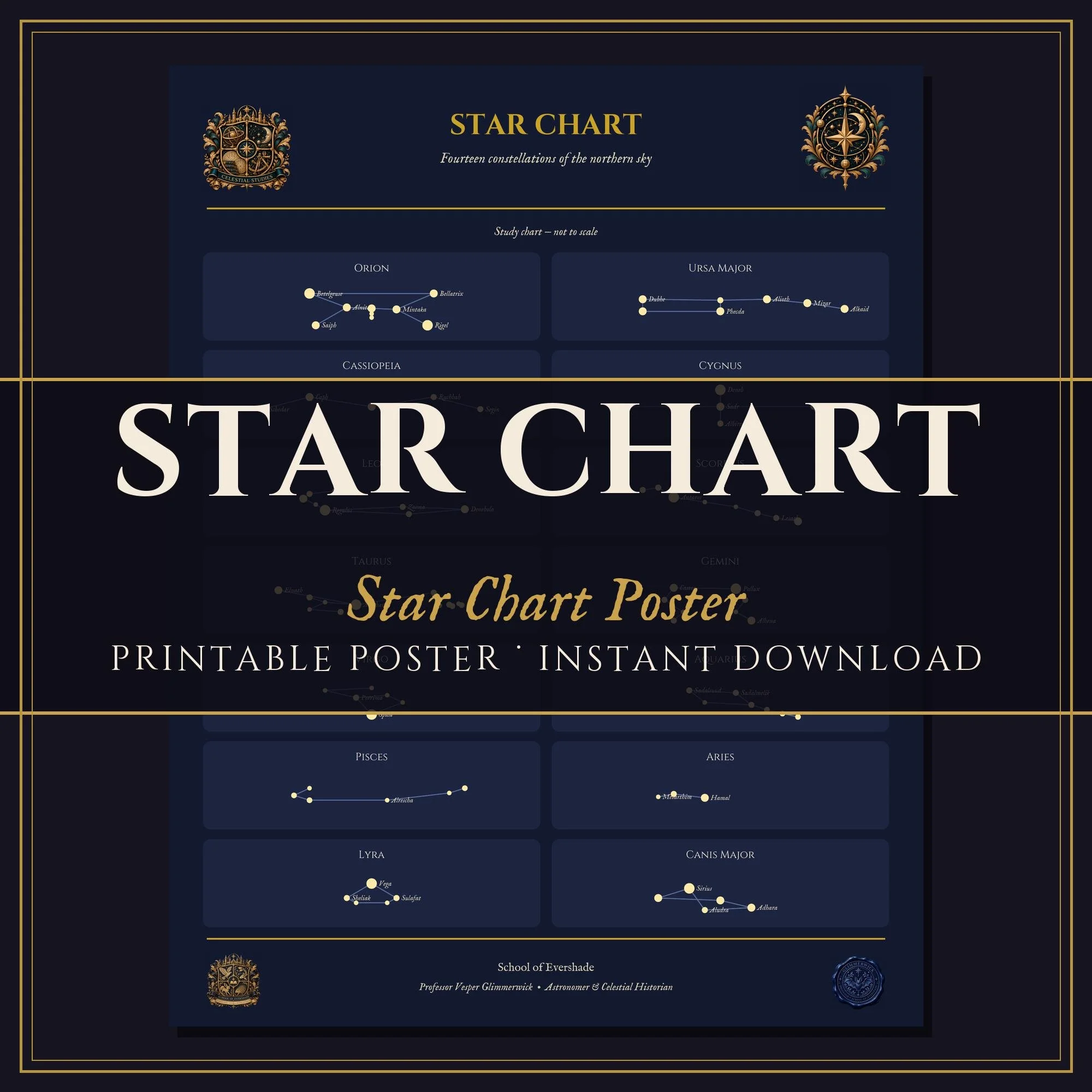
- Find the naked-eye planets and major seasonal constellations from their own latitude, using accurate charts and locating directions.
- Tell the true histories behind star and constellation names, including the Arabic star names and sky lore from many cultures.
- Describe the history of astrology as cultural and intellectual history, clearly distinguishing the astronomical constellations from the conventional twelve-sign zodiac.
- Build and use simple astronomical instruments, including a working sundial and a planisphere calibrated for their own latitude.
- Practice safe observing habits for night skies and solar events, always and without exception.
The Curriculum
Unit I: The Sky as Clock & Calendar
Learn to read time itself in the sky: day and night, the tilted seasons, ancient observatories raised in stone, the calendars of the world, and the longitude problem that taught sailors to carry time across the sea. This is where scholars become observers.
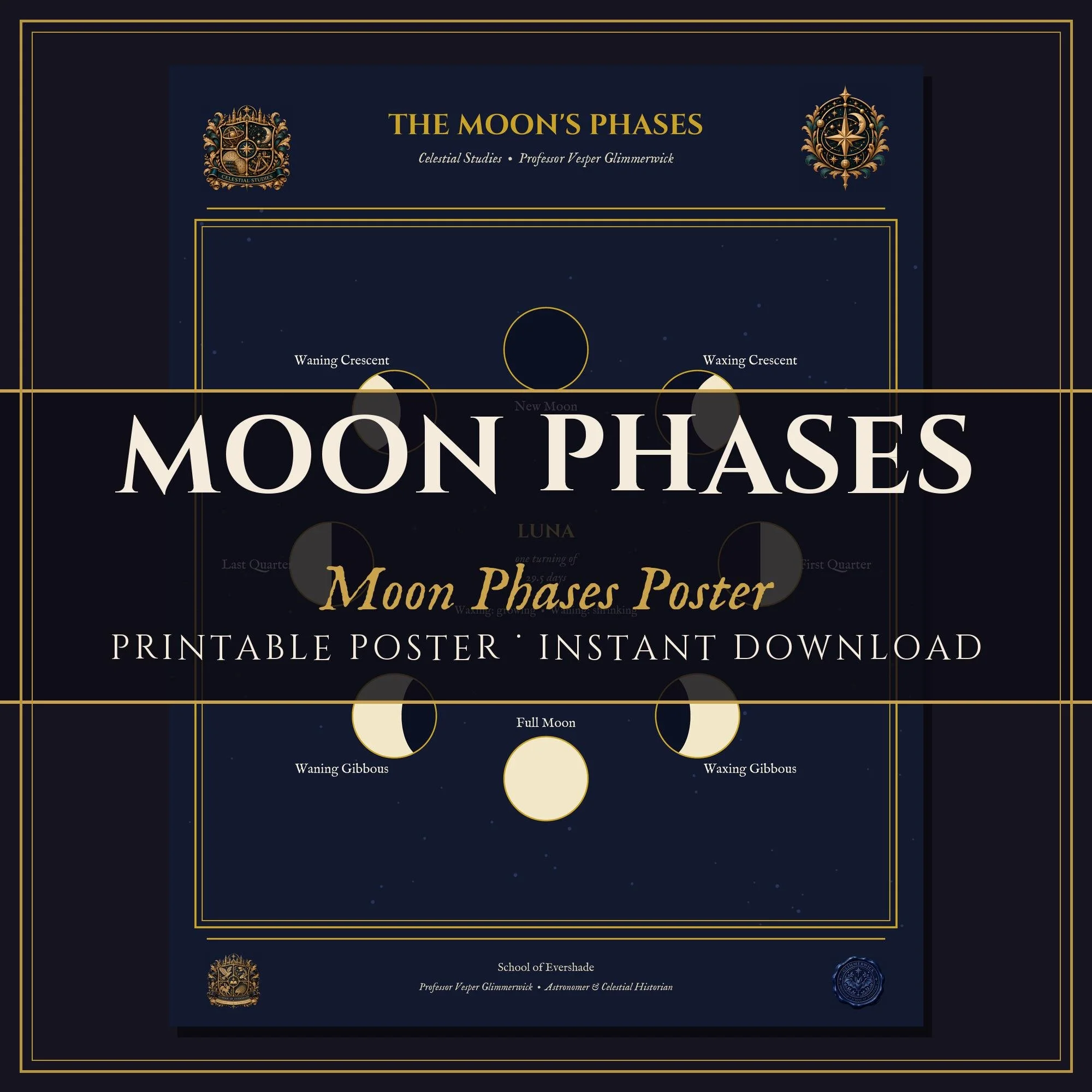
A full lunation in the company of Earth's companion: phases as sunlit geometry, the honest history of moon names, eclipses, tides, and the Apollo footprints on a face we had only ever watched. The Moon Journal begins here and runs at your own pace.
Five bright lights that refused to stay put: the naked-eye planets, retrograde motion taught as true geometry rather than story, Venus tracked by Maya astronomers, the Mars canal craze and what the rovers really found, the giant worlds, and Pluto's famous demotion.
What stars are, how far away they are, and how they came by their names: the sun as our star, Henrietta Leavitt's distance ladder, the Arabic star names carried through the Islamic Golden Age, constellations and their stories from many cultures, galaxies and nebulae, and the fireworks of comets, meteors, and supernovae.
Unit V: The History of Astrology & the Zodiac
What people believed the sky meant, from Babylonian omen tablets to the newspaper horoscope: taught as cultural and intellectual history, with honest psychology about why belief persists, and never as practice. No scholar is labeled by any sign at any point in this course.
Unit VI: Instruments of the Sky
Hands, glass, and mathematics: build a working sundial and a planisphere for your own latitude, meet the astrolabe, follow the telescope from Galileo to the Webb Space Telescope, and take up the cause of dark skies.
Capstone: Chart Your Sky. Each scholar assembles a planisphere calibrated for their latitude, a completed Moon Journal, and a personal constellation guide recording their observing location, then defends it in a written or illustrated submission. No oral presentation required.
From the Celestial Studies Bookshelf
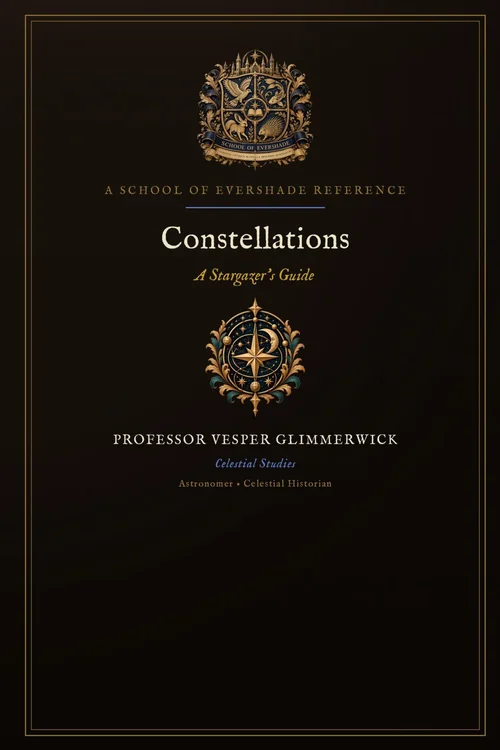
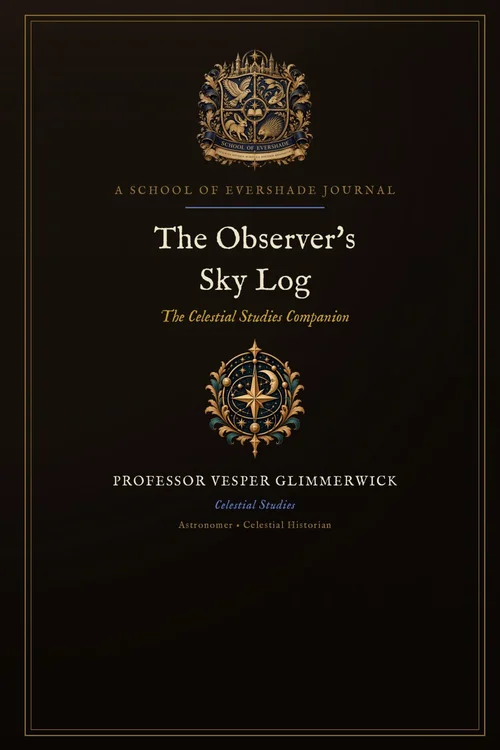
Printed volumes from this classroom’s own shelf in the school Bookstore — bound editions to keep beside your lessons.
From the Celestial Shelf
The printed companions to this observatory, from Professor Glimmerwick’s shelf in the shop.