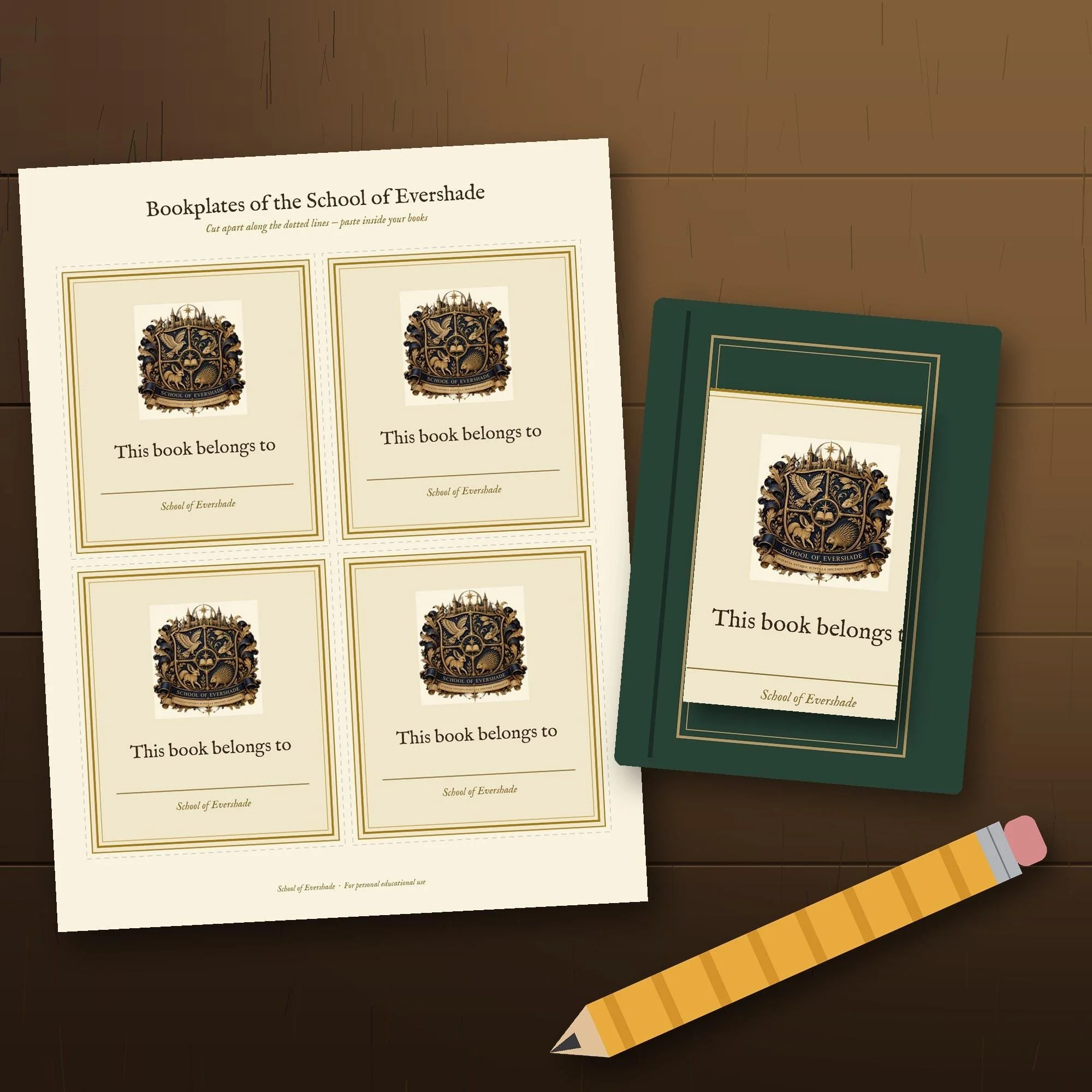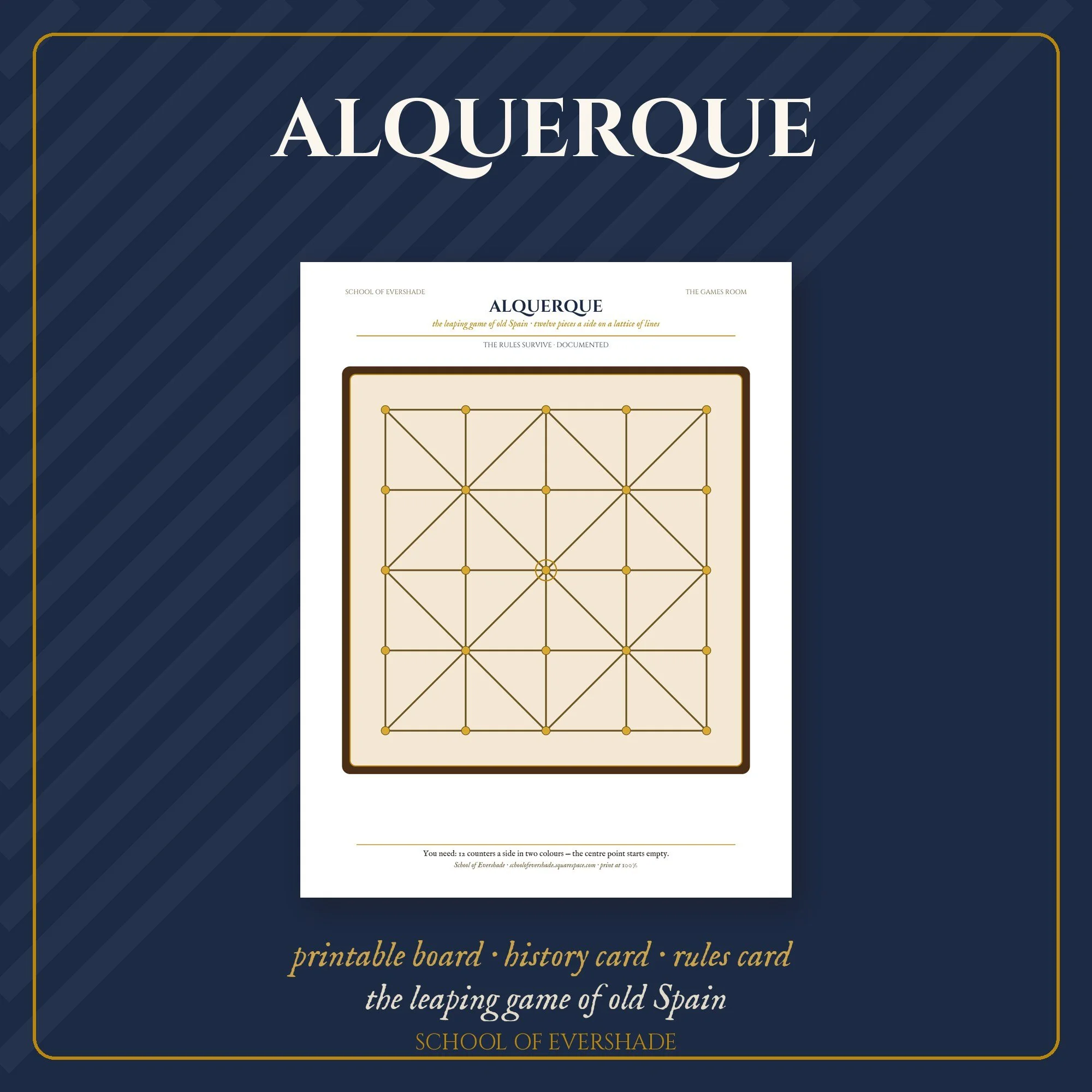
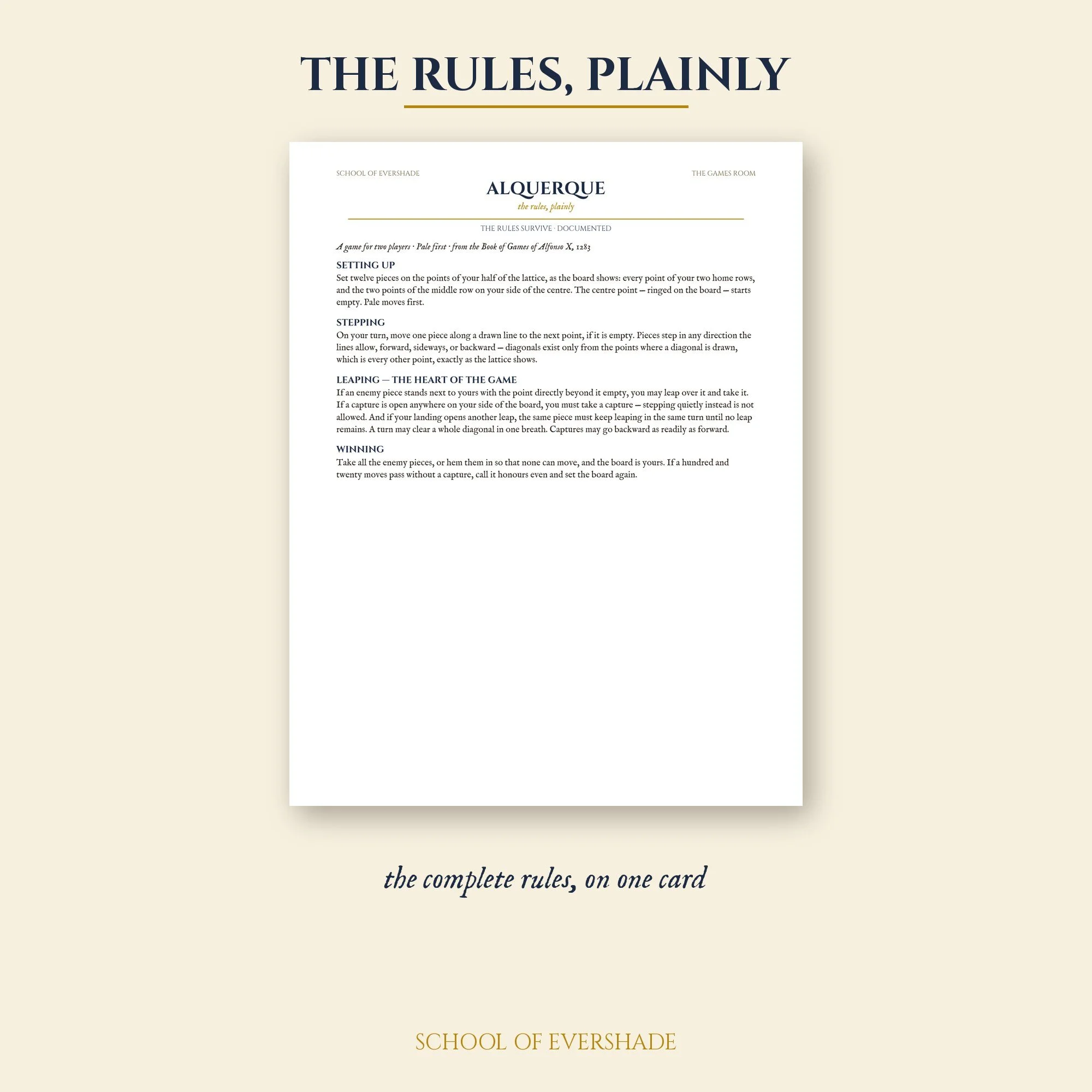
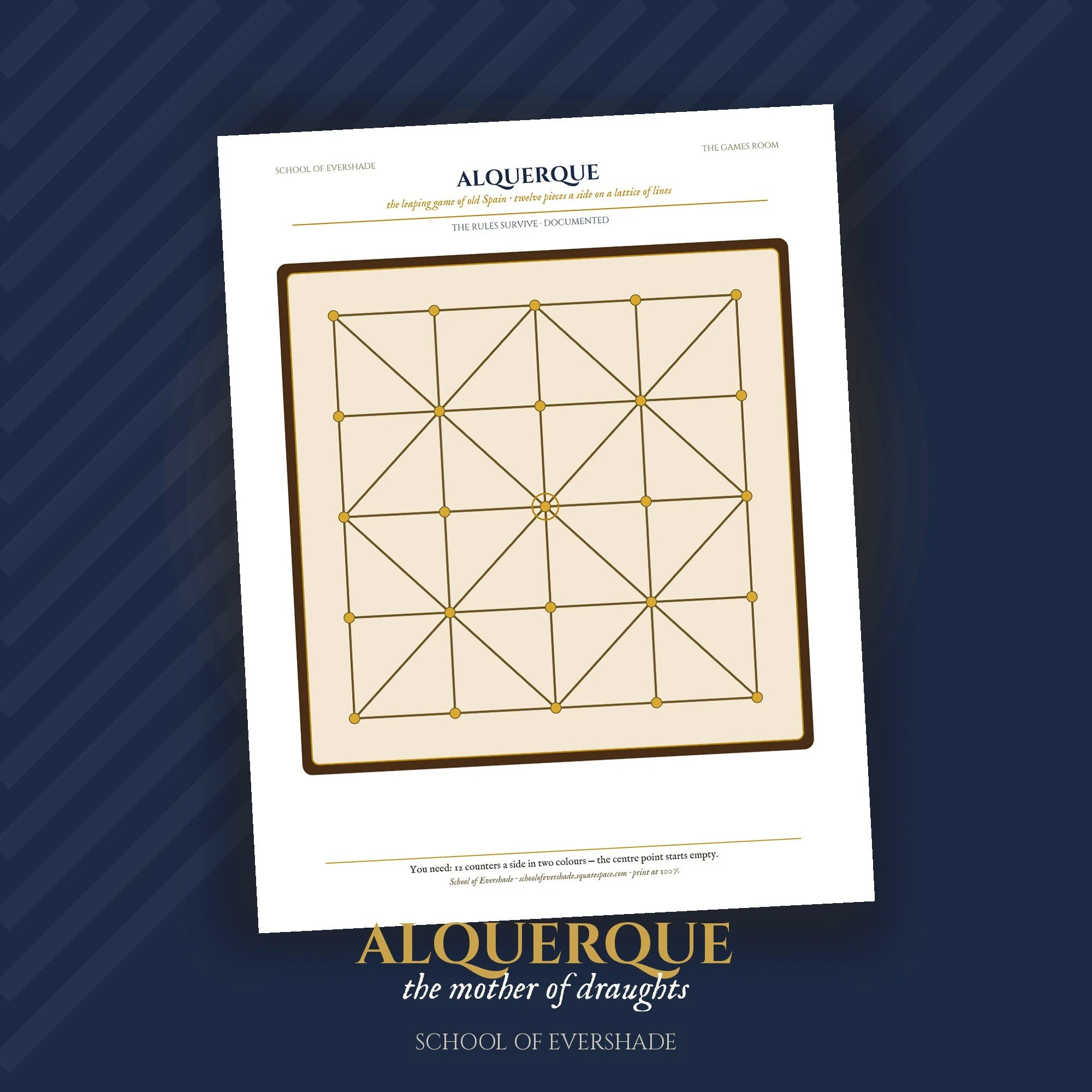
The leaping game of old Spain: twelve pieces a side on a lattice of twenty-five points, where a capture offered must be taken and a leap begun must be finished — the great invention that later grew into draughts. Alquerque survives complete in the Book of Games of King Alfonso X of Castile, finished at Seville in 1283 — one of the oldest complete rule-sets for any board game in Europe — and this pack plays Alfonso's game as he printed it. Inside are three pages: a full-page printable board, a history card, and the complete rules on one card — just add twelve counters a side in two colours. Play it free online in the Games Room, or print it at home on US Letter paper. From the School of Evershade.
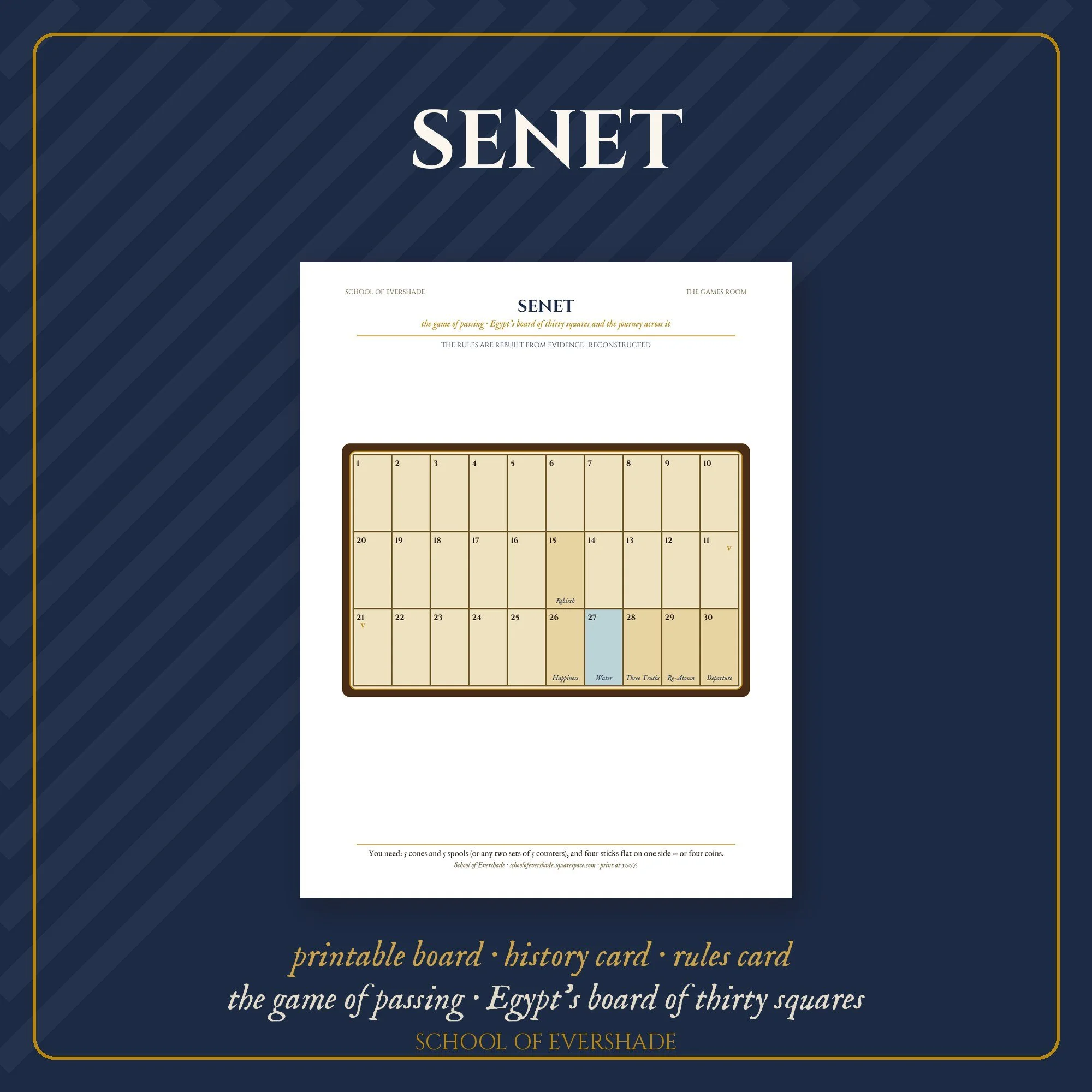
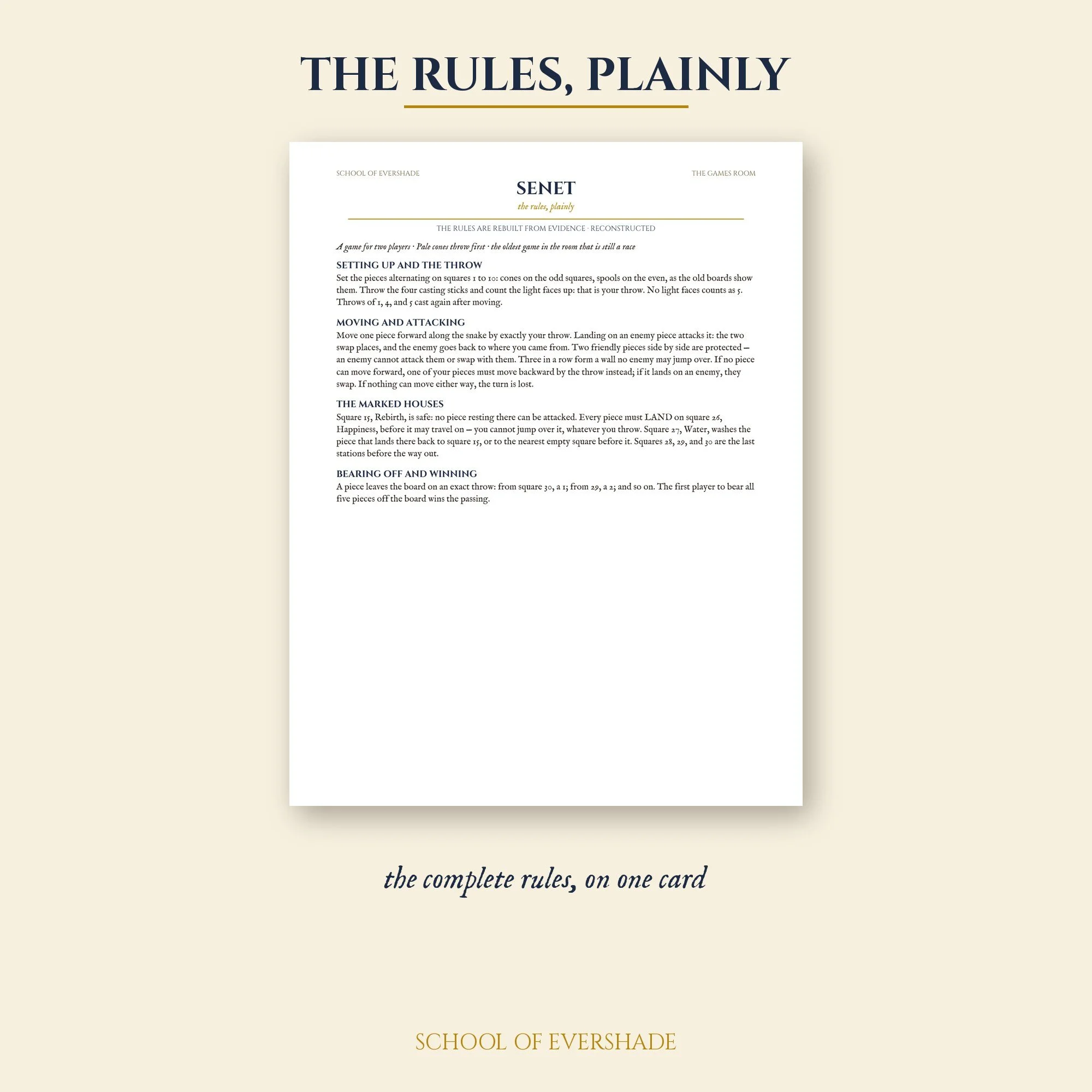
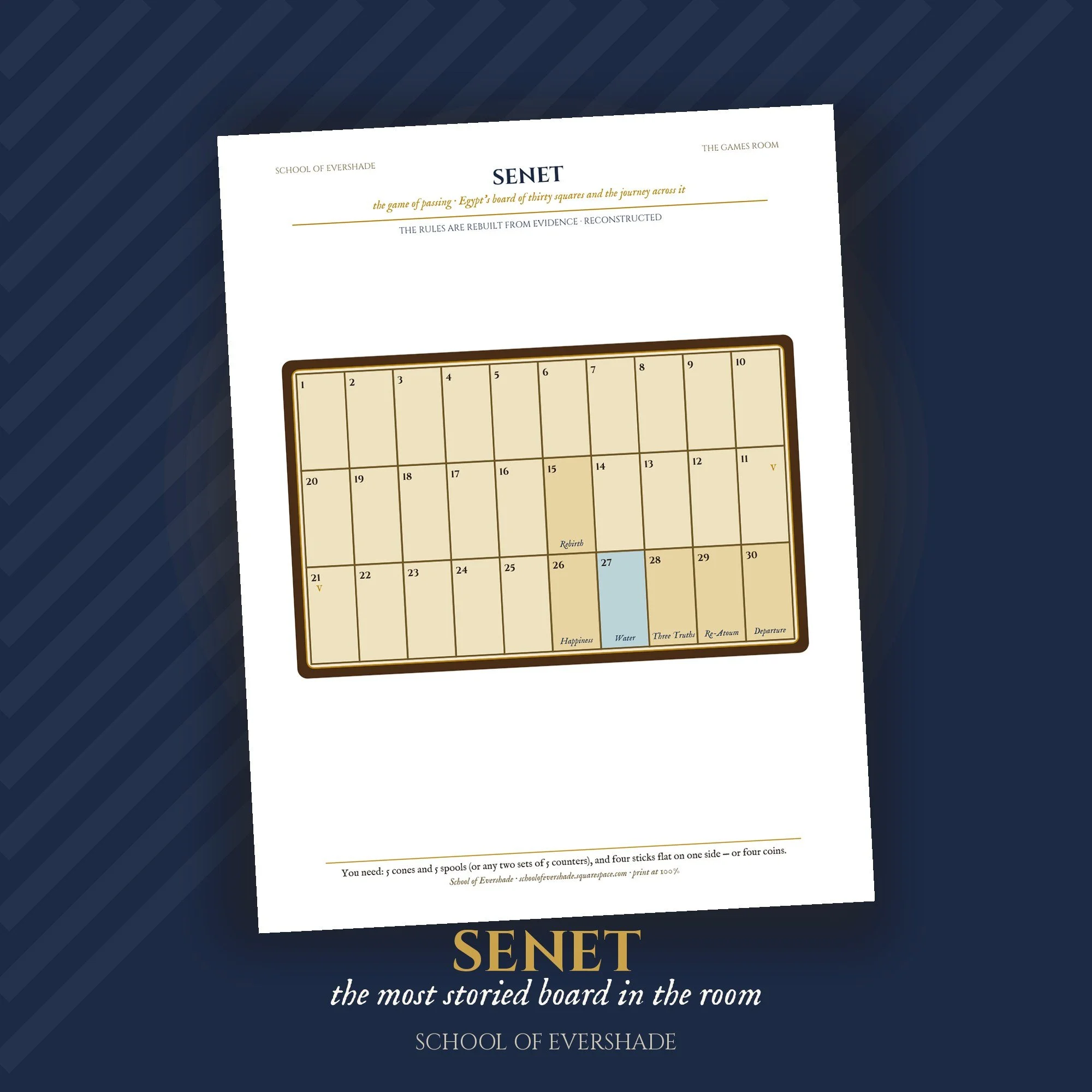
The game of passing: Egypt played senet for three thousand years — boards survive in burials from about 3100 BCE onward, and four were buried with Tutankhamun. Five cones race five spools along a snaking road of thirty squares, past the House of Rebirth and the House of Water, to the final square of Departure; the throw is made with four sticks or coins. No rulebook survives — the Egyptians never needed to write down what everyone knew — so the rules in this pack are the common modern reconstruction, honestly labelled and rebuilt from tomb paintings, surviving boards, and the pictured houses themselves. Inside are three pages: a full-page printable board, a history card, and the complete rules on one card. Play it free online in the Games Room, or print it at home on US Letter paper. From the School of Evershade.
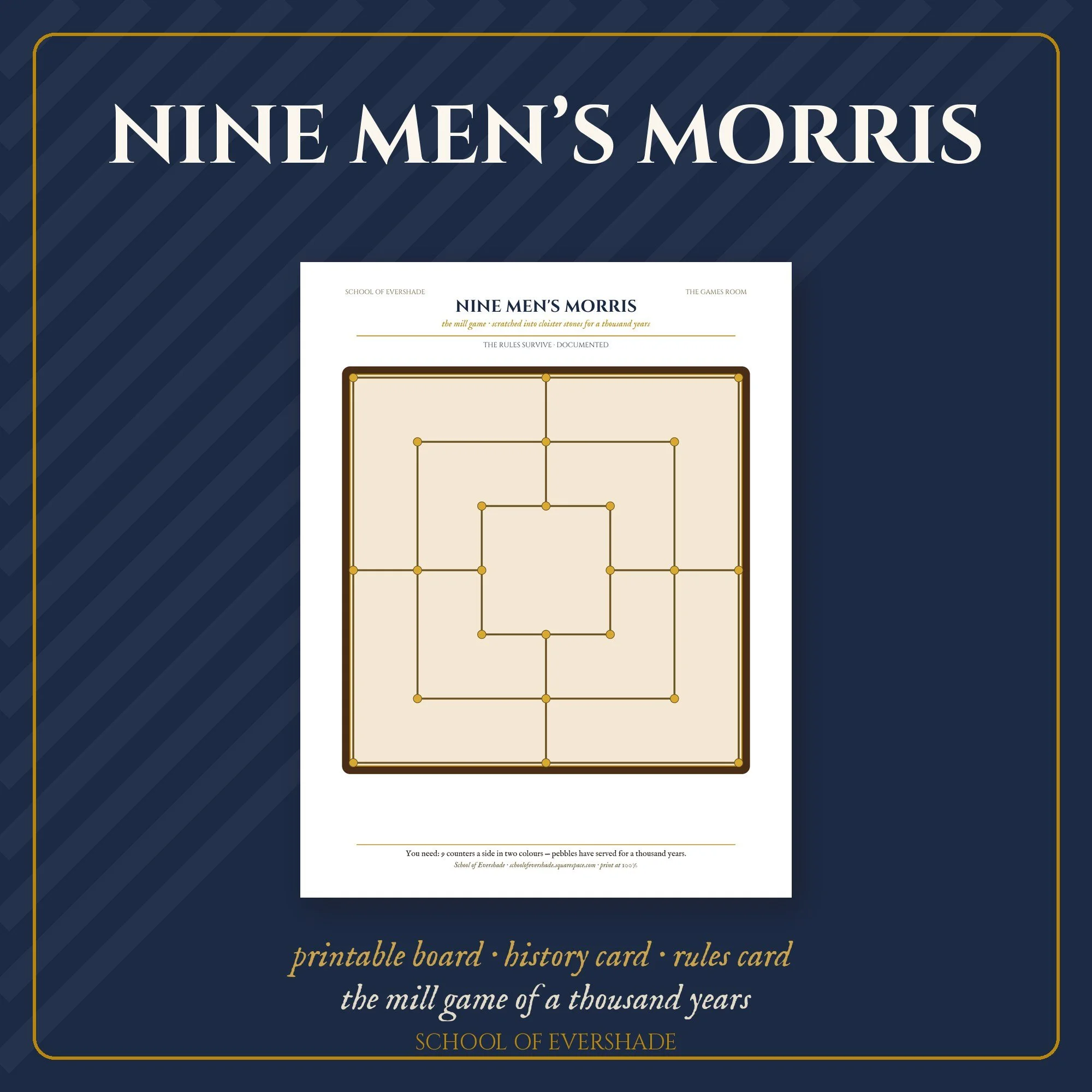
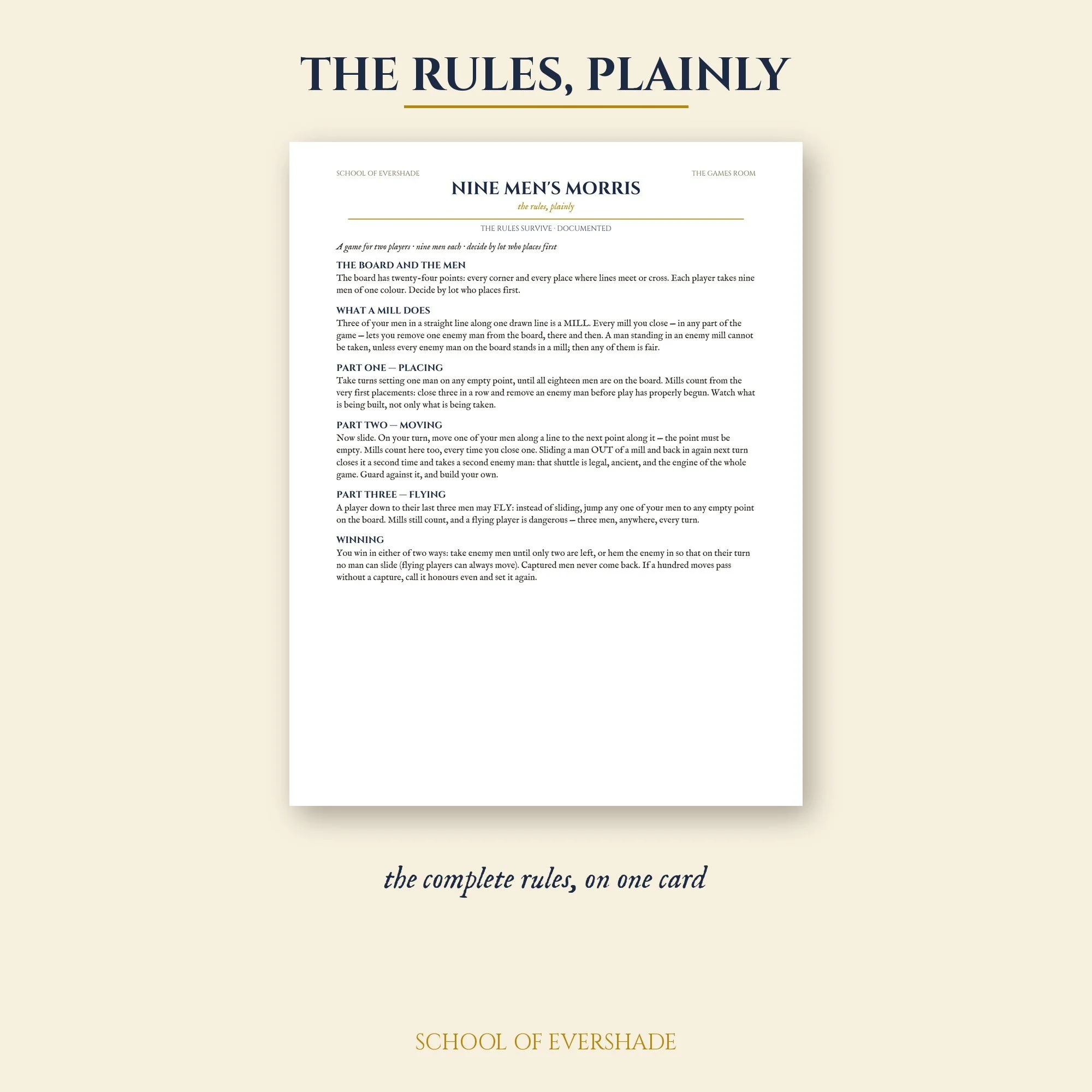
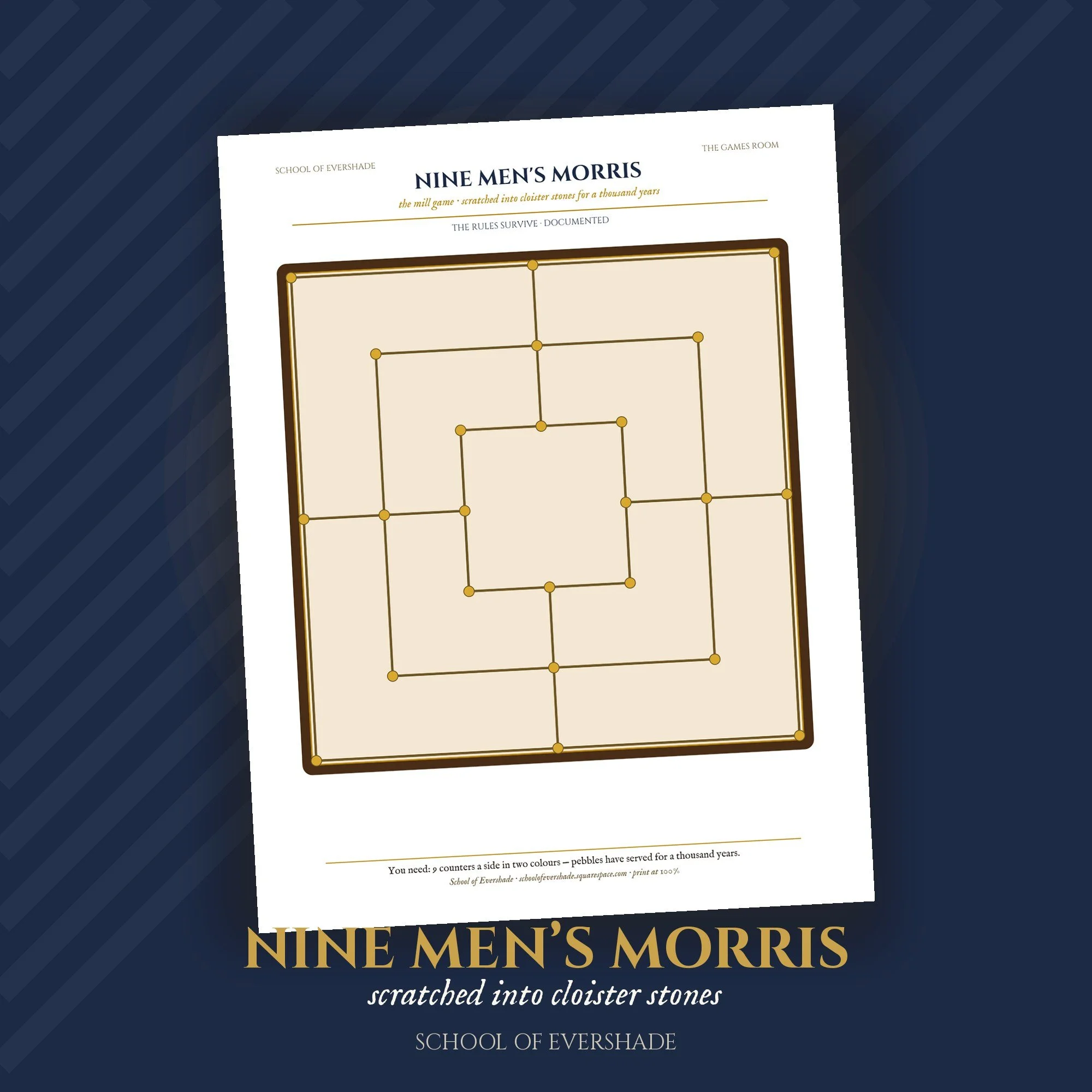
The mill game: three squares one inside another, twenty-four points, nine pieces a side — build a row of three and take one of your opponent's men. Boards survive scratched into stone from Roman times onward, and cut into the cloister benches of Gloucester, Canterbury, and Norwich, where monks and schoolboys played with pebbles; it may be the oldest board game in the world still played for pleasure. This pack's board is drawn complete, with every line joining square to square exactly as the game requires. Inside are three pages: a full-page printable board, a history card, and the complete rules on one card — nine counters a side are all you need. Play it free online in the Games Room, or print it at home on US Letter paper. From the School of Evershade.
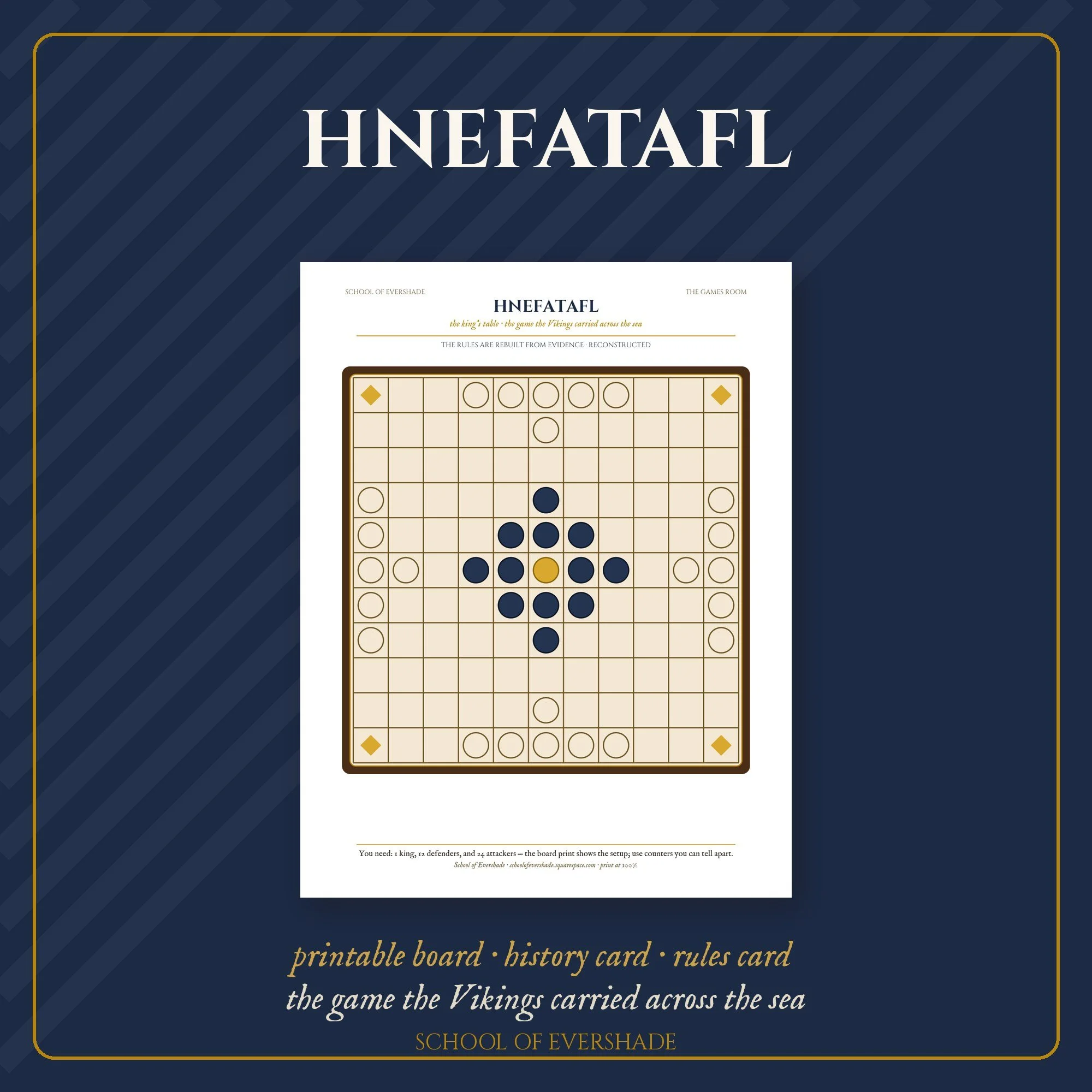
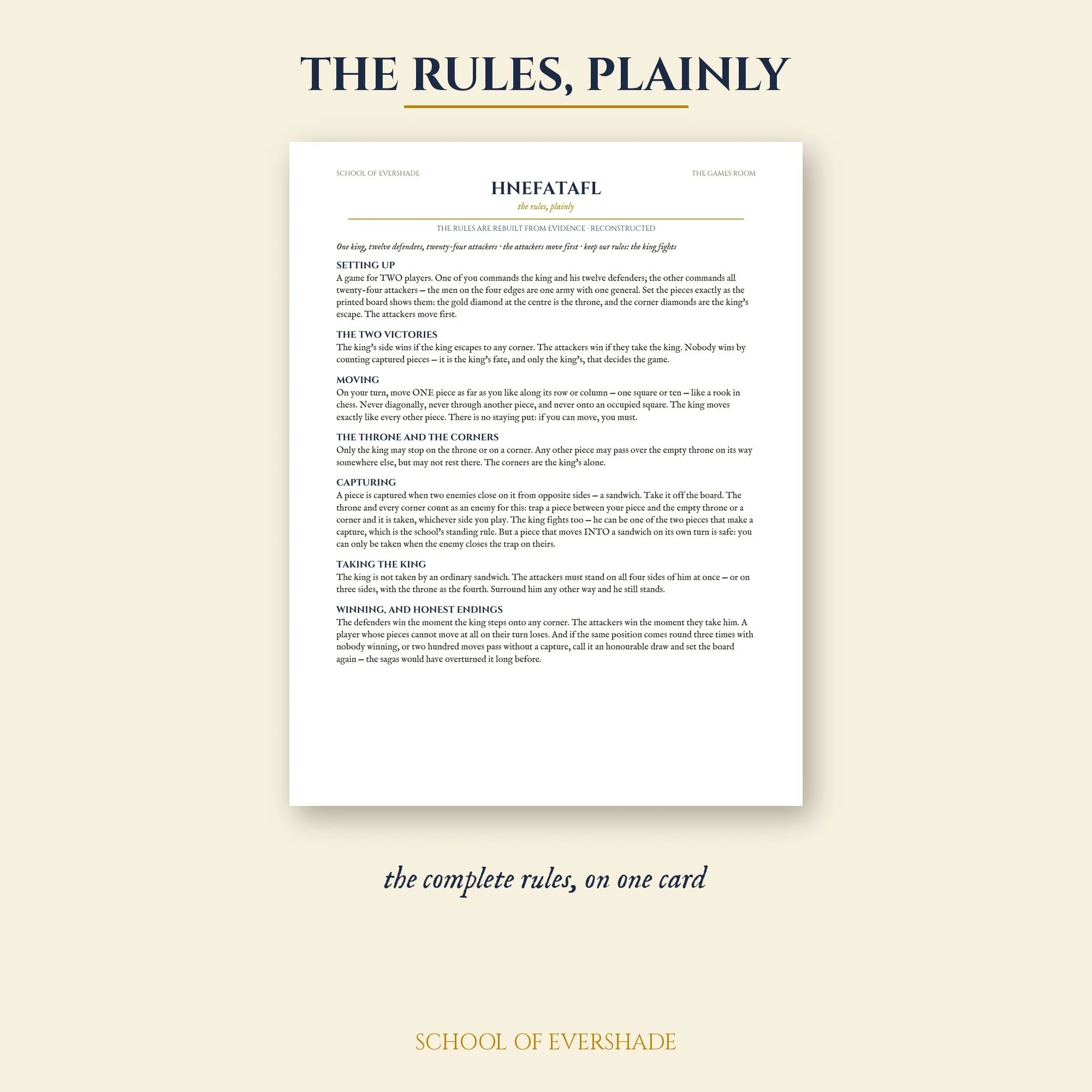
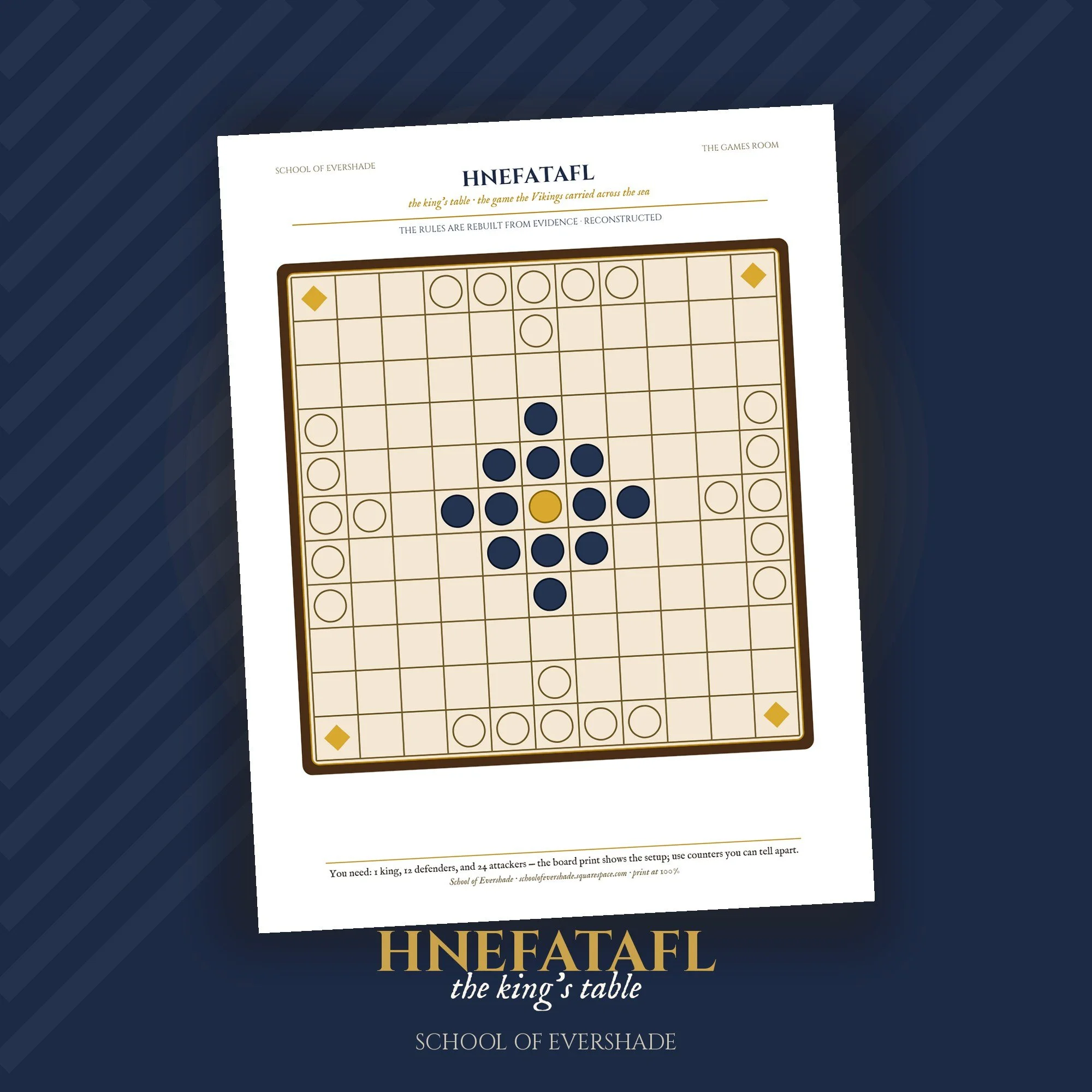
The king's table: for some three hundred years this was THE board game of the Norse world, played across Norway, Iceland, Sweden, and Denmark and carried everywhere the longships went — a hnefatafl board was buried in the great Gokstad ship around the year 890. One king, guarded by twelve defenders, stands besieged at the centre while twenty-four attackers close in from the edges; the attackers win by taking the king, and the king wins by escaping to a corner — and by the school's ruling, the king fights. No rulebook survives from the Viking Age, so these rules are honestly labelled what they are: a reconstruction, rebuilt from the surviving evidence. Inside are three pages: a full-page printable board, a history card, and the complete rules on one card. Play it free online in the Games Room, or print it at home on US Letter paper. From the School of Evershade.
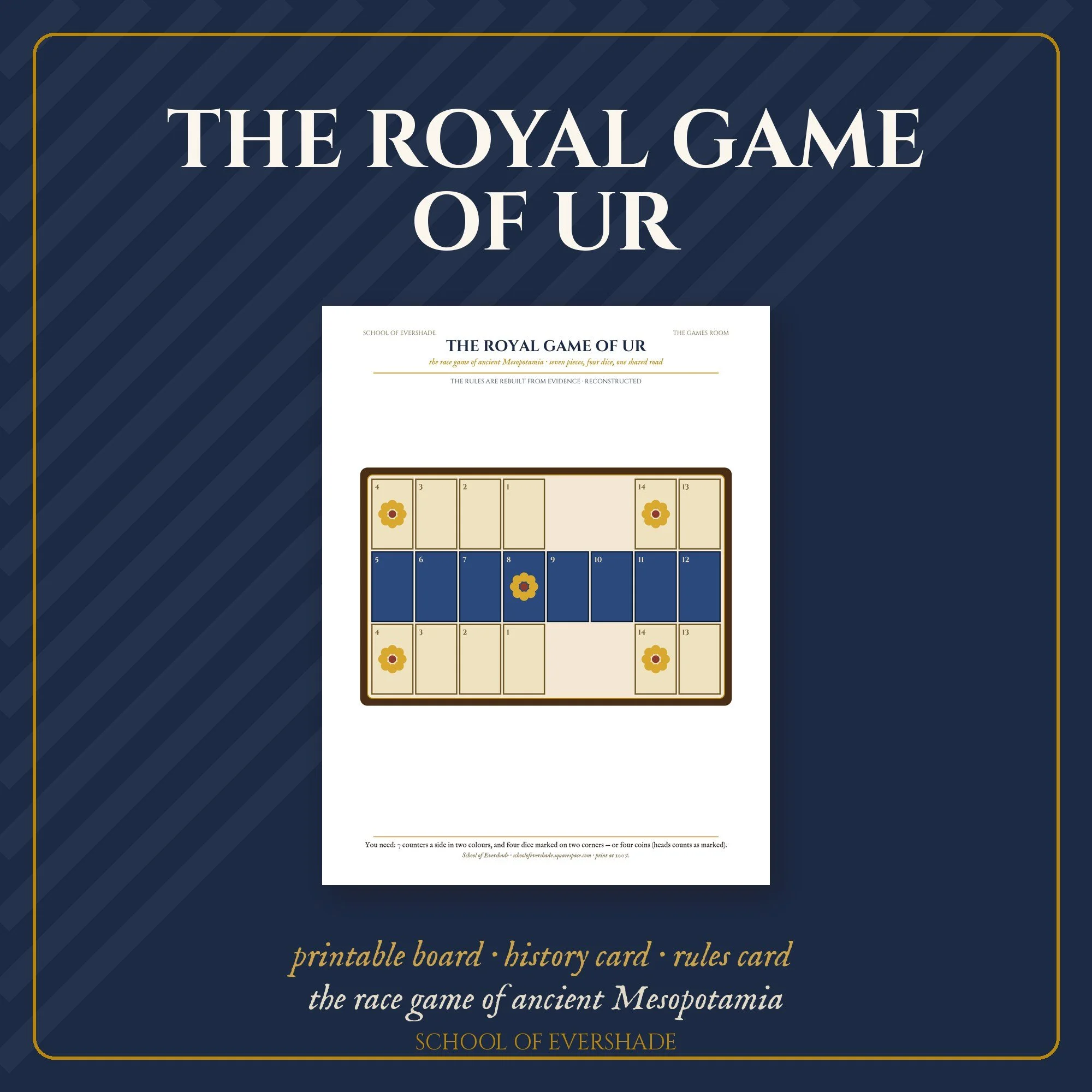
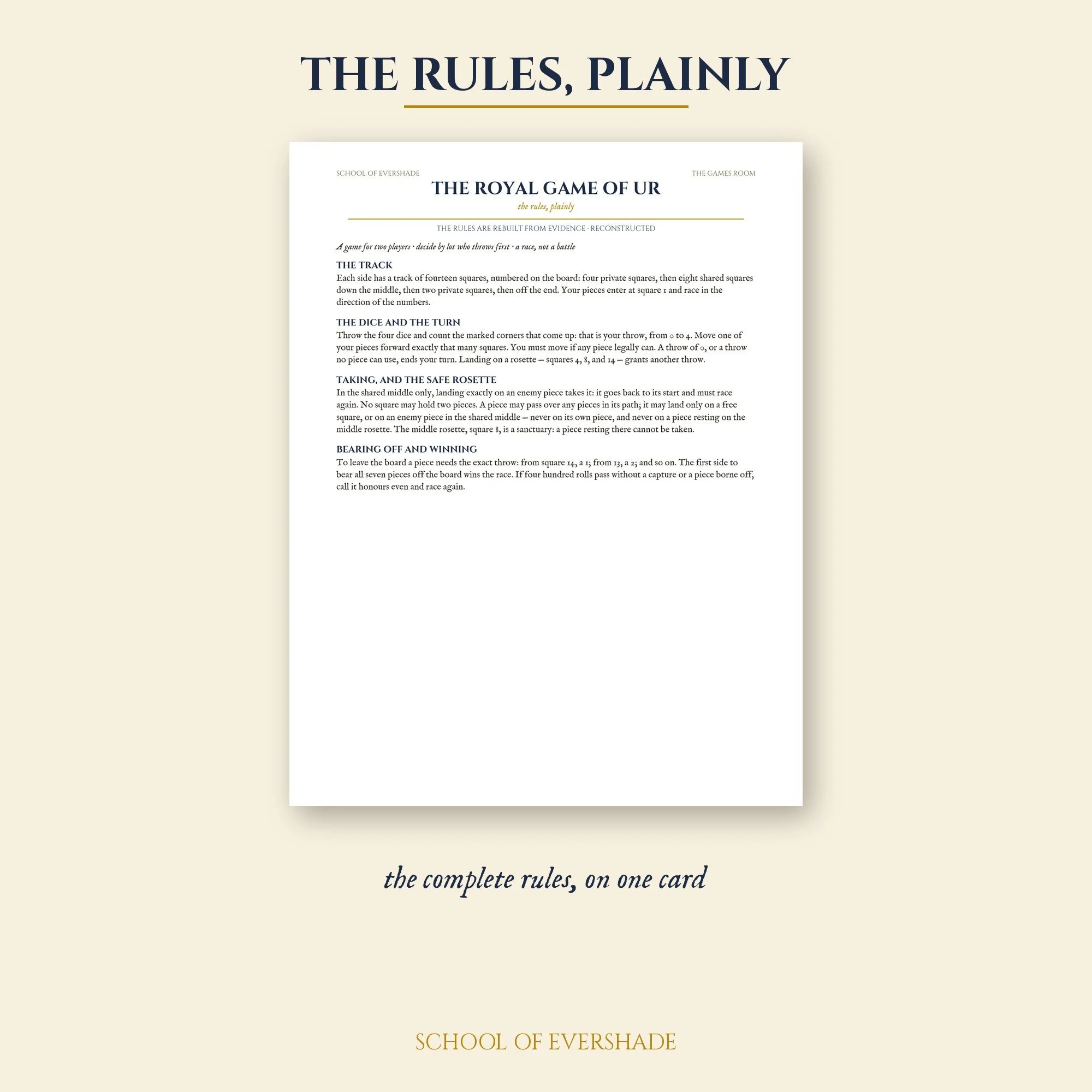
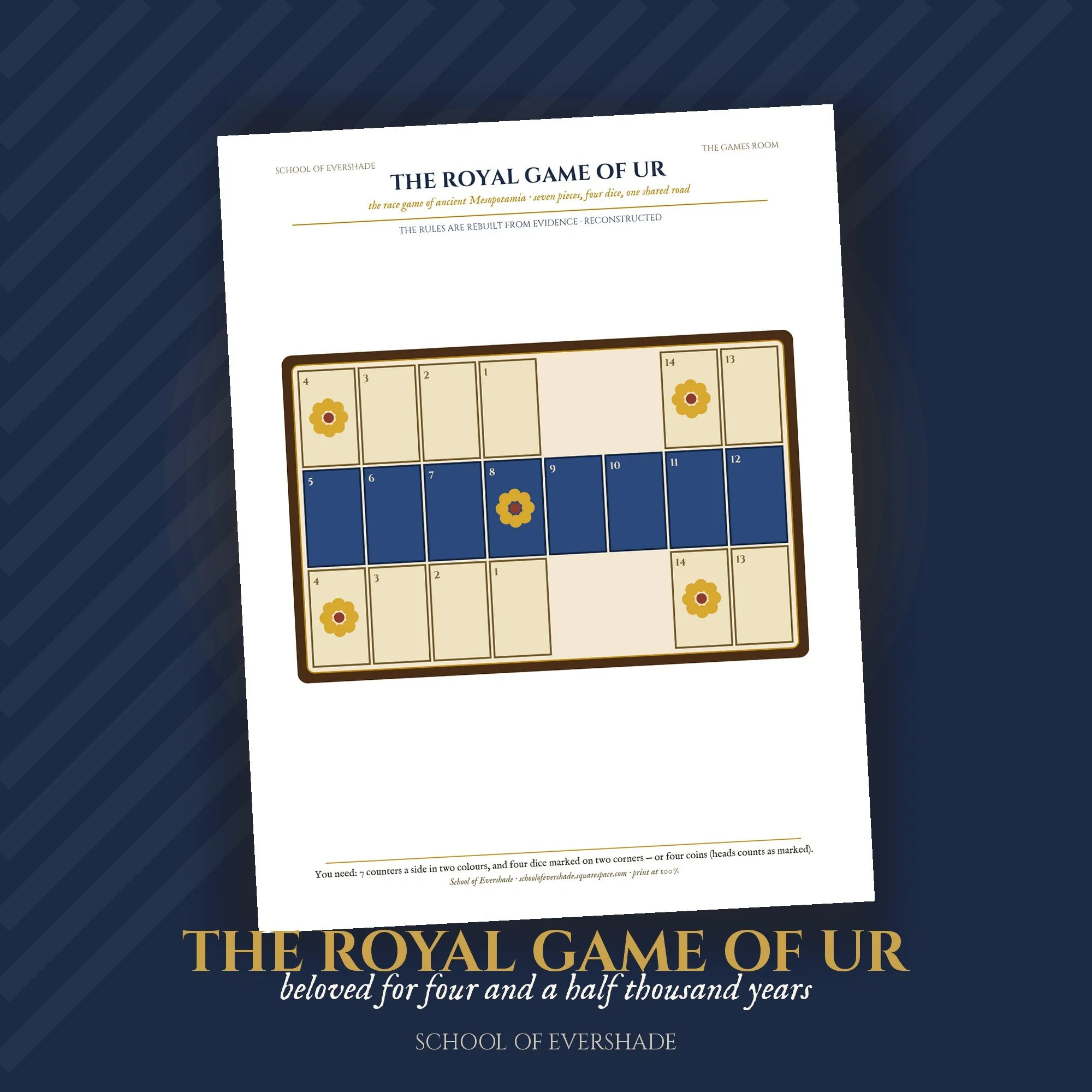
The race game of ancient Mesopotamia: seven pieces a side run a track of fourteen squares, and the shared middle road is dangerous ground where an enemy piece can be sent home to start again. Boards faced with shell, lapis lazuli, and red limestone were buried in the Royal Tombs of Ur some four and a half thousand years ago, but no rules were buried with them; the rules in this pack follow Irving Finkel's reconstruction from a Babylonian clay tablet written in 177 BCE, rosettes that grant another throw and all. Inside are three pages: a full-page printable board, a history card, and the complete rules on one card — add seven counters a side and four dice or coins for the throw. Play it free online in the Games Room, or print it at home on US Letter paper. From the School of Evershade.
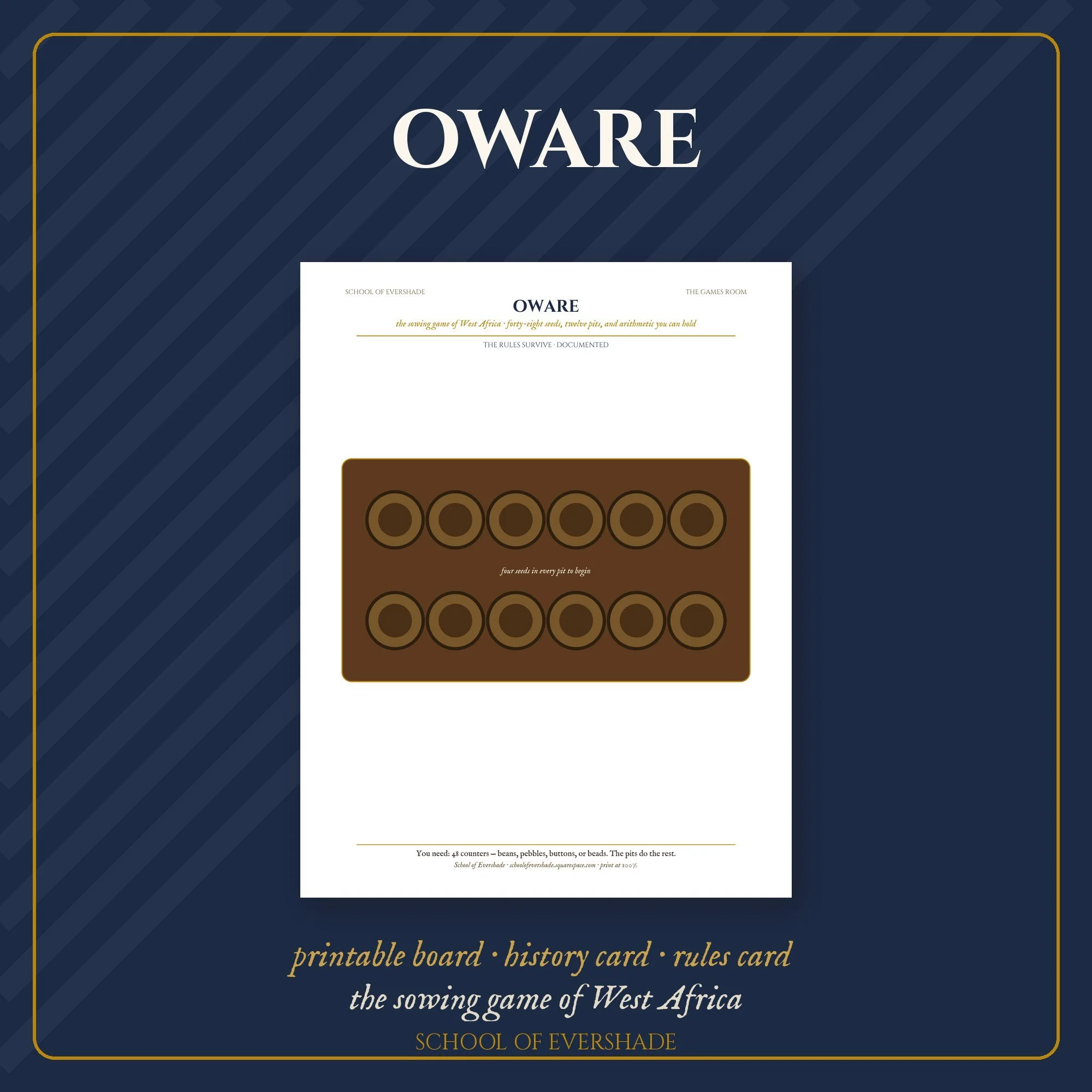
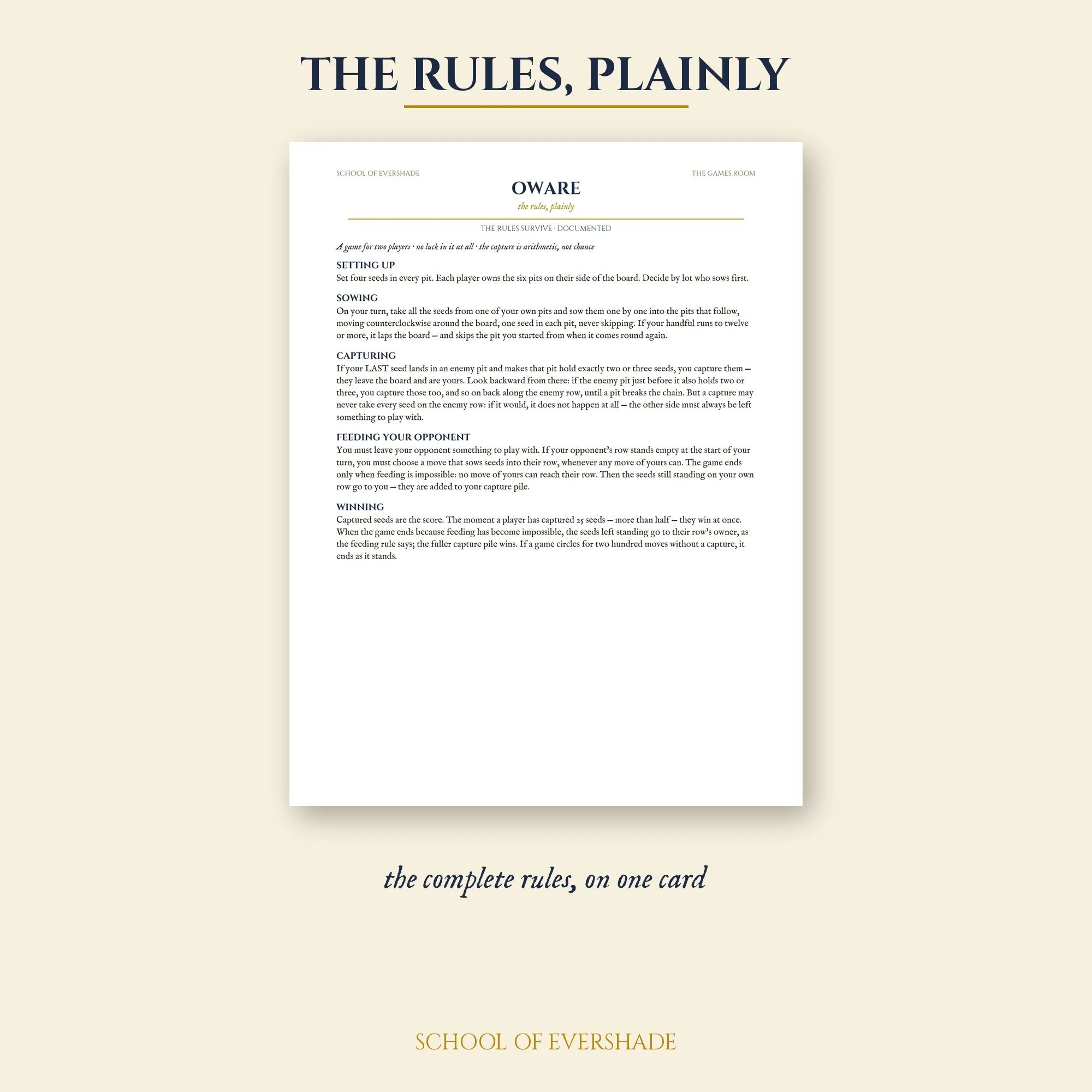
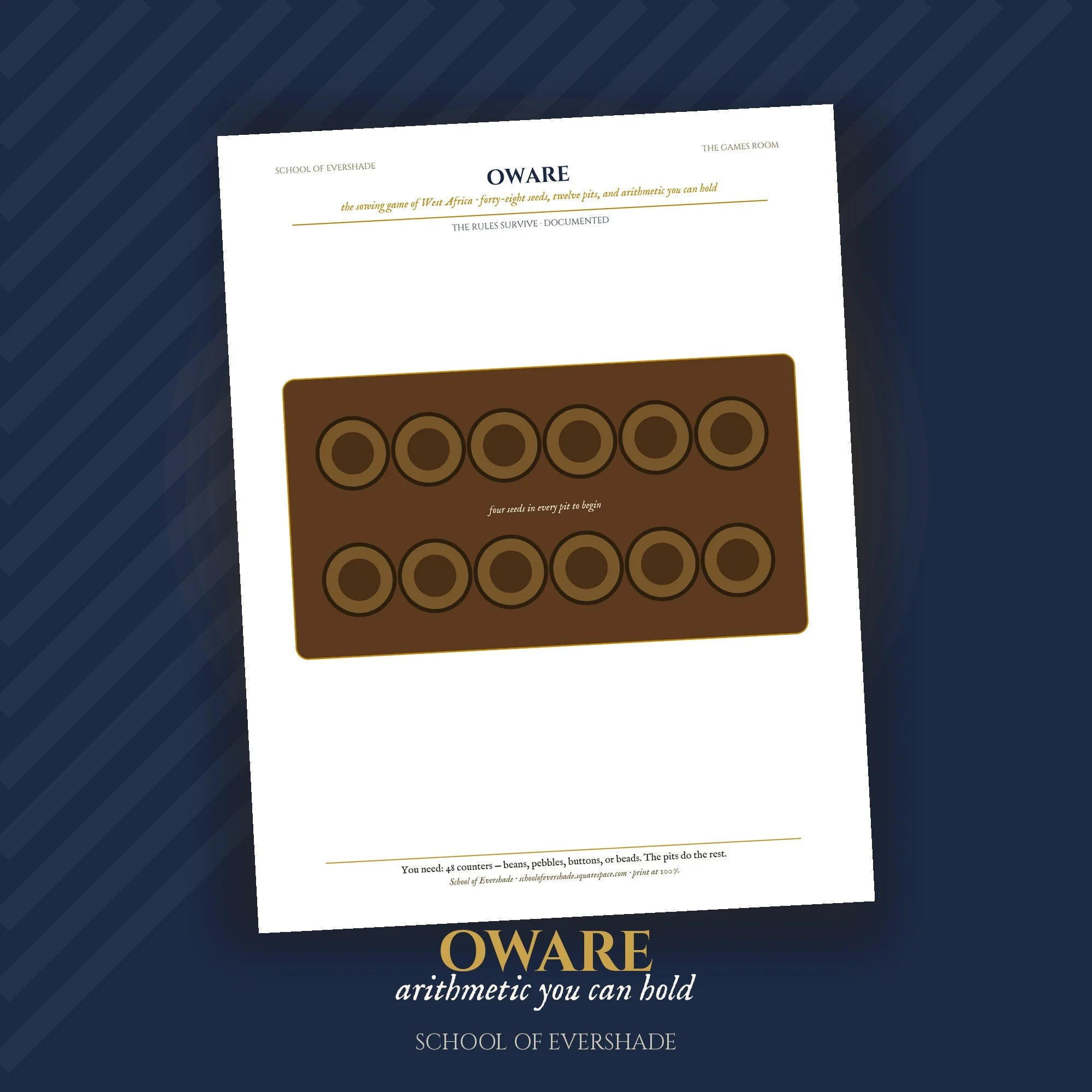
The sowing game of West Africa: forty-eight seeds in twelve pits, sowed one by one around the board, where your last seed falls decides what you harvest. Oware is the game of the Asante of Ghana — a game of honour and quick arithmetic with no luck in it at all — carried across the Atlantic to the Caribbean as warri, and played in tournaments in Ghana today. This pack plays the widely used standard rules, including the must-feed rule: if your opponent's row stands empty, you must sow into it whenever one of your moves can reach. Inside are three pages: a full-page printable board, a history card, and the complete rules on one card — beans, pebbles, buttons, or beads serve as seeds. Play it free online in the Games Room, or print it at home on US Letter paper. From the School of Evershade.
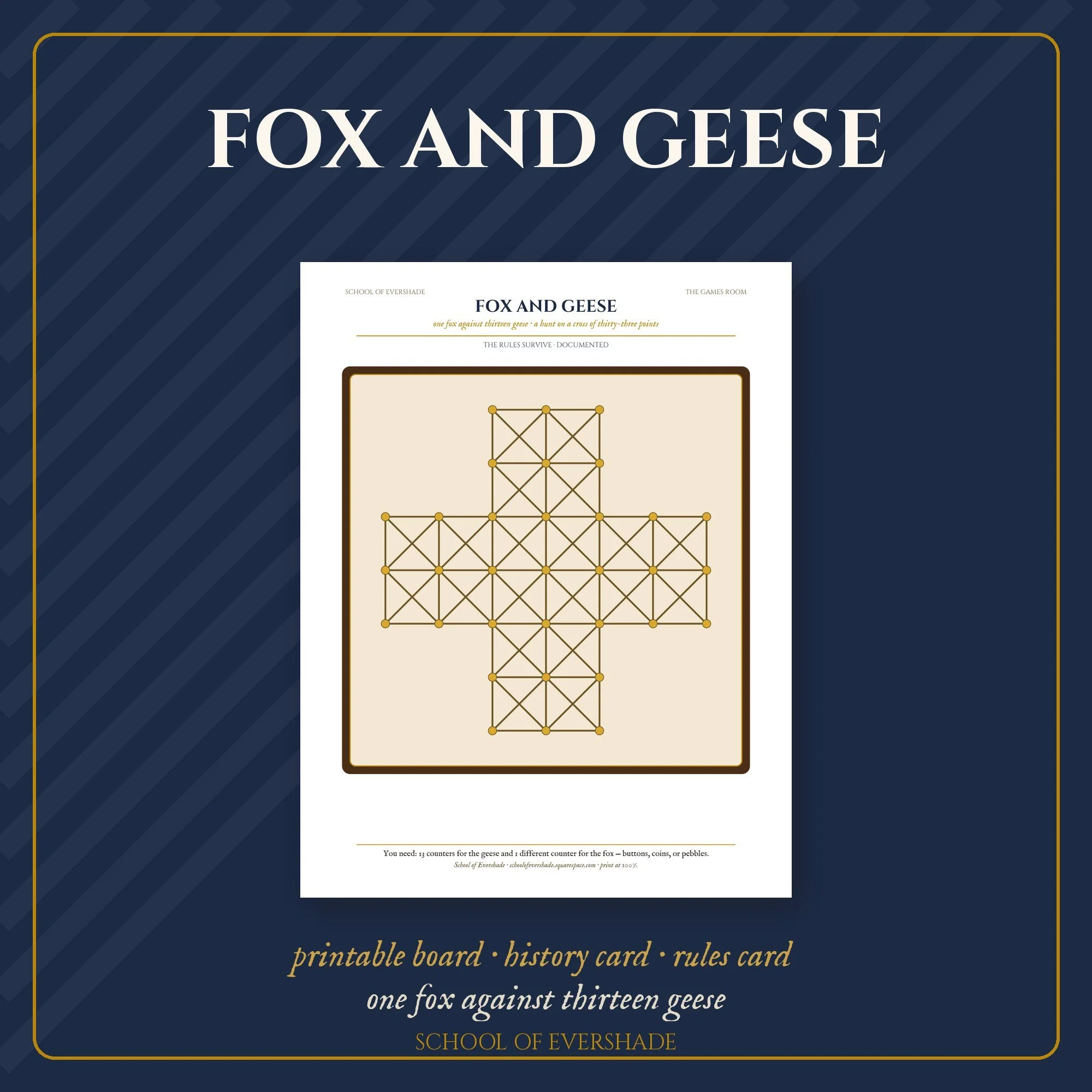
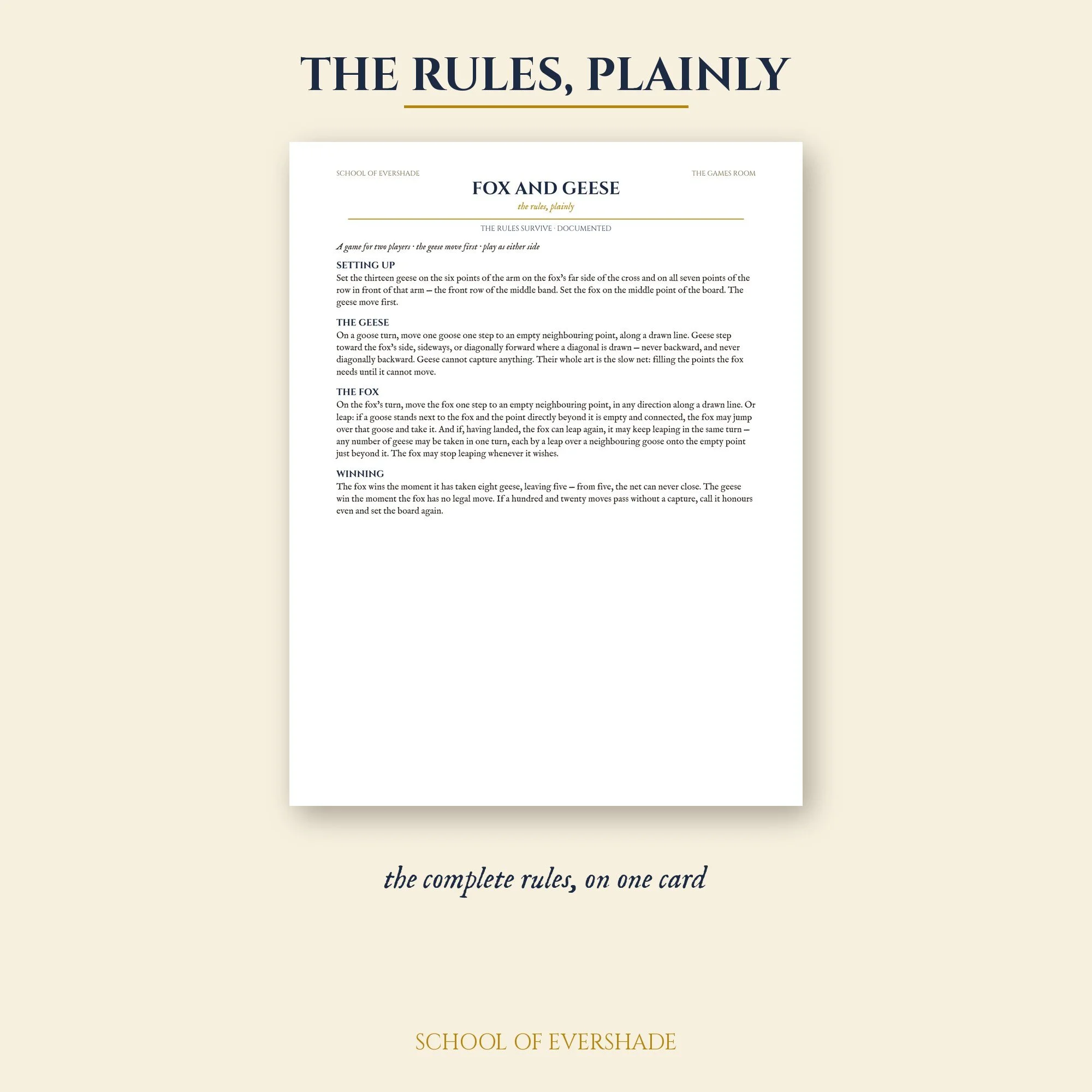
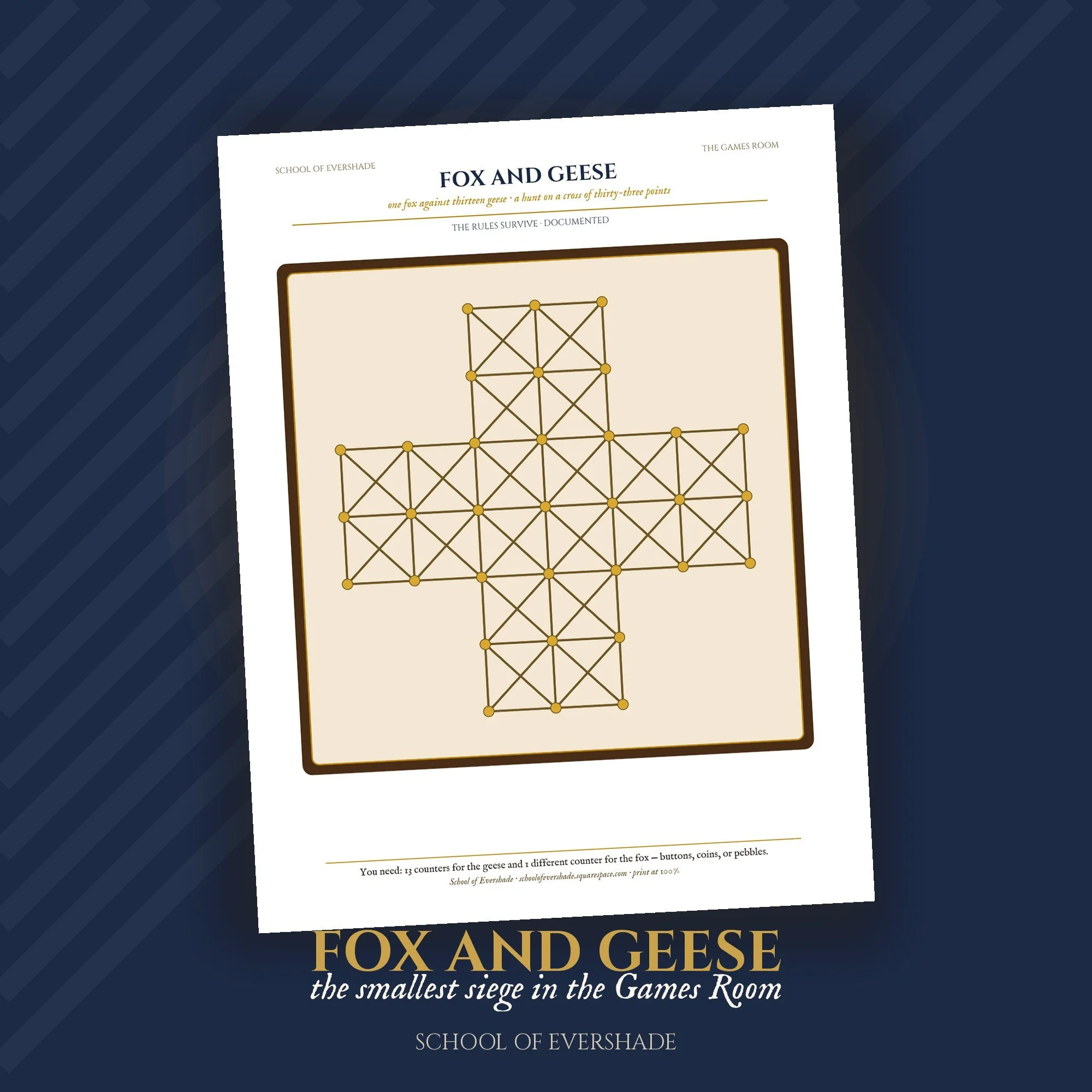
One quick fox against thirteen geese on a cross of thirty-three points: the fox leaps and takes, while the geese — who can never take at all — win only by closing in until the fox cannot move. Fox and Geese is a hunt game from the Norse world's tafl family, fashionable for centuries; the household accounts of King Edward IV of England record a set whose fox and geese were made of silver. This pack follows Cyningstan's rules, including the fox's chained captures — while leaps remain the fox may keep leaping, and may stop whenever it wishes. Inside are three pages: a full-page printable board, a history card, and the complete rules on one card — just add thirteen counters and one different counter for the fox. Play it free online in the Games Room, or print it at home on US Letter paper. From the School of Evershade.
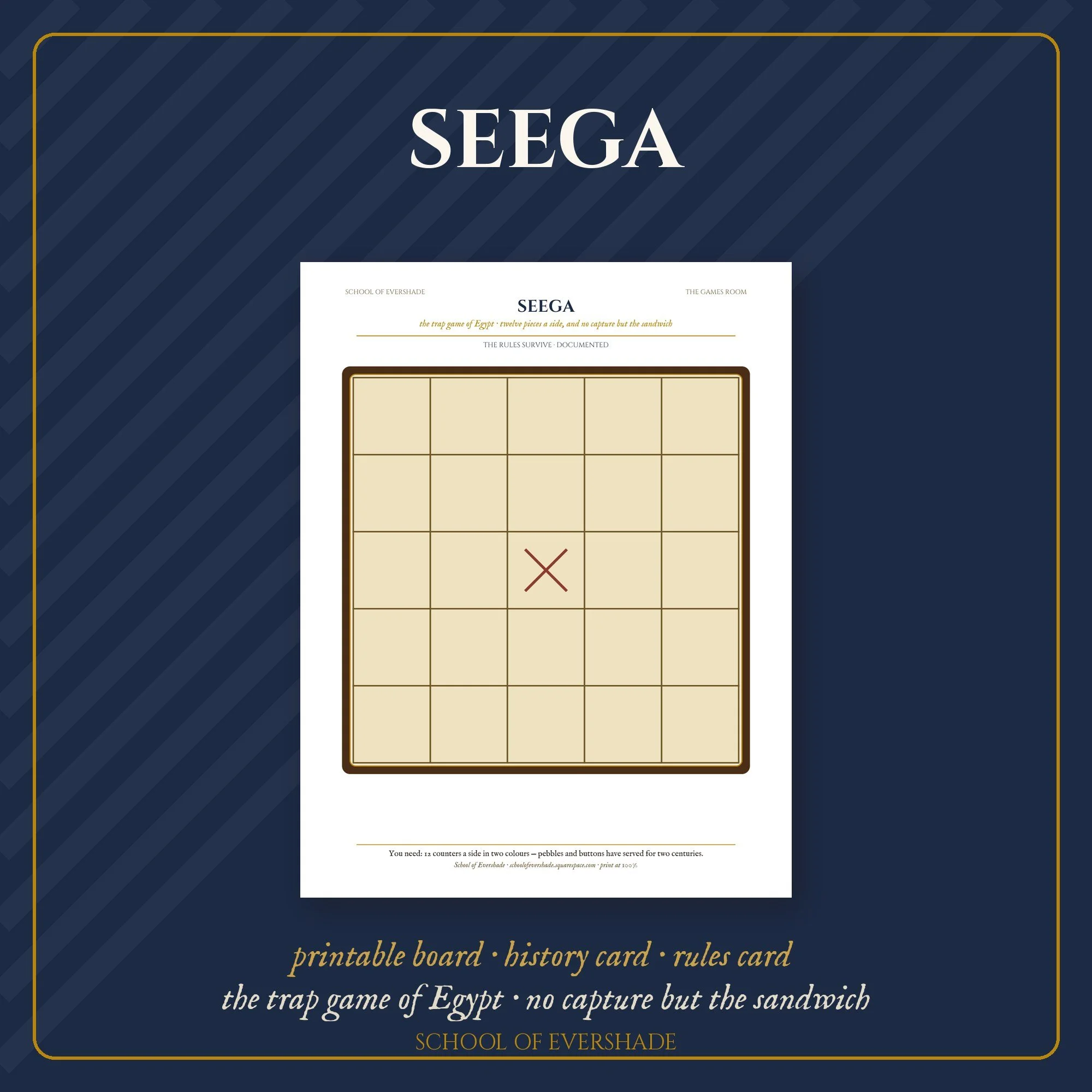
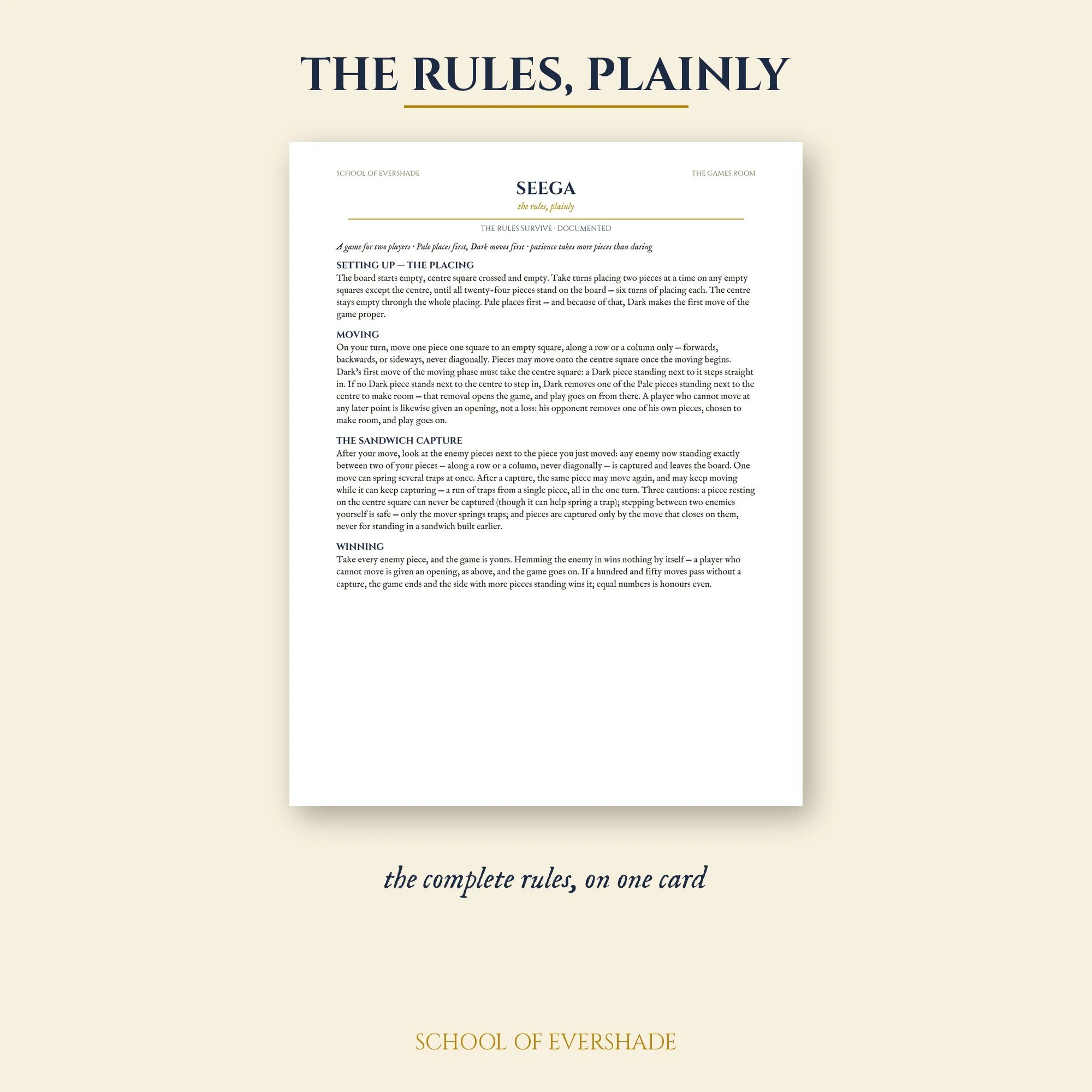
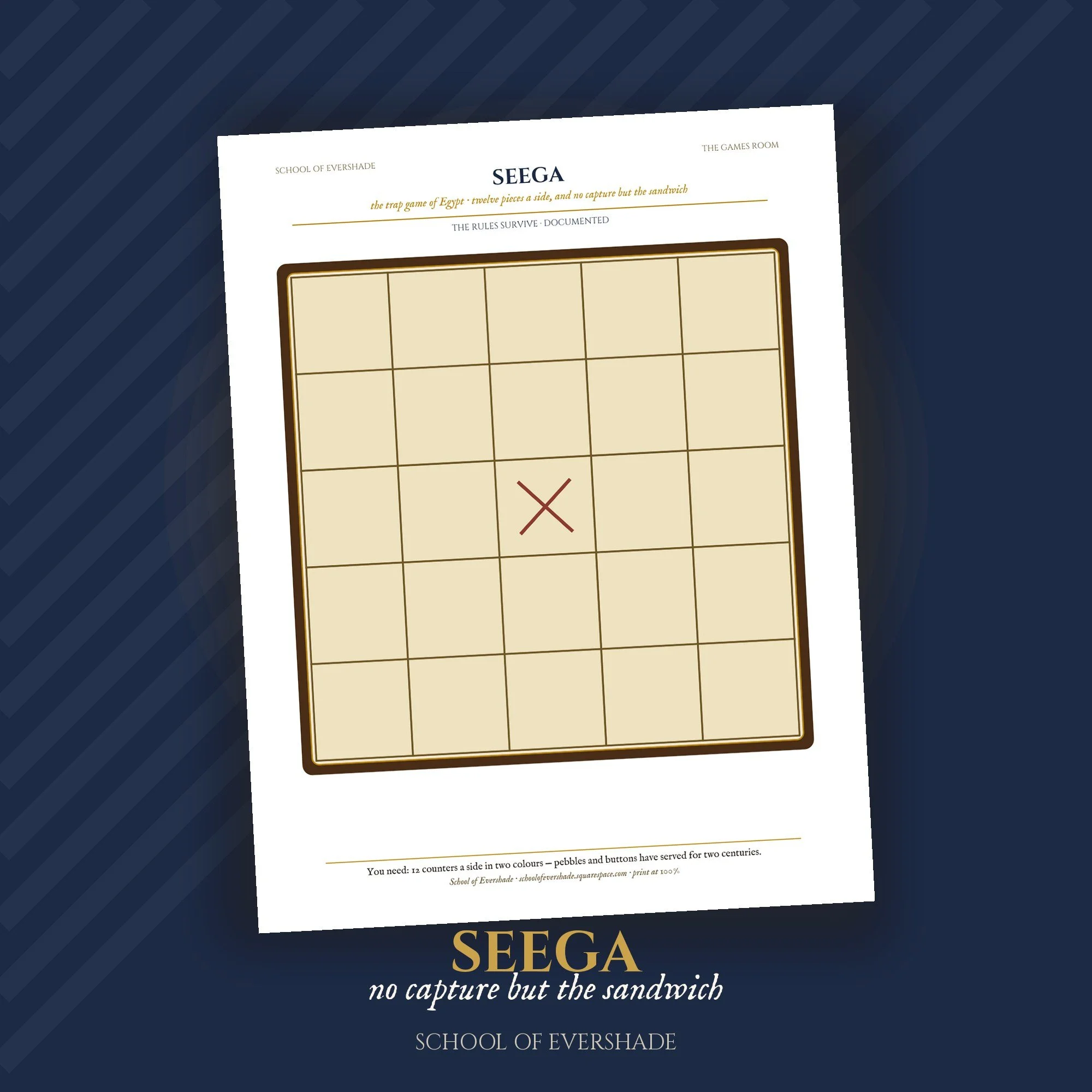
The trap game of Egypt: twelve pieces a side on a board of twenty-five squares, where nothing is ever taken by leaping — a piece falls only when two enemies close on it from opposite sides at once. Seega was first described for the outside world by Edward William Lane, who watched it played in Cairo for his 1836 account of Egyptian life, and it is still played in Egypt today; this pack follows Lane's documented rules exactly — pieces placed two at a time over six turns, straight-line moves never diagonal, captures that may continue while they last, and the crossed centre square as sanctuary. Inside are three pages: a full-page printable board, a history card, and the complete rules on one card — just add twelve counters a side. Play it free online in the Games Room, or print it at home on US Letter paper. From the School of Evershade.
No results match your search. Try removing a few filters.