
SCROLLWORK
Unit II · Lesson 5SOOT & CHARCOAL INK
Professor Quillberry Nocturne
Master Scribe & Illuminator
The Scrollwork Library
Professor's Introduction
To work, scholars, and welcome to Unit II.
Every manuscript you will ever make begins with a single question: what carries the mark? Before the iron gall inks, before the chemist's shelf of modern dyes, there was soot, the black left behind by flame, gathered, ground, and coaxed into liquid. It is among the oldest writing inks known to us, and in the one quality a record-keeper prizes most, endurance, carbon pigment is extraordinarily stable. Properly made and preserved, carbon inks have remained dark and legible for thousands of years. The finished ink's survival also depends on its binder, its page, and the centuries it must weather, but the carbon itself does not surrender.
In this lesson you will make carbon ink yourself: the first ink of our ink-making unit, and the fulfillment of a promise. At the close of our last unit I told you: the ink. In this unit, we make it. Here is the first of them.
We will work with prepared charcoal, already cooled and untreated. The soot-gathering at the lamp-flame belongs to history, not to your desk. Those who wish to go further will find the historian's materials waiting in the Demonstration. Grind carefully. Observe everything.
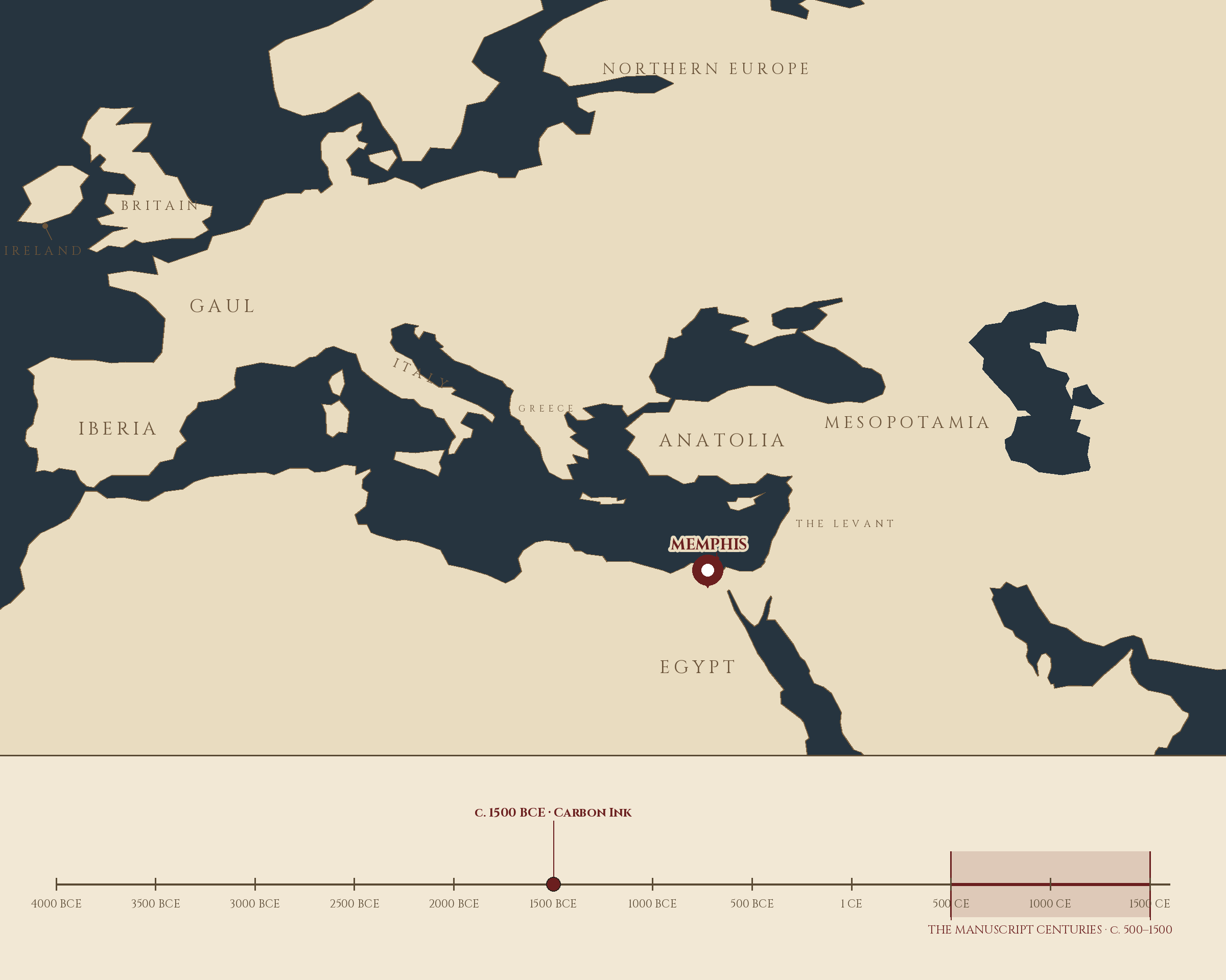
Where and when: Memphis, Egypt, c. 1500 BCE — Carbon Ink. The pin is this lesson. The line beneath the map is our road: every stop a place where writing changed, every lesson a pin.
Lesson Objectives
By the end of this lesson, students should be able to:
- explain how historical soot and charcoal inks were produced
- describe the purpose of gum arabic in carbon ink
- define viscosity and suspension in relation to liquid ink
- mix a functional carbon ink and explain the roles of carbon, water, and binder
- evaluate ink flow and line quality on ordinary paper
- adjust ink thickness to improve writing performance
Reading this lesson: ★ marks the passages to remember. They return on the unit quiz and the class test. Check in questions ask the material back as you go; answer them in your workbook when you meet them.
Working this lesson: Your assignment packet is the first download on this page. Work in it as the lesson moves along, answering each assignment as its subject is taught — or read the lesson through for your notes and take the assignments as homework afterward. Both are proper ways to sit this class. Signposts in the reading tell you where each assignment belongs. Written answers are short answers in your own words; a few honest lines are worth more than a filled page.
Your Assignment Packet
This lesson's assignments live in its packet: the Lexicon Handout (every term, course terms marked ◆), Materials, Guided Practice, the Assignment Manual with its answer key for self-checking, the Reflection Questions, and the Workbook Checklist. Download the packet before you begin and keep it beside you as you read.
Historical Overview: An Ancient Partnership
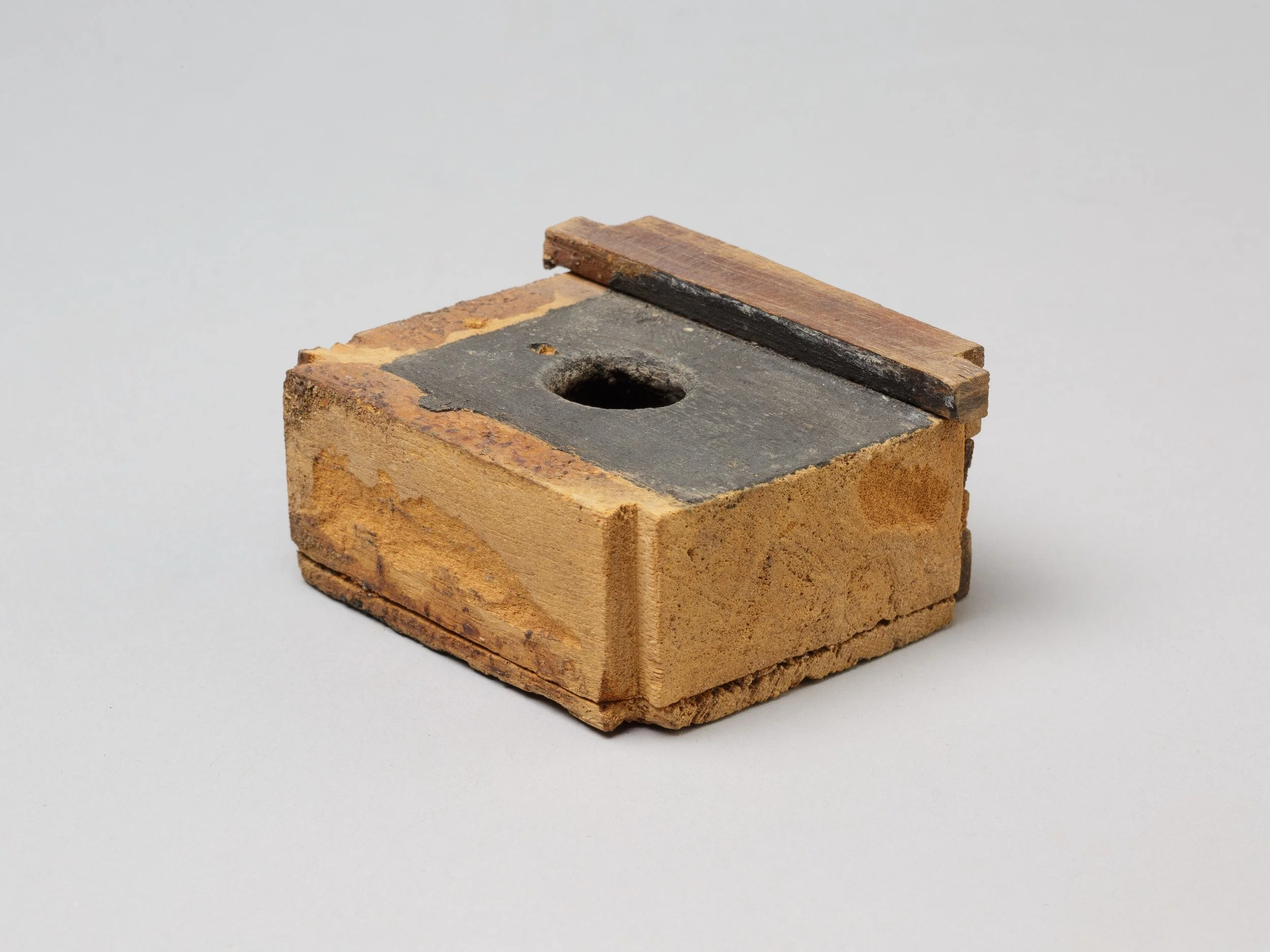
An Egyptian inkwell of wood, about 4,000 years old: the well that held a scribe's carbon black.
Wooden inkwell (Egyptian, ca. 2051–1981 BCE), The Metropolitan Museum of Art, New York (Rogers Fund, 1931). Public domain.
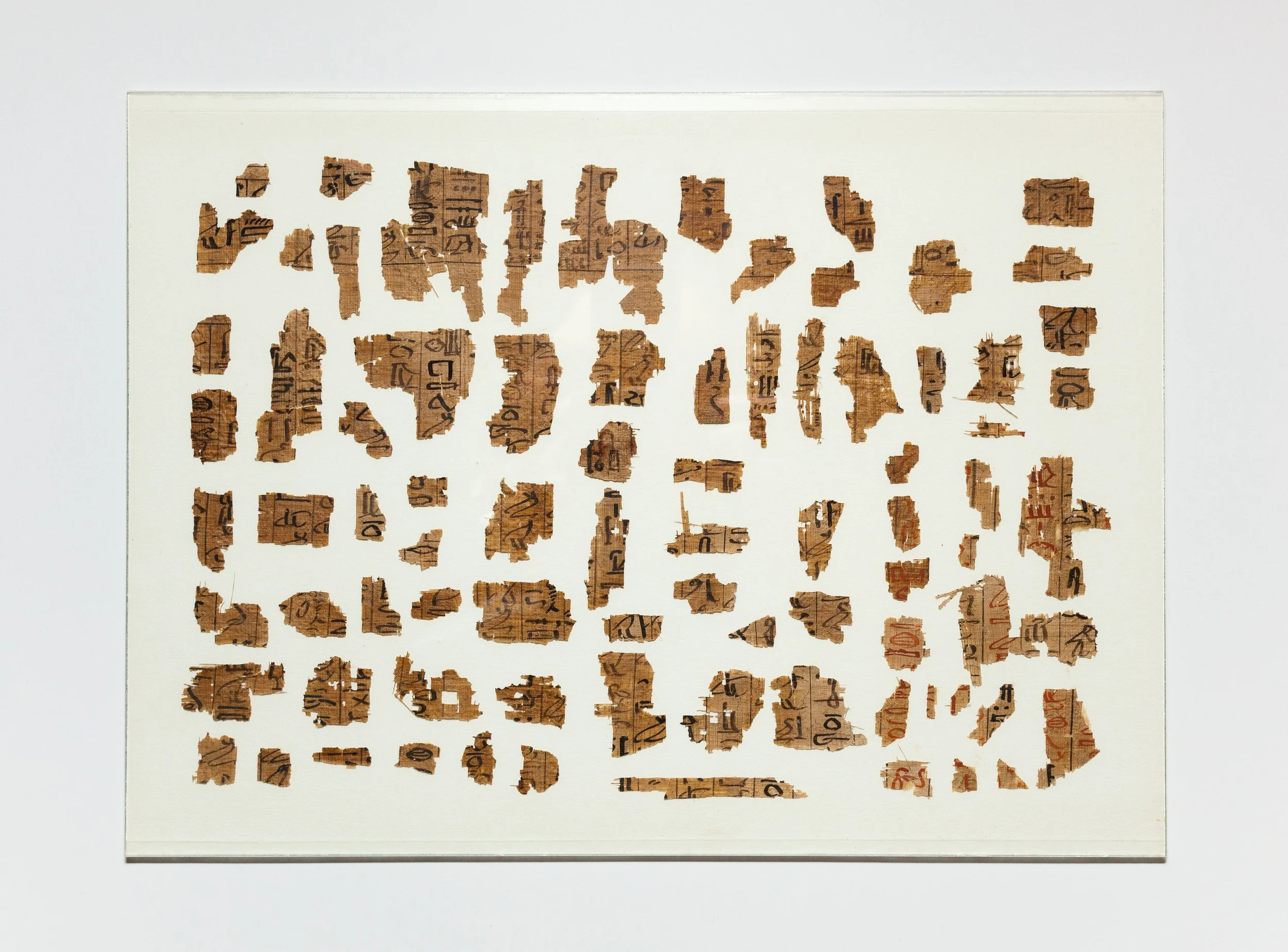
Carbon ink outlasts its page: the writing on these papyrus fragments of the scribe Roy is still black after 3,300 years.
Papyrus fragments from the Book of the Dead of the Scribe Roy (Egyptian, possibly ca. 1314–1300 BCE), The Metropolitan Museum of Art, New York (Rogers Fund, 1921). Public domain.
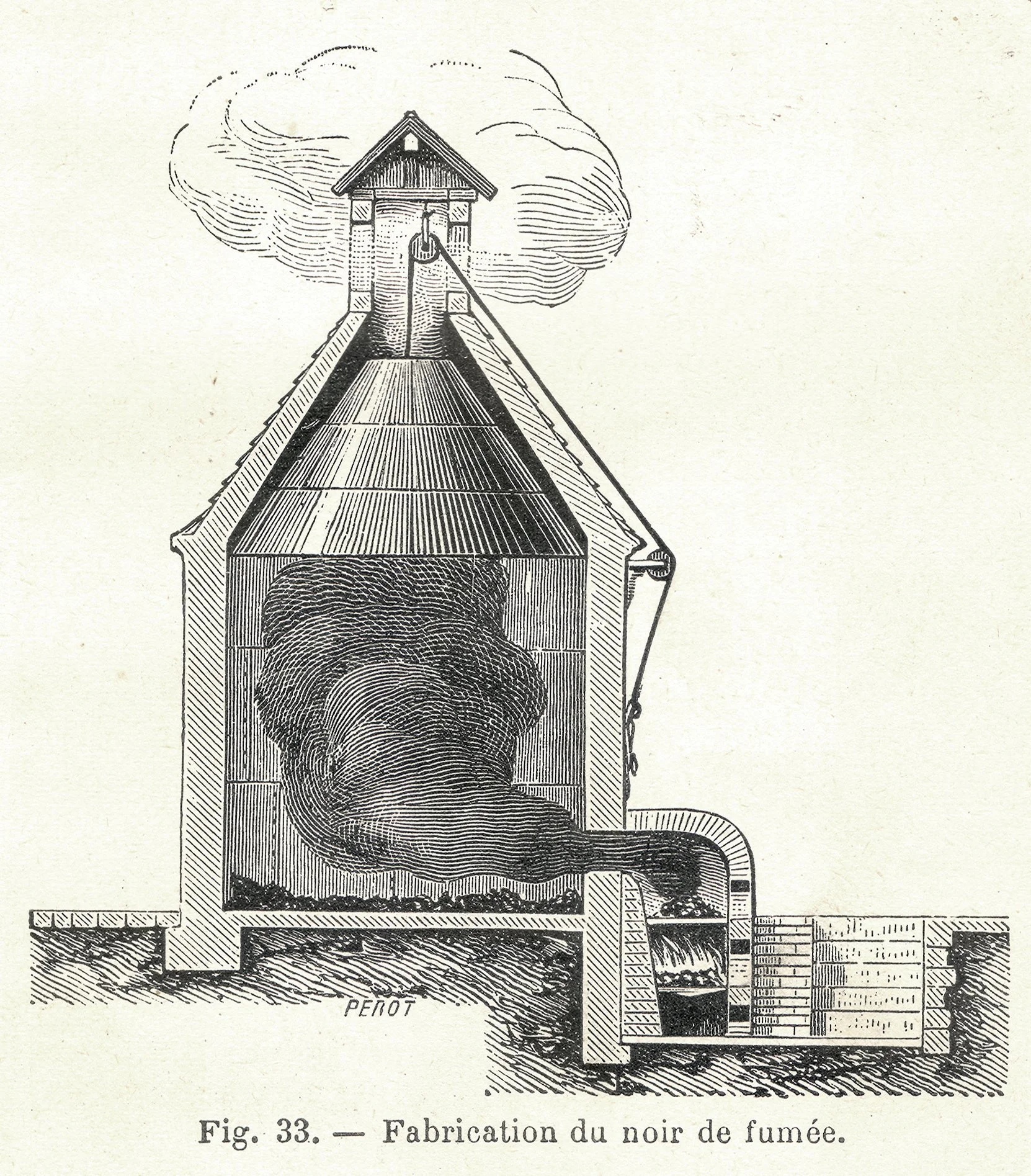
Gathering lampblack: smoke from the furnace fills the chamber, and the soot coats the cone, ready to be scraped down.
Fabrication du noir de fumée (the making of lampblack), 19th-century French engraving. Public domain.
Long before anyone wrote with iron gall ink, long before the recipes of the medieval scriptorium, scribes across the ancient world wrote in black made from fire.
★ In Egypt, scribes kept cakes of carbon ink — soot or charcoal pigment suspended in water with a binder — on wooden palettes beside their reed pens; examples survive from more than three thousand years ago. In China, ink-makers burned pine wood and collected the soot. In Greece and Rome, the black called atramentum was prepared from the soot of resin and pitch fires, and the Roman writer Pliny the Elder, describing its manufacture, notes that writing ink was finished with gum: the binder that made the black stay.
★ The soot itself has a finer name you should know: lampblack, a fine carbon pigment traditionally collected from soot produced by burning oils or other materials. You will meet it in histories of ink; you will not be collecting it. Some materials belong to the story, not to the desk.
★ Carbon endures because carbon is chemically stable. It does not fade the way many dyes fade, and it does not attack the page the way some later inks would, a contrast you will come to appreciate when we meet iron gall ink in our next lesson. But remember the honest version of the claim: the pigment is stable; the finished ink's survival also depends on its binder, its page, its keeping, and its luck. Endurance is a partnership, not a property.
★ The partnership had one difficulty, and it is the whole subject of this lesson. Soot and charcoal do not dissolve in water. Stir carbon into plain water and the particles separate, settle, and, once the water dries, brush away from the page like dust. Ink-makers needed binders to help disperse the carbon and hold it to the writing surface. Different traditions used different materials; among the most important was gum arabic, obtained from acacia trees.
Check in: Carbon ink is a suspension — solid particles held dispersed through a liquid, not dissolved in it — not a solution. In your own words, what is the difference, and what happens to carbon stirred into plain water once the water dries?
❦ In your workbook: record the ancient partnership in your own way — the lands that wrote in carbon, and why their black endured — copy, sketch, or note what matters.
Professor Nocturne
Mark this well, and hold this distinction firmly, for it will serve you through the entire unit.
Many modern fountain-pen inks use dyes: color dissolved into liquid, the way sugar dissolves into tea. Traditional carbon ink works differently. Its blackness comes from solid particles: tiny, separate, stubborn, dispersed through a liquid medium. Left alone, they separate and scatter. The binder does not dissolve them; it persuades them to stay. It helps keep that stubborn company dispersed long enough for your pen to carry the carbon to the page, then helps bind the pigment there as the written line dries.
When your ink misbehaves, do not merely call it a failure. Ask what has fallen out of balance. Is there enough carbon? Has the pigment settled? Is the binder sufficient? Has the mixture become too thick or too thin? What is the paper doing with it? The scribe's craft is the art of asking the ink the right questions.
The Binder's Work
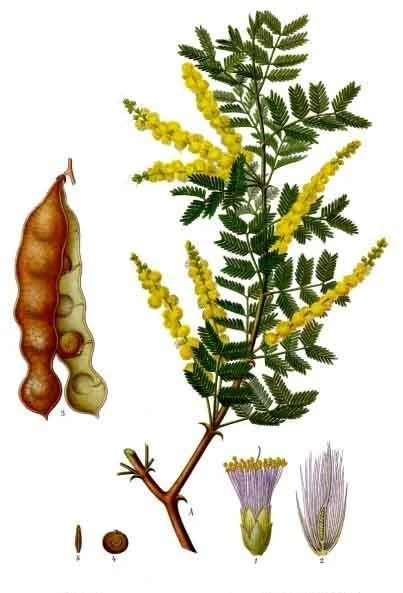
Acacia senegal, the tree whose sap hardens into gum arabic, the binder that holds carbon to the page.
Acacia senegal, from Köhler's Medizinal-Pflanzen (1887–1914). Public domain.
The binder is one of the most important members of the ink-maker's company, and the easiest to overlook, precisely because it does its work invisibly.
Gum arabic, the hardened sap of acacia trees, dissolves in water into a sticky solution. That solution helps disperse the carbon through the liquid. As the written line dries, the gum helps hold the carbon against the writing surface, improving the pigment's adhesion.*
★ The amount of binder decides the ink's character. Too little binder may leave the pigment poorly bound to the page; too much can make the mixture thick and reluctant to flow. The historical ink-maker's skill lay in balancing three companions: carbon, water, and binder. Change one, and you change the writing.
Check in: Two batches misbehave: one rubs off the page as dust, and one will not leave the pen. Which batch wants more binder, and which wants less?
❦ In your workbook: record the binder's work in your own way — what gum arabic does inside the mixture, and what too much or too little of it costs — copy, sketch, or note what matters.
Ink Flow & Viscosity
Scribes learned to read their ink the way a sailor reads water: by watching how it moves.
★ An ink of low viscosity flows fast and spreads eagerly. If the mixture is very thin, particularly on an absorbent paper, it may spread or feather into the fibers, blurring the letter's edges. An ink of high viscosity moves slowly and, if it becomes too thick, may flow poorly from the pen or interfere with a clean written line. The working ink lives between the two: fluid enough to leave the pen cleanly, controlled enough to hold its edge.
The page takes its share of the negotiation. An absorbent paper drinks the liquid quickly; a smooth, hard-sized sheet — one coated with size, the treatment that makes paper resist ink — lets it sit. Historical ink recipes varied considerably across periods, regions, materials, and working traditions. Ink-making was never only a recipe. It was an observational craft, and your own adjustments in this lesson's exercises are the beginning of it.
Check in: The same ink feathers on one sheet and sits crisp on another. What is the page's share in that difference?
❦ In your workbook: record ink flow and viscosity in your own way — the thin ink, the thick ink, and the working ink that lives between them — copy, sketch, or note what matters.
Guided Observation: Carbon & Binder Analysis
Before you grind anything, look closely at your materials and record what you see. The scribe observes before acting.
Study:
- dry charcoal powder: its fineness, its color, how it moves
- a drop of honey beside it: its thickness, how slowly it flows
- a spoonful of water: and how differently the two behave in it
- two small mixtures of your own: honey stirred into a spoonful of water, and a pinch of charcoal powder stirred into another
- ordinary paper: its surface, held to the light
Consider:
- What happens when dry carbon meets plain water? Does it mix, or resist?
- How does the honey change the water's behavior when stirred in?
- Which mixture looks thickest? Which looks most even?
- Why would carbon particles need something to hold them?
- How might thickness change the quality of a written line?
Record your observations carefully. You will compare them against your results.
Demonstration: Formulating Carbon Ink
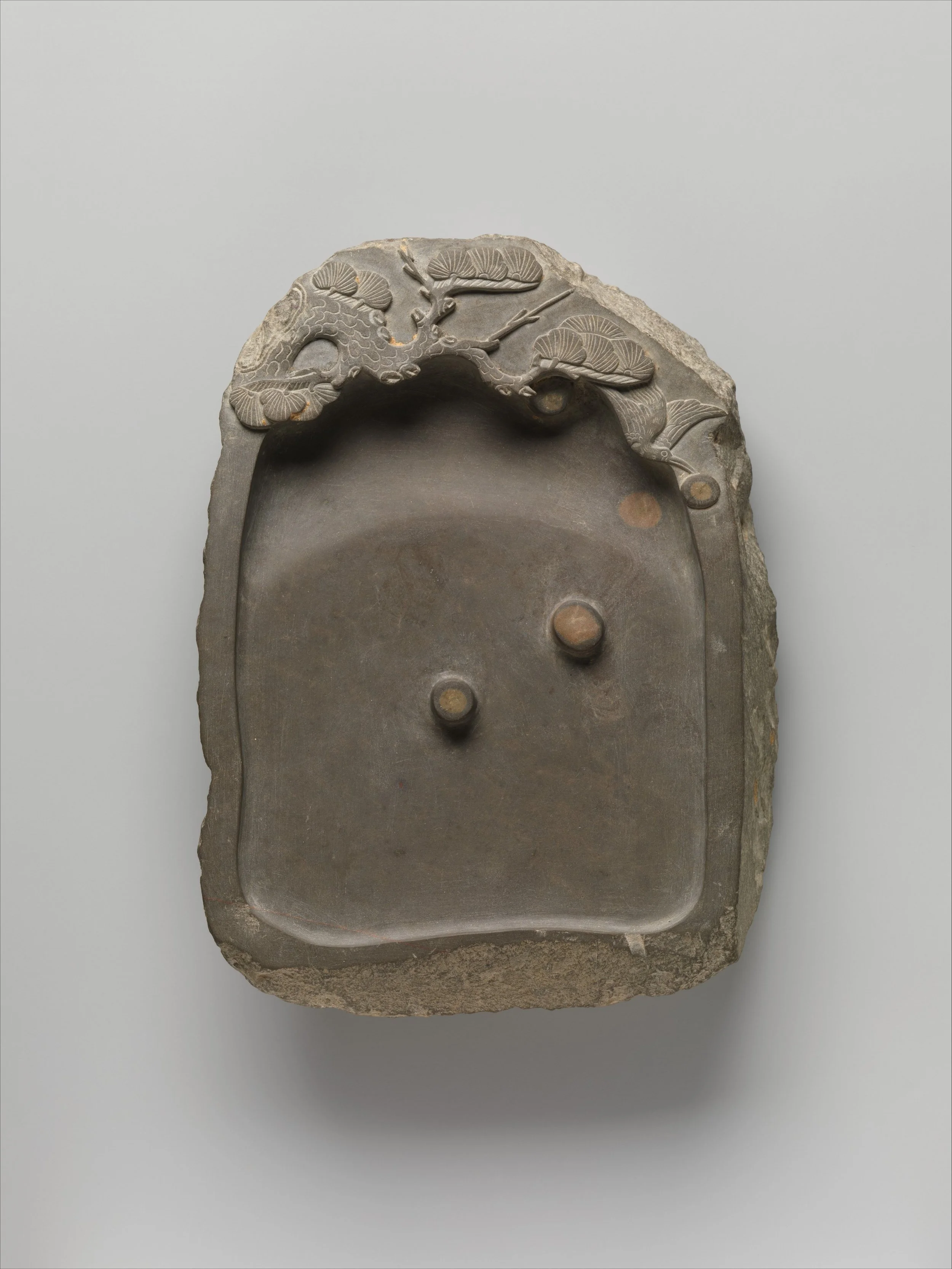
A Chinese inkstone of slate, carved with a pine: the stick of pine-soot ink was ground here, with water, as you grind your charcoal.
Inkstone with Pine Tree and Bird (Chinese, 16th century), slate, The Metropolitan Museum of Art, New York (Purchase, Harrison Cady Bequest, by exchange and Anonymous Gift, 1993). Public domain.
There are two paths through this demonstration. The first uses accessible materials and teaches the behavior of a carbon ink without pretending to reconstruct a particular historical recipe. The second uses gum arabic and additional materials for a closer study of historically documented carbon-ink practice. Choose the path suited to your materials; the observations matter in both.
Suggested Materials — Level One (Household)
- untreated charcoal: artist's drawing charcoal or plain natural lump charcoal, already fully cooled. Never use self-lighting or treated briquettes; they contain chemical accelerants.
- ordinary tap water
- honey (the accessible binder)
- a ceramic plate or glass sheet for grinding
- a smooth stone or the flat base of a jar, for a muller — the blunt tool used to grind pigment into liquid
- a dropper or teaspoon
- a small sealed container or inkwell
- ordinary paper for testing
- a clean cloth or cotton swab, for the Smudge Resistance Test in Exercise II
- a small brush, dip pen, or other suitable testing tool
- optional reed or quill pen, if already available
Safety: work with charcoal that is completely cool. Grind gently and avoid breathing the fine dust. Nothing in this lesson requires flame. Do not burn anything and do not collect soot.
Level One: The Household Ink
In Level One, you will use honey as an accessible household binder and observe how it changes the behavior and adhesion of your carbon mixture. This is an experimental classroom formulation rather than a reconstruction of one specific historical recipe.
Prepare the grinding surface. Place a clean ceramic plate or glass sheet on your workspace.
★ Crush the carbon. Break the charcoal into small pieces and crush them to a fine powder on the plate, using the smooth stone or jar base in slow circular motions. The finer the powder, the smoother the ink.
Add water. With the dropper, add a small amount of tap water to the powder, a teaspoon at a time.
Add the binder. Stir in a very small drop of honey and grind thoroughly. Test the ink before adding more. Observe how the mixture changes as the binder is introduced. Historical carbon inks used several different binders and additives depending on time and place; in Level Two, you will work with gum arabic.
Grind the ink. Continue grinding slowly in circular motions until the mixture is smooth and evenly blended, with no dry pockets or lumps.
Adjust the balance. If the ink feels thick and reluctant, add water a few drops at a time. If the line it makes is faint or watery, work in more carbon. You are negotiating the three companions. Observe and adjust.
Transfer the ink. Move the finished ink into your sealed container or inkwell. Keep the mixture covered during your working session and stir before reuse if the carbon begins to settle.
Level Two: The Historian's Ink
For students who wish to work with a historically documented binder: prepare a second batch replacing the honey with liquid gum arabic solution. Gum appears in Pliny's description of writing black, and modern analysis of material from the Dead Sea Scrolls has produced evidence consistent with gum arabic from acacia as an ink binder. Use distilled water for a controlled preparation, and test the gum-arabic ink on cotton rag paper alongside ordinary paper, comparing how each surface receives it. Record which formula flows better, which line dries darker, and which page holds the line more crisply.
In your packet: Exercise I — The Ink Flow Test ⚒ begins here. Work it now, or mark the place and take it as homework — your choice.
In your packet: Exercise II — The Smudge Resistance Test ⚒ begins here. Work it now, or mark the place and take it as homework — your choice.
Materials
Required (Level One — household items)
- Untreated charcoal: artist's drawing charcoal or plain natural lump charcoal, already fully cooled. Never use self-lighting or treated briquettes; they contain chemical accelerants.
- Ordinary tap water
- Honey: the accessible binder.
- A ceramic plate or glass sheet: for grinding.
- A smooth stone or the flat base of a jar: for a muller.
- A dropper or teaspoon
- A small sealed container or inkwell
- Ordinary paper: for testing.
- A small brush, dip pen, or other suitable testing tool
- A reed or quill pen: optional, if already available.
- A clean cloth or cotton swab: for the Smudge Resistance Test.
Safety: work with charcoal that is completely cool. Grind gently and avoid breathing the fine dust. Nothing in this lesson requires flame. Do not burn anything and do not collect soot.
For the Historian's Path (Level Two)
- Liquid gum arabic solution: the historically documented binder.
- Distilled water: for a controlled preparation.
- Cotton rag paper: to test alongside ordinary paper, comparing how each surface receives the ink.
Reflection Questions
Answer the following questions in your workbook.
- Why does carbon ink remain stable for long periods of time, and what else, besides the carbon, does its survival depend on?
- What role does the binder play within the ink mixture?
- How does viscosity affect writing performance?
- Why would different paper surfaces change the behavior of the same ink?
- What adjustments improved your ink mixture during testing, and what did each adjustment teach you?
Workbook Checklist — Lesson 5
In my workbook I have:
- ☐ explained how historical soot and charcoal inks were produced
- ☐ described the purpose of gum arabic in carbon ink
- ☐ defined viscosity and suspension, and told a suspension from a solution
- ☐ mixed a functional carbon ink and named the roles of carbon, water, and binder
- ☐ tested my ink's flow and line quality on ordinary paper
- ☐ adjusted my ink's thickness and recorded what each adjustment did
☐ Lesson completed Date: ___ Signature: ___
Professor's Review
Review with me, then, what your hands now know.
Carbon itself is remarkably stable. Properly made and preserved, carbon inks can remain dark and legible for extraordinary lengths of time. The binder is the peacemaker: without it the particles scatter; with too much the ink sulks and will not flow. Viscosity is the scribe's daily negotiation between ink, quill, and paper.
You may be tempted to think of carbon ink as the primitive ancestor, the rough draft before the clever iron gall inks arrive in our next lesson. Resist that temptation. Carbon ink was never simply replaced. Carbon-based inks endured alongside later formulations and remain in use today, because for the work of enduring, few materials have served better. New tools do not always defeat old ones; sometimes they merely join them.
In our next lesson, we turn to the ink that bites: oak gall ink: dark and permanent, and hungry enough to eat through the very page it honors. You will understand, then, why the scribe's choice of ink was never only about blackness.
PROFESSOR QUILLBERRY NOCTURNE
Scrollwork Library
Master Scribe & Illuminator
Cross-Class Connections
Runes · Lesson 2 — The Unilateral Sound-Signs (Egyptian ink, written with reed brushes on papyrus)
Webblethorn's Egyptian scribes wrote with this lesson's ink long before Rome had a word for it: cakes of black and red pigment on a wooden palette, the palette itself so standard a possession that the hieroglyph for "scribe" shows it. Her lesson sends its scholars here to compare ink-making across three thousand years. Begin at the palette; the cakes on it are where our story starts.
Runes · Lesson 2 — The Unilateral Sound-Signs
My Egyptian scribes wrote with this lesson's ink long before Rome had a word for it: cakes of black and red pigment on a wooden palette, so standard a possession that the hieroglyph for 'scribe' shows the palette itself. I send my scholars to Professor Nocturne to compare ink-making across three thousand years. Come and begin at the palette.
PROFESSOR THISTLELOOM WEBBLETHORN
Runes & Ancient Writing
Potions · Unit VI, Lesson 48 — Midnight Carbon & Oak Gall Inks
Muddlenook's laboratory studies this same ink from the chemist's side of the bench: carbon resting upon the page, iron gall biting into its fibers, and the binder's ratio judged by eye and by brush. His lesson names this one outright — the scribe's first black, and gum arabic the writer's binder. Make the ink here; go there to learn exactly what you made.
Potions · Unit VI, Lesson 51 — Wax Seals & Colored Matrix Blends
The lampblack of this lesson's history, the soot of burned oils that belongs to the story and not to your desk, is Muddlenook's safe black for sealing wax, ground into the colored matrix that will one day stamp your letters. The same soot serves two crafts: it blacks the ink in this room and the seal in his.
Potions · Unit VI, Lesson 48 — Midnight Carbon & Oak Gall Inks
I study this same ink from the chemist's side of the bench: carbon resting upon the page, iron gall biting into its fibers, the binder's ratio judged by eye and by brush. My lesson names his outright: the scribe's first black, and gum arabic the writer's binder. Make the ink in his library; then come to my laboratory and learn exactly what you made.
Potions · Unit VI, Lesson 51 — Wax Seals & Colored Matrix Blends
The lampblack of this lesson's history, the soot of burned oils, is my safe black for sealing wax, ground into the colored matrix that will one day stamp your letters. The same soot serves two crafts. Come and see it blacken a seal in my laboratory, as it blackens ink in his library.
PROFESSOR CRIMBLEBREW MUDDLENOOK
Potions Laboratory • Master Apothecary • Head of House Meridies

Creative Arts · Unit IV, Lesson 15 — Pigments, Paints & Color Charts
In the Workshop, the muller works again. Timberclank's scholars grind pigment into this same gum arabic and call the result paint — watercolor and gouache from the binder that carries your ink — working the stone in slow figure-eights until every grain has taken its coat. Same binder, same grinding, different black.
Creative Arts · Unit IV, Lesson 15 — Pigments, Paints & Color Charts
At my color bench the muller works again: my scholars grind pigment into the same gum arabic that carries Professor Nocturne's ink, and call the result paint. Slow figure-eights on the stone, until every grain has taken its coat. Come and grind; same binder, same patience, different black.
PROFESSOR COGBRANCH TIMBERCLANK
Creative Arts Workshop
Further Reading & Sources
*Pliny the Elder. Natural History, Book 35, Chapter 25 ("Atramentum").* Perseus: Pliny on Atramentum Soot from resin and pitch fires prepared as black pigment; the most esteemed black from torch-pine wood; writing ink finished with gum: the ancient description of the carbon-and-binder partnership taught in this lesson.
The Metropolitan Museum of Art. "Scribal Palette," ca. 1580–1458 BCE. Met: Scribal Palette An Egyptian scribal palette of wood, ivory, and ink, dating to ca. 1580–1458 BCE. See the twin depressions for black and red ink cakes, the form described in this lesson.
Chemical & Engineering News (American Chemical Society). "Noninvasive analysis reveals gum arabic in Dead Sea Scrolls ink." C&EN: Gum arabic in Dead Sea Scrolls ink Modern noninvasive analysis found molecular evidence pointing to gum arabic from acacia as a binder in carbon-based Dead Sea Scrolls ink.
Browse the Scrollwork shelf in the school Library for readable editions of these works.
Submit your work for this lesson using the form below.
CONTINUE IN THE SCROLLWORK LIBRARY
← Previous · Lesson 4: Inkwells, Sand, & Scribal Tools Next · Lesson 6: Oak Gall Ink →
Unit II — Ink & Pigment Scrollwork Library — All 26 Lessons
The rest of Unit II: Lesson 6 · Oak Gall Ink · Lesson 7 · Red Inks & Rubrication · Lesson 8 · Ink Flow & Preservation