
THE BESTIARY
Unit I · Lesson 5The Elementals of Paracelsus
Professor Sable Rookmere
Bestiary Keeper
The Bestiary Hall • School of Evershade
Professor's Introduction
Every other being in this unit arrived the slow way — tale by tale, century by century, nobody in charge. This lesson's beings arrived all at once, between the covers of one book, by one named author, arranged in a table. That makes the Elementals the tidiest file on the shelf, and in some ways the strangest: a system built like a natural history of peoples nobody could visit.
Your author is a physician — a loud, brilliant, quarrelsome one, who believed the world was readable and set out to read all of it. Read him the keeper's way: note what he claims, note what he built it from, and note, above all, the dates. This lesson's record has a trap in it, and the trap is the year on the title page. I keep the author's portrait where I can see it while I work on this file. It helps to have a face to argue with.
The Bestiary
Bestiary Keeper
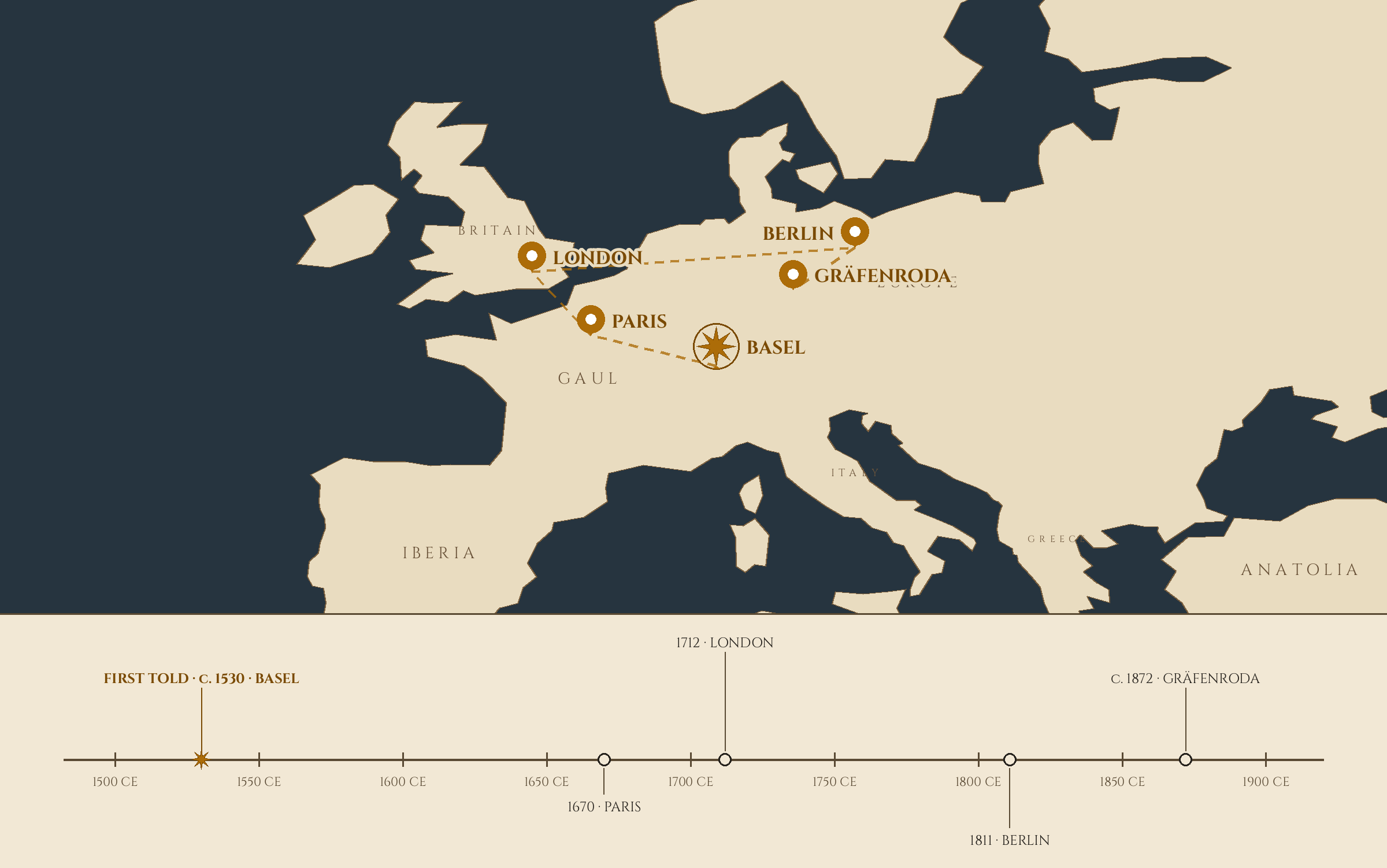
Where this lesson travels: Basel, where Paracelsus wrote the Liber de Nymphis in the 1530s — the place of writing is approximate, and the book was first printed in 1566 — and gnome, undine, sylph and salamander got their names; Paris, where the abbé de Montfaucon de Villars published Comte de Gabalis in 1670 and the elementals became a European fashion; London, where Alexander Pope's The Rape of the Lock (1712) gave the sylphs to English poetry; Berlin, where Friedrich de la Motte Fouqué published Undine in 1811; and Gräfenroda, where the Griebel workshop began mass-producing terracotta garden gnomes about 1872. The starred pin is the first record; the dashed line is the telling, traveling.
Lesson Objectives
By the end of this lesson, you will be able to:
- Describe the four elemental peoples in their order — gnomes, undines, sylphs, salamanders — and read their plates, from a medieval salamander to an 1832 sylph.
- Name Paracelsus's book of the elemental peoples, and give its record honestly — written before his death in 1541, printed in 1566.
- Answer the origin question head-on: who invented the elementals, what he coined, and what he merely collected.
- Tell how the telling grew — through a fashionable French dialogue, an English mock-epic, and a German novella.
- Say, in one honest line, why this lesson has no sightings to report.
- Keep two salamanders apart: the real amphibian of the old natural histories, and the fire people of the system — and give the real animal's present standing.
- Say what the system was built from, and what became of it in the modern world.
Your Assignment Packet
This lesson's work lives in its packet: the Lexicon Handout (every term, the core terms marked with the keeper's diamond ◆), Materials, Guided Practice, the Assignment Manual written out whole, the Scholar's Entry Page, the Reflection Questions, the Workbook Checklist, and the Keeper's Notes, for whoever teaches the lesson. Download the packet before you begin and keep it beside you as you read. The packet's assignment is Rookmere's own word for the work: Entry No. 5 — The Four Peoples of the Elements (written, with a table) ✎. The Unit I Quiz is not printed in the packet; it waits at the end of the unit, with Lesson 6.
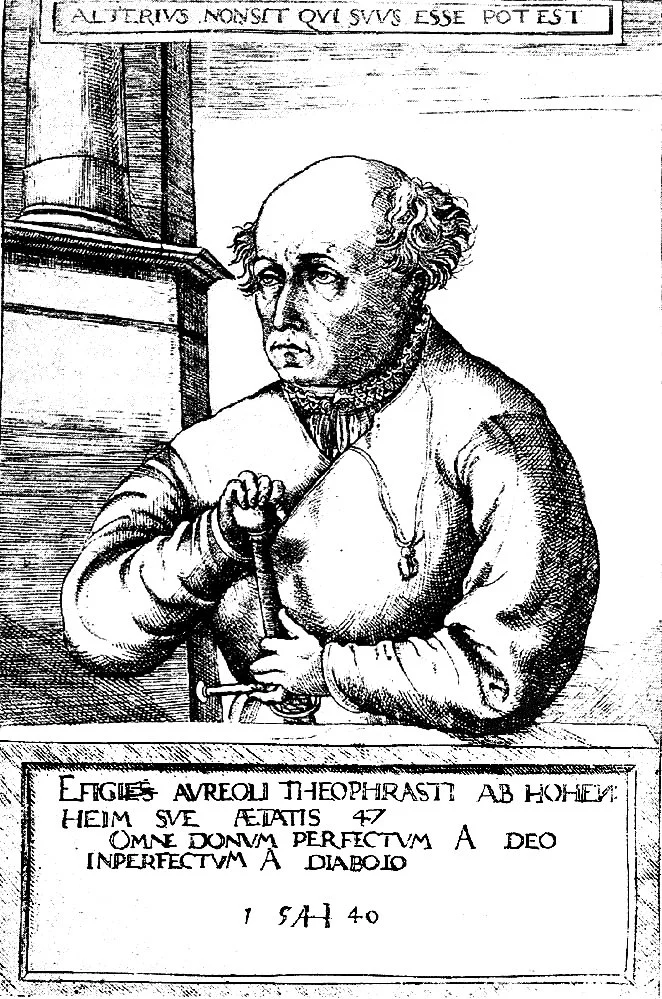
Paracelsus at forty-seven — Augustin Hirschvogel's engraving of 1540, the lifetime portrait of the physician who named the four peoples of the elements. Public domain, via Wikimedia Commons.
The Creature
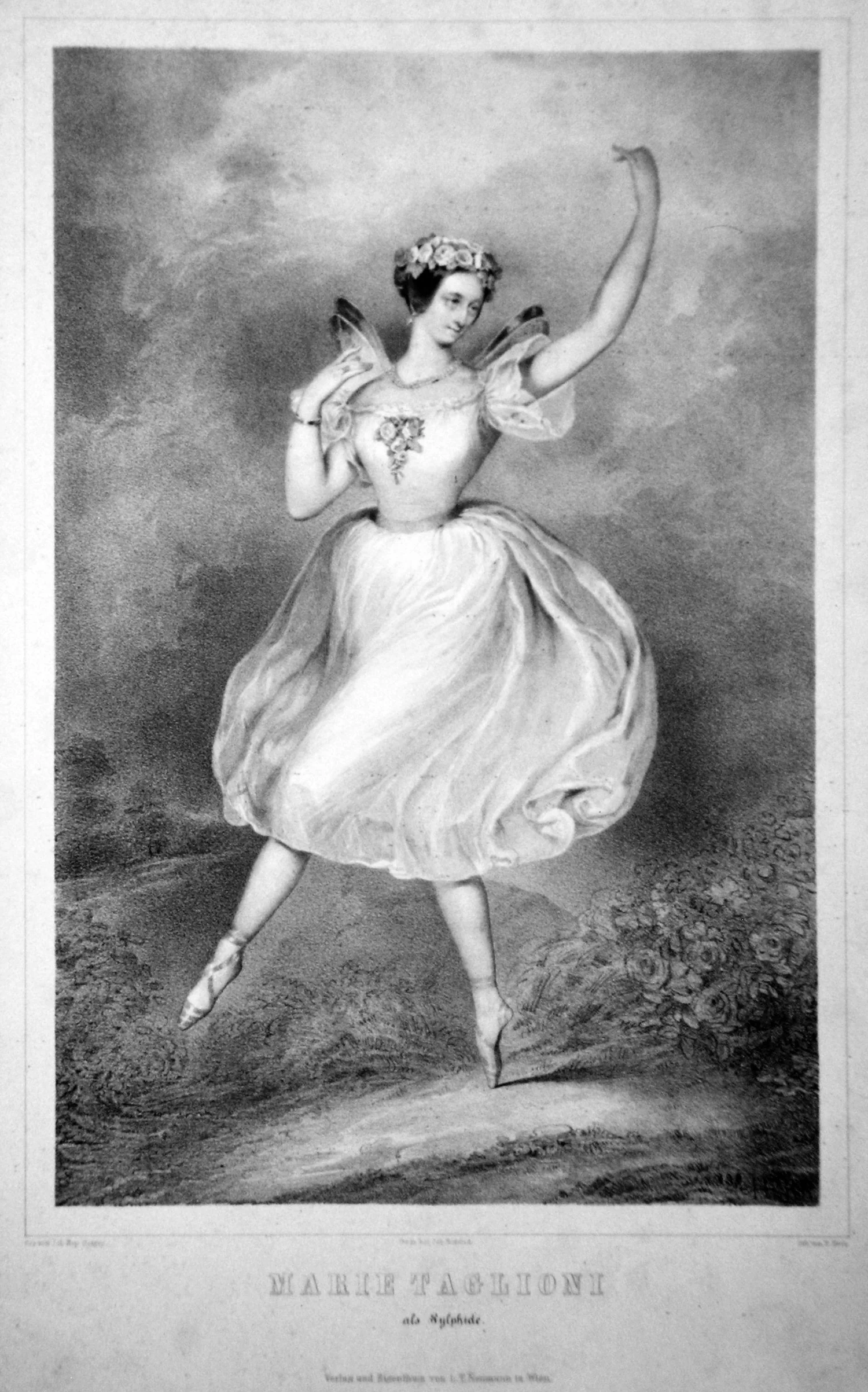
Marie Taglioni as the Sylph in La Sylphide (Paris, 1832), lithograph by Faustin Herr — a dancer in a long white dress with small wings at her back: the picture that fixed the sylph for the next two centuries. Public domain, via Wikimedia Commons.
The elementals are four peoples, one for each of the four elements — earth, water, air, and fire, the fourfold scheme that runs back to the Greek philosopher Empedocles. Human beings live in air as their element. But each of the other elements, the system holds, has its own people, living in it as naturally as we live in ours: peoples with bodies, houses, governments, food, and families.
The people of the earth are the gnomes: small, sturdy nations living inside the earth, guardians of its ores and buried treasure. The people of the water are the undines: water people in human form, living under the waters in an ordered world of their own. The people of the air are the sylphs: tall, fine, long-lived, the nearest of the four to human beings in form and temper. The people of the fire are the salamanders: long, lean beings living in flame, the least approachable of the four and the least described. All four are mortal, embodied, and governed — nations, in the system's own terms, lacking only souls.
Their pictures are as uneven as their natures. This lesson hangs four plates, and they are four different kinds of record. The hero is not a creature at all: it is the author — Augustin Hirschvogel's engraving of Paracelsus at forty-seven, made in 1540, a face drawn from life by a man who could walk around his sitter and check his work. No other file in this unit begins with a face like that. The second plate is the oldest creature-picture here: the salamander of the Rochester Bestiary, painted about 1230, sitting in the fire its kind was said to master — three centuries before the system existed, because the salamander was a bestiary animal long before it was a fire person. The third is Rose Pitman's illustration for Undine (1897): one water spirit with one face, standing in for a whole nation. And the fourth is the newest: a lithograph of 1832 showing Marie Taglioni as the Sylph in the ballet La Sylphide — a dancer in a long white dress, small wings at her back, lit against a dark wood so she seems half-transparent and about to leave the ground. That is still the shape the word sylph carries into a room. Of the four peoples, only the salamander has a picture older than the book that names the system — because only the salamander was ever a real animal in the records. The gnomes' modern picture, the garden gnome, survives as objects in gardens rather than as a plate this lesson can lawfully hang; the Still With Us section tells that story in words.
First Told
The author first. Paracelsus was the working name of Theophrastus von Hohenheim (1493/94–1541), a Swiss physician, alchemist, and medical reformer who spent his life traveling, practicing, arguing, and writing at a pace that outran the printers.
Late in his life, Paracelsus wrote the treatise this lesson is built on: the Liber de Nymphis, sylphis, pygmaeis et salamandris et de caeteris spiritibus — in English, A Book on Nymphs, Sylphs, Pygmies, and Salamanders, and on the Other Spirits. Its claim is simple to state and enormous to file. The world, Paracelsus held, is built of the four elements. Each element, he argued, has its own people, as real, in his account, as the nations on any map, and as separate.
Here is the trap the introduction warned about, and it is worth stepping around it carefully, because this class's whole discipline is in it. Paracelsus died in 1541. The book was first printed in 1566 — a quarter of a century later, by other hands, from his manuscripts. It appeared again in 1567 inside a collection of his philosophical works. So the first record of the Elementals has two dates, and a keeper keeps both: written before 1541 by a named man whose lifetime we can date to the year; published 1566, which is when the record begins to travel. The starred pin on this lesson's map stands at Basel, about 1530, where the treatise is thought to have been written — thought, not proven, and the map's notes say so. A first record with an approximation in it is not a failed record. It is an honest one.
So who invented the elementals? Here, at last, the origin question has a name for an answer — with seams a keeper should see. Paracelsus invented the system: the table of four peoples in four elements. He coined the word gnome, apparently built from a Greek word for an earth-dweller, and undine, from unda, Latin for a wave — the most successful name in the book — and adapted sylph from his Latin sylvestres, the wild or forest people. He did not invent the beings themselves, as the Tales will show: earth-men, water-women, air people, and the fire-lizard were all older than his book. And one more honesty: Paracelsus never called his four peoples elementals. That word — the word this whole lesson is filed under — was fitted to the system later, by the writers who took it up. The system is his. The label is theirs. Records are full of such joinery, and a keeper's job is to see the seams.
The Tales
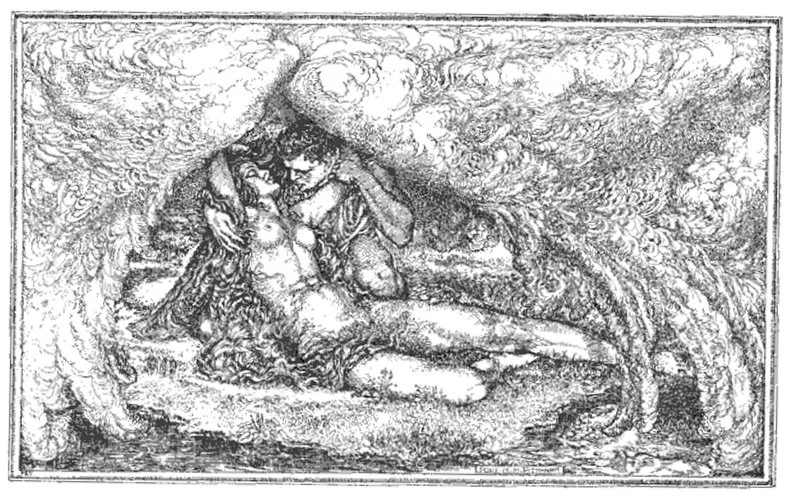
Rose M. M. Pitman's illustration for Fouqué's Undine (1897 edition) — the water spirit's defining tale, still in print eighty-six years after it was written. Public domain, via Wikimedia Commons.
Paracelsus arranges his peoples by their element, and gives most of them more than one name — as if he were recording nations known under several names in several places, which is what he took himself to be doing.
Earth: the gnomes. The people of the earth he calls pygmies — and gnomes. They are the mountain people: small, sturdy nations living inside the earth as we live on it, moving through solid ground, in his account, as we move through air. They are the guardians and knowers of what the earth holds — ores, veins, buried treasure — and the miners of Europe had told of such earth-men long before Paracelsus gave them a Greek name and a place in a table. The knockers of the last lesson are their Cornish cousins in all but filing. Hold that thought: the system did not invent the peoples. It collected them.
Water: the undines. The people of the water he calls nymphs — the old Greek word for the spirits of springs and rivers — and undines. The undines stand at the center of the doctrine that made the system famous: that an elemental being, mortal and soulless by nature, could gain a soul — could become, in the terms of the age, fully a person — through marriage with a human being. In 1811, in Berlin, Friedrich de la Motte Fouqué built that doctrine into a novella: Undine, the story of a water spirit who marries a knight, gains a soul, and is destroyed by the world's terms for keeping one. It is the undines' defining tale, translated everywhere, staged as opera and ballet, and illustrated for two centuries — the third plate in this lesson is Rose Pitman's illustration from an edition of 1897, eighty-six years after the tale was written and still in print. Of the four peoples, the undines got the literature. Pitman's plate shows what the novella did to them: where Paracelsus filed a whole nation of water people, Pitman draws one figure with one face, standing in for all of them. Hold the two side by side when you come to study the plates.
Air: the sylphs. The people of the air he calls sylphs. Of the four, his sylphs stand closest to human beings in form and temper: tall, fine, long-lived nations of the air, nearer to us than the others and more concerned with us. It was the sylphs whom Gabalis made fashionable and Pope made immortal in miniature; and it was the sylphs who took the stage — in 1832, in Paris, the ballet La Sylphide made the air-spirit a ballerina in a white dress, an image so strong that "sylph" in ordinary speech still means a slender, graceful figure. The other three peoples kept their strangeness. The sylphs were made beautiful, which is a different fate, and in its way a stranger one. The ballet fixed the picture for good — the 1832 lithograph in this lesson, Taglioni herself in the role, is the fixing caught in the act.
Fire: the salamanders. The people of the fire he calls salamanders, and also vulcans, after Vulcan, the Roman god of the forge. They are the fire people: long, lean beings living in flame as the others live in their elements, the least approachable of the four and the least described. But the salamander carries a double file, and the What It Actually Is section belongs to it — because alone among the four peoples, the salamander was not Paracelsus's collection from folklore. It was already a citizen of the natural histories, with a record thirteen centuries older than the system that adopted it.
How the telling grew, after the book. For a century after its printing, the treatise traveled the way learned books did — in Latin, among physicians, alchemists, and theologians. Then, in 1670, it changed its clothes. In Paris, the abbé Nicolas de Montfaucon de Villars published Comte de Gabalis, a set of dialogues in which a German count expounds the elemental peoples to a fascinated narrator: the sylphs of the air, the undines of the waters, the gnomes of the earth, the salamanders of the fire — and the doctrine, drawn from Paracelsus, that these beings, having no immortal souls of their own, might gain one by union with a human being. Comte de Gabalis was witty, elegant, possibly half-ironic, and a sensation. It carried the four peoples out of the alchemical study and into the drawing rooms of Europe, where they stayed, as fashion, for two hundred years.
English poetry took them up almost at once. Alexander Pope built the machinery of The Rape of the Lock — his mock-epic of a stolen lock of hair, first published in 1712 and expanded in 1714 — out of Gabalis's sylphs: airy guardians assigned to watch over his heroine, exquisitely serious about teacups and card games. Pope's sylphs are jokes with a system inside them, and every reader of the poem absorbed the system with the joke: air has its people, they are near us, they concern themselves with us. That is how a physician's Latin treatise became common furniture of the imagination. The nineteenth century then gave the system its story — Fouqué's Undine, above. The occult writers of that century also took Paracelsus's table up whole, filing the four peoples into their own systems of correspondences — a second life, in earnest, for a scheme its first popularizer may have meant as a game. Whether the carriers' intentions should count for anything in the file — whether a system spread half as a joke should weigh less than one spread in earnest — is a fair keeper's question. The file's own answer is plainer: what the record records is the carrying.
KEEPER'S CHECK-IN
Name the four peoples with their elements and the names Paracelsus gives them, and what could an undine gain through marriage with a human being?
Spotted
This section, in this lesson, is one honest line long: the elementals have no sightings. No parish, mine, newspaper, or court ever filed a report of meeting a sylph or an undine, the way Kirk's parishioners reported the fairies or Cornish miners reported the knockers. The only "witness" is the author himself, presenting his peoples as fact inside his own book, and the count in Comte de Gabalis, claiming acquaintance with the peoples inside a dialogue that may be half a game. Neither is a sighting report, and a keeper does not promote them into one. A beat with no honest material says so, and moves on — the empty section is itself information about what kind of being this is: one that was written, not met.
KEEPER'S CHECK-IN
Why does this lesson's Spotted section hold no sightings, and why does a keeper refuse to promote Paracelsus's own book or the Comte de Gabalis into a sighting report?
What It Actually Is
✦ On the class test
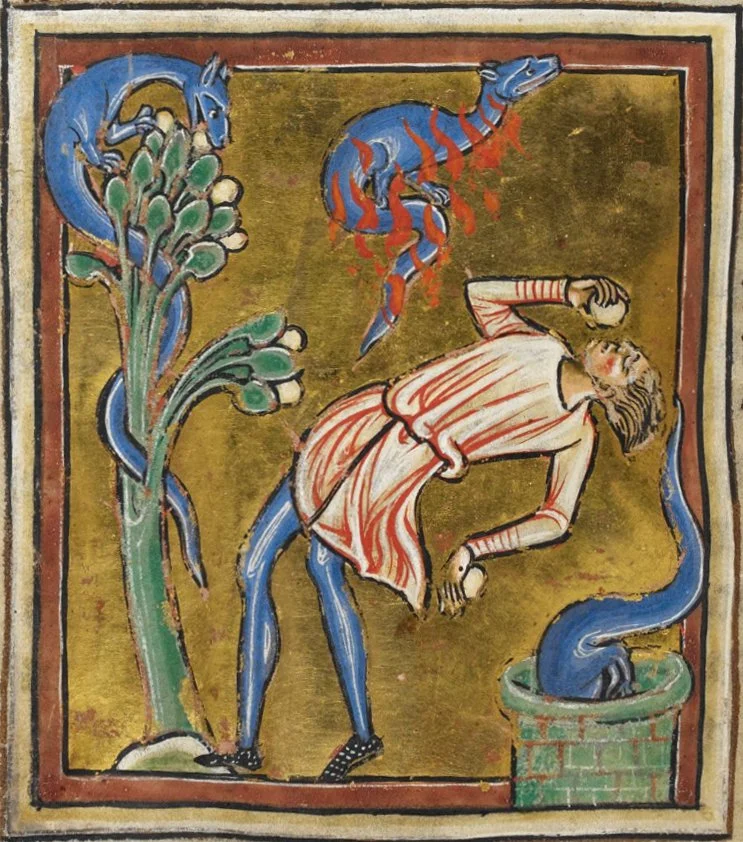
The salamander of the Rochester Bestiary (c. 1230): Pliny's starred, lizard-shaped creature, with the flames the bestiary tradition added to it. Public domain, via Wikimedia Commons.
Begin with the animal, and keep it separate, as the class orders. A salamander is also a real amphibian — kin to the newts, soft-skinned, cold-blooded, living in damp places. Pliny the Elder described it in his Natural History (77 CE), and his description is a keeper's delight, because the true and the wonderful stand in it side by side. The salamander, Pliny writes, is shaped like a lizard and starred all over — which is accurate: the fire salamander of Europe carries bold yellow markings on black, and the Alpine salamander is starred with gold. It comes out in heavy rain and vanishes in fine weather — also accurate: salamanders are creatures of wet nights. And it is so intensely cold, Pliny reports, that it quenches fire by its touch, as ice does. That part is the belief — with a small real root inside it, for a frightened salamander exudes a milky fluid from its skin, and a damp, fluid-covered animal thrown on a fire will hiss and briefly resist the flame. Pliny himself, elsewhere in the same work, doubted the claim, remarking that if it were true it would be easy to show. The bestiaries took the animal in, flames and all: the salamander in the Rochester Bestiary, painted about 1230 — this lesson's second plate — sits in the fire its kind was said to master. When Paracelsus needed a people for the fire, he did not have to invent one. The fire-lizard was already there, thirteen centuries deep in the books, and he promoted it: the animal of the natural histories became the nation of the fire.
The animal itself, with measurements, because this class measures what it can. The fire salamander, Salamandra salamandra, is a stocky amphibian about 15 to 25 centimeters long — roughly 6 to 10 inches, tail included — black or dark brown under bold yellow spots or stripes that no two individuals wear in quite the same pattern. Its skin stays moist and glandular, and the glands behind its eyes can secrete a milky, bitter fluid that discourages anything thinking of eating it; that damp secretion is the small real thing inside the old fire stories. It hunts on wet nights, taking worms, slugs, and other soft prey, and it does not lay its eggs in a pond like a frog: the female gives birth to living larvae and places them in cool, clean streams. The Alpine salamander, Salamandra atra, is smaller — about 9 to 15 centimeters — and carries its young further still, giving birth on land to one or two fully formed young. Both are slow, long-lived animals. A fire salamander can live upward of twenty years in the wild, and far longer in care.
So what was the system itself built from? Three things, and a keeper should be able to name all three. First, the four elements — a scheme of Greek natural philosophy, from Empedocles onward, in which everything in the world is some mixture of earth, water, air, and fire. Paracelsus did not invent the elements; he inherited them, as every physician of his age did. Second, the beings themselves, who are older than the book: earth-men in the mines, water-women in the springs and rivers, wild people of the air, the fire-lizard in the natural histories — folklore and old authority, gathered from the same Europe that produced this unit's other lessons. Third, Paracelsus's own turn of mind: he was a physician who believed nature was a book of signs to be read by experience, and he filed the elemental peoples the way he filed plants and minerals — as part of the furniture of a real world, mortal, embodied, and governed, lacking only souls. The system is his. Nearly everything in it is older. That is not a scandal; it is how systems are made, and the keeper's marks exist precisely to show the join: the table is F, dated and signed; the nations in it are T, tales told — in this case, told by the author of the table himself.
Still With Us
The Elementals never had a Cottingley — no photograph, no hoax, no scandal to fix them in the newspapers. Their modern face is quieter: they became the standard cast of the invisible world.
The four names are now simply available, the way the names of the winds are available. Sylphs preside over air in a century of fantasy novels and games; undines over water; gnomes over earth; salamanders over fire — in role-playing games the four peoples survive as the elementals proper, summoned beings of pure element, Paracelsus's nations thinned into their elements at last. The word he never used became the name of the whole shelf.
The undines keep their story. Fouqué's Undine is still read, still illustrated, still staged; readers have long heard its echo in Hans Christian Andersen's little mermaid, who longs for an immortal soul exactly as Fouqué's water spirit did — read it as an echo, not a borrowing, but hear how far the doctrine traveled: from a physician's Latin, through a French abbé's drawing room, into the nursery of the world.
And the gnomes took the garden. German ceramic-makers were producing small terracotta earth-men by the 1840s; in 1847 Sir Charles Isham brought twenty-one of them from Germany to his rockery at Lamport Hall in Northamptonshire — one of them, known as Lampy, survives there still. In the 1870s the workshops of Gräfenroda in Thuringia — the Griebels' among them — began turning the figures out in quantity, and the gnome completed the longest journey in this unit: from the deep earth of Paracelsus's table, past the knockers' mines, to a painted figure with a red cap and a wheelbarrow, standing guard over the flowerbeds of two continents. The survivor at Lamport — Lampy — wears the uniform the workshops settled on: a tall red pointed cap and a white beard, on a figure small enough to stand among the flowerpots he now guards. The last pin on this lesson's map is Gräfenroda, about 1872.
The real salamander, meanwhile, has acquired a modern record of its own, and it is not a comfortable one. In 2023 the IUCN Red List moved the fire salamander from Least Concern to Vulnerable: a chytrid fungus, Batrachochytrium salamandrivorans — Bsal, identified in 2013 after fire salamander populations in the Netherlands collapsed — is spreading through Europe's salamanders, and the animal Pliny described is now in genuine danger from a named, checkable cause. The fire people were invented. The fire animal is real, and it is the one that needs keeping. A keeper could ask for no plainer ending to a lesson.
It is worth seeing the unit's shape so far whole. You began with a lion drawn by men who had never seen one; you end with a book that arranged the invisible nations. Both taught the same keeper's lesson: that a record is a thing made by hands, at a date, out of older records — and that reading it well means seeing the hands.
Guided Observation
This lesson carries four plates, and they are four different kinds of record. Study them in turn, and name the kind as you go.
First, the Hirschvogel portrait of Paracelsus (1540). This is a lifetime portrait — an engraving of a living man by an artist who could look at him. Note what it gives you that no other plate in this unit gives: a face with a date, an age — forty-seven — and a sitter who sat. When the record of a being begins with a named author, this is what the author's own record looks like. Hold it against the drawn lions and fairies of the earlier lessons and write down the difference in one sentence.
Second, the salamander of the Rochester Bestiary (about 1230). Look for Pliny's description in the drawing: the starred body, the lizard's shape — and look for what the bestiary added, the flames. The painter had Pliny's words and, in all likelihood, no salamander. Write down one thing in the picture that comes from the text, and one thing that comes from the belief about the text.
Third, Pitman's illustration for Undine (1897). This is a picture made for a story — neither a portrait from life nor a copy from an authority, but an artist's reading of a tale eighty-six years old when she drew it. Compare the water spirit you see with Paracelsus's filing of the undines: a nation of water people, in human form, in an ordered world of their own. Write down what the novella, and its illustrators after it, did to the water people that the treatise never did: it gave them a single face, a single story, and a soul to lose.
Fourth, the Taglioni lithograph (1832). This is a picture made from a stage performance — a named dancer, in a named role, in the ballet's first season. Compare the sylph you see with Paracelsus's filing of the sylphs: tall nations of the air, nearer to us than the others. Write down what the ballet kept, what it discarded, and what it added that no text in this lesson ever mentions — beginning with the wings at her back.
Assignment Manual
✎ WRITTEN · ⚒ HANDS-ON · ◐ BOTH
✎ Written, with a table to draw · Entry No. 5: The Four Peoples of the Elements.
- Rule your entry page. Turn to the Scholar's Entry Page in this packet and rule the next page of your journal to match it.
- Write the entry, to the standard. The Creature: the four peoples in their elements, and their pictures — portrait, bestiary salamander, Pitman's undine, Taglioni's sylph — with dates. First Told: Paracelsus's Liber de Nymphis — and write the record as this lesson taught it: written before his death in 1541, first printed in 1566. Give the Basel pin its honest label: approximate. The Tales: the four peoples, each with its element, its names, and its character — gnomes, undines, sylphs, salamanders — the undines' doctrine of the soul, with Fouqué's tale as its story, and the telling's growth through Comte de Gabalis (1670) and Pope's sylphs. Spotted: the honest line — no sightings exist, and why that is itself a fact about this being. What It Actually Is: the three things the system was built from; and the true salamander, kept separate, with Pliny's description and Pliny's doubt. Still With Us: the four names in modern fantasy; Undine's afterlife; the gnomes in the garden, Isham to Gräfenroda; and the real salamander's IUCN standing. The Keeper's Line: your own judgment, in one or two lines.
- Draw the table. ◐ On a fresh page of your journal, rule Paracelsus's table for yourself: four rows — element, people, the names he gives them, where they live — and a fifth column of your own: what became of them. A keeper who cannot draw the system from memory does not yet hold it; draw it until you can.
- Mark every line. T, S, or F, as always — and watch this entry in particular for the seams: the dates and the table are F; the nations are T; at least one claim in your First Told lines should carry both dates, the writing and the printing, because that is what the record actually says; and your Spotted line will carry no S at all, which is the correct mark for an honest empty.
When it is marked, look back over your five entries before you close the book.
Materials
· Your creature-guide journal, with Entries No. 1–4 in it
· Pencils, and a pen you like
· A ruler — this lesson's table wants ruled lines
· Colored pencils, if you want the four elements marked in color (optional)
· This lesson's packet (the Scholar's Entry Page is in it)
Reflection
Paracelsus's book was printed twenty-five years after he died. In what sense is 1566 the Elementals' birthday, and in what sense is it not? Which date belongs on the map — and why does the keeper keep both?
Of the four peoples, three were made over by later ages — the sylphs made beautiful, the undines given a story, the gnomes made into garden ornaments — and the salamanders were left strange. What does each remaking tell you about the age that did it?
This unit's beings were recorded four ways: by a skeptic, by collectors, by a king, and by a system's maker. Which record do you trust furthest, and for what? Answer as a keeper, with reasons.
A Closing Note
Your first shelf so far: a lion and how we know him, the fairies, the hidden folk, the helpers of house and mine, and the four peoples of the elements — five entries, all marked.
The Bestiary
Bestiary Keeper
Further Reading & Sources
Paracelsus, A Book on Nymphs, Sylphs, Pygmies, and Salamanders, and on the Other Spirits — in English in Henry E. Sigerist (trans.), Four Treatises of Theophrastus von Hohenheim, Called Paracelsus (Johns Hopkins University Press, 1941). Written before 1541; first printed 1566.
Nicolas de Montfaucon de Villars, Comte de Gabalis (Paris, 1670) — the dialogues that carried the four peoples into fashion.
Alexander Pope, The Rape of the Lock (1712; expanded 1714) — Gabalis's sylphs, set to guard a heroine's hair.
Friedrich de la Motte Fouqué, Undine (Berlin, 1811) — the water spirit's defining tale, in many translations.
Pliny the Elder, Natural History, Book X, ch. 86 — the salamander described: starred, rain-loving, and (he reports, and elsewhere doubts) cold enough to quench fire.
IUCN SSC Amphibian Specialist Group, Salamandra salamandra, The IUCN Red List of Threatened Species (2023) — the fire salamander's move to Vulnerable, and the Bsal fungus behind it.
Submit your work for this lesson using the form below.
CONTINUE IN THE BESTIARY HALL
← Previous · Lesson 4: Brownies & the Household Helpers Next · Lesson 6: The Made →
Unit I — Meeting the Creatures The Bestiary Hall — All 41 Lessons
The rest of Unit I: Lesson 1 · Meeting the Creatures · Lesson 2 · Fairies · Lesson 3 · The Hidden Folk · Lesson 4 · Brownies & the Household Helpers · Lesson 6 · The Made