CREATIVE ARTS WORKSHOP

Supplies for this course: everything the Workshop asks you to gather, by level, lives on the Creative Arts supplies page.
Course SuppliesVisit Professor Timberclank's OfficeBookstore Shelf
Scholars, welcome to the Creative Arts Workshop. I am Professor Cogbranch Timberclank, Master Artisan, and this is my course.
Come in and look around before you touch anything. That is the first lesson, and it is free.
This workshop is where Evershade learns to make things. The other professors teach you what the world knows. In here, you learn what your hands can do with it. You will measure and mark, cut and join, sew and bind, press and carve. You will learn the tools the way builders have always learned them: one at a time, on practice wood first, with the safety rules learned before the sharp edge comes out.
I have kept things mended in this castle longer than it has been a school. When the ruin became Evershade, we rebuilt its walls and roofs largely from what the forest and the old stones offered, and most of what we made then is still standing, because it was made true. That is the standard in this room. Not built fast. Not built fancy. Built true, so it lasts, and built kindly, so nobody gets hurt making it.
You will make mistakes here. Every maker does. A mistake brought to my bench is information, and I would rather have it on my bench than hidden in a drawer. Bring me the broken thing before you bring me the new thing. Nine times out of ten, the broken one is better, and the tenth time we will learn something from taking it apart.
A Note from Professor Timberclank

A note on the notes. All through this course you will find boxes like this one, sealed with my mark. Those are my words, set apart from the lesson on purpose. Some of them are sealed notes, and those carry the safety rules for the sharp and hot work: read them twice. The rest is just an old builder talking while he works, which is how most craft was ever taught.
Mind the sealed ones. Enjoy the rest.
PROFESSOR COGBRANCH TIMBERCLANK
Creative Arts Workshop
Master Artisan, Head of House Occidens
Course Learning Objectives
By the end of this course, scholars will be able to:
- Set up a workbench, work at it safely, and put every tool away in its place, ready for the next pair of hands.
- Measure, mark, level, and check work for true using rulers, squares, plumb lines, string lines, and levels, and read a simple plan before cutting anything.
- Cut, score, pierce, drill, and fasten materials with control, including joints that hold with no hardware at all.
- Choose, prepare, and care for adhesives, wax, glass, clay, fiber, pigments, wood, and simple metals, knowing which jobs belong to adults and why.
- Follow the history of a craft from its earliest tools to the present bench, and explain why the old methods worked.
- Build durable, useful things: bound books and boxes, presses, racks, shelves, seals, pouches, and instruments that serve scholars across Evershade.
- Keep an honest build log: the plan, the work, what went wrong, and how it was mended.
What You Will Need
Keep at hand:
- Scrap wood and cardboard
- Practice paper and cloth
- A ruler and pencils
- Scissors
- A spirit level
- String or cord
- Household glues
Every lesson is built on two levels of immersion, and both teach the same craft.
Level One uses household items only: scrap wood and cardboard, practice paper and cloth, a ruler, scissors, pencils, and kitchen level tools and glues. Each lesson names exactly what to gather. Practice work in this course is done on scrap and sampler stock on purpose, so a scholar can repeat a drill until it is steady without spending anything that matters.
Level Two uses historically closer materials for scholars who can gather them: hide glue in a proper pot, hardwood and soft stone, real joinery cut by hand, reed and clay for the oldest writing tools, and hand tools of traditional pattern. The finished piece is the same; the road to it is older.
Sharp tools, heat, and glass appear in this course, and each is taught with its rules before it is touched. Young scholars work under adult supervision, and some steps are marked adult only, with the reason stated plainly. The rule over every bench in this workshop is short. We stop. We make it safe. Then we begin again.
PROFESSOR COGBRANCH TIMBERCLANK
Creative Arts Workshop
Master Artisan, Head of House Occidens
The Curriculum
Unit I: The Workshop Foundation
Before any scholar builds anything, the Workshop teaches the bench itself. Workspace and eyes, measuring and leveling, cutting, drilling and fastening, glue and heat and glass, and the materials library where every craft begins. These six lessons are the foundation under everything that follows, in this course and in half the castle besides.
Unit II: Paper & Bound Records
The other classes keep journals, logs, charts, and specimens, and paper goods are where the Workshop pays its debts. Scholars learn paper and board construction, scrolls and their cases, pamphlet binding, the field kit a scholar carries outdoors, and the case binding and archival boxes that keep finished work safe for years.
Unit III: Fiber, Thread & Soft Goods
Thread is a small tool that does heavy work. First stitches and honest mending come first, then the sewn containers every class needs: pouches, tool rolls, and storage bags. The unit closes with garlands, braiding, and weaving, the oldest fiber crafts of all.
Unit IV: Pigment, Print & Seals
Color and the mark. Scholars grind pigments and keep color charts, print with stamps at the label station, and cut seal matrices and work wax, learning how a maker signs a piece of work and makes that signature mean something.
Unit V: Clay & the Garden Bench
Out to the garden bench, where tools meet weather. Garden tool care comes first, then clay in two stages: pinch, coil, and slab work, then vessels, tiles, and molds. The unit finishes with a build the whole Greenhouse uses, a plant press made true and level so it presses evenly.
Unit VI: Wood & Workshop Furniture
Now the builds get bigger. Wood, grain, and safe hand tools open the unit, and scholars cut real joinery by layout and patience. Then the furniture of the school itself: counting boards, drying racks and bench fittings, and the shelves and boxes that hold Evershade together.
Unit VII: Carving, Stone & Metal
The last unit teaches the slowest crafts. Carving begins in soap and soft wood, where mistakes are cheap, before scholars carve letterforms into runestones, ogham sticks, and plaques with the scripts Professor Webblethorn teaches. Foil, wire, and simple metalwork close the course.
The Capstone: The Master Artisan's Build
In the old guilds, an apprentice proved mastery with one substantial piece. Scholars plan and build one thing that serves another class or a real need at Evershade, and keep the build log beside it: the plan, the materials, what went wrong, and how it was mended. A mended build, honestly logged, passes with honor in this workshop.
Five optional builds stand beyond the numbered course for scholars whose tickets are in order: the paper instruments of the other classes remade to last, a permanent sundial, models that move, painted wheels at full size, and relief and scale displays. They are never required, for any lesson or any class. They are listed, with the tickets each one stands on, on the Studio Extensions page.
Four times a year the Workshop leaves its benches for the season's work: harvest and keeping in autumn with Occidens, feeders and lanterns in winter with Septentrio, starting and growing in spring with Oriens, and camp keepsakes and a weather station in summer with Meridies. Each special is hosted by the house whose season it is, and all four are listed on the Seasonal Workshop Specials page.

From the Creative Arts Bookshelf
Printed volumes from this classroom’s own shelf in the school Bookstore — bound editions to keep beside your lessons.
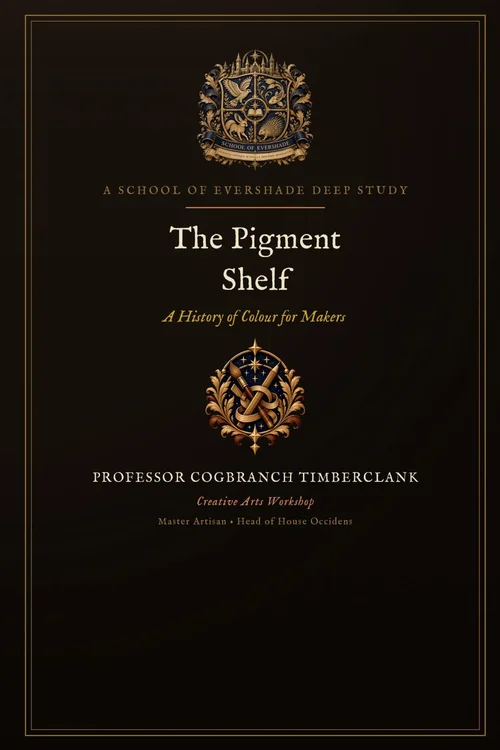
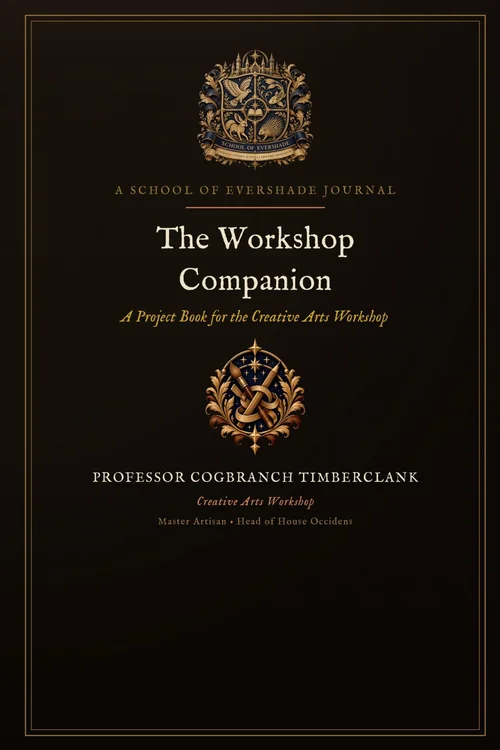
From the Workshop Shelf
The printed companions to this workshop, from Professor Timberclank’s shelf in the shop.