CELESTIAL STUDIES
Unit V · Lesson 28Why People Believe & How It's Used Today
Professor Vesper Glimmerwick
Astronomer & Celestial Historian
The Celestial Tower • School of Evershade
Professor's Introduction
Lanterns lit and charts open, scholars,
This is the last lesson of Unit V, and it is the one I have been looking forward to most, because it asks the kindest question of the whole unit: not "is astrology true," but "why do people believe?"
I want to say something plainly before we begin. Some of you know people who read horoscopes every morning. Some of you may read them yourselves. There is nothing foolish about that, and this lesson will never ask you to feel embarrassed about it. Belief is one of the most human things there is. Understanding why it persists, in intelligent and thoughtful people, is not an attack. It is a kind of respect.
Tonight we are going to study the machinery of belief itself: the pattern seeking brain, a famous classroom experiment from 1948, the invention of the newspaper horoscope, and a second zodiac system, two thousand years older than the first, that most Western readers have never been taught to take seriously. We will name these things with kindness. And at the end, I promise, you will understand something about your own mind that most grown people never learn.
One rule for this lesson, and it is a gentle one but it is firm. In this unit, no scholar is ever labeled by any sign, not in this lesson and not anywhere else. You are not a sign. You are a scholar of the sky, and your name is quite enough.
PROFESSOR VESPER GLIMMERWICK
Celestial Studies
Astronomer & Celestial Historian
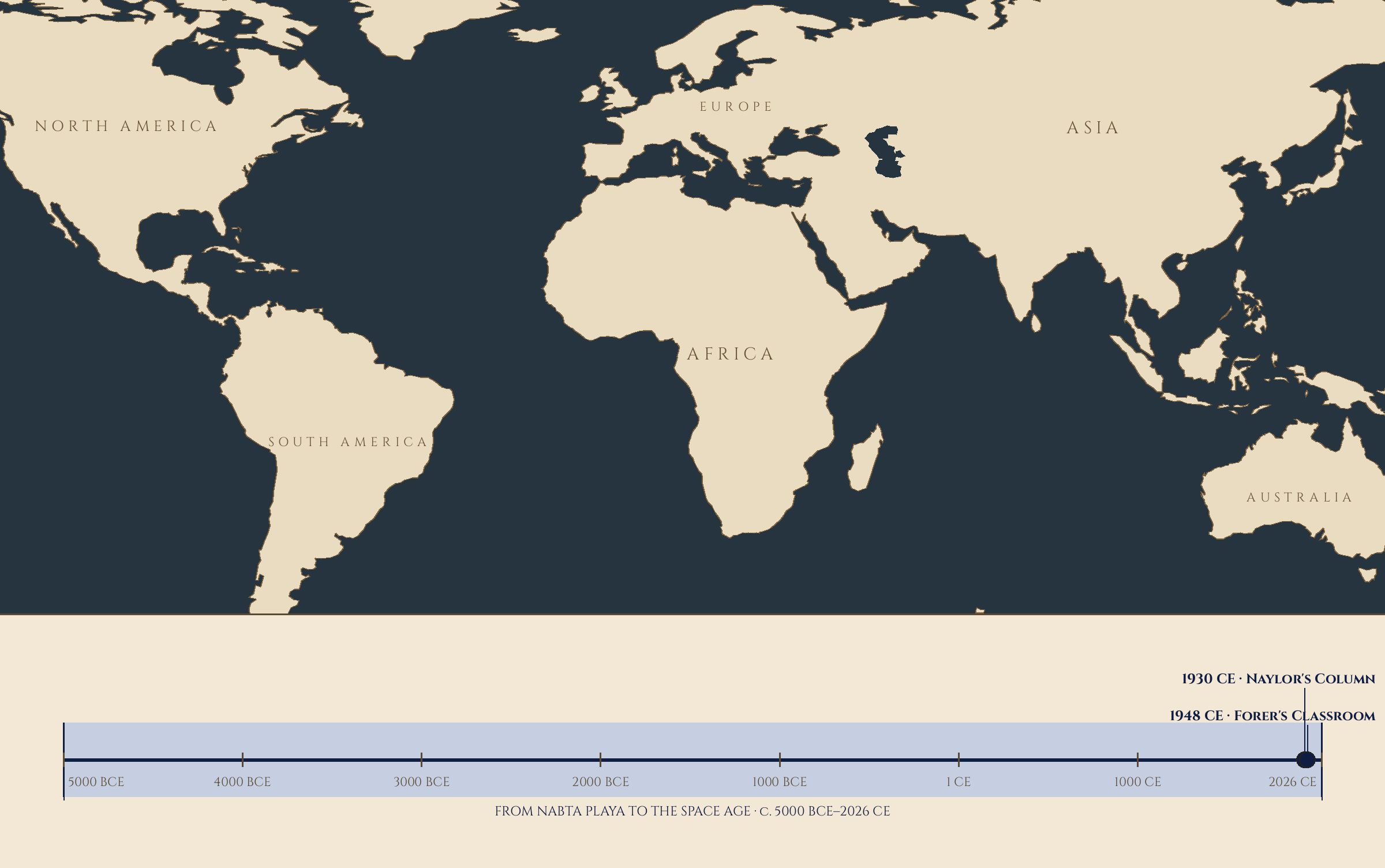
Where and when: your own sky, tonight — Why People Believe & How It's Used Today. This lesson has no pin: its place is wherever you stand under the night sky. Its stops stand on the road below: 1930 CE · Naylor's Column (year 1930) + 1948 CE · Forer's Classroom (year 1948). The line beneath the map is our road through the course: every stop a moment when watching the sky changed, every lesson a place upon it.
Lesson Objectives
By the end of this lesson, you will be able to:
- Define apophenia, the Barnum effect, and confirmation bias in their own words, and explain why each one is a feature of human cognition rather than a flaw to be mocked.
- Describe Bertram Forer's 1948 classroom demonstration: what he did, what the students rated, and what the result reveals.
- Trace the invention of the newspaper horoscope to August 1930, the Sunday Express, and R. H. Naylor's column, and explain how sun sign columns simplified astrology for a mass audience.
- Explain the structure and history of the Chinese twelve year zodiac: its animals, its ancient roots, and its connection to the Chinese calendar.
- Compare the Western newspaper horoscope and the Chinese zodiac as two different cultural systems, each with its own history, without ranking one above the other.
- State and practice the unit's standing rule: astrology is studied here as history only, no scholar is ever labeled by any sign, and believers are treated with kindness always.
Reading this lesson: ★ marks the passages to remember. They return on the unit quiz and the class test. Check in questions ask the material back as you go; answer them in your workbook when you meet them.
Working this lesson: Your assignment packet is the first download on this page. Work in it as the lesson moves along, answering each exercise as its subject is taught — or read the lesson through for your notes and take the exercises as homework afterward. Both are proper ways to sit this class. Signposts in the reading tell you where each exercise belongs. Written answers are short answers in your own words; a few honest lines are worth more than a filled page.
Your Assignment Packet
This lesson's exercises live in its packet: the Lexicon Handout (every term of the lesson), Materials, Guided Practice, the Assignment Manual with its answer key for self-checking, the Reflection Questions, and the Workbook Checklist. Download the packet before you begin and keep it beside you as you read. The packet's exercises are Glimmerwick's own word for the work: Exercise I: The Barnum Detective ✎, Exercise II: The Hit and Miss Ledger ◐, and Exercise III: Two Systems, Side by Side ✎. The manual's own Lesson Quiz is not printed in the packet; it pools to the Unit V Quiz, where it will meet you again.
Safety Briefing
This lesson needs no telescope and no night sky. Everything in it is done indoors, with paper, a pencil, and your own honest attention.
Online and app safety. This lesson asks you to look at horoscope websites or astrology apps to study their structure, not to use them as guides. Never create an account, never hand over your full birth date, your location, or any payment information. Many astrology apps are free to download and expensive to keep: subscriptions, in app purchases, and "premium readings" are designed to take money from exactly the hopeful feelings this lesson explains. If an app asks you to pay, the lesson's answer is no. You can study the machinery without feeding it.
Kindness in discussion. You will be talking about belief in this lesson, and some people you love may believe the things you are studying. Mockery is not analysis, and contempt is not insight. The rule of this classroom is the rule of Professor Glimmerwick herself: inform, not convert, and never make anyone feel small for believing.
Night observing note. If you do any of this lesson's sky work outdoors after dark, the usual course rules apply: an adult present, a familiar and safe location, someone told where you are and when you expect to return.
The Wonder
Some of the smartest people you will ever meet read their horoscope.
Doctors read them. Engineers read them. People with advanced degrees, people who can do the mathematics of Lesson 16 in their heads, people who know perfectly well how precession works and what L26 taught them about the signs. They read them on their phones with their morning coffee, the way you might check the weather, and then they go about their day.
This is the wonder, and I want you to sit with it before we explain a single thing. If astrology were only believed by the foolish, belief would be easy to explain. It is believed by the brilliant. It is believed by people who run laboratories and people who fly airplanes and people who love you. Whatever is going on in the human mind when a horoscope feels true, it is not a lack of intelligence. It is something intelligence itself is doing.
So we ask the better question. Not "how can people be so gullible," which is unkind and also wrong. The better question is this: what is the mind doing when belief happens? What machinery is turning underneath, and why does it turn the same way in almost everyone?
That machinery has a name, and then another name, and then a third. Let us meet all three.
❦ In your workbook: record the wonder in your own way — the horoscope read with morning coffee by people who run laboratories and fly airplanes, and the better question this lesson asks instead of the unkind one — copy, sketch, or note what matters.
The Story
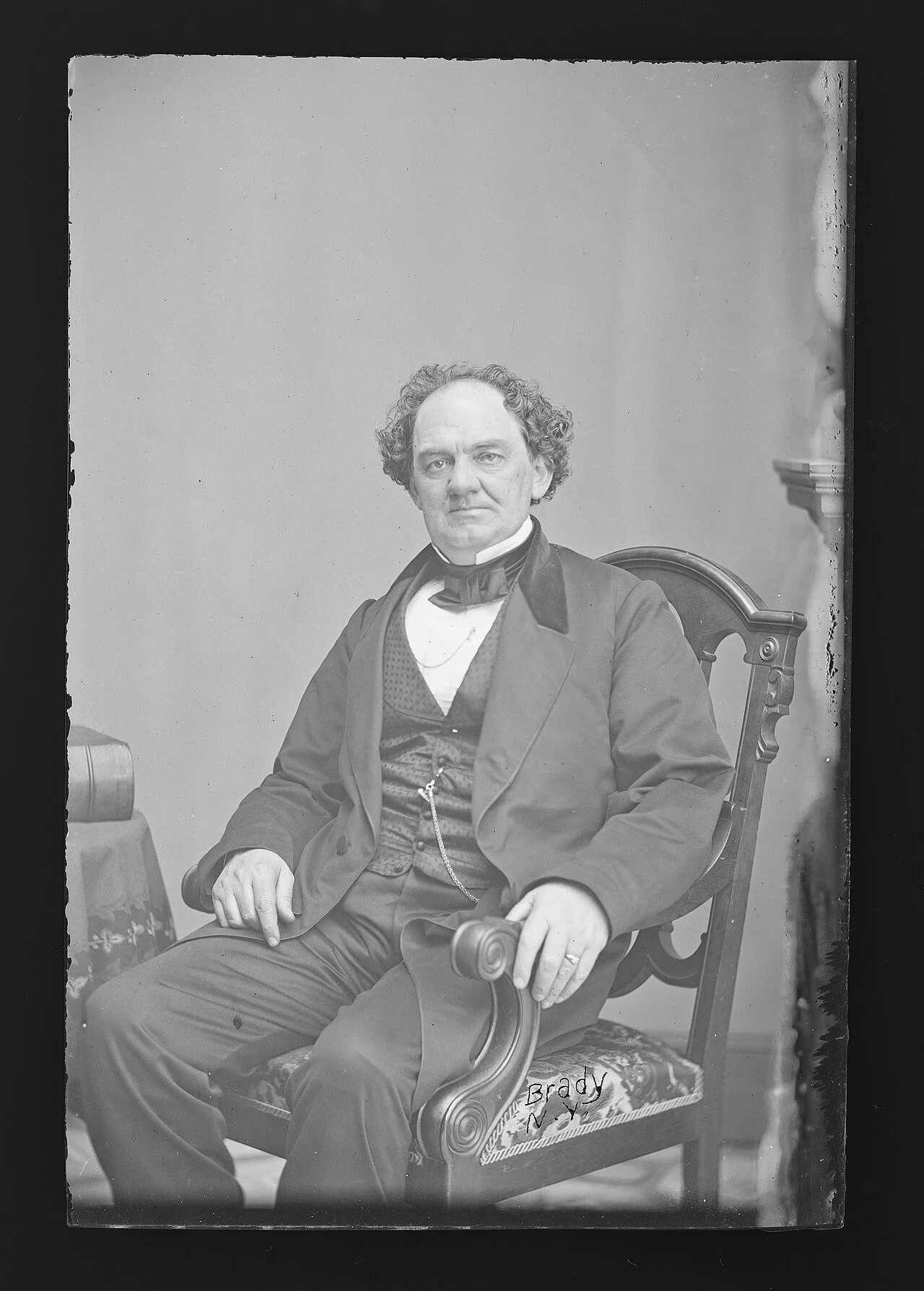
P. T. Barnum (1810–1891), photographed at the Mathew Brady Studio, c. 1860. The showman whose name Paul E. Meehl borrowed in 1956 for the effect Forer demonstrated: entertainment — and horoscopes — that give every customer exactly what they came for.
Mathew Brady Studio, glass plate collodion negative, c. 1860 — National Portrait Gallery, Smithsonian Institution; Frederick Hill Meserve Collection, via Wikimedia Commons.
The pattern hungry brain
Long before there was astrology, there was the brain that made astrology possible.
Your brain is a pattern detection engine. It runs constantly, beneath your notice, matching what your senses report against everything you have ever learned, and it is biased toward finding a pattern rather than missing one. There is a good evolutionary reason for this. If you hear rustling in the grass and it might be a predator, the ancestor who assumed a pattern and ran survived. The ancestor who waited for more data did not always get more data. A brain that sometimes sees a face that is not there will occasionally be embarrassed. A brain that sometimes misses a face that is there will occasionally be eaten. So evolution built us to notice.
That is why you see faces in clouds and in the headlights of cars and in the grain of wood. That is why a song played backward seems to whisper messages, and why three coincidences in a row feel like the universe winking at you. The machinery is working exactly as designed. It is only that the machinery was designed for a grassy plain full of predators, and you are now aiming it at a newspaper column.
The German psychiatrist Klaus Conrad gave this tendency its formal name in 1958: apophenia, from Greek roots meaning roughly "to show forth." He coined it to describe seeing connections that are not really there, and while he was writing about the early stages of illness, the word was soon adopted for the ordinary, everyday version that every healthy brain performs all day long. Apophenia is not a disorder. It is the factory setting.
Hold onto that phrase: the factory setting. We will come back to it.
Check in: Why is a brain biased toward finding a pattern rather than missing one — and what did Klaus Conrad name that tendency, and when?
❦ In your workbook: record the pattern hungry brain in your own way — the ancestor who assumed a pattern and ran, the faces in clouds and headlights and wood grain, and the factory setting named in 1958 — copy, sketch, or note what matters.
A classroom in 1948
In 1948, an American psychologist named Bertram R. Forer gave his students a personality test. The students were told that each of them would receive an individual analysis based on their answers. A week later, each student received a personality sketch, and each was asked to rate how accurate it was on a scale from 0 (very poor) to 5 (excellent).
★ The average rating was about 4.3 out of 5. The students were impressed. Their analyses felt remarkably personal.
Then Forer revealed the trick. Every student had received the exact same sketch. He had assembled it from a newsstand astrology book: a bouquet of vague, flattering, mostly true of everybody statements. Each student had read universal language and found themselves in it, because the human mind is very good at supplying the personal details that the text leaves out. Forer published the result in 1949 under the title "The Fallacy of Personal Validation."
The phenomenon got its famous name a few years later, in 1956, when psychologist Paul E. Meehl called it the Barnum effect, after the showman P. T. Barnum, whose name had become shorthand for entertainment that gives every customer exactly what they came for. The experiment has been repeated many times since 1948, and the average rating lands in the same place every time: people consistently judge generic descriptions as deeply personal.
(A year earlier, in 1947, another psychologist, Ross Stagner, had run a similar demonstration on personnel managers, handing them generic feedback assembled from horoscopes and graphology. More than half called it accurate. Forer's classroom version is the one the world remembers.)
Check in: What did Forer's students actually receive, what did they rate it — and who named the effect, in what year, and for whom?
❦ In your workbook: record the classroom in your own way — a test, a week's wait, one identical sketch for every student, and a rating of about 4.3 out of 5 for a page assembled from a newsstand astrology book — copy, sketch, or note what matters.
Why the vague feels personal
It is worth slowing down here, because this is the genuine mechanism and it deserves real teaching.
A Barnum statement works because of how it is built. It is vague enough to fit almost anyone, and specific enough to feel like it was aimed at you. It leans on phrases that cover both sides of everything: "at times you are outgoing, at times you are reserved." Well, yes. That is every human being who has ever lived, including you, including me, including the bat currently writing this lesson.
It also leans on flattery and on near universal truths. "You have a great deal of unused capacity." Who does not? "You tend to be critical of yourself." Nearly everyone is, at least sometimes. The statement provides the frame; your memory provides the photograph. You remember the week you doubted a decision, and you forget the months you did not. The horoscope gets the credit for your own autobiography.
And crucially, the reader believes the description is personal. Forer's students were told their sketches came from their own test answers. A horoscope reader believes the column was written for people born under their sign. That belief is the lens. Once you believe the text is about you, your mind does the rest of the work, happily and invisibly. This related habit has its own name: subjective validation, the tendency to treat coincidences and vague statements as personally meaningful because you have already decided they might be.
None of this requires foolishness. It requires a normal human brain, which is what Forer's students had, and what you have, and what I have, even though I navigate by echolocation in the dark and am frankly proud of it.
Check in: A Barnum statement provides the frame — what provides the photograph, and what is the lens that makes the whole thing feel personal?
❦ In your workbook: record the vague made personal in your own way — both sides covered in one phrase, the frame and the photograph, and subjective validation named as the lens — copy, sketch, or note what matters.
The birth of the newspaper horoscope
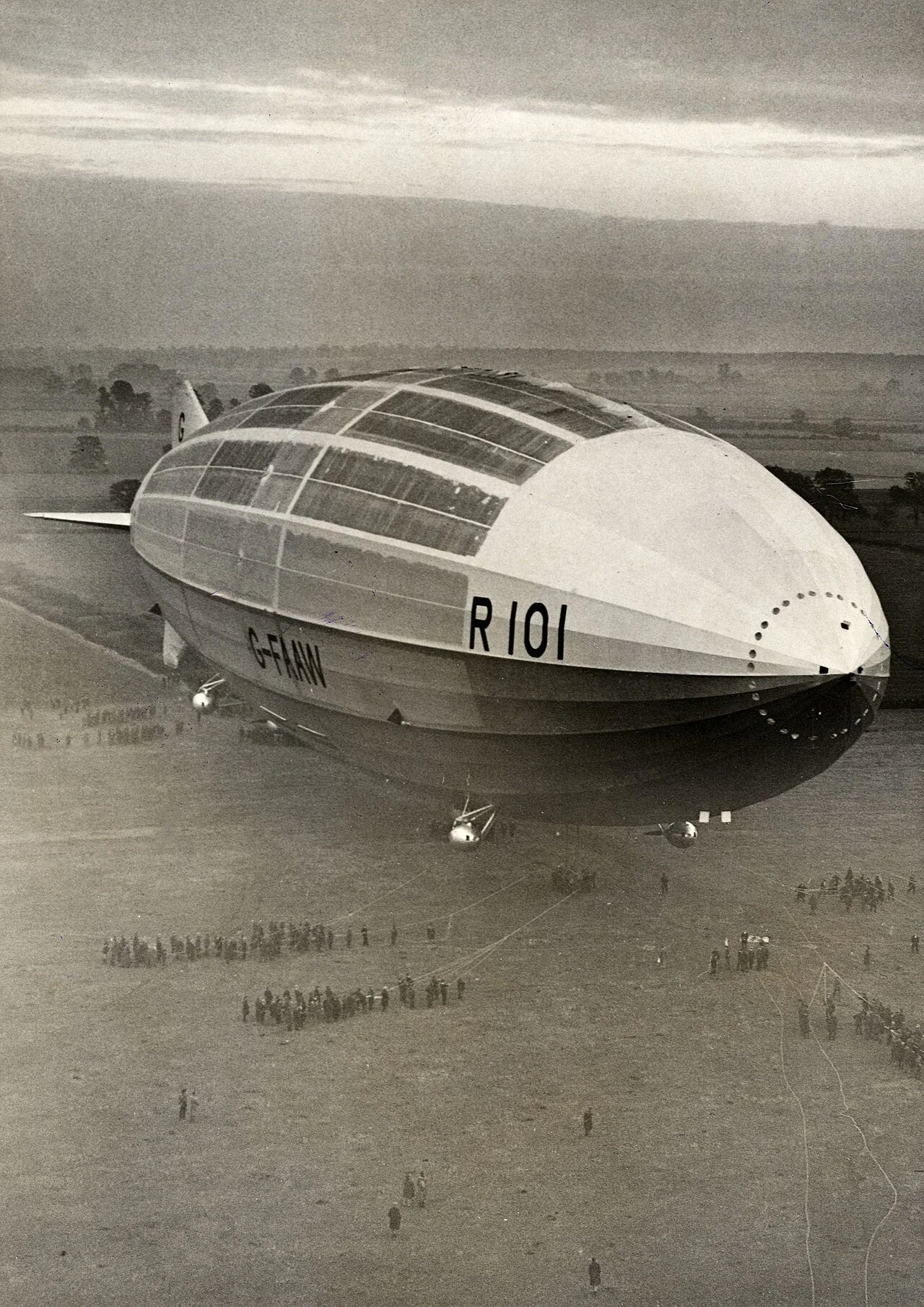
The airship R101, photographed on an early flight. Naylor's vague forecast that "a British aircraft will be in danger" was credited to him after the R101 crashed and burned in France on October 5, 1930 — the remembered hit that won him the first regular newspaper astrology column. The lesson's own verdict stands beside it: a classic Barnum statement, vague enough to seem fulfilled by almost any accident.
U.K. Government photograph (first flight 14 October 1929), via Wikimedia Commons.
Here is one of the best documented origin stories in all of popular culture, and it begins with a royal baby.
★ On August 21, 1930, Princess Margaret was born. The editor of Britain's Sunday Express, John Gordon, wanted a fresh angle on the story, so he asked the most famous astrologer of the day, a celebrity figure known as Cheiro, to cast the newborn princess's horoscope. Cheiro was unavailable. The job fell to his assistant, a man named Richard Harold Naylor.
Naylor's article, titled "What the Stars Foretell for the New Princess," appeared on August 24, 1930. It gave the baby's birth chart, described her sun sign in careful generalities, and predicted she would lead an "eventful life," which was safe enough to be undeniable. The article was enormously popular. Readers wrote in asking for more.
★ Then came the lucky break that made Naylor's career. He had forecast that "a British aircraft will be in danger" in October. On October 5, 1930, the great airship R101 crashed and burned in France. Naylor was credited with a successful prediction, and Gordon gave him a weekly column. Britain had its first regular newspaper astrology column, and other newspapers soon copied the format.
(An honest footnote, because this course teaches honesty: forecasts like "a British aircraft will be in danger" are classic Barnum statements. They are vague enough to seem fulfilled by almost any accident, and we remember the hits and forget the misses. Naylor himself badly missed the approach of the Second World War, warning in 1939 about childless marriages and failing farms instead. The lesson is not that Naylor was a fraud. The lesson is that the system selects for memorable hits.)
Over the following years, Naylor simplified further. By 1937 he had developed the twelve sun sign column, offering one short forecast per sign of the zodiac, endlessly renewable, perfectly suited to a daily or weekly newspaper slot. The complicated machinery of horoscopic astrology you studied in L25, the houses and aspects and exact birth times, was distilled into twelve paragraphs. Anyone with a birthday could find their paragraph. Everyone did.
That is the invention at the heart of the modern horoscope. It is less than a century old. It was born in a newspaper office, not a temple.
Check in: Who actually wrote the first article, for which newspaper and which baby — and what happened in October 1930 that won him the weekly column?
❦ In your workbook: record the birth of the column in your own way — a royal baby, an unavailable celebrity, an assistant named Naylor, a vague forecast, a crashed airship, and twelve paragraphs by 1937 — copy, sketch, or note what matters.
From newsprint to the glowing rectangle
The newspaper column never really died; it moved. Today the horoscope lives in apps, in social media accounts, in the wellness industry, in morning routines shared by millions of people who would never buy a newspaper. The format has barely changed. Short paragraphs, twelve divisions, a tone of warm generality. The delivery system is new. The machinery underneath is the one Forer demonstrated in a classroom in 1948.
Why does it persist? Ask with kindness, and several honest answers appear.
First, uncertainty is uncomfortable, and horoscopes offer the feeling of a map. A vague forecast for the week ahead does not reduce uncertainty at all, but it can reduce the feeling of uncertainty, and feelings are what we live in.
Second, ritual is comforting. Reading the same column every morning is a small ceremony, like tea in a favorite cup. The content matters less than the rhythm.
Third, self reflection is valuable, and horoscopes are excellent prompts for it. "You have been carrying too much; consider what you can set down" is good advice no matter what the stars are doing. Many readers use horoscopes the way others use a journal prompt or a proverb: not as prediction, but as a mirror.
Fourth, community. Sharing horoscopes, comparing notes with friends, laughing over the eerily accurate line at lunch: these are social pleasures. Belief can be the price of admission to a conversation, and the conversation is the real point.
None of these reasons is foolish. A scholar of this school can hold all of them in mind at once: the psychology is real, the comfort is real, and the stars are not doing the work. That is not a contradiction. That is just an honest description of being human.
Check in: Name the four honest reasons this lesson gives for the horoscope's persistence — and say which parts of the picture the lesson calls real, and what is not doing the work.
❦ In your workbook: record the move to the glowing rectangle in your own way — the same twelve paragraphs in apps and morning routines, and the four kind reasons: uncertainty, ritual, self reflection, community — copy, sketch, or note what matters.
A second zodiac, two thousand years older
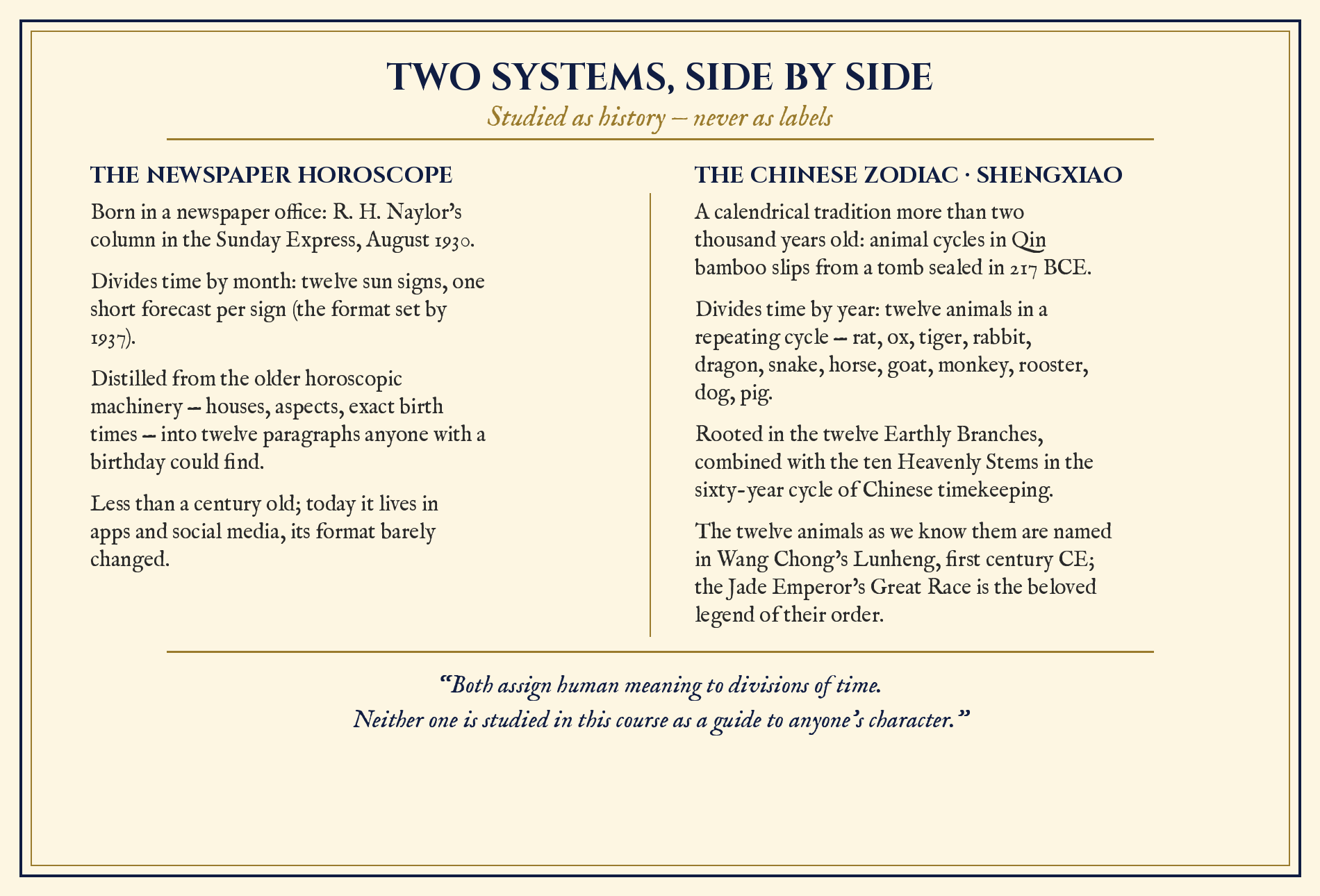
Two Systems, Side by Side: a newspaper invention from 1930, month based and less than a century old, beside a calendrical tradition more than two thousand years old, year based and rooted in Chinese timekeeping. The comparison does not rank them, and neither is a label for any scholar.
Built digitally for this overhaul (Python/PIL, typeset text), reproducing the lesson's taught comparison (builder: ).
Now, as promised, the cultural comparison, and I ask you to give it your full respect.
★ The Chinese zodiac, known in Chinese as shengxiao, is a twelve year cycle in which each year is associated with an animal: the rat, the ox, the tiger, the rabbit, the dragon, the snake, the horse, the goat, the monkey, the rooster, the dog, and the pig. Your animal is set by your birth year, not your birth month, and the cycle then repeats.
This is not "the Chinese version of horoscopes." It is its own system with its own deep history, and it is roughly two thousand years older than the newspaper column. Animal cycles appear in bamboo slips from a Qin dynasty tomb sealed in 217 BCE, and the Han dynasty scholar Wang Chong's Lunheng, written in the first century CE, is the earliest surviving text to name the twelve animals as we know them today. The animals are tied to an older Chinese calendrical system, the twelve Earthly Branches, which combined with the ten Heavenly Stems to make the sixty year cycle that organized Chinese timekeeping. The Jade Emperor's Great Race, in which the twelve animals raced for their places in the cycle, is the beloved legend that explains the order. The history is the calendar; the legend is the story.
In Chinese culture, the zodiac animal has long been linked to personality traits, compatibility in marriage, fortune in a given year, and the great public celebration of the Lunar New Year. It is woven into art, poetry, festivals, and daily life across China and much of East and Southeast Asia.
So here are two systems side by side. One is a newspaper invention from 1930, month based, built for a mass audience, less than a century old. The other is a calendrical tradition more than two thousand years old, year based, rooted in one of the world's great systems of timekeeping. Both assign human meaning to divisions of time. Both are believed by millions of thoughtful people. Neither one is studied in this course as a guide to anyone's character, and that includes yours. This lesson will not ask you to find your animal, and it has never asked you to find your sign.
The point of the comparison is not to rank them. The point is that humanity keeps building these systems, in every century and on every continent, because the pattern hungry brain is everywhere and the longing for meaning is everywhere. That is the real subject of this lesson. It always was.
Check in: How does the Chinese zodiac divide time, how old are its roots — and how does it differ from the newspaper column in age, basis, and origin?
❦ In your workbook: record the second zodiac in your own way — twelve animals set by birth year, bamboo slips from 217 BCE, the Earthly Branches and the sixty year cycle, and two systems side by side, unranked — copy, sketch, or note what matters.
In your packet: Exercise III: Two Systems, Side by Side ✎ begins here — its three paragraphs are this comparison: the histories, the structures, and the scholar's judgment. Work it now, or mark the place and take it as homework — your choice.
The Mechanism
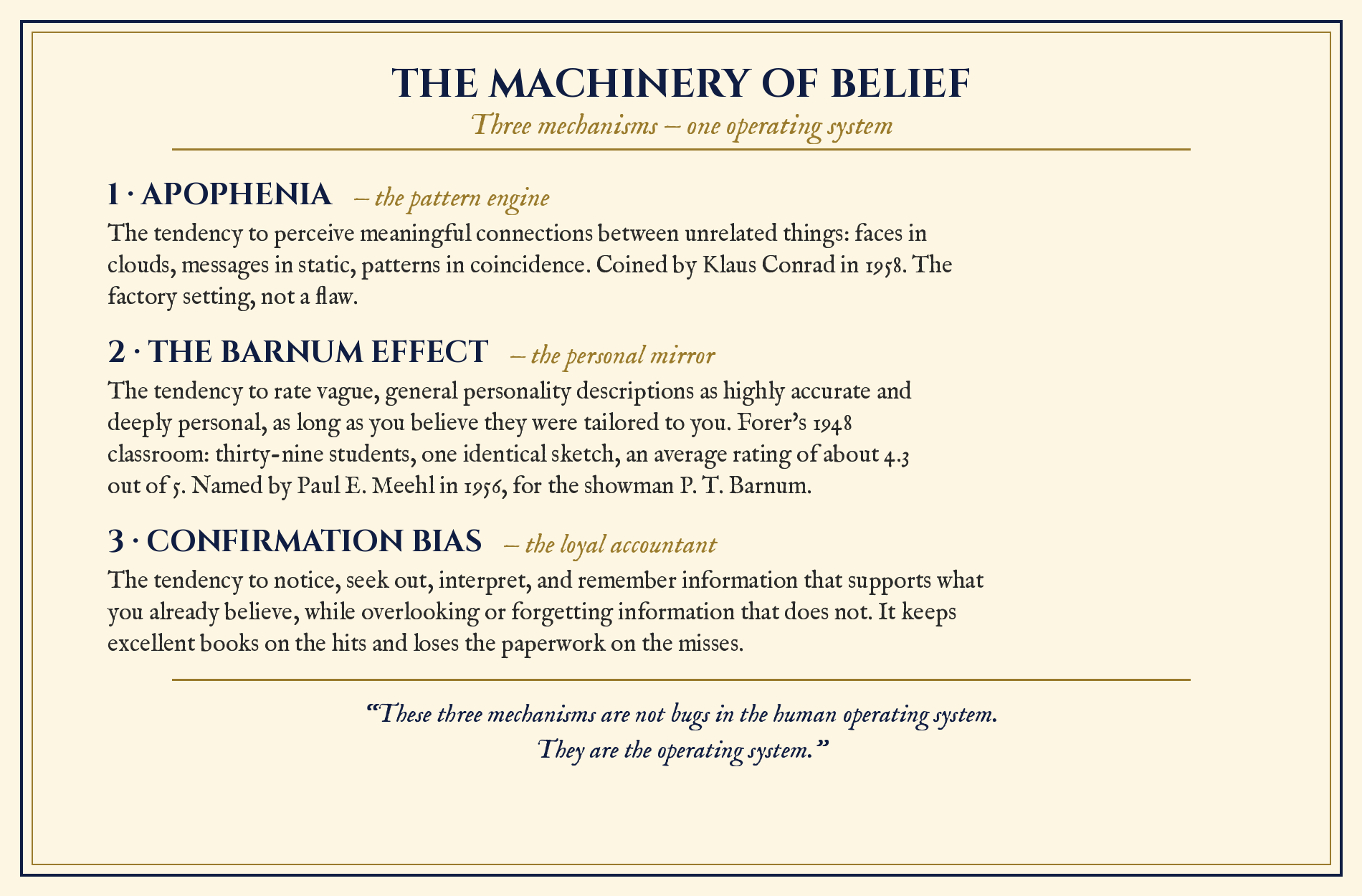
The Machinery of Belief: apophenia the pattern engine, the Barnum effect the personal mirror, confirmation bias the loyal accountant — the three mechanisms this lesson names, each one running in every reader, scholars included.
Built digitally for this overhaul (Python/PIL, typeset text), from the mechanism taught in the lesson text (builder: ).
Let us now name the three mechanisms properly, the way a scholar names stars: each one distinct, each one real, each one operating in your mind right now as you read this.
1. Apophenia: the pattern engine
★ Apophenia is the tendency to perceive meaningful connections between unrelated things. Faces in clouds. Messages in static. A sense that the universe is winking at you because three small coincidences happened in one afternoon.
This is the deepest of the three mechanisms because it is the oldest. It is the factory setting. Your ancestors survived by assuming patterns, and you inherited the assumption. Modern life simply gives the engine new material: license plates, song lyrics, horoscope columns. The engine does not know the difference between a predator in the grass and a paragraph in the paper. It only knows how to find the face.
Apophenia is not a flaw. It is the same machinery that lets a scientist notice an anomaly in the data, that lets an artist see the painting inside the blank canvas, that lets you recognize a friend's voice in a noisy room. A mind that never saw patterns would be safe from horoscopes and useless at almost everything else. The goal is not to switch the engine off. The goal is to know when it is running.
Check in: What is apophenia, why does this lesson call it the factory setting — and why is the goal to know when it is running, not to switch it off?
❦ In your workbook: record the pattern engine in your own way — faces in clouds, messages in static, the engine that cannot tell a predator in the grass from a paragraph in the paper — copy, sketch, or note what matters.
2. The Barnum effect: the personal mirror
★ The Barnum effect, also called the Forer effect, is the tendency to rate vague, general personality descriptions as highly accurate and deeply personal, as long as you believe they were tailored to you.
Forer's 1948 demonstration is the cleanest proof ever produced: thirty nine students, one identical sketch assembled from a newsstand astrology book, an average rating of about 4.3 out of 5. The students were not foolish. They were doing what minds do: reading universal language, supplying personal memories, and feeling recognized.
The effect is strongest when three conditions hold: the statements are vague but flattering, the reader trusts the source, and the reader believes the description is personal. A horoscope column satisfies all three at once. That is why the newspaper format works so well. Twelve paragraphs, each one a little mirror, and every reader finds their own face in the glass.
Check in: What three conditions make the Barnum effect strongest — and why does a horoscope column satisfy all three at once?
❦ In your workbook: record the personal mirror in your own way — one identical sketch rated 4.3 out of 5, the three conditions that strengthen the effect, and twelve paragraphs as twelve little mirrors — copy, sketch, or note what matters.
In your packet: Exercise I: The Barnum Detective ✎ begins here — its six statements are hunted in real columns and labeled by exactly these techniques. Work it now, or mark the place and take it as homework — your choice.
3. Confirmation bias: the loyal accountant
★ Confirmation bias is the tendency to notice, seek out, interpret, and remember information that supports what you already believe, while overlooking or forgetting information that does not.
This is the quietest of the three mechanisms and in some ways the most powerful. You do not need to be shown a horoscope for it to work; you only need a belief. Once you believe that Mercury retrograde ruins travel plans, you will remember every delayed flight during those weeks and forget every smooth one. Once you believe your horoscope warned of a difficult conversation, you will remember the argument on Tuesday and forget the pleasant lunch on Wednesday. The bias does not invent the hits. It simply keeps excellent books on the hits and loses the paperwork on the misses.
Psychologists note that this, too, is largely unintentional. It is an efficient way to process an overwhelming world: you cannot weigh every piece of evidence equally, so your mind weighs most heavily the evidence that fits the story you already carry. It also protects self esteem. Discovering that a cherished belief is wrong feels bad, so the mind quietly declines to discover it.
★ Here is the kindest and most important sentence in this section. These three mechanisms are not bugs in the human operating system. They are the operating system. Pattern detection kept your ancestors alive. Trust in personalized feedback makes learning possible. Efficient belief protects a mind that would otherwise drown in data. The scholar's task is not to feel superior to these mechanisms. The scholar's task is to recognize them, in horoscopes and in themselves, with clear eyes and a gentle heart.
Check in: What does the loyal accountant keep excellent books on, and what paperwork does it lose — and why is the habit largely unintentional?
❦ In your workbook: record the loyal accountant in your own way — the delayed flights remembered and the smooth ones forgotten, the hits kept and the misses' paperwork lost, and the operating system that is not a bug — copy, sketch, or note what matters.
In your packet: Exercise II: The Hit and Miss Ledger ◐ begins here — its two columns keep both sets of books for a week, the hits and the misses alike. Work it now, or mark the place and take it as homework — your choice.
A Sealed Note on Belief
My dears, I have lived in a tower full of old star charts for a very long time, and I want to tell you something the charts taught me.
The charts are wrong about the future. Every one of them. I say this with love for the people who drew them, because they drew them beautifully, and because they were trying to answer the oldest question there is: what happens next? That question deserves beautiful attempts. It also deserves honest answers.
Here is the honest answer I have come to. People do not believe because they are weak. They believe because they are human, because uncertainty is heavy, because ritual is warm, because a mirror held up at breakfast can make a person feel seen before the day has even started. If you ever catch yourself feeling clever for not believing, stop. Cleverness is cheap. Kindness is the actual achievement.
You now know the names of the machinery: the pattern engine, the personal mirror, the loyal accountant. They are running in you too. They run in me. The difference between a scholar and everyone else is not that the scholar's machinery stops. It is that the scholar knows it is running, and smiles at it, and checks the work.
❦ In your workbook: record the sealed note in your own way — charts that are wrong about the future and beautiful anyway, belief as a human thing rather than a weak one, and the scholar who knows the machinery is running and checks the work — copy, sketch, or note what matters.
PROFESSOR VESPER GLIMMERWICK
Celestial Studies
Astronomer & Celestial Historian
Guided Observation
Try It Tonight
No telescope required. Bring a pencil, your workbook, and your honesty.
Part One: The All Twelve Read
Find a newspaper style horoscope: in a print newspaper, a magazine, or a reputable website. (Remember the Safety Briefing: read only, no accounts, no payments, no personal details.)
Read all twelve paragraphs. Every one of them. Do not look for any one in particular; in this lesson we do not single out any sign, including, especially, the idea of "yours."
As you read, mark every statement that feels personally true or oddly accurate. Count them when you finish. Then look at your marks spread across all twelve columns and ask the scholar's question: if these paragraphs were really divided by birthday, why do so many of them feel like they were written about me?
Write your count and your answer in your workbook. You have just performed Forer's experiment on yourself, with a larger sample and no deception at all.
Check in: You marked statements across all twelve paragraphs, not one — what does the spread of your marks show that reading a single paragraph never could?
❦ In your workbook: record the All Twelve Read in your own way — your count of statements that felt personally true, spread across all twelve columns, and your answer to the scholar's question — copy, sketch, or note what matters.
Part Two: The Coincidence Census
For one full day, keep a small notebook page titled "Patterns I Noticed." Every time you catch yourself noticing a coincidence, a meaningful seeming song lyric, a "weird, I was just thinking about them" moment, write it down in one line.
At the end of the day, add a second column: "Ordinary Moments I Almost Forgot." List ten completely unremarkable things that happened today: the toast, the hallway, the pencil that did not break. Look at the two columns side by side.
The first column is apophenia doing its beautiful work. The second column is everything your loyal accountant usually throws away. A scholar keeps both ledgers.
❦ In your workbook: record the Coincidence Census in your own way — the day's patterns noticed in one column, ten ordinary moments rescued in the other, and both ledgers kept side by side — copy, sketch, or note what matters.
Sky Log Entry
Date your Sky Log and title this entry "The Machinery of Belief."
Write three short paragraphs, one for each mechanism: apophenia, the Barnum effect, confirmation bias. In each paragraph, describe one moment from your own life when you caught that mechanism running. It does not have to be about horoscopes. A face in the clouds counts. A song that felt like a message counts. A time you remembered the hits and forgot the misses counts.
Then add one final line answering this: now that you know the names of these mechanisms, does knowing make you feel wiser, or smaller? There is no wrong answer. Professor Glimmerwick only asks that you answer honestly.
If you keep a Moon Journal, note tonight's phase beside the entry. The moon keeps its own counsel about all of this.
❦ In your workbook: record the Sky Log entry in your own way — three paragraphs, one per mechanism, each with a moment from your own life, your honest final line, and tonight's Moon Journal phase noted beside the entry if you keep one — copy, sketch, or note what matters.
Materials
Required (Level One — household items)
- Your workbook and a pencil for the All-Twelve Read, the Coincidence Census, and the Sky Log entry.
- A small pocket notebook or a single folded sheet for the one-day Coincidence Census and the week-long Hit and Miss Ledger.
- Access to a newspaper-style horoscope in print or on a reputable website, for reading and analysis only (no accounts, no payments, no personal details).
- An adult willing to talk for the optional kindness check in Exercise I, and the usual night-observing rule if you go outside after dark.
Suggested (Level Two — historically closer)
- A library card and a library visit to find an older book on the history of astrology or of the press, and compare its account of the newspaper horoscope with this lesson's.
- A printed almanac or an old newspaper to see how horoscope columns looked before the app era.
Reflection Questions
Answer in your workbook, in complete sentences.
- Forer's students rated an identical personality sketch about 4.3 out of 5 for accuracy. What does that result tell you about the difference between feeling recognized and being known?
- The lesson calls apophenia, the Barnum effect, and confirmation bias "the factory setting, not a flaw." Do you agree? Can you think of a time when one of these mechanisms helped you rather than misled you?
- Why do you think the newspaper horoscope survived the move from newsprint to apps with its format almost unchanged? What does that suggest about what readers are actually looking for?
- The Chinese zodiac is more than two thousand years old; the newspaper horoscope is less than a hundred. Does the age of a belief system change how you think about it? Why or why not?
- Professor Glimmerwick writes that "understanding why belief persists is itself a kind of wisdom." What do you think she means, and do you feel wiser, or smaller, knowing the names of the machinery?
Workbook Checklist — Lesson 28
In my workbook I have:
- ☐ read all twelve paragraphs of a newspaper style horoscope, marked every statement that felt personally true, and recorded my count and my answer to the scholar's question
- ☐ kept the one-day Coincidence Census in two columns — the patterns I noticed, and ten ordinary moments I almost forgot
- ☐ written my Sky Log entry, "The Machinery of Belief": one paragraph per mechanism, each with a moment from my own life, my honest final line, and tonight's Moon Journal phase noted beside the entry if I keep one
- ☐ completed Exercise I: six Barnum statements from three sources, each labeled with its technique, my explanation paragraph, and the kindness check if I made one
- ☐ kept the Hit and Miss Ledger for one full week and written its closing answers — the count, the confirmation-bias answer, and the feels-true versus tested paragraph
- ☐ written Exercise III's three-paragraph comparison of the two systems — histories, structures, and the scholar's judgment, neither ranked and neither used as a label
☐ Lesson completed Date: ___ Signature: ___
Cross-Class Connections

Runes · Unit I, Lesson 1 — The Structural Wedge
Tower scholars, the oldest sky-patterns your professor studies tonight were first written down by accountants' cousins: scribes pressing a cut reed stylus into wet clay, wedge by wedge, until the tablet held what the sky-watchers saw. My first lesson teaches that wedge — the tokens, the clay, the five basic forms, and why so many tablets survived to be read at all. Glimmerwick reads what the engine built. Here, we press the marks it built them with.
PROFESSOR THISTLELOOM WEBBLETHORN
Runes & Ancient Writing
Scrollwork · Unit V, Lesson 20 — Marginalia & Manuscript Creatures
Tower scholars, Professor Glimmerwick has named the pattern hungry brain for you; my twentieth lesson shows you its pawprints. In the margins of the great manuscripts, knights battle snails, rabbits hunt hunters, and faces peer out of illuminated letters — apophenia at the scribe's desk, drawn with a master's discipline. Come to the Scrollwork Library and learn what marginalia are, why the scribes played at the page's edge, and how to draw a drollery of your own that earns its joke.
PROFESSOR QUILLBERRY NOCTURNE
Scrollwork Library

Herbology · Unit IV, Lesson 27 — Timing the Harvest
Come down to the greenhouse a moment, scholars. Glimmerwick has taught you to ask of any timing lore: what did people believe, and what does the evidence support? In my garden, timing is a question we answer by watching the plant itself. A leaf gathered at dawn and a leaf gathered at noon are not the same leaf — the volatile oils rise in the cool night and spend themselves in the heat, and you can smell the difference. That is a timing claim you can test with your own nose. Bring your loyal accountant with you, and we will keep both ledgers: the hits, and the misses too.
PROFESSOR BERYL FERNFOOT
Herbology Greenhouse

Creative Arts · Unit IV, Lesson 16 — Printmaking, Stamps & The Label Station
Bring those three Barnum statements to my bench, scholars, and we will take them apart the way we take apart any made thing: word by word, looking for what carries the load. At my label station we hold a sterner rule — a label is a small promise, and it must hold what it claims. A Barnum statement is a label that promises a person and holds almost anyone, and once you have seen how its wording does that trick, you will spot the joinery everywhere. Write yours carefully, test them kindly, and label them true: exercises, not fortunes.
PROFESSOR COGBRANCH TIMBERCLANK
Creative Arts Workshop
The Professor's Closing Note
And so we close Unit V, my dearest scholars, here at the end of the history of belief.
We began in Babylon, where the zodiac was a calendar and an omen system. We walked through the Hellenistic workshops where the horoscope was invented, did the honest mathematics of precession, and sat with the kings and scholars and skeptics of every age since. And now we end not with a debunking but with an understanding.
You know how the newspaper horoscope was born: a royal baby, an unavailable celebrity, an assistant named Naylor, a vague forecast, a crashed airship, and a column that never stopped running. You know about the classroom in 1948 where thirty nine students rated the same paragraph 4.3 out of 5. You know the three names of the machinery, and you know they are the factory setting, not a malfunction.
Carry this unit the way you carry the sky itself: with wonder first and honesty always. Be kind to believers, because you now know exactly why belief feels the way it does, and there is nothing in that knowledge that gives anyone permission to sneer. The charts are beautiful. The history is real. The psychology is real. And the stars, the actual stars, are still up there doing what they have always done, which is shining, whether or not anyone is reading meaning into them.
You came to this unit to learn what people thought the sky meant. You leave it understanding why people needed it to mean something. And my dears, understanding why belief persists is itself a kind of wisdom.
PROFESSOR VESPER GLIMMERWICK
Celestial Studies
Astronomer & Celestial Historian
Further Reading & Sources
- The Barnum Effect: the full account of Forer's experiment, the 1948 classroom demonstration, and how Paul E. Meehl coined the term in 1956. A useful study destination for the psychology at the heart of this lesson.
- Apophenia: the pattern seeking tendency itself, from Klaus Conrad's 1958 coinage to its everyday forms, including pareidolia, the seeing of faces in random things.
- Confirmation Bias: Britannica's overview of how the mind favors confirming evidence, why the habit is largely unintentional, and where it shows up in medicine, law, and daily life.
- R. H. Naylor: the astrologer behind the first newspaper horoscope column, the 1930 Sunday Express article for Princess Margaret, the R101 forecast, and the development of the sun sign column.
- What the Stars Foretell: a short illustrated history of the first newspaper astrology column and how Naylor's weekly forecasts became a media institution.
- The Chinese Zodiac: the twelve year animal cycle, its history from the Qin bamboo slips through the Han dynasty, the Earthly Branches calendar system, and the Great Race legend.
Browse the Celestial Studies shelf in the school Library for readable editions of these works.
Sealed in the Celestial Tower, in deep midnight blue, by Professor Vesper Glimmerwick.
Submit your work for this lesson using the form below.
THE UNIT V QUIZ
CELESTIAL TOWER · UNIT V: THE HISTORY OF ASTROLOGY & THE ZODIAC
Unit V is complete: from Babylon, where the zodiac was born, through the Hellenistic machinery and precession's slow wobble, down the long centuries of astrology's ages, to this lesson's honest question — why people believe, and how the belief is used today. This quiz gathers the whole unit into one sitting. Take it from memory first, before you look back at your notes, because it measures what has stayed with you. If you kept the passages marked ★ in your workbook as you read, you have already practiced most of what it asks.
It stands beside this lesson itself: the lesson is the unit's history, understood and argued in the open; the quiz is the unit remembered. Two different kinds of proof, both worth having.
The quiz packet is a single download. Part I gathers multiple-choice questions from across the unit, Part II asks true or false, Part III matches the unit's vocabulary, and the answer key waits at the back for self-checking. When you have finished, score it honestly, note the result in your workbook, and revisit any lesson whose questions went wrong before you move on.
CONTINUE IN THE CELESTIAL TOWER
← Previous · Lesson 27: Astrology Through the Ages Next · Lesson 29: Sundials: Catching Shadows →
Unit V — The History of Astrology & the Zodiac Celestial Tower — All 33 Lessons
The rest of Unit V: Lesson 24 · Babylon · Lesson 25 · The Hellenistic System · Lesson 26 · Precession · Lesson 27 · Astrology Through the Ages
From the Celestial Shelf
The printed companions to this lesson, from Professor Glimmerwick’s shelf in the shop.