

HERBOLOGY
Unit I · Lesson 1THE SCHOLAR'S FAMILIAR
PROFESSOR BERYL FERNFOOT
Herbology Greenhouse
Master Herbalist
Choosing a living companion plant, establishing a grow ledger, and recording baseline observations.
Professor's Introduction

Welcome, scholars.
I am delighted that you have chosen to join us in the Greenhouse. Whether you arrived here with years of gardening experience or have never cared for a single plant in your life, you are standing at the beginning of a journey that has fascinated humanity for thousands of years.
Plants shape nearly every aspect of life on Earth. They produce the oxygen we breathe, stabilize the soil beneath our feet, and provide food, fiber, dyes, timber, and countless other resources upon which civilizations have depended for centuries. Entire cultures have been built around the cultivation, harvest, and stewardship of plants.
Yet despite their importance, many people pass by them every day without truly noticing them. Herbology begins by changing that.
Unlike many subjects, Herbology cannot be mastered by reading alone. Plants are living organisms. They change over time. They respond to weather, light, water, soil, and countless other influences. To understand them fully, we must spend time with them.
For that reason, you will select a Scholar's Familiar to accompany you throughout this course. This plant will become your living laboratory, allowing you to apply each lesson through direct observation. Choose it with care, and it will teach you more than any book alone could manage.
The greenhouse doors stand open. Let us begin.
— Professor Beryl Fernfoot, Herbology Greenhouse • Master Herbalist • Head of House Oriens

The line beneath the map is our road: every stop a place where the knowledge of plants changed, every lesson a step along it.
Lesson Objectives
By the end of this lesson, you will be able to:
- Select an appropriate beginner plant to serve as your Scholar's Familiar
- Establish a grow ledger and explain what it records
- Record baseline observations of light, water, soil, and environment
- Describe the naturalist's habit of careful, patient observation
- Adapt plant care to indoor or windowsill growing conditions
Reading this lesson: ★ marks the passages to remember. They return on the unit quiz and the class test. Check in questions ask the material back as you go; answer them in your workbook when you meet them.
Working this lesson: Your assignment packet is the first download on this page. Work in it as the lesson moves along, answering each exercise as its subject is taught — or read the lesson through for your notes and take the exercises as homework afterward. Both are proper ways to sit this class. Signposts in the reading tell you where each exercise belongs. Written answers are short answers in your own words; a few honest lines are worth more than a filled page.
Your Assignment Packet
This lesson's exercises live in its packet: the Lexicon Handout (every term, course terms marked ◆), Materials, Guided Practice, the Assignment Manual with its answer key for self-checking, the Reflection Questions, and the Workbook Checklist. Download the packet before you begin and keep it beside you as you read.
What Is a Scholar's Familiar?
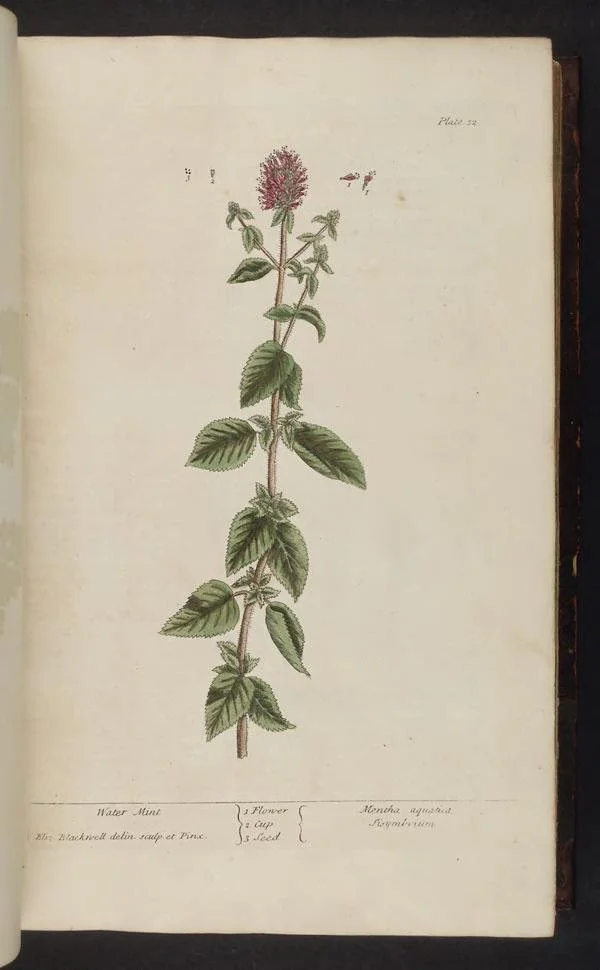
Water mint, drawn from the living plant by Elizabeth Blackwell for A Curious Herbal (1737) — an herbalist's knowledge began with looking closely at one plant.
Elizabeth Blackwell, A Curious Herbal (1737), plate 32, via the Biodiversity Heritage Library. Public domain.
Every great botanical study begins with a single plant.
Long before botany had laboratories and Latin names, it had people who paid close attention to one plant at a time. The ancient herbalists learned their craft by watching the same specimens through whole seasons. They knew when a particular plant leafed out, when it flowered, how it responded to a dry spell, and which insects visited its blooms. That patient, personal knowledge was the foundation of everything that followed.
★ Your Scholar's Familiar continues that tradition. It is a living companion plant that you choose at the beginning of this course and care for throughout your studies. Every lesson you complete will ask something of it. When you study leaves, you will study its leaves. When you study soil, you will test its soil. When you study harvest, you will harvest from it if it is the right kind of plant, or practice the techniques on a suitable stand-in.
This is not a decoration for your desk, though it may become a beloved one. It is a working partner. Treat it as one.
Take your time with this choice. A familiar chosen in haste is still a plant, and still worthy of care, but a familiar chosen with thought will reward you for the whole course.
❦ In your workbook: record the scholar's familiar in your own way — what it is, and why this course begins with one living plant — copy, sketch, or note what matters.
Choosing Your Plant
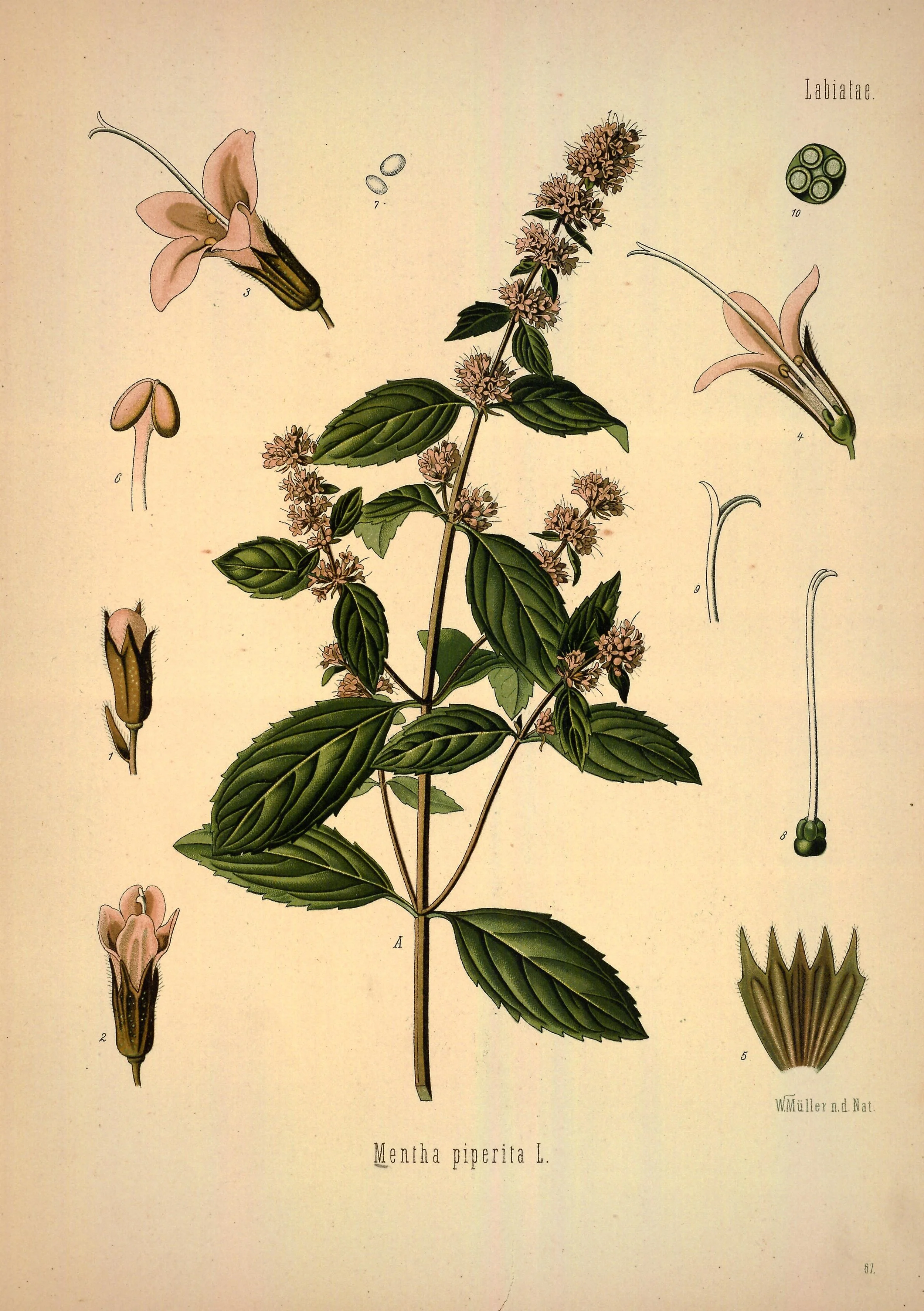
Peppermint (Mentha piperita), plate 67 of Köhler's Medizinal-Pflanzen (1887): opposite, toothed leaves and flowers in whorls — the most forgiving familiar of all.
Franz Eugen Köhler, Köhler's Medizinal-Pflanzen (1887), plate 67, via the Biodiversity Heritage Library. Public domain.
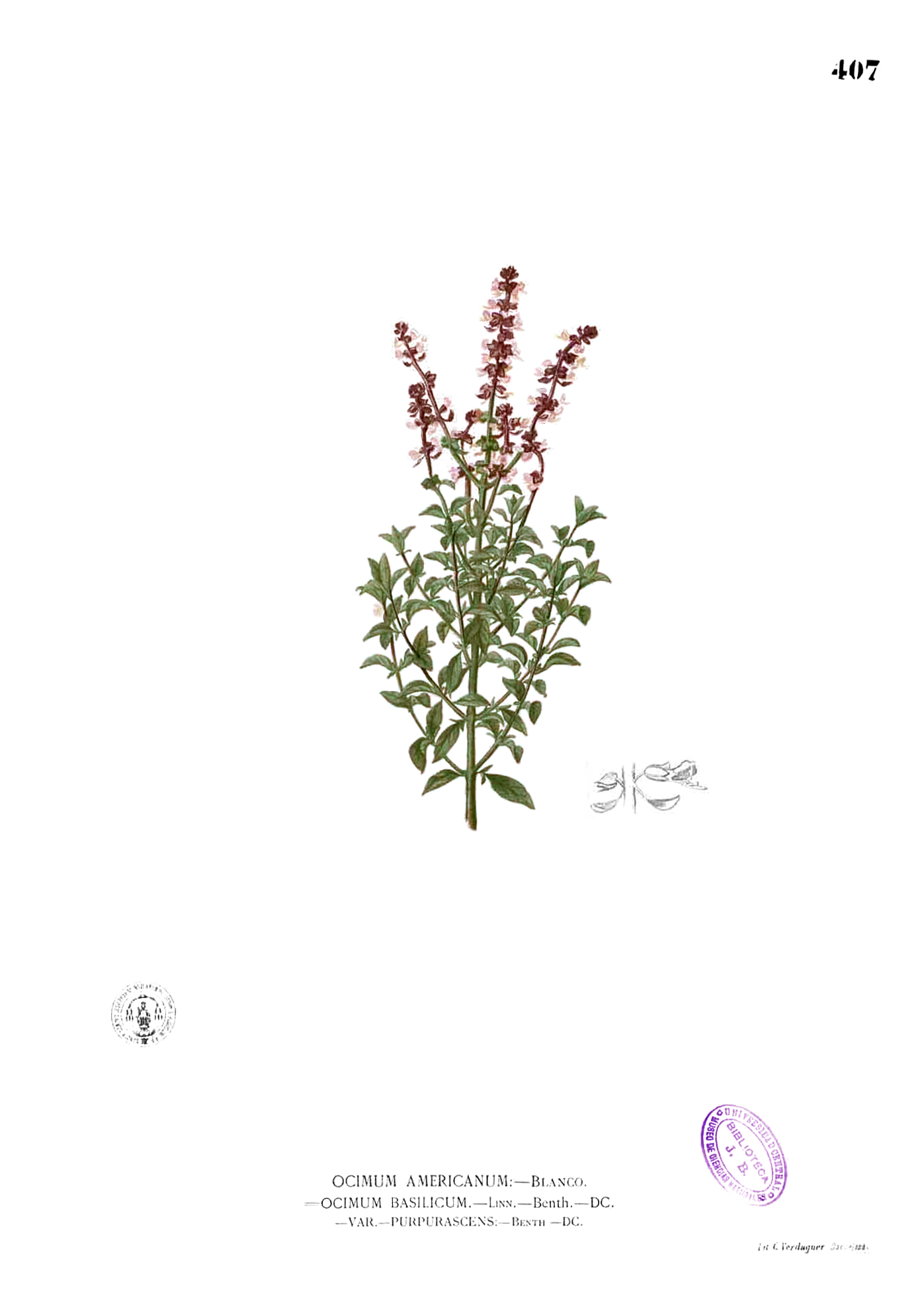
Basil (Ocimum basilicum, the purple-tinged variety named on the plate), plate 407 of Blanco's Flora de Filipinas (1880–1883): the familiar that wilts when thirsty and perks up within hours of watering.
Francisco Manuel Blanco, Flora de Filipinas, Gran edición, Atlas II (1880–1883), plate 407. Public domain.
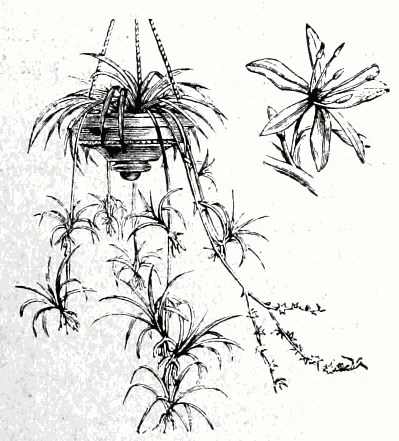
A spider plant in a hanging basket, plantlets cascading on its runners — from Udo Dammer's house-plant book Zimmerblattpflanzen (1908), drawn when this was already a windowsill plant.
Udo Dammer, Zimmerblattpflanzen (Berlin, 1908). Public domain.
★ A good Scholar's Familiar has three qualities: it is hardy, it is responsive, and it is forgiving. Hardy means it tolerates a beginner's mistakes. Responsive means it shows you clearly when something is wrong, through wilting, yellowing, or slowed growth, so you can learn to read its signals. Forgiving means it recovers when you correct course.
Check in: A plant wilts dramatically when thirsty and perks up within hours of watering. Which of the three qualities is it showing you, and why does that make it a good teacher?
Three plants meet these requirements beautifully, and I recommend starting with one of them.
Mint (Mentha species) is nearly unkillable, which makes it the most forgiving choice of all. It grows quickly, so you will see results within days, and its square stems and toothed, fragrant leaves give you excellent material for the anatomy lessons ahead. Keep mint in its own pot. It spreads aggressively through underground runners and will take over any container it shares. Give it bright light and consistent water, and it will thrive.
Basil (Ocimum basilicum) is fast growing and wonderfully communicative. It wilts dramatically when thirsty and perks up within hours of watering, which teaches you to read a plant's water needs faster than any lecture could. Basil loves warmth and bright light, at least six hours daily, and regular harvesting actually encourages bushier growth. Pinch flower buds as they appear to keep the plant producing leaves.
Spider plant (Chlorophytum comosum) asks the least of you and gives a great deal in return. It tolerates lower light than the herbs, needs water only about once a week, and produces cascading plantlets that you can later use for propagation lessons. Its arching striped leaves make leaf anatomy a pleasure to study. Keep it in bright indirect light and let the top inch or two of soil dry between waterings.
If none of these suits you, any hardy houseplant or culinary herb will serve. Pothos, chives, parsley, and aloe are all reasonable choices. What matters is that the plant is alive, accessible to you daily, and one you are willing to observe closely for months.
Avoid, for now, anything delicate, slow growing, or demanding. Orchids, ferns, and seedlings started from tiny seed are wonderful plants, but they are poor teachers for a beginner. They suffer quietly and recover slowly, which means you learn less from them. Save them for later, when your skills have grown.
What Not to Do in the First Weeks
★ Your new Familiar does not need your help yet. It needs your patience. Most beginner plants are lost not to neglect but to enthusiasm, so for the first few weeks, please refrain from three things.
Do not repot it. The nursery pot is fine. Repotting disturbs the roots at the exact moment the plant is adjusting to a new home, and a stressed plant in a new pot is a plant with two problems instead of one. You will learn repotting properly in a later lesson.
Do not fertilize it. Nursery soil contains enough nutrients for weeks. Extra fertilizer now can burn tender roots, and a plant that is settling in cannot use it well anyway. Feeding comes later, when you understand what each nutrient does.
Do not overwater it. This is how most first plants are lost. Check the soil with your finger before watering. If the top inch feels damp, wait. Your plant would rather be slightly thirsty than drowning.
What should you do instead? Watch. Water only when the soil asks for it. Note what you see in your grow ledger. Let the plant teach you its rhythms before you try to improve them. There will be plenty of time for doing. These first weeks are for noticing.
❦ In your workbook: record choosing your plant in your own way — the three qualities, the three recommended plants, and the three first-weeks restraints — copy, sketch, or note what matters.
In your packet: Exercise I — Choose and Settle Your Familiar ⚒ begins here. Work it now, or mark the place and take it as homework — your choice.
The Grow Ledger
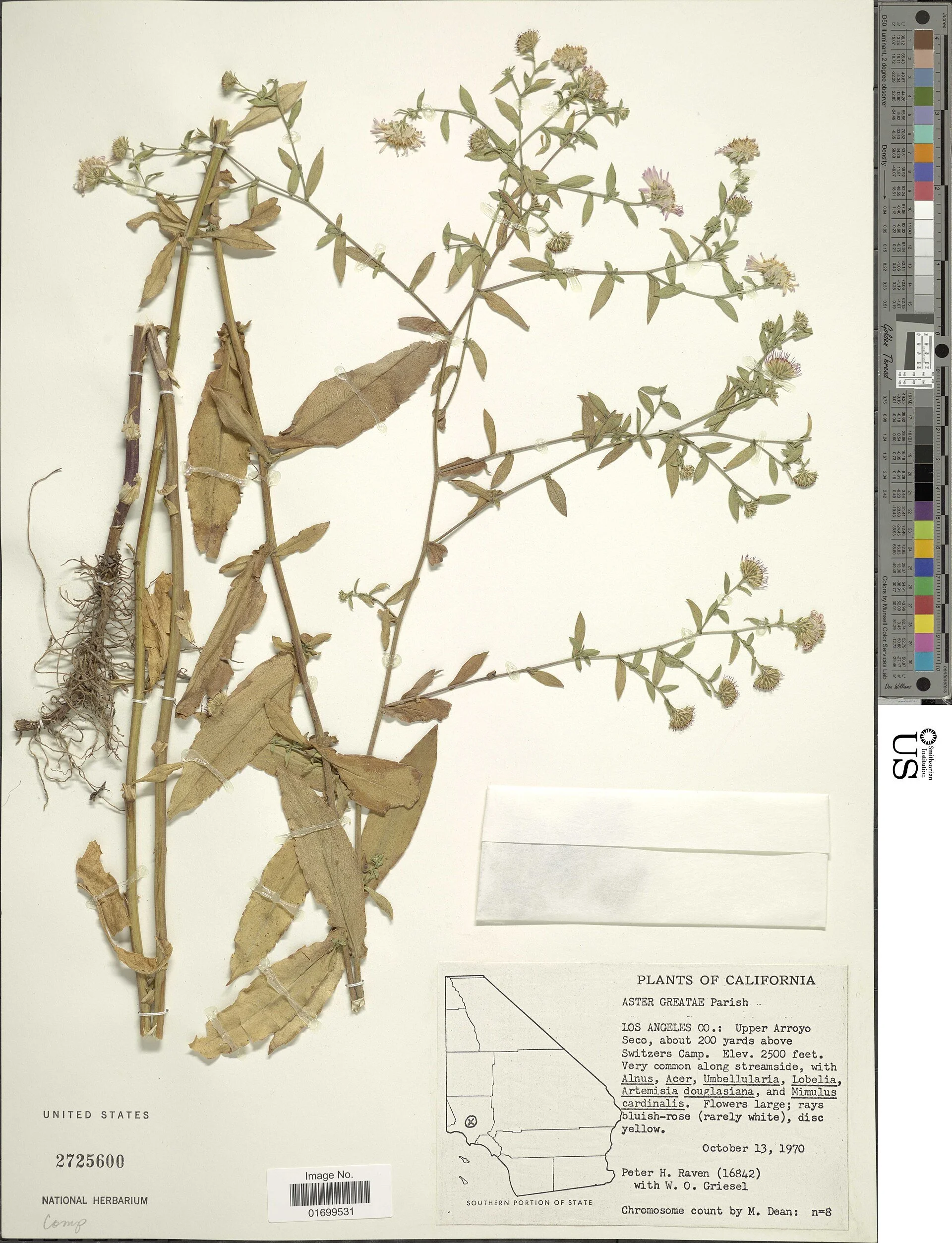
A herbarium sheet is a grow ledger for a wild plant: the pressed specimen above a label that records what it is, where it grew, and the date — Greata's aster (Symphyotrichum greatae), collected in Los Angeles County on October 13, 1970.
Herbarium sheet US 01699531, United States National Herbarium, National Museum of Natural History, Smithsonian Institution. CC0.
★ A grow ledger is the written record of your plant's life under your care. Every serious gardener keeps one, whether on paper or in a bound journal. It is part diary, part scientific record, and part memory. Months from now, when you wonder why your plant struggled in February or thrived in May, the ledger will hold the answer.
Your ledger should record the following for your Scholar's Familiar, beginning today:
- The plant's identity. Common name and, once you learn how in Lesson 4, its scientific name. Where you got it and when.
- Its container and soil. Pot size, whether it has drainage holes, and what kind of soil or potting mix it sits in.
- Its location. Windowsill, shelf, greenhouse bench. Which direction does the nearest window face? How many hours of direct sun does the spot receive?
- Watering events. Date, approximate amount, and how you decided it was time (finger test, weight of the pot, visible wilt).
- Observations. Anything you notice: new leaves, color changes, leaning toward light, insects, soil condition. Date each entry.
- Interventions. Anything you do: repotting, pruning, moving, feeding. Note what you did and why.
There is no wrong way to keep a ledger as long as it is honest and dated. Sketch if you like. Press a fallen leaf between the pages. The ledger is yours, and it will become one of the most valuable things you make in this course.
Do not worry about making it beautiful yet. A ledger becomes beautiful the way a garden does: through steady attention over time, not through a single afternoon of effort.
❦ In your workbook: record the grow ledger in your own way — what it records, and why honest, dated entries matter — copy, sketch, or note what matters.
This ledger has a bound companion. The Scholar's Familiar Journal is the printed course companion for Herbology: a dated spread for every one of the thirty-seven lessons, your Familiar's profile, and room for the whole year of watching one plant grow. Keep your record in whatever notebook you have — the course asks nothing more — but if you would like the ledger made for the purpose, it is printed for the school.
Find it in print at Lulu, and among the Herbology books on the Bookstore Shelf.
PROFESSOR BERYL FERNFOOT
Herbology Greenhouse
Growing Without Outdoor Space
No garden is required for this course. No balcony, no yard, no greenhouse of your own. A windowsill is a perfectly respectable growing space, and generations of herbalists began exactly there.
Choose the brightest window you have. An unobstructed south or west facing window suits most herbs. If your only window faces north or is shaded, a spider plant or pothos will still do well, and a small inexpensive grow light can transform a dim corner. You do not need professional equipment. A simple full spectrum bulb in a desk lamp, kept a few inches above the plant for twelve to fourteen hours a day, will grow herbs through the darkest winter.
★ Keep pots small enough to lift easily, and always use containers with drainage holes. A saucer beneath catches the excess. Without drainage, water collects at the bottom of the pot, roots sit in it, and rot follows. This single detail, drainage, prevents more beginner plant deaths than any other.
Check in: Why does a container without drainage holes put a plant's roots in danger, even if you water carefully?
Indoor air tends to be dry, especially in heated homes. Most houseplants tolerate this, but you can raise humidity around your plant by grouping pots together or setting the pot on a tray of pebbles with water just below the pot's base. Never mist as a substitute for watering. It wets the leaves without reaching the roots, and damp foliage invites fungal problems.
❦ In your workbook: record growing without outdoor space in your own way — the brightest window, drainage first, and humidity without misting — copy, sketch, or note what matters.
The Naturalist's Habit
There is a skill at the heart of Herbology, and it is not memorization. It is attention.
★ The naturalist's habit is simple to describe and takes a lifetime to master: look closely, look regularly, and write down what you see. Visit your plant at roughly the same time each day. Spend two unhurried minutes with it. Notice what changed since yesterday. A new leaf unfurling. Soil a shade lighter. A stem leaning a fraction further toward the window. These are small events, and they are the whole curriculum in miniature.
Check in: What does restraint add to observation — why is "observation first, intervention second" part of the habit and not just politeness toward the plant?
Resist the urge to fuss. Beginners often overwater, overfeed, and overhandle their plants out of eagerness. The naturalist's habit includes restraint. Observation first, intervention second, and only when observation suggests it. Your plant will tell you what it needs if you give it the chance.
Plants do not hurry, and neither should you. Growth happens on its own schedule, and the gardener's job is mostly to watch, learn, and provide steady conditions. Patience is not the absence of action. It is the presence of attention.
❦ In your workbook: record the naturalist's habit in your own way — look closely, look regularly, write it down, and hold your hand — copy, sketch, or note what matters.
In your packet: Exercise III — The First Week of Tending ◐ begins here. Work it now, or mark the place and take it as homework — your choice.
Safety Notes
Herbology is a safe and gentle pursuit, and keeping it that way requires only a few steady habits.
Wash your hands after handling soil, compost, or plants. Soil contains microorganisms that are harmless on unbroken skin but should not be transferred to your face or food. This is simple hygiene, and it should become automatic.
Some plants irritate skin. If you ever notice redness, itching, or a rash after handling a plant, stop handling it, wash the area with soap and water, and note the reaction in your ledger. You will learn to identify hazardous species in Lesson 6, but the habit of cautious first contact starts now: observe first, touch gently, and wash afterward.
Younger students should have adult supervision when using scissors, pruners, or any sharp tool, and when lifting heavy pots or bags of soil. There is no part of this course that requires risk. If an activity feels unsafe, pause and ask for help.
★ Never eat any plant, or any part of any plant, unless you are completely certain of its identity and its safety, and an informed adult has confirmed it. This rule has no exceptions, and it applies to the entire course. Many edible plants have toxic look-alikes, and certainty matters more than curiosity.
❦ In your workbook: record the safety notes in your own way — hand-washing, cautious first contact, adult help with tools, and the rule that has no exceptions — copy, sketch, or note what matters.
Guided Observation: Baseline Observations
★ Before you change anything about your plant's care, record where it stands today. These baseline observations are your starting point. Every future comparison depends on them.
Light. Spend a day noticing the light where your plant lives. When does direct sun arrive, and when does it leave? Is the light bright but indirect, filtered through a curtain? Does a building or tree shade the window for part of the day? Note the window's direction if you can: south-facing windows give the most light in the northern hemisphere, north-facing the least. Record your findings in the ledger.
Water and soil. Press your finger about an inch into the soil. Is it damp, dry, or soggy? Lift the pot. Does it feel heavy with water or light and dry? Look at the soil surface. Is it crusted, mossy, pulling away from the pot's edge? These simple checks tell you a great deal about what your plant has been experiencing. Write it all down.
The plant itself. Look at your familiar the way a naturalist looks at a new specimen. Count the leaves, or estimate. Note their color: deep green, pale, yellowing at the edges? Are the stems firm or floppy? Is new growth visible at the tips? Gently check the undersides of a few leaves for insects or dust. None of this is a test. It is simply the first honest look.
Environment. Record the room temperature if you can, or simply note whether the spot feels warm, cool, or drafty. Note nearby heat sources, radiators, or air vents. Plants notice drafts and dry air long before we do.
Date this entry. It is the first page of a long record.
In your packet: Exercise II — The Light Study ◐ begins here. Work it now, or mark the place and take it as homework — your choice.
Materials
Required (Level One — household items)
- A notebook or journal: any bound notebook becomes your grow ledger. Lined or unlined both work.
- Pencil and eraser: pencil survives greenhouse humidity better than pen.
- A container with drainage holes: any clean pot, tub, or tin with holes added. A saucer or tray beneath.
- Potting soil: a bag of general-purpose potting mix from any garden center or grocery store.
- Your Scholar's Familiar plant: mint, basil, or spider plant from a nursery, grocery store, or cutting.
- A bright windowsill: the brightest window you have. South or west facing is ideal.
Suggested (Level Two — historically closer)
- A bound blank journal: stitched binding rather than spiral, closer to the ledgers historical herbalists kept.
- A terracotta pot: porous clay breathes like the earthenware planters of old kitchen gardens.
- A simple full-spectrum bulb in a desk lamp: approximates steady daylight for winter growing, as greenhouse growers have long supplemented light.
Reflection Questions
Answer the following questions in your workbook.
- Why does Herbology begin with a single living plant rather than with a textbook chapter?
- What makes a plant a good teacher for a beginner? How do hardiness, responsiveness, and forgiveness each contribute?
- Why are baseline observations necessary before changing anything about a plant's care?
- How does the naturalist's habit differ from simply looking at a plant? What does restraint add to observation?
- What challenges might a windowsill grower face, and how does the lesson suggest addressing them?
Workbook Checklist — Lesson 1
In my workbook I have:
- ☐ selected a Scholar's Familiar that is hardy, responsive, and forgiving — or begun observing one daily where it lives
- ☐ opened my grow ledger with its founding, dated entry: identity, container and soil, location and light
- ☐ recorded my baseline observations of light, water and soil, the plant itself, and environment before changing any care
- ☐ completed the light study for my plant's location, morning, midday, and afternoon
- ☐ kept the first week of tending: soil checked before watering, two unhurried minutes of observation daily, every watering and observation recorded
- ☐ stated the safety habits in my own words, including the rule about eating plants that has no exceptions
☐ Lesson completed Date: ___ Signature: ___
The Professor's Closing Note
You have chosen your familiar, opened your ledger, and recorded your first observations. That is no small thing. You have done today what herbalists have done for thousands of years: you have begun paying attention.
In the lessons ahead, your familiar will teach you about leaves and roots, about names and families, about history and hazards. Each lesson will ask you to look at the same plant with new eyes, and each time you will see something you missed before. That is the quiet miracle of observation. The plant does not change. You do.
Keep your ledger close. Visit your plant daily. Write down what you see, even when it seems like nothing changed. Especially then.
The greenhouse doors stand open. I will see you in Lesson 2.
— Professor Beryl Fernfoot, Herbology Greenhouse • Master Herbalist • Head of House Oriens
Cross-Class Connections

Creative Arts · Unit II, Lesson 10 — The Field & Observation Kit
Fernfoot's scholars learn the naturalist's habit at a windowsill; mine learn it with mud on their boots. Come to the Workshop and assemble the kit that carries your journal, your charts, and your small finds into the field and brings them home identifiable — then carry it on a real walk, and fix what the walk complains about. A kit untested is a rumor. We test ours.
Creative Arts · Unit V, Lesson 21 — Building the Plant Press
Your ledger invites you to press a fallen leaf between its pages. When a leaf deserves better than a book's weight, come and build the press that has kept plants flat, dry, and recognizable for five centuries: level boards, even straps, pressure the same at every corner. Build it true here; what goes into it is Professor Fernfoot's teaching.

Potions · Unit I, Lesson 5 — Recipe Journals & Archival Notes
In good order, scholars: heads are terrible archives, and the Laboratory keeps its memory in a book, as your Greenhouse keeps its ledger. Come and build the recipe journal with us — kept daily, kept honestly, never backdated, failures recorded as carefully as successes — and your future self will thank you in both rooms.

Celestial Studies · Unit I, Lesson 2 — Day, Night & the Turning Sky
Evening, stargazers. Your light study watches the sun arrive at a window and leave it again; in the Celestial Tower we learn why — the whole sky wheeling around one still point, the oldest clock ever built. Come up after your windowsill watching and see the turning that moves your plant's light.
Further Reading & Sources
- Growing Herbs Indoors — The Old Farmer's Almanac — practical guidance on light, water, and containers for indoor herb growing. - Spider Plant — Royal Horticultural Society — the RHS plant profile for Chlorophytum comosum, with cultivation and propagation details. - Growing Herbs in Home Gardens — University of Minnesota Extension — university-backed guidance on light, soil, watering, and harvest timing for culinary herbs. - Plant Finder — Missouri Botanical Garden — searchable database of thousands of plant profiles with light, water, and hardiness details. - Poison Control — National Capital Poison Center — the national poison control resource, including the 1-800-222-1222 helpline; save this number before working with any unfamiliar plant. Browse the Herbology shelf in the school Library for readable editions of these works.
Plants from this lesson stand in the Materia Botanica, the school's shared archive — each kept with its lessons, its keepings, and its cautions. This lesson's company:
BasilChivesParsleyPothos, devil's ivySpider Plant The whole Materia BotanicaPROFESSOR BERYL FERNFOOT · HERBOLOGY GREENHOUSE
Submit your work for this lesson using the form below.
CONTINUE IN THE HERBOLOGY GREENHOUSE
Next · Lesson 2: Anatomical Architecture: Foliage & Stems →
Unit I — Morphology, Taxonomy & the Ancient Lore Herbology Greenhouse — All 37 Lessons
The rest of Unit I: Lesson 2 · Foliage & Stems · Lesson 3 · Root Vaults · Lesson 4 · Binomial Classification · Lesson 5 · Historian's Herbarium · Lesson 6 · Baneful Greenhouse · Lesson 7 · Threshold Examination