

HERBOLOGY
Unit V · Lesson 34COMPANION PLANTING & GUILD DESIGN
PROFESSOR BERYL FERNFOOT
Herbology Greenhouse
Master Herbalist
UNIT V • LESSON 34
The Master Herbologist's Craft
Professor's Introduction

Take your time settling in, gardeners,
You have spent this whole course learning to read one plant at a time: your Scholar's Familiar, your seedlings, your cuttings, your harvest. Now we step back and look at the whole bed, because a garden is not a collection of plants standing alone. It is a community, and like any community, the neighbors shape each other.
Companion planting is the old practice of choosing which plants grow near which. Some of it is folk wisdom that has survived centuries because it works. Some of it is folk wisdom that has survived centuries because it is a lovely story. Part of your work as a master herbologist is learning to tell the two apart, and this lesson will show you how.
We will meet the Three Sisters, untangle the truth about marigolds, give basil and tomatoes their honest due, and then I will teach you the design idea that ties it all together: the guild. By the end, you will be planning plant communities instead of single plants, and that is a genuine step toward mastery.
With patience and plenty of room to grow,
Professor Beryl Fernfoot, Herbology Greenhouse • Master Herbalist • Head of House Oriens
The line beneath the map is our road: every stop a place where the knowledge of plants changed, every lesson a step along it.
Lesson Objectives
By the end of this lesson, you will be able to:
- Explain what companion planting is and how it differs from folklore claims about plant "friendships."
- Describe the Three Sisters planting system and the three jobs each sister performs.
- Name two pairings with real evidence behind them and state what the evidence actually shows.
- Identify two companion planting claims that are folklore rather than fact.
- Name three antagonistic pairings to avoid and explain the mechanism behind each.
- Design a small herb guild in which every plant performs more than one function.
Reading this lesson: ★ marks the passages to remember. They return on the unit quiz and the class test. Check in questions ask the material back as you go; answer them in your workbook when you meet them.
Working this lesson: Your assignment packet is the first download on this page. Work in it as the lesson moves along, answering each assignment as its subject is taught — or read the lesson through for your notes and take the assignments as homework afterward. Both are proper ways to sit this class. Signposts in the reading tell you where each assignment belongs. Written answers are short answers in your own words; a few honest lines are worth more than a filled page.
Your Assignment Packet
This lesson's assignments live in its packet: the Lexicon Handout (every term, course terms marked ◆), Materials, Guided Practice, the Assignment Manual with its answer key for self-checking, the Reflection Questions, and the Workbook Checklist. Download the packet before you begin and keep it beside you as you read.
Why Plants Have Neighbors at All
In the wild, plants never grow alone. A forest floor, a meadow, a riverbank: every one of these is a dense crowd of different species tangled together, competing and cooperating at once. What we call companion planting began simply as gardeners watching these crowds and asking which neighbors seemed to thrive together.
Over centuries, those observations hardened into rules: plant this with that, never plant this with that. Some rules earned their place. Others were passed down because they sounded right and nobody checked. Modern research has now checked quite a few of them, and the results are more interesting than the rules themselves. A few old rules hold up beautifully. A few fall apart entirely. And the most useful discoveries are new combinations nobody's grandmother wrote down, because they come from understanding mechanisms: the actual reason a pairing works.
★ That is the heart of this lesson. You will not memorize a chart of friends and enemies. You will learn to ask one question about any pairing anyone recommends: what is the mechanism? If no one can name one, treat the claim gently but skeptically. If the mechanism is named and tested, you have something worth planting.
Check in: What one question does this lesson teach you to ask about any recommended pairing — and how do you treat a claim when no one can answer it?
❦ In your workbook: record why plants have neighbors in your own way — the wild crowd, the rules that hardened, and the one mechanism question — copy, sketch, or note what matters.
The Three Sisters: The Proof It Can Work
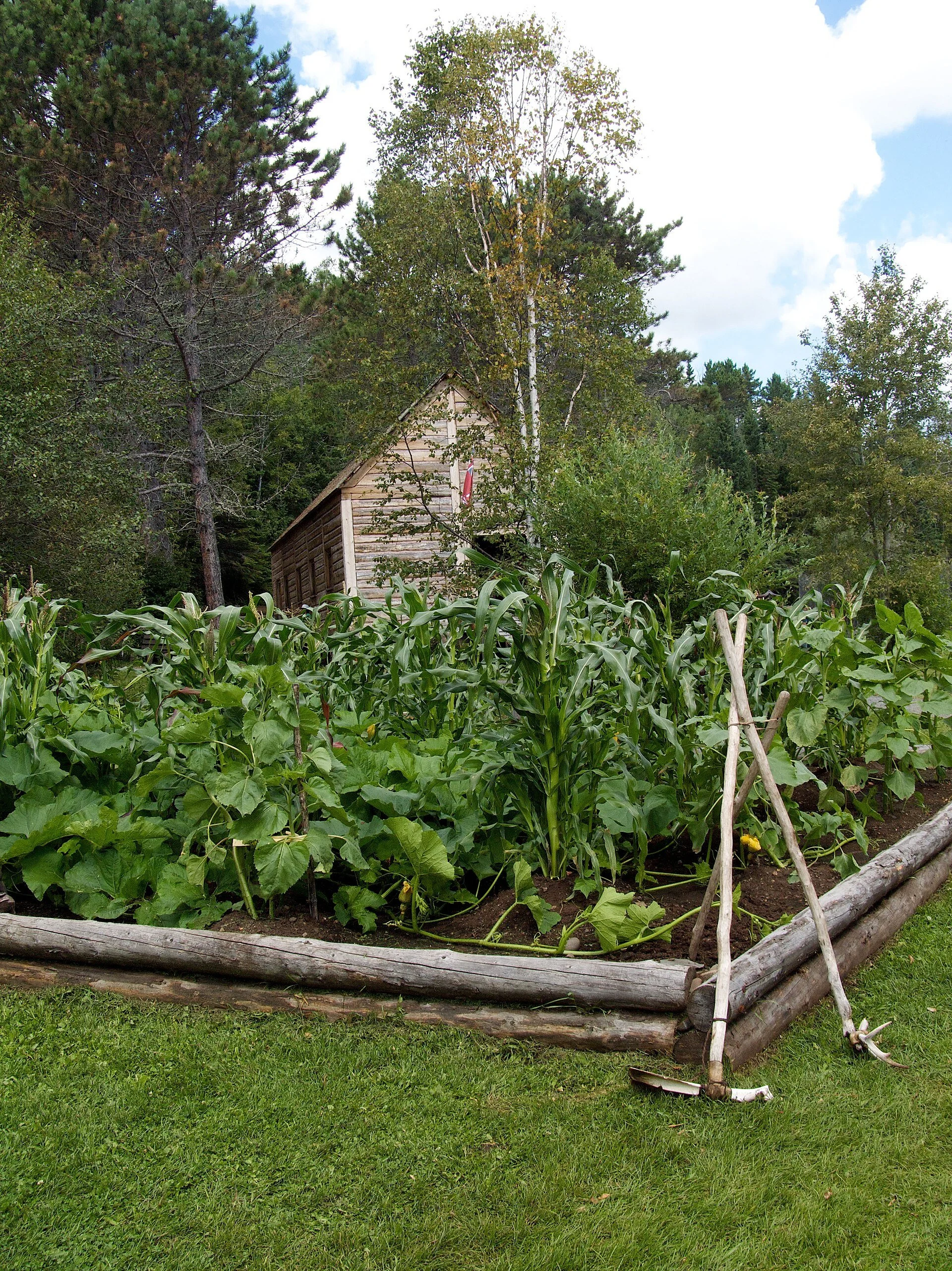
The Three Sisters, growing as one community at Grand Portage National Monument's Ojibwe Village garden: corn standing tall at the center, squash sprawling across the ground in front, beans climbing between them. Each sister performs a different job — trellis, nitrogen fixation, living ground cover — and the bed, not any single plant, is the design.
Three Sisters Garden, Ojibwe Village, Grand Portage National Monument; U.S. National Park Service photograph (Sharon Layton). Public domain.
The most famous companion planting in the world comes from the Indigenous peoples of the Americas, who planted corn, beans, and squash together for centuries. They are called the Three Sisters, and the system works because each sister performs a different job.
★ Corn is the first sister. It grows tall and sturdy, and its strong stalks give the bean vines something to climb.
★ Beans are the second sister. Climbing beans wind up the corn stalks, and in their root nodules live rhizobia bacteria that convert atmospheric nitrogen into a form plants can use. This is nitrogen fixation, and it feeds not just the bean but the soil around it, replenishing some of what the heavy-feeding corn takes out.
★ Squash is the third sister. It sprawls along the ground, and its great leaves shade the soil, holding moisture in and crowding weeds out. Many heritage squash varieties also carry spiny stems that discouraged deer and raccoons from walking into the patch.
Check in: Name each sister and the job she performs — trellis, soil feeding, or ground cover — and name the bacteria behind the beans' work.
The planting order mattered: corn first, beans added when the corn was a few inches tall so the stalks were strong enough to carry the vines, squash last to fill the ground beneath. The harvest fed people, too: eaten together, corn and beans provide complementary proteins.
This is the standard against which every other companion claim gets measured. It has a mechanism for every pairing. It has centuries of harvests behind it. And researchers still study it as one of the most productive mixed plantings known, with the combined planting often out-yielding the same area planted to any one of the three crops alone.
❦ In your workbook: record the Three Sisters in your own way — each sister's job, the planting order, and why this system is the standard every other claim is measured against — copy, sketch, or note what matters.
What the Evidence Actually Supports
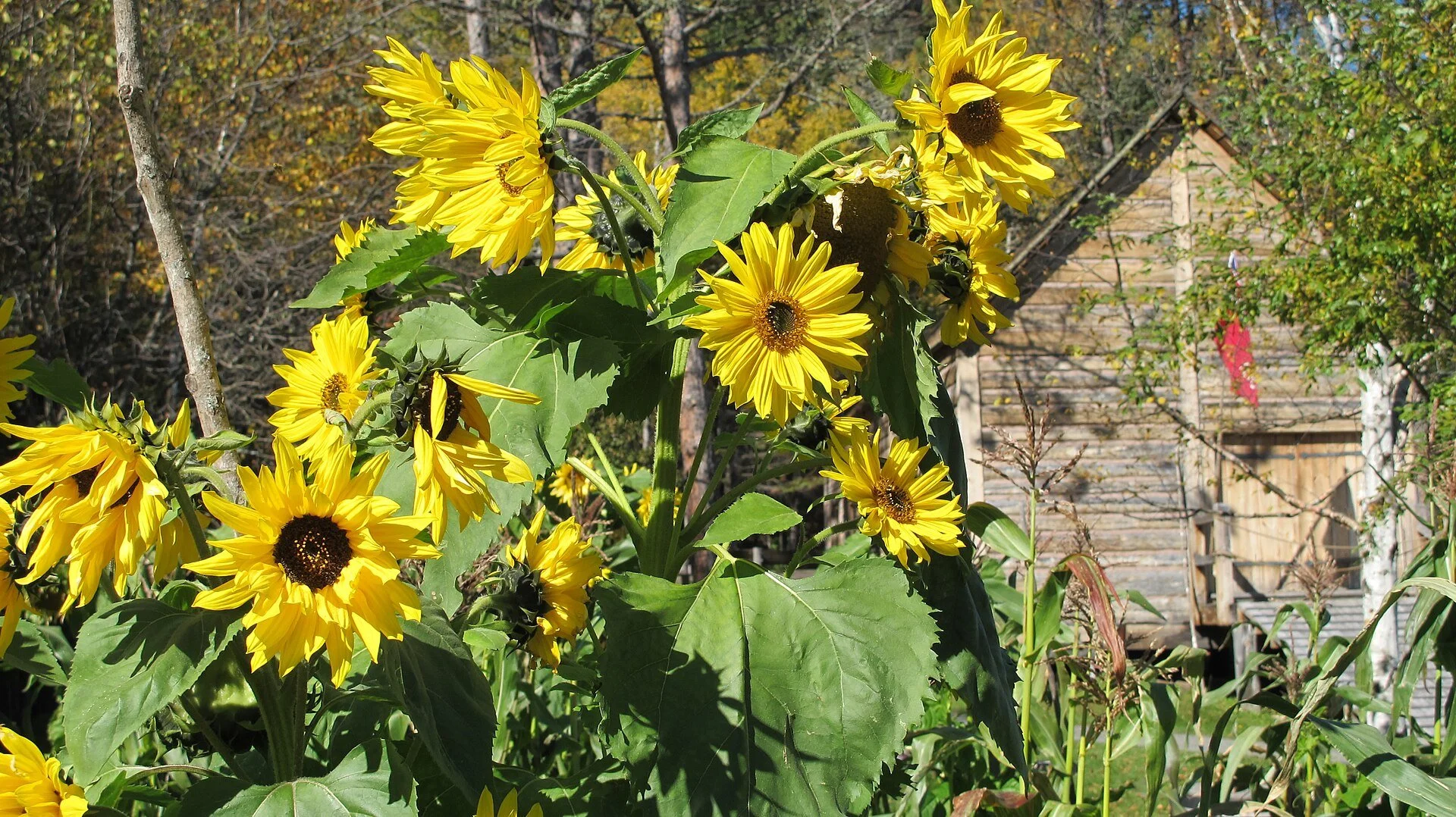
Seneca sunflowers at the edge of the Three Sisters Garden, Grand Portage. Flowers at a planting's edge do not repel pests; they feed pollinators and the predators that eat pests — the insectary effect, and one of the best-evidenced companion moves in this lesson.
Seneca Sunflowers — Three Sisters Garden, Grand Portage National Monument; U.S. National Park Service photograph. Public domain.
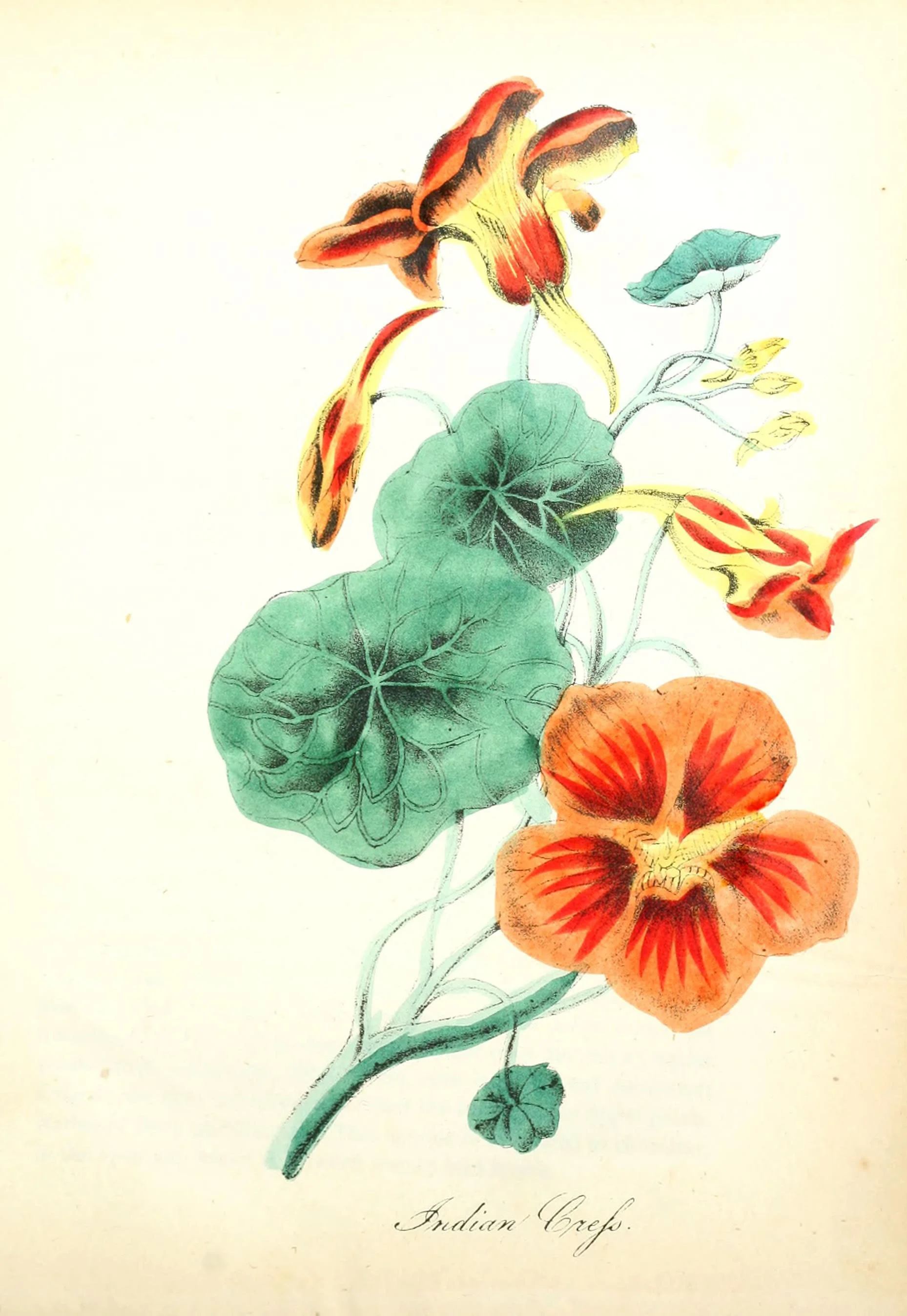
Nasturtium (Tropaeolum majus), plate 23 of The American Flora (1855), captioned on the plate "Indian Cress." This is the lesson's trap crop: aphids strongly prefer it to many garden plants, so it concentrates them where they can be managed — if the gardener monitors it and deals with the gathered pests, rather than letting the trap become a nursery.
Tropaeolum majus, plate 23 in The American Flora, Vol. 1 (1855); scan via the Biodiversity Heritage Library / Internet Archive. Public domain.
Beyond the Three Sisters, several pairings hold up when researchers test them. Note what each one has in common: a named mechanism.
★ Carrots and onions. Carrot rust fly finds carrots almost entirely by scent. Onion-family volatiles help mask that scent and confuse the fly. Research has measured real reductions in carrot fly attacks in onion-intercropped rows. It is not a perfect shield, and in areas with heavy carrot fly pressure the flies still find their way, but the mechanism is real and the pairing costs nothing to try.
★ Nasturtiums as trap crops. Aphids strongly prefer nasturtiums to many garden plants. Planted near brassicas or cucumbers, nasturtiums concentrate aphid (and sometimes cucumber beetle) populations on themselves, leaving the crop relatively untouched. This is genuine trap cropping, but it comes with a responsibility: you must monitor the nasturtiums and deal with the gathered pests, by blasting them off with water or removing the worst leaves, rather than letting the trap become a nursery.
Check in: A trap crop comes with a responsibility — what is it, and what happens if you neglect it?
Flowers for beneficial insects. Alyssum, marigold, dill flowers, yarrow, and chamomile all feed hoverflies, parasitic wasps, ladybugs, and other predators that quietly handle aphids and caterpillars. This is sometimes called the insectary effect, and it is one of the best-evidenced "companion" moves in gardening. It does not repel pests. It feeds the creatures that eat pests.
Legumes as soil feeders. Beans and peas fix nitrogen through rhizobia. The clearest application: cut finished pea plants at the soil line and leave the roots and their nitrogen-rich nodules to decompose, feeding whatever you plant next. Most of the benefit arrives the following season rather than during the growing one.
Tall crops shading heat-sensitive greens. Lettuce bolts in summer heat. Planted where trellised tomatoes or beans give afternoon shade, it stays cool and keeps producing. Nothing mystical: it is a shadow with a job.
Check in: Name two pairings from this section and state the mechanism the evidence actually shows for each.
❦ In your workbook: record what the evidence supports in your own way — scent masking, the trap crop and its responsibility, the insectary effect, and the following-season nitrogen — copy, sketch, or note what matters.
In your packet: Exercise II — The Companion Field Study ◐ begins here. Work it now, or mark the place and take it as homework — your choice.
Professor's Mid-Lesson Note
Notice the pattern, my dear. Every pairing above earns its place with a reason you can point to: a scent that masks, a flower that feeds a predator, a root that fixes nitrogen, a leaf that makes shade. When someone tells you two plants are friends, ask them to name the reason. If they can, plant with confidence. If they cannot, plant with curiosity and watch for yourself. Your garden can be your laboratory.
Professor Fernfoot
The Honest Truth About Marigolds
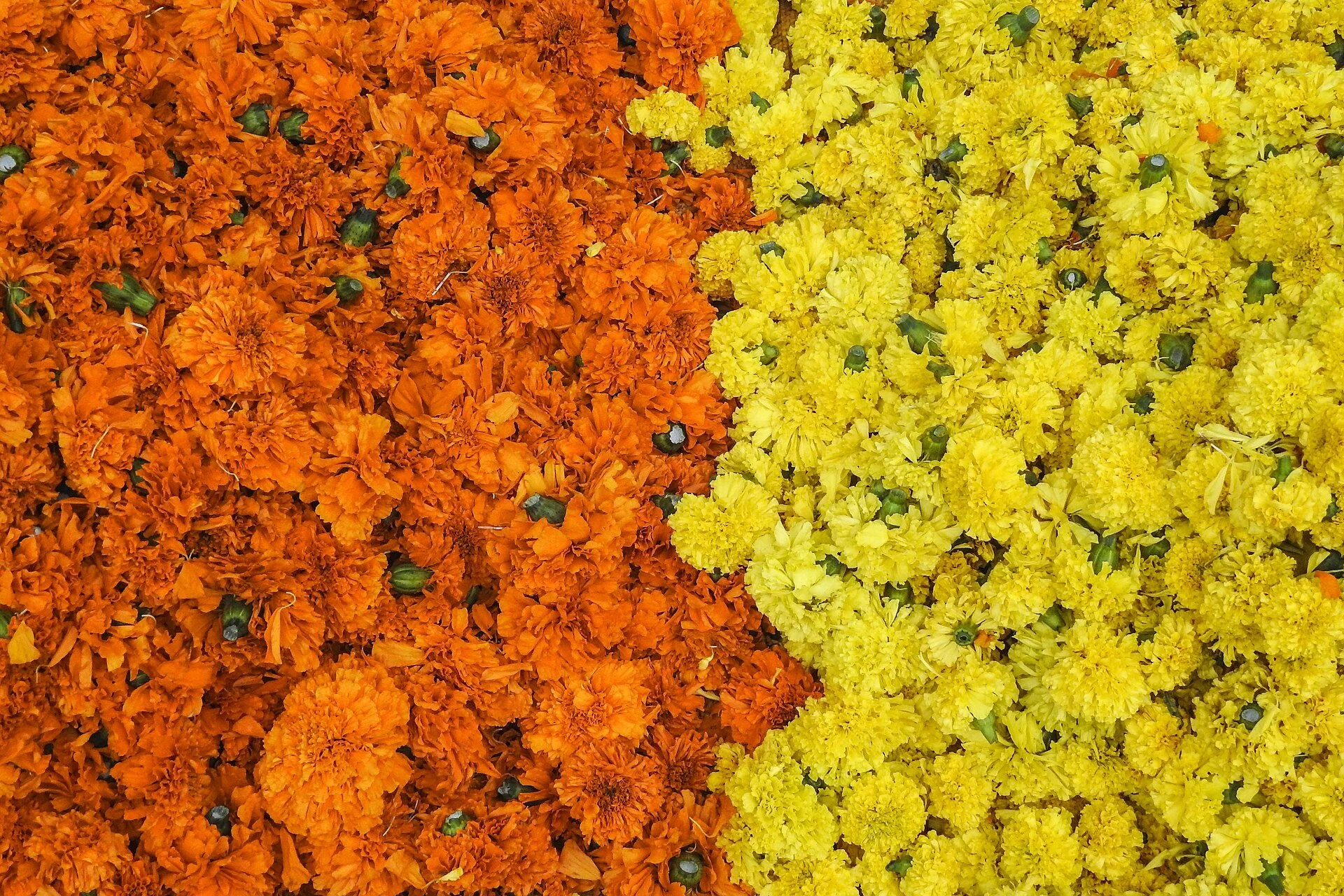
Marigolds (Tagetes), harvested heads in orange and yellow. Plant them freely for their flowers, their pollinators, and their beneficial insects — but know the honest limit this lesson teaches: a border row is not a force field. The nematode effect is real only when French marigolds are grown as a dense cover crop for two to three months and turned into the soil, a method pictured in this lesson's words, not in any photograph here.
Marigold flower heads (Tagetes), photograph via Wikimedia Commons. CC0.
Marigolds are the most repeated claim in companion planting, and they deserve an honest telling. The claim is that marigolds repel pests and suppress root-knot nematodes. Here is what the research shows.
French marigolds (Tagetes patula) really do suppress root-knot nematodes. That part is true, documented by extension services and researchers, including trials run through Louisiana and Oklahoma state extension programs and Indian university pot trials.
★ But the method matters enormously, and most people get it wrong. The effect happens in the marigold's own root zone, and it only works when marigolds are grown as a dense cover crop, planted thickly across a whole bed for at least two to three months, then turned into the soil before the susceptible crop goes in. A border row of marigolds dotted along the edge of a tomato bed produces near-zero effect on nematode populations. The nematodes still find the tomato roots.
Check in: The marigold claim is true but misapplied — what is the method that actually works, and why does a border row fail?
So plant marigolds freely. They are cheerful, they bloom all season, they attract pollinators and beneficial insects. Just do not expect a border row to act as a force field. And in a container of fresh potting soil, the nematode question is mostly irrelevant anyway, since you started with clean soil.
❦ In your workbook: record the honest truth about marigolds in your own way — the real effect, the cover-crop method, and the border row that does nothing — copy, sketch, or note what matters.
Basil and Tomatoes: Giving the Pair Its Due
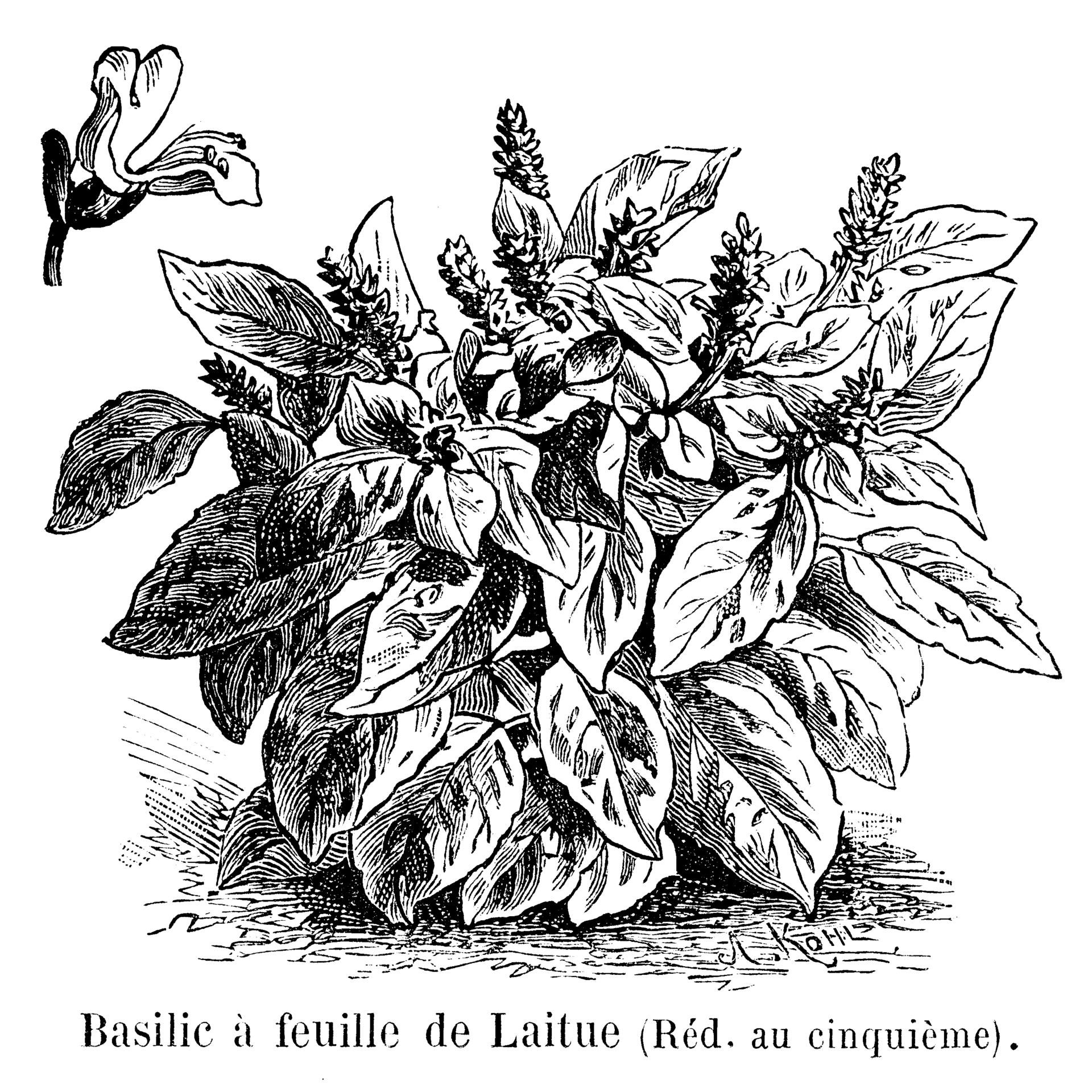
Lettuce-leaf basil, from Vilmorin-Andrieux's Les Plantes Potagères (1904 printing). Basil earns its place beside tomatoes for true reasons — identical needs of full sun, steady water, and rich soil; volatile oils with some repellent effect in trials; support for beneficial insects — and not for the beloved flavor claim, which a three-year double-blind taste test did not support.
Basil engraving from Vilmorin-Andrieux, Les Plantes Potagères (1904). Public domain.
"Basil makes tomatoes taste sweeter" is one of the most beloved claims in gardening. There is no controlled study supporting it. A double-blind taste test over three years found no preference for tomatoes grown next to basil. The flavor claim is folklore, and we say so with love.
★ The real reasons to plant them together are better, and they are practical:
They want identical conditions: full sun, steady water, rich soil. Neither compromises for the other. Basil's volatile oils show some repellent effect against thrips and whiteflies in crop trials. Research has found basil supports populations of beneficial insects in tomato plantings, working as a banker plant for predators. The basil canopy shades the soil surface, cutting evaporation. * You cook them together, so they belong within arm's reach of the kitchen door.
Check in: The flavor claim is folklore — name two of the true, practical reasons to plant basil and tomatoes together anyway.
Plant them together, but plant them for the true reasons: shared needs, useful insects, cool soil, and convenience. Folklore is not evidence, but folklore is sometimes still pointing at a good decision for the wrong reason.
❦ In your workbook: record basil and tomatoes in your own way — the folklore claim, the taste test that settled it, and the true reasons the pair still belongs together — copy, sketch, or note what matters.
In your packet: Exercise III — The Claim Check ✎ begins here. Work it now, or mark the place and take it as homework — your choice.
Antagonistic Pairings: When Neighbors Hurt Each Other
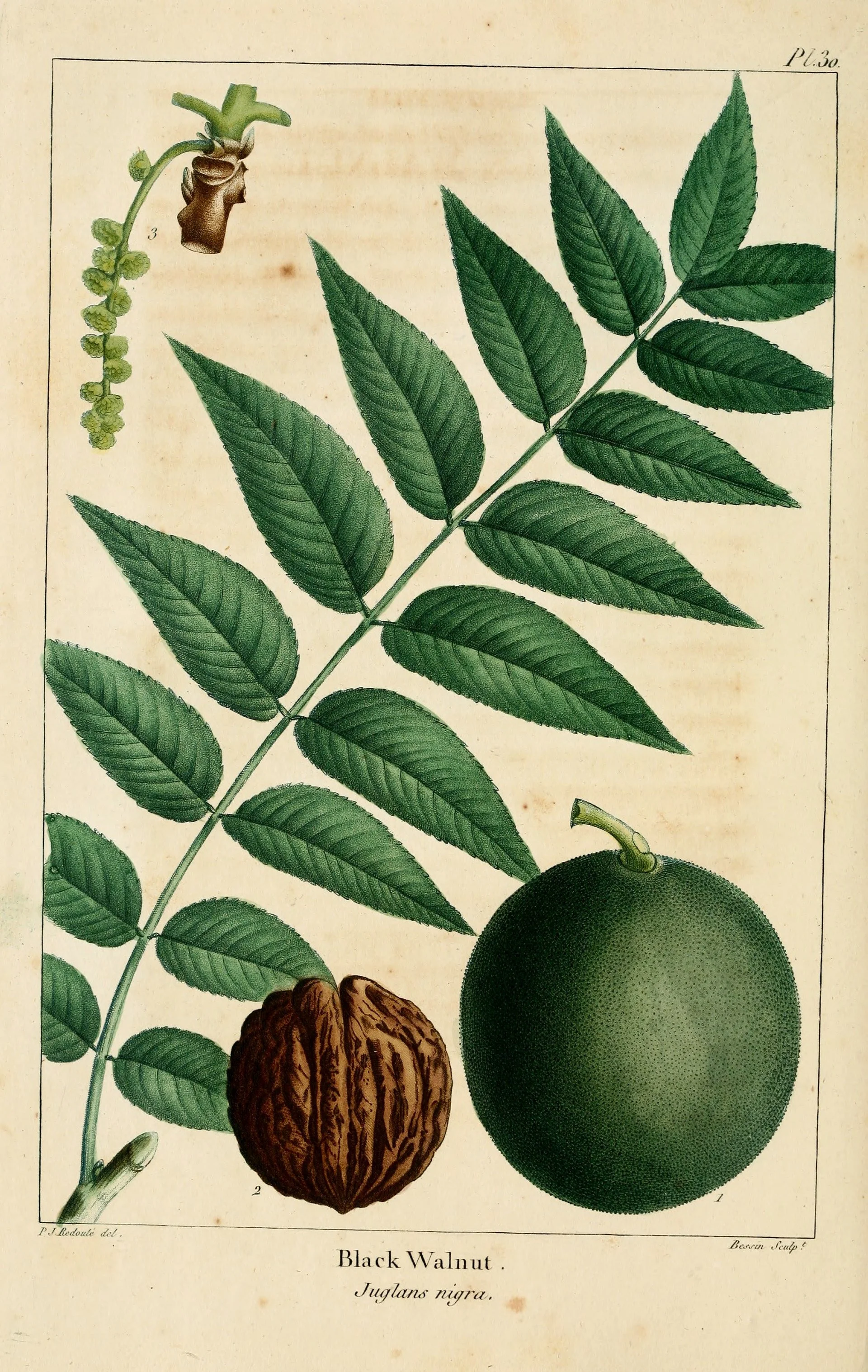
Black walnut (Juglans nigra), plate 30 from Michaux's North American Sylva, drawn by P. J. Redouté: the pinnate leaf, the green husked fruit (1), the shelled nut (2), and the catkin (3). The tree produces juglone in its roots, leaves, nut hulls, and bark, and solanaceous vegetables — tomatoes, peppers, potatoes — are among the least tolerant of it. Keep tomatoes well away from walnut trees.
F. Andrew Michaux, The North American Sylva, plate 30 (black walnut), drawn by P. J. Redouté. Public domain.
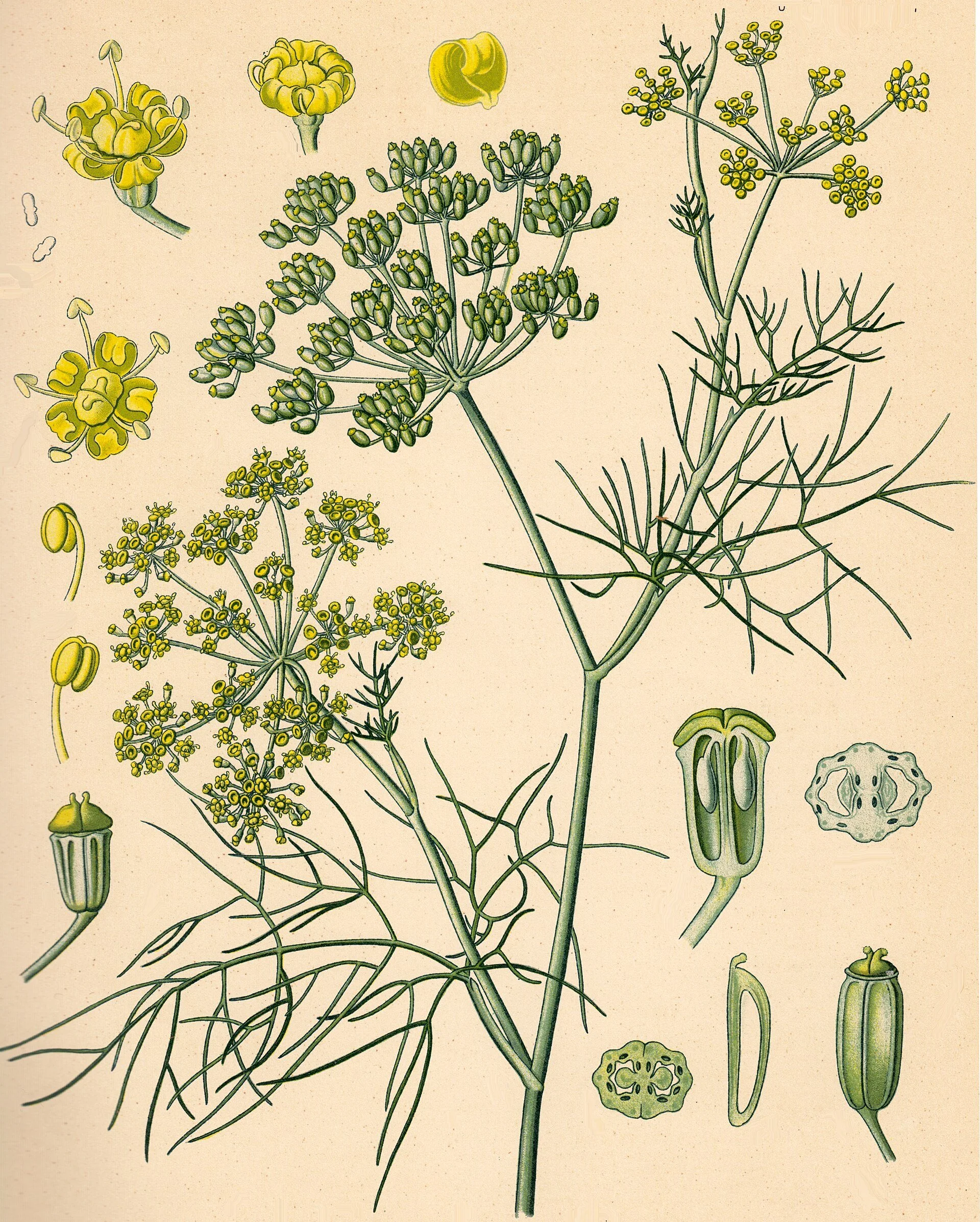
Fennel (Foeniculum vulgare), from Köhler's Medizinal-Pflanzen: feathery leaves, yellow flower umbels, and the seed fruit sectioned at lower right. Fennel is genuinely allelopathic to most neighboring vegetables and herbs, inhibiting their growth — the lesson's ruling is to give it its own container or its own section of the garden, away from everything else.
Foeniculum vulgare, plate from Köhler's Medizinal-Pflanzen (1887–1914). Public domain.
Some plants genuinely harm their neighbors. The mechanisms here are as real as the friendly ones, and a master herbologist knows both.
★ Black walnut and juglone. The black walnut (Juglans nigra) produces juglone in its roots, leaves, nut hulls, and bark. Solanaceous vegetables, meaning tomatoes, peppers, and potatoes, are among the least tolerant of it; affected plants yellow, wilt, and die. This is allelopathy in action — a plant releasing chemicals that suppress the growth of neighboring plants. One honest caveat: extension researchers note that little of the work has been done in ordinary garden soils, and some poor growth under walnuts is simple competition for water and light. Still, keep tomatoes well away from walnut trees, because the risk is documented even if the mechanism's range is debated.
★ Fennel. Fennel is the one piece of companion folklore with genuine teeth. It is allelopathic to most neighboring vegetables and herbs, inhibiting their growth. Give it its own container or its own section of the garden, away from everything else.
Alliums and legumes. Onions and garlic produce volatile compounds that can stunt the growth of beans and peas. The evidence is documented. Keep them apart.
Tomatoes and corn. They share a pest: the corn earworm is the same insect as the tomato fruitworm. Planting them side by side concentrates a buffet for one pest.
Heavy feeders together. This one is simple arithmetic, not chemistry. Two heavy feeders in the same small bed compete for the same nutrients. Rotating and spacing them is enough.
Check in: Name three antagonistic pairings to avoid, and give the mechanism behind each one.
Notice what most "enemies lists" have in common: they trace back to one old book, not to trials. Keep the few with real mechanisms and hold the rest lightly.
❦ In your workbook: record the antagonistic pairings in your own way — juglone and its honest caveat, fennel's teeth, the allium rule, and the shared pest — copy, sketch, or note what matters.
Guild Design: Putting It All Together
In 1978, Australian ecologist Bill Mollison and his student David Holmgren published Permaculture One, formalizing permaculture: designing human habitats and food systems as stable, productive communities that mimic natural patterns. From that work comes the idea that gathers everything in this lesson: the guild.
★ A guild is a group of plants (and sometimes other elements) assembled so they help each other, each performing several functions. The design rule behind it is called stacking functions: each element performs many functions, and each important function is supported by many elements. A single plant that only feeds you is underused. A garden job supported by only one plant is brittle. The Three Sisters are the classic guild, but the idea works at any scale, including a cluster of pots on a balcony.
Check in: State the stacking-functions rule in both directions — what each element should do, and what each important function should have.
Building a guild is straightforward once you know the parts:
- Name the functions you want. Food, shade, pest control, pollination, soil feeding, beauty. Every guild needs its list before it needs its plants.
- Give every plant at least two jobs. A plant that earns its space twice is twice as valuable.
- Back every important job with more than one plant. If the aphids arrive and your only defense was one flower border, you were never defended.
- Place plants by need. Match sun, water, and height first. A guild fails fastest when its members want different conditions.
- Watch and revise. A guild is a living design. Note what works, move what does not, and improve it next season.
❦ In your workbook: record guild design in your own way — the 1978 origin, the stacking-functions rule, and the five building steps — copy, sketch, or note what matters.
A Worked Example: The Kitchen Door Herb Guild
Imagine five pots clustered by a kitchen door, or one small raised bed. Here is a guild, with every plant's jobs named:
Basil (center). Jobs: kitchen harvest; beneficial insect support; soil shading with its canopy. Loves full sun and steady water.
Chives (border). Jobs: kitchen harvest; allium volatiles that confuse flying pests like carrot fly and aphids; chive flowers that feed pollinators.
Nasturtium (edge, allowed to trail). Jobs: trap crop for aphids, drawing them away from the herbs; edible flowers for salads and garnish.
Chamomile (one corner). Jobs: hoverfly magnet, whose larvae are voracious aphid predators; flowers for tea (see the Potions laboratory's infusion lessons for preparation craft).
A single French marigold (one corner). Jobs: pollinator attraction; bright color to please the eye. Remember: in a pot of fresh soil, its nematode-fighting power is irrelevant, and we plant it for its flowers and insects, not for folklore.
★ Count the functions: kitchen harvest comes from four plants. Pest management comes from four. Pollination support comes from three. No single plant carries the whole design, and no design job depends on a single plant. That is stacking functions.
Check in: In the Kitchen Door guild, which jobs are backed by more than one plant — and why does that backing matter?
If you are working the no-plant path: sketch this same guild on paper, or find a community garden bed and map its members the same way. The design skill is identical; only the ownership differs.
❦ In your workbook: record the Kitchen Door guild in your own way — its five plants, each one's jobs, and the function count that proves the stacking — copy, sketch, or note what matters.
Your Turn: Design Your Guild
Exercise I asks you to design a guild for your own space. Begin with the functions you want, choose plants whose needs match your light and climate, and give every plant at least two jobs. Then Exercise II turns you into a field researcher: you will observe a real planting and assess its companions honestly, evidence first. The Scholar's Familiar is welcome in your guild design if it fits, but it is not required.
In your packet: Exercise I — Design Your Guild ✎ begins here. Work it now, or mark the place and take it as homework — your choice.
❦ In your workbook: record your turn in your own way — the functions you want first, and the Familiar's welcome-but-not-required place in the design — copy, sketch, or note what matters.
Safety Notes
Companion planting involves no special hazards beyond ordinary gardening. Still, the standard rules apply:
Wear gloves when turning soil or handling unknown plants; wash your hands when you come in from the garden. Watch for bees and wasps when working around flowering companions. That is what the flowers are for, after all. Never taste an unknown plant. Some plants discussed as companions, like fennel seed or nasturtium flowers, are food-safe; others are not. Identify with certainty before tasting. Lift heavy bags of soil with your legs, not your back. Ask for help with anything you cannot comfortably carry. * Garden in the heat of the day only with water, a hat, and sunscreen. The plants can wait for cooler hours.
❦ In your workbook: record the safety notes in your own way — gloves and hand-washing, the bees the flowers are for, and never taste an unknown plant — copy, sketch, or note what matters.
Guided Observation: Reading a Planting for Its Mechanisms
This lesson's observation is the evidence eye, worked in full on a real planting before any design of your own: a close reading of three neighbors, asking of every pair the lesson's one question — what is the mechanism? — because a guild designed from mechanisms stands, and a guild designed from a friends-and-enemies chart only hopes.
You will need:
- a real planting to read (your own garden or pots, a neighbor's bed with permission, a community garden, or a park bed)
- your workbook or field notebook
- a pencil
Choose three neighbors. Pick three plants growing near each other and record what they are and how they are arranged: which is tallest, which shades the ground, which flowers while you watch.
Ask the question of every pair. For each pair, propose one possible benefit or harm, and name the mechanism you think is behind it: scent masking, shade, nitrogen fixation, pest attraction, root competition. If you cannot name a mechanism, write that down honestly — "no mechanism named" is a finding, not a failure.
Watch the insects. Spend a few quiet minutes at the planting. Note which flowers draw visitors, and whether any plant is gathering pests the way a trap crop should. The insectary effect does not repel pests; it feeds the creatures that eat pests — look for the feeders and the fed.
Check the soil story. Look for a legume among the three. If one is present, its roots carry the nodules where rhizobia work; remember that most of the nitrogen benefit arrives the following season, after the roots decompose.
Consider:
- Which pair in your planting has the clearest named mechanism — and what is it?
- Did any pair surprise you: a claimed friendship with no mechanism, or a quiet benefit nobody charted?
- Judged by evidence alone, would you plant these three together yourself? Why or why not?
No-plant alternative: work the same reading on a community garden bed, a park bed, or a store display you can visit — the source's own field-study ground. Map its members exactly as above.
Workbook path: if no planting is within your reach this week, work the reading on the Kitchen Door Herb Guild as printed in this lesson, or on a clear photograph of a mixed planting — name each plant, propose a mechanism for each pair, and mark which claims you would need an outside source to settle. The evidence eye is the skill; the live bed is its next occasion.
Materials
Required (Level One — household items)
- Notebook and pencil: your guild design journal for measurements, sketches, and plant notes.
- Ruler or measuring tape: to measure your space and its hours of direct sun.
- Colored pencils or markers: for a labeled guild map, with every plant shown and its jobs noted.
- Three to five plants (or seeds/seedlings): chosen to match your light and climate, one for each guild role you design — for planting the design out, when you choose to realize it; the design itself is complete on paper.
- Pots or a bed with drainage: whatever your guild will live in, ready with potting mix or garden soil.
- Watering can: for settling new plantings into place.
Suggested (Level Two — historically closer)
- Raised bed or cold frame: a defined guild bed, the way kitchen gardens have been framed for centuries.
- Finished compost: to settle guild plantings into rich, living soil.
- Row cover or fine mesh: to protect young guild members while they establish.
Safety notes: Wear gloves when turning soil or handling unfamiliar plants; wash your hands when you come in from the garden. Watch for bees and wasps around flowering companions. That is what the flowers are for. Never taste an unknown plant. Identify with certainty before tasting anything. Lift heavy bags of soil with your legs, not your back; ask for help with anything heavy. Garden in the heat only with water, a hat, and sunscreen.
Reflection Questions
Answer the following questions in your workbook.
- Why does this lesson insist on asking "what is the mechanism?" instead of memorizing a chart of plant friends and enemies?
- The Three Sisters system is centuries old. What makes it still worth studying in a modern lesson on companion planting?
- The marigold claim is "true but misapplied." Explain what that means, in your own words, using another example from your own experience if you can.
- Fennel is described as the one piece of companion folklore "with teeth." What makes it different from the basil-tomato flavor claim?
- In your guild design, which function did you back with the most plants, and why did that function earn the extra insurance?
Workbook Checklist — Lesson 34
In my workbook I have:
- ☐ explained what companion planting is and how it differs from folklore claims about plant "friendships," by asking what the mechanism is
- ☐ described the Three Sisters and the three jobs each sister performs — trellis, nitrogen fixation through rhizobia, and shade that holds moisture and crowds weeds out
- ☐ named two pairings with real evidence behind them and stated what the evidence actually shows, mechanism included
- ☐ identified two companion planting claims that are folklore rather than fact — the basil flavor claim and the marigold border row among them
- ☐ named three antagonistic pairings to avoid and explained the mechanism behind each
- ☐ designed a small herb guild on paper — functions named first, three to five plants matched to my light, every plant carrying at least two jobs, every important job backed by more than one plant
- ☐ completed the field study honestly: three neighbors, a named mechanism (or an honest "no mechanism named") for every pair, and one researched verdict with its source
- ☐ rewritten two common claims honestly, the way this lesson rewrote the marigold and basil claims
☐ Lesson completed Date: ___ Signature: ___
The Professor's Closing Note
You are no longer planting single plants, my dear. You are composing communities. The Three Sisters farmers understood this centuries ago: the corn did not need to become a bean, and the bean did not need to become corn. Each sister simply had to be good at her own work and let her sisters be good at theirs.
Design your guild with that same generosity. Give every plant real work to do, back every important job twice over, and then step back and watch what your little community becomes. You will be surprised, and you will learn more from the surprises than from the plans.
With patience,
— Professor Beryl Fernfoot, Herbology Greenhouse • Master Herbalist • Head of House Oriens
Cross-Class Connections

Potions · Unit IV, Lesson 27 — Hydro-Infusions
Benches clear, notebooks open, scholars. Professor Fernfoot's Kitchen Door guild grows the chamomile, and her lesson sends you to this laboratory for its preparation craft — rightly, for the steeping of delicate flowers is taught here and nowhere else. In this lesson you will learn what an infusion is: dried chamomile flowers steeped in hot water, covered, never simmered, because the material dictates the method and a simmer would destroy the very compounds you wanted. Grow the flower in the Greenhouse; bring it here to learn what hot water honestly does to it. — Muddlenook.

Creative Arts · Unit V, Lesson 22 — Garden Structures: Supports, Cold Frames & Garden Models
What stands in the garden, and how truly it stands, is ours, scholars. Professor Fernfoot teaches which plants climb, which lean, and which give the afternoon shade her lettuce guilds depend on — trellised tomatoes and beans are her planting scheme, and her word governs every living thing that climbs. My bench builds what they climb: supports, trellises, and cold frames, lashed, screwed, or pegged, squared by the diagonals, and rehearsed at model scale before full-size stock is cut. Design the guild in the Greenhouse; build its bones here, and it will stand the season. — Timberclank.

Celestial Studies · Unit I, Lesson 3 — The Tilted Year: Why We Have Seasons (named, no link — Celestial Studies has no live lesson slugs yet)
Come up to the Tower, scholars, when your guild plan asks its hardest question: how much sun, and when? Professor Fernfoot has you measure your space's hours of direct sun, and match plant to light — but the sun itself keeps a tilted schedule, and this lesson teaches it: the lean of Earth's axis, about 23.5 degrees, that makes the seasons, lengthens and shortens your days, and moves the shade across your bed between spring and midsummer. Every planting calendar in the Greenhouse runs on the tilt. Learn the tilt here, and your guild's sun hours will never surprise you. — Glimmerwick.
Further Reading & Sources
- Returning the 'Three Sisters' to Native American Farms — Phys.org. The corn, beans, and squash system, with each sister's job explained.
- Marigolds vs. Nematodes — LSU AgCenter. The honest fine print on how marigolds actually suppress nematodes.
- Allelopathy in the Home Garden — Penn State Extension. Black walnut, juglone, sunflowers, and other allelopathic plants.
- Control of Root-Knot Nematode in the Garden — Oklahoma State Extension. Companion planting with marigolds in context.
- Myth vs. Reality: Companion Planting — Verdenook. An evidence-graded companion planting chart.
- What is Permaculture Anyway? — Hennepin County Master Gardeners. The Mollison and Holmgren origins and an accessible introduction.
Browse the Herbology shelf in the school Library for readable editions of these works.
End of Lesson 34.
Plants from this lesson stand in the Materia Botanica, the school's shared archive — each kept with its lessons, its keepings, and its cautions. This lesson's company:
Black walnutChiliChivesCorianderCorn The whole Materia BotanicaPROFESSOR BERYL FERNFOOT · HERBOLOGY GREENHOUSE
Submit your work for this lesson using the form below.
CONTINUE IN THE HERBOLOGY GREENHOUSE
← Previous · Lesson 33: Toxic Plants & Garden Safety Next · Lesson 35: Foraging Ethics & Wildcrafting →
Unit V — The Master Herbologist's Craft Herbology Greenhouse — All 37 Lessons
The rest of Unit V: Lesson 33 · Toxic Plants & Safety · Lesson 35 · Foraging Ethics · Lesson 36 · Materia Botanica · Lesson 37 · Garden Design · The Master Herbologist Defense