

HERBOLOGY
Unit II · Lesson 9SOIL CHEMISTRY: THE pH SCALE
PROFESSOR BERYL FERNFOOT
Herbology Greenhouse
Master Herbalist
The chemistry of the soil affects how plants access nutrients. Learning to read it is learning to listen to the ground itself.
Professor's Introduction

Rest a moment, scholars.
Last lesson, you held soil in your hands and learned to read its texture. You felt how sand slips, how silt smooths, how clay clings. Today we go one layer deeper, into something your fingers cannot feel at all: the quiet chemistry happening in every handful of earth.
Do not be nervous. Chemistry sounds like a stern subject, all glassware and strict numbers, but soil chemistry is really just another way of listening. Your plants have been listening to it all along. Every yellow leaf, every stunted stem, every plant that simply refuses to thrive in soil that looks perfectly fine is telling you something about pH. Today you learn the language.
Take it slowly. The numbers will make sense, I promise. And at the end of this lesson, you will test your own Familiar's soil and know something about its home that you did not know yesterday.
— Professor Beryl Fernfoot, Herbology Greenhouse • Master Herbalist • Head of House Oriens

The line beneath the map is our road: every stop a place where the knowledge of plants changed, every lesson a step along it.
Lesson Objectives
By the end of this lesson, you will be able to:
- Explain what the pH scale measures and read a pH value
- Describe how soil pH controls which nutrients plants can access
- Recognize the signs of nutrient lockout in a struggling plant
- Test soil pH using a proper test kit and understand the limits of home fizz tests
- Adjust soil pH safely using lime or sulfur, with appropriate precautions
Reading this lesson: ★ marks the passages to remember. They return on the unit quiz and the class test. Check in questions ask the material back as you go; answer them in your workbook when you meet them.
Working this lesson: Your assignment packet is the first download on this page. Work in it as the lesson moves along, answering each assignment as its subject is taught — or read the lesson through for your notes and take the assignments as homework afterward. Both are proper ways to sit this class. Signposts in the reading tell you where each assignment belongs. Written answers are short answers in your own words; a few honest lines are worth more than a filled page.
Your Assignment Packet
This lesson's assignments live in its packet: the Lexicon Handout (every term, course terms marked ◆), Materials, Guided Practice, the Assignment Manual with its answer key for self-checking, the Reflection Questions, and the Workbook Checklist. Download the packet before you begin and keep it beside you as you read.
A Note for Scholars Without a Familiar
If you do not have a living plant of your own, you can still do every activity in this lesson. Adopt a plant you can visit regularly: a park tree, a neighbor's garden bed, a plant in a store display, even a determined sidewalk weed. The observation skills are identical. Only the ownership differs. Wherever this lesson says "your Familiar," read "your adopted plant."
What Is pH?
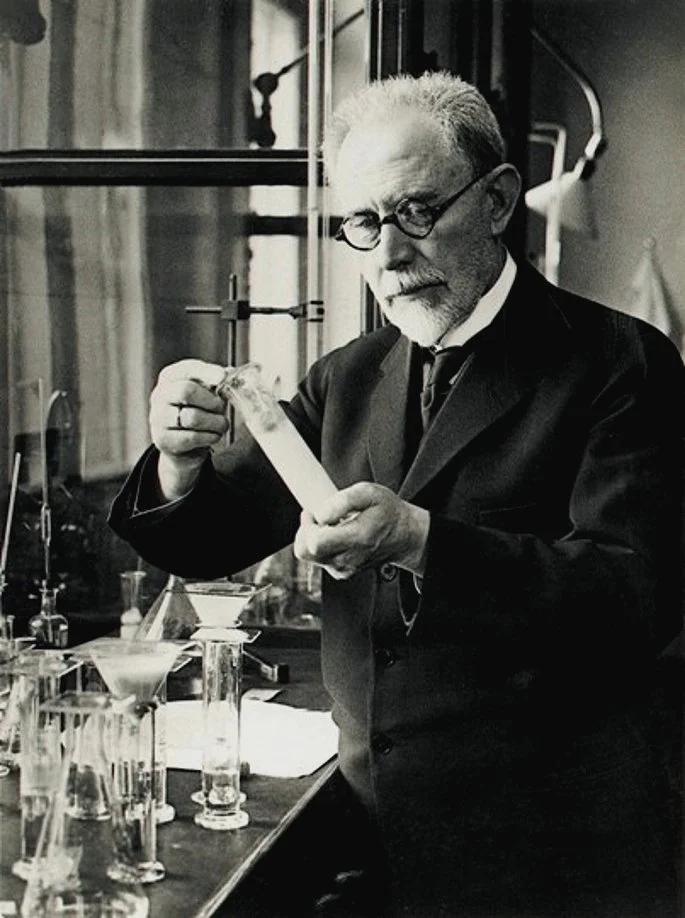
Søren Peter Lauritz Sørensen (1868–1939), the Danish chemist who introduced the pH notation in 1909, at work in his laboratory. The scale he proposed runs 0 to 14 — 7 neutral, below it acidic, above it alkaline — and each whole number on it is a tenfold step.
Photograph of S. P. L. Sørensen; photographer unknown; via the Royal Library, Copenhagen / Polytech photodatabase record on the Commons file page. Public domain.
The pH scale is a way of measuring how acidic or alkaline a substance is. It runs from 0 to 14. A value of 7 is neutral, neither acidic nor alkaline. Numbers below 7 are acidic. Numbers above 7 are alkaline.
★ Two things about this scale surprise most beginners. First, it is logarithmic, which is a careful way of saying that each whole number represents a tenfold change. Soil at pH 5 is ten times more acidic than soil at pH 6. Soil at pH 5 is one hundred times more acidic than soil at pH 7. Small numbers on paper; enormous differences underground.
Check in: Soil at pH 5 is ten times more acidic than soil at pH 6, and one hundred times more acidic than soil at pH 7. What does "logarithmic" mean here, in your own words?
Second, most garden soils live in a fairly narrow band, roughly 4.5 to 8.5. The extremes of the scale belong to laboratory chemicals, not flowerpots. Your work as a gardener happens in the middle, where half a point of pH can change everything for a plant.
Think of pH as the soil's mood. It does not tell you what is in the soil. It tells you how the soil behaves toward what is in it.
❦ In your workbook: record what pH is in your own way — the 0-to-14 scale, the tenfold steps, and the narrow band where garden soils live — copy, sketch, or note what matters.
Why pH Matters to Plants
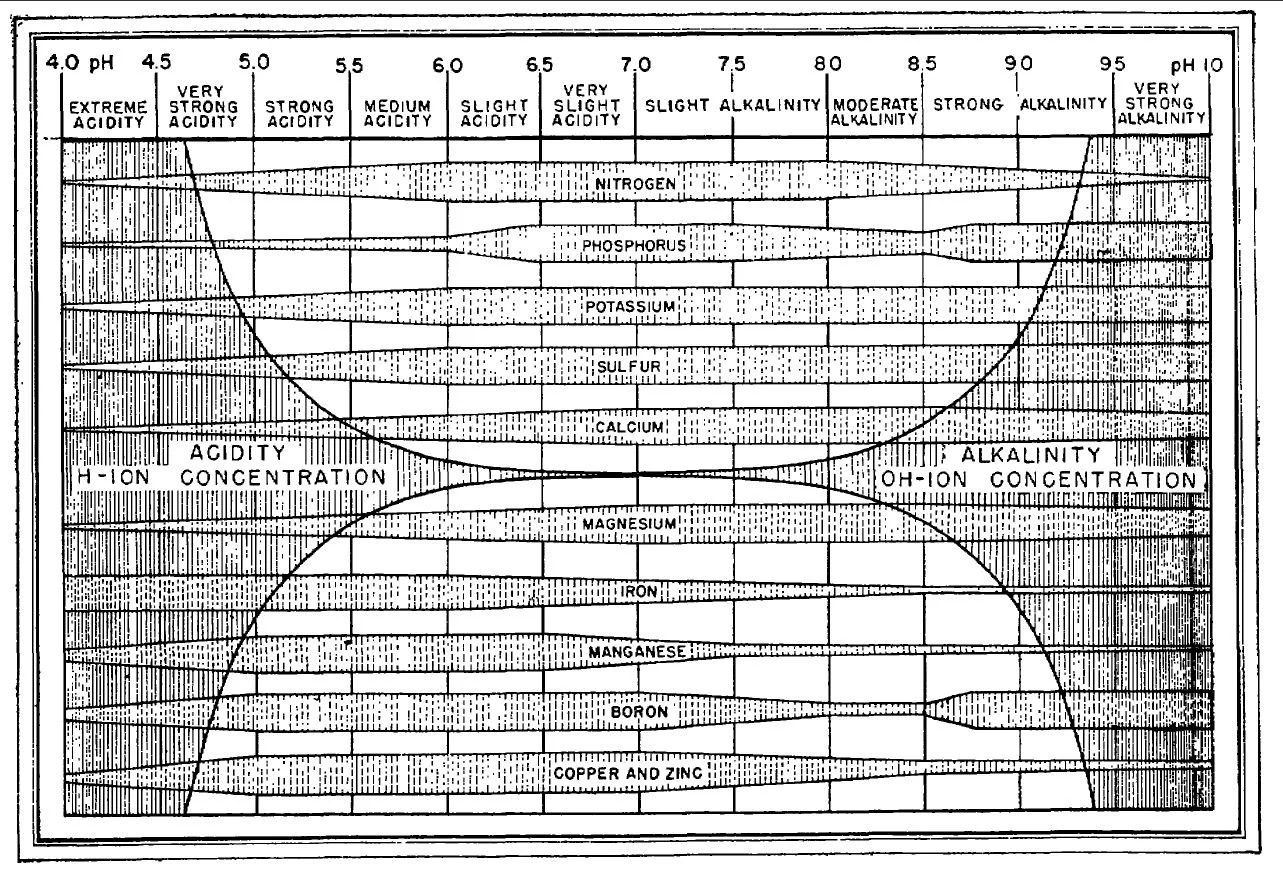
The whole lesson in one diagram. Truog's chart of nutrient availability against soil pH (USDA Yearbook of Agriculture, 1947): a band is widest where its nutrient is easiest for roots to take up. Read the iron band — generous in acid soil, a thread in alkaline soil. That taper is nutrient lockout, drawn. The comfortable middle, roughly pH 6.0 to 7.0, is where most bands are wide at once.
Truog, E. 1947. "The Liming of Soils." In: USDA Yearbook of Agriculture 1943–1947, pp. 569–570. Public domain (U.S. federal work).
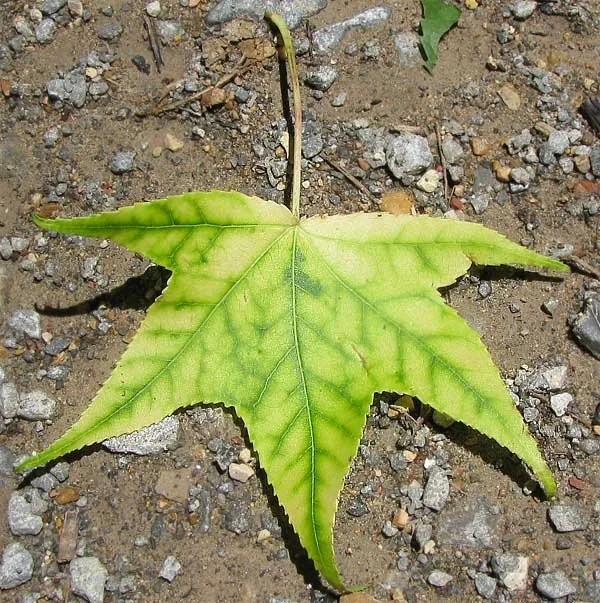
Interveinal chlorosis on a sweetgum leaf (Liquidambar styraciflua) — for identification. The blade yellows while the veins stay green. In alkaline soil this pattern often means iron is locked out: the iron is in the soil, but the plant cannot reach it, and extra fertilizer will not fix it. Only correcting the pH does.
Photograph by Jim Conrad (Conrad's naturalist newsletter, Natchez, Mississippi). Public domain.
Here is the heart of the lesson, and it is simpler than it sounds.
Plants need nutrients: nitrogen, phosphorus, potassium, iron, calcium, magnesium, and others. Those nutrients may be present in the soil in generous amounts. But presence is not the same as availability. Whether a root can actually take up a nutrient depends on the soil's pH.
★ When pH drifts too far in either direction, nutrients become locked away in chemical forms the plant cannot absorb. Gardeners call this nutrient lockout. The food is sitting on the table, but the plant cannot reach it.
★ The pattern goes like this. In strongly acidic soil, below about 5.5, iron and manganese become very soluble, sometimes excessively so, while calcium, magnesium, and phosphorus become harder for plants to take up. In alkaline soil, above about 7.0, the reverse happens: iron, manganese, and phosphorus lock up, and plants develop deficiencies even in rich soil. The comfortable middle, roughly 6.0 to 7.0, is where most nutrients are most available to most plants. That is why so many gardening guides recommend it.
Check in: A plant's soil is rich and well fed, yet the plant develops deficiencies. What is the likely problem, and what is it called?
★ The classic visible sign of pH trouble is chlorosis: leaves turning yellow while their veins stay green. This pattern, called interveinal chlorosis, often means iron is locked out by soil that is too alkaline. The iron is there. The plant simply cannot reach it. No amount of extra fertilizer fixes this. Only correcting the pH does.
Check in: A plant's leaves are yellow with green veins. What is this pattern called, what does it often mean — and why will extra fertilizer not fix it?
Soil pH also shapes the community of microorganisms living in the soil, and those tiny workers do much of the breaking down of organic matter that feeds plants. Most beneficial soil microbes prefer conditions near neutral. Extreme pH quiets them, and a quiet soil is a hungry soil.
This is worth sitting with for a moment. A plant can starve in fertile soil. The lesson of pH is that growing is not only about providing. It is about making what you provide reachable.
❦ In your workbook: record why pH matters in your own way — presence versus availability, lockout at both ends of the scale, and the chlorosis sign — copy, sketch, or note what matters.
Different Plants, Different Preferences
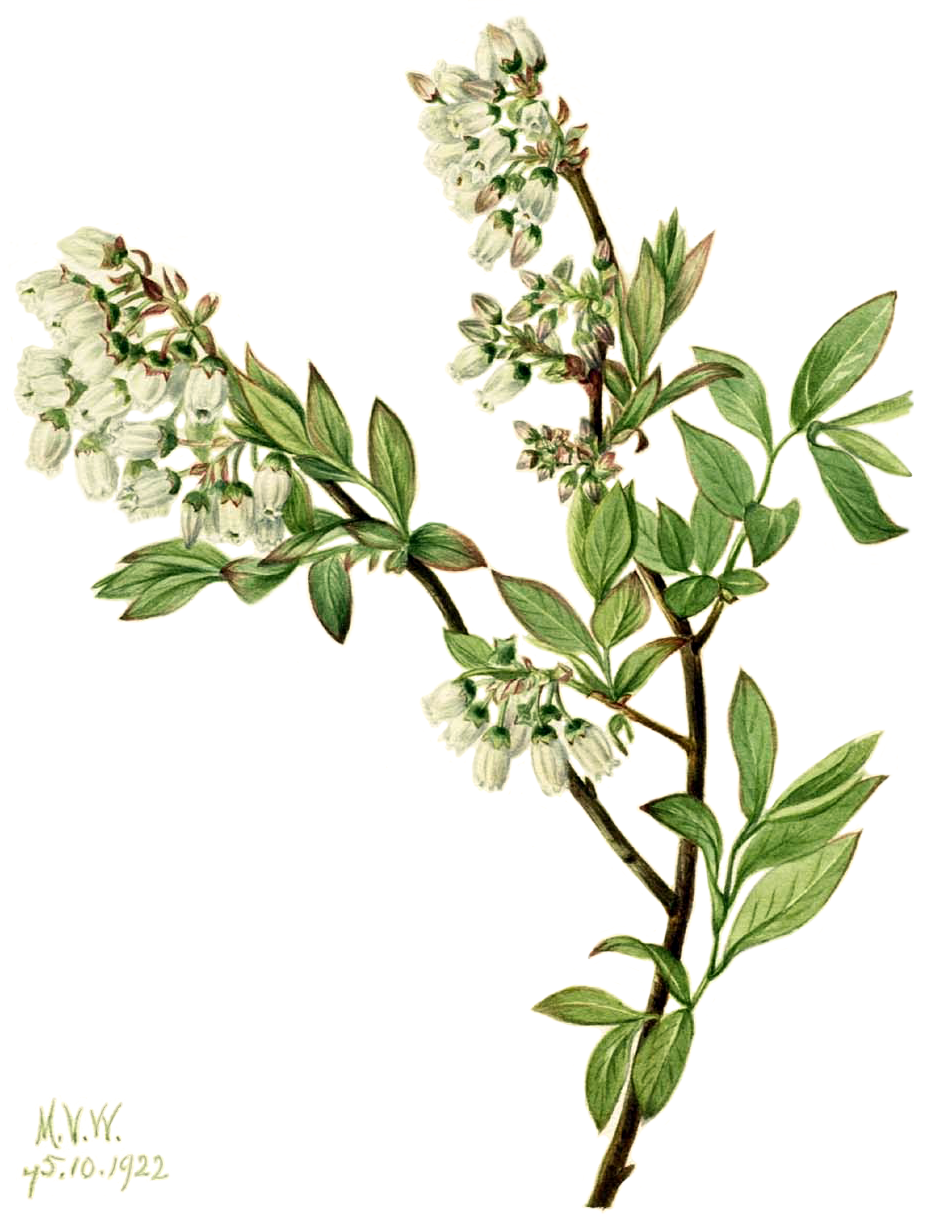
Highbush blueberry (Vaccinium corymbosum) in flower and in health: white urn-shaped blossoms and deep-green leaves. Blueberries evolved in acidic bogs and pine barrens and want soil between pH 4.5 and 5.5. Keep this picture beside the next one — same plant, wrong soil.
Mary Vaux Walcott, Highbush Blueberry (Vaccinium corymbosum), 1922; Smithsonian American Art Museum. Public domain.
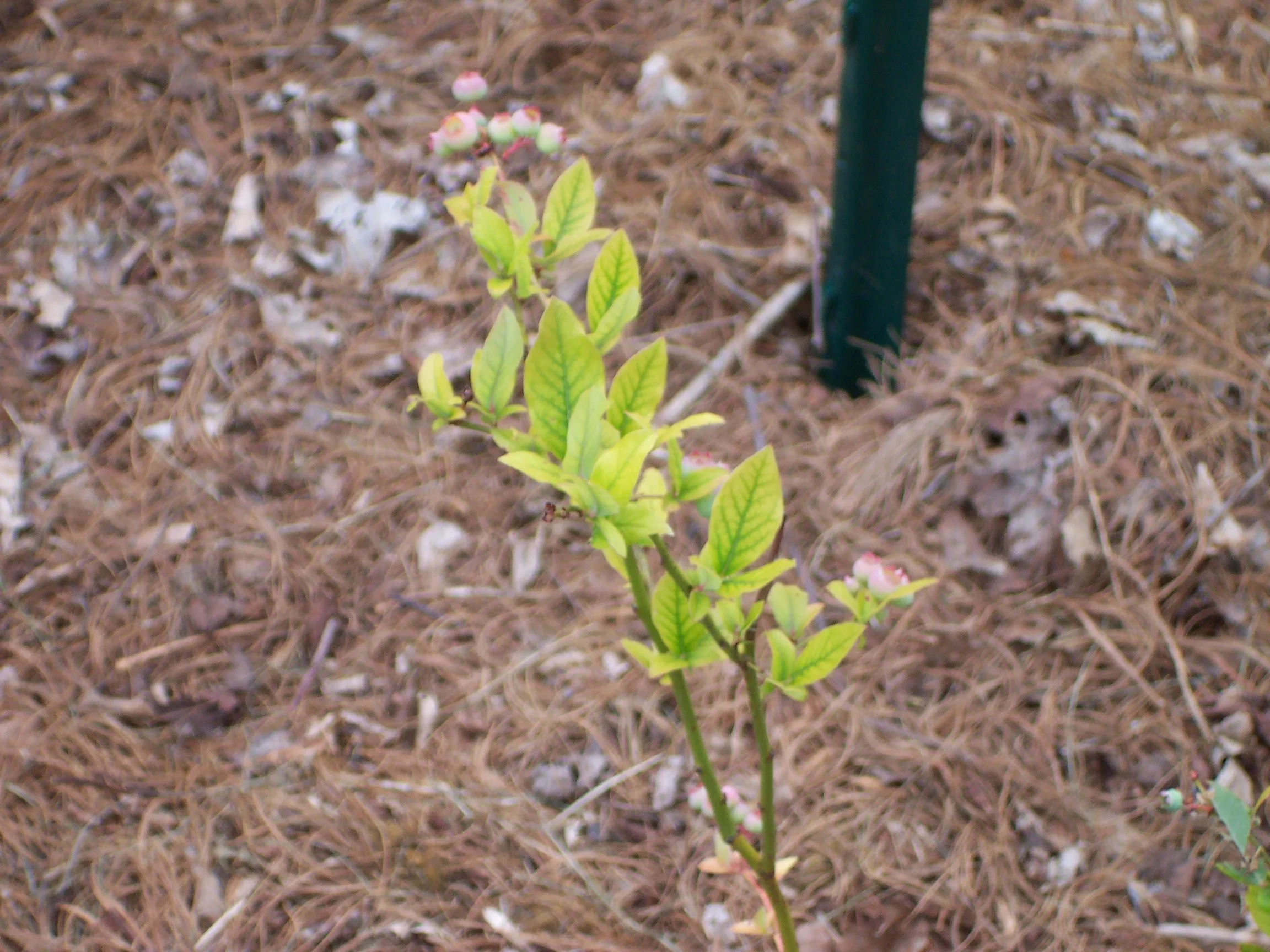
A blueberry in soil too sweet for it — for identification. The file record for this photograph states the cause plainly: chlorosis from soil pH too high, the plant unable to take up iron. Above pH 5.5, iron becomes unavailable to blueberries quickly and the leaves yellow between green veins, exactly as here. The food is on the table; the plant cannot reach it.
Photograph by Reznil, released by its author on Wikimedia Commons. Public domain.
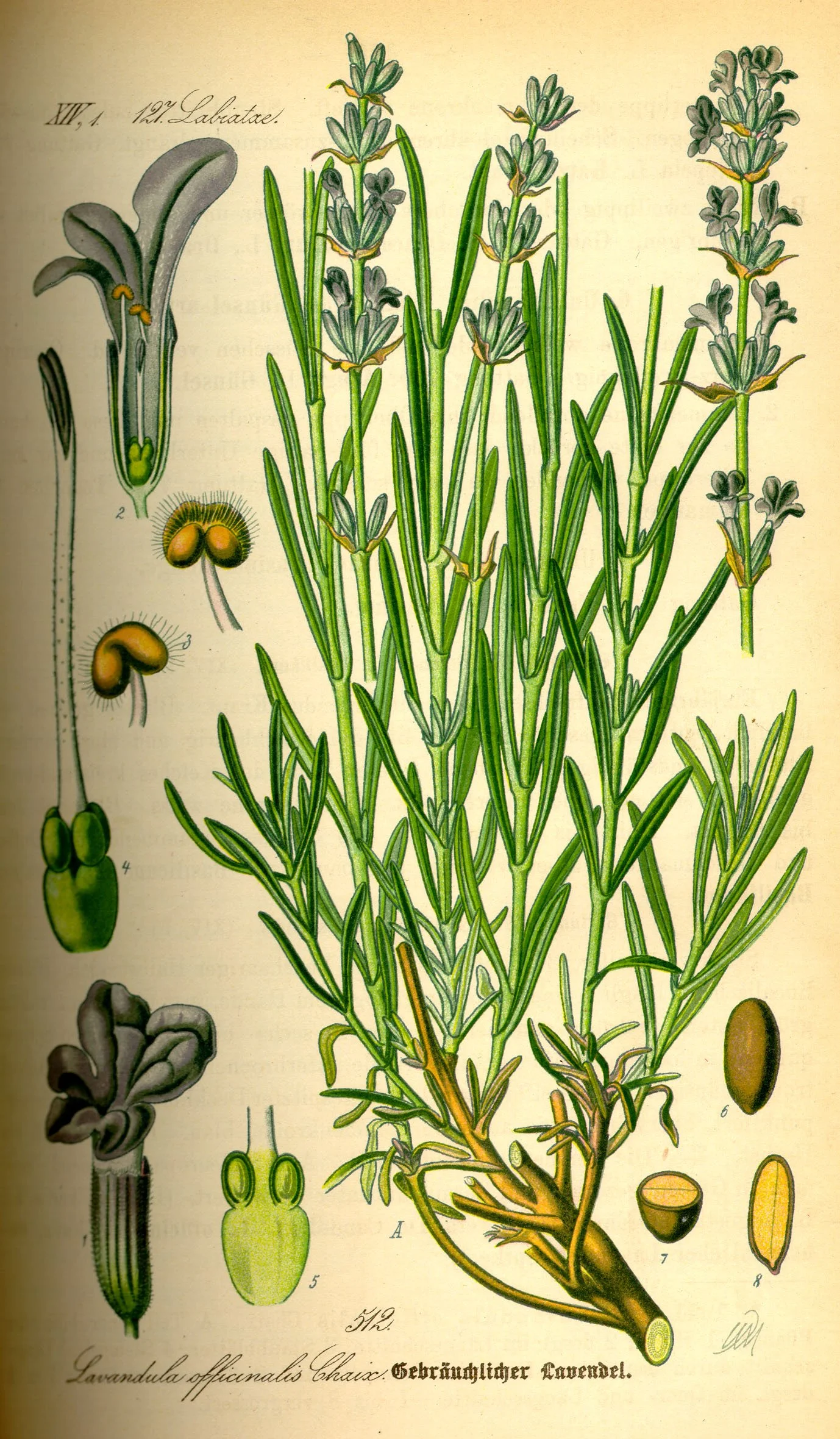
Lavender at the other end of the scale: a child of Mediterranean limestone hillsides, it prefers neutral to slightly alkaline soil, roughly pH 6.5 to 7.5, and struggles in acid ground. Thomé's plate names it Lavandula officinalis, the older name for Lavandula angustifolia — the same plant wearing an earlier label. Gardeners in acidic regions add lime to lavender beds to keep them sweet.
Otto Wilhelm Thomé, Flora von Deutschland, Österreich und der Schweiz (1885), plate 512. Public domain.
Most plants are happiest between 6.0 and 7.0, slightly acidic to neutral. But some plants have strong opinions, and a good gardener respects them.
★ Blueberries are the famous example. They evolved in acidic bogs and pine barrens, and they want soil between pH 4.5 and 5.5. Plant a blueberry in ordinary garden soil at pH 6.5 and it will sulk: pale leaves, poor growth, little fruit. Above pH 5.5, iron becomes unavailable to blueberries quickly, and chlorosis sets in. Below pH 4.0, the acidity itself can damage their fine roots. They are particular, and they do not negotiate.
Check in: A blueberry is planted in ordinary garden soil at pH 6.5. What happens to it, and why?
★ Lavender sits at the other end. A child of Mediterranean limestone hillsides, it prefers neutral to slightly alkaline soil, roughly 6.5 to 7.5. In acidic soil it struggles, prone to root trouble and poor vigor. Gardeners in acidic regions add lime to lavender beds to keep them sweet.
Your Scholar's Familiar is probably neither of these extremes. Mint, basil, and spider plants all accept the ordinary range. But the principle holds for every plant you will ever grow: find out what pH your plant prefers, find out what pH your soil actually is, and close the gap gently if one exists.
❦ In your workbook: record the different preferences in your own way — the blueberry's bog, the lavender's limestone, and the principle that holds for every plant — copy, sketch, or note what matters.
Testing Your Soil
Before changing anything, measure. Guessing at pH and amending blindly is how gardeners create new problems while solving old ones.
The reliable methods, in order of precision:
A soil test kit from a garden center gives you a real number, usually through a color-change reaction. Follow the instructions exactly, use clean containers, and test soil from the root zone, not the surface crust.
A digital pH meter pushed into moist soil gives a quick reading. Meters are convenient but need calibration and clean probes to stay honest. Rinse the probe between tests.
Your local extension service or agricultural laboratory will test a mailed sample and return a detailed report, often with amendment recommendations. This is the gold standard, and it is usually inexpensive.
The home fizz tests are the folk method, and they deserve an honest description. Put soil in one container and add vinegar: fizzing suggests strongly alkaline soil. Put soil in another with water and baking soda: fizzing suggests strongly acidic soil. No reaction in either suggests roughly neutral.
★ These tests are fun, and they are worth trying once for the sheer pleasure of watching soil react. But understand their limits. They only respond to strongly acidic or strongly alkaline soil, roughly below 5 or above 7.5. They give no number. They cannot tell you whether your soil is 6.2 or 6.8, and that half point matters enormously to plants. They also cannot tell you how much amendment — any material added to soil to change its properties — to add. Treat them as a first curiosity, not a diagnosis.
Check in: Your fizz tests show no reaction in either cup. What can you honestly conclude — and what can you not?
Whichever method you use, test more than one spot and average the results. Soil varies across even a small bed. For a container plant like your Familiar, take the sample from a few inches below the surface, near the roots, where it counts.
❦ In your workbook: record testing your soil in your own way — the methods in order of precision, and the fizz tests' honest limits — copy, sketch, or note what matters.
In your packet: Exercise I — The Kitchen Fizz Test ⚒ begins here. Work it now, or mark the place and take it as homework — your choice.
In your packet: Exercise II — Your Familiar's Soil Profile ◐ begins here. Work it now, or mark the place and take it as homework — your choice.
Adjusting pH Safely
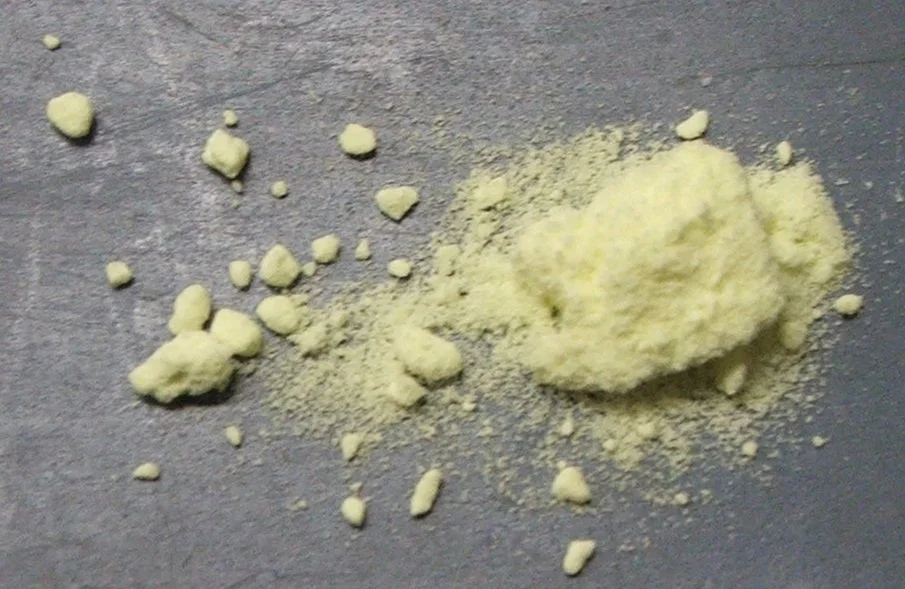
Elemental sulfur — for identification. The pale yellow powder gardeners use to lower soil pH; soil microbes convert it slowly, over months, so it is applied well before planting and the soil is retested before more is added. Handle it as the lesson directs: dust mask, gloves, ventilated space, hands washed afterward, and the bag kept sealed, labeled, and away from children and pets.
Photograph by Chemicalinterest, released by its author on Wikimedia Commons. Public domain.
If your test shows a pH outside your plant's preferred range, you can adjust it. The key word is gently. Soil chemistry changes slowly, and patience here prevents harm.
★ To raise pH (make soil less acidic, more alkaline), gardeners use agricultural lime: ground limestone, either calcitic lime (calcium carbonate) or dolomitic lime (calcium magnesium carbonate, which also supplies magnesium). Lime works gradually over weeks. Follow the package rate for your soil type. Clay soils and soils rich in organic matter resist the change — that resistance is called buffering capacity — so they need more amendment to shift than sandy soils, which change easily. It is easy to over-lime, and excess alkalinity locks out iron just as surely as excess acidity locks out phosphorus.
★ To lower pH (make soil more acidic), gardeners use elemental sulfur. Sulfur works very slowly, often over months, as soil microbes convert it. Apply in the recommended season, usually well before planting, and retest before adding more. Wood ash also raises pH and is potent, so it is used sparingly.
Check in: Your soil is too acidic and your soil is too alkaline: which amendment answers each case, and how fast does each one work?
Three rules govern all amending:
- Test first, amend second. Never add lime or sulfur on a guess.
- Go slowly. Add less than you think you need, wait, retest. You can always add more. Removing an amendment is far harder.
- Retest after every adjustment. A shift of half a pH unit changes nutrient availability enough to matter. Confirm the change before planting or before adjusting again.
★ Safety notes for amendments: Powdered lime and sulfur create dust. Wear a dust mask when handling them, work outdoors or in ventilated space, and avoid breathing the dust directly. Wear gloves. Wash your hands thoroughly afterward. Keep bags sealed, labeled, and stored away from children and pets. Read and follow the product label; it is written for your protection.
❦ In your workbook: record adjusting pH safely in your own way — lime to raise, sulfur to lower, the three rules, and the safety notes — copy, sketch, or note what matters.
In your packet: Exercise III — The Amendment Plan ✎ begins here. Work it now, or mark the place and take it as homework — your choice.
Safety Notes
Soil amendments are real chemical materials, even the natural ones. Lime dust irritates lungs and eyes. Sulfur dust is flammable in concentrated form and irritates skin and airways. These are manageable risks, not reasons for fear, but they deserve respect.
- Wear a dust mask when handling powdered lime or sulfur
- Wear gloves and wash hands thoroughly after working with amendments
- Work in ventilated areas, never inhale dust directly
- Store amendments sealed, labeled, and out of reach of children and pets
- Follow package directions exactly; more is not better
- Younger students should have an adult present for all amendment work
❦ In your workbook: record the safety notes in your own way — the mask, the gloves, the ventilation, and the sealed, labeled storage — copy, sketch, or note what matters.
Guided Observation: Reading a pH Reading
Before you amend anything, train your judgment on readings themselves: a number, a plant's preference, and the gap between them. Work these three readings — every one of them is drawn from this lesson — in your workbook before you test your own soil.
You will need:
- this lesson, open at Different Plants, Different Preferences and at Testing Your Soil
- your workbook and a pencil
- your grow ledger, if you keep one
Work reading by reading. For each reading below, write down three things: the number, the range the plant prefers, and your judgment — within range, or outside it, and in which direction.
- A blueberry in ordinary garden soil at pH 6.5. Blueberries want soil between pH 4.5 and 5.5. Above pH 5.5, iron becomes unavailable to blueberries quickly, and chlorosis sets in.
- A lavender bed testing at pH 5.8. Lavender prefers neutral to slightly alkaline soil, roughly 6.5 to 7.5. (This is the practice case Exercise III will ask you to plan for.)
- A plant with yellowing leaves and green veins, growing in soil at pH 7.8. In alkaline soil, above about 7.0, iron, manganese, and phosphorus lock up, and plants develop deficiencies even in rich soil.
Consider:
- For each reading, what is the gap between the number and the plant's preferred range — and is it a wide gap or a narrow one, remembering that each whole number is a tenfold change?
- Which of the three plants is starving in soil that may be perfectly fertile, and what is that condition called?
- For the lavender bed: which amendment moves pH in the direction this plant needs — and why must the plan still begin with a proper test rather than this reading alone?
Safety: this observation is worked entirely on paper, from the lesson's own readings. No amendments are handled, and no soil is amended on the strength of a practice reading.
Materials
Required (Level One — household items)
- Your grow ledger: the journal you established in Lesson 1, for recording test results.
- Two clear cups or jars: for the kitchen fizz tests.
- White vinegar and baking soda: from the kitchen, for the fizz tests.
- A spoon: for measuring soil samples.
- A color-change soil pH test kit: from any garden center or hardware store, for a real pH number.
- Clean water: distilled or rainwater if available; tap water is acceptable for the fizz tests.
- A workbook: for the guided observation, the workbook paths, and the written work.
Suggested (Level Two — historically closer)
- A digital pH meter: calibrated per its instructions; the modern equivalent of the apothecary's careful instruments.
- A mailed sample to your extension service laboratory: the gold standard, as professional growers have long relied on laboratory analysis.
- Litmus-style pH test strips: the older paper method, still serviceable for a quick reading.
Safety note: Test kits contain small amounts of reagent chemicals. Follow kit instructions, avoid contact with eyes, wash hands after use. Younger students: adult supervision required.
Reflection Questions
Answer the following questions in your workbook.
- Why does the logarithmic nature of the pH scale matter to a gardener? What does it mean in practical terms?
- Explain nutrient lockout in your own words. Why is adding more fertilizer not the solution?
- A friend's plant has yellowing leaves with green veins, growing in soil at pH 7.8. What is likely happening, and what should they do first?
- Why do blueberries and lavender want such different soils? What does this tell you about matching plants to places?
- The fizz tests are fun but limited. Describe a situation where relying on them alone could lead a gardener astray.
Workbook Checklist — Lesson 9
In my workbook I have:
- ☐ explained what the pH scale measures and read a pH value, including the tenfold change each whole number stands for
- ☐ described how soil pH controls which nutrients plants can access, and named nutrient lockout
- ☐ recognized interveinal chlorosis — yellow leaves, green veins — as the classic sign of iron lockout
- ☐ tested soil pH with a proper test kit or another reliable method, and stated the limits of the home fizz tests honestly
- ☐ recorded my Familiar's soil profile — the number, the date, and the method — in my grow ledger
- ☐ stated which amendment raises pH and which lowers it, written out the three rules of amending, and listed the safety precautions for handling lime and sulfur
☐ Lesson completed Date: ___ Signature: ___
The Professor's Closing Note
You have done careful work today, scholars.
pH is invisible, and invisible things are easy to ignore. But you did not ignore it. You learned the scale, you learned what lockout looks like, and you learned to test before you act. That last habit, testing before acting, will serve you in every part of this course and well beyond it.
When you test your Familiar's soil this week, whatever number you find, remember: the number is not a verdict. It is a conversation starter. Your plant has been living in that soil all along, telling you how it feels in the only language it has. Now you can understand a little more of what it has been saying.
Record your reading in your grow ledger, nice and clear, with the date. Future you will be glad you did.
— Professor Beryl Fernfoot, Herbology Greenhouse • Master Herbalist • Head of House Oriens
Cross-Class Connections

Potions · Unit VI, Lesson 48 — Midnight Carbon & Oak Gall Inks
Your Herbology Lesson 9 taught you to measure pH, and my laboratory spends that skill where it is sorely needed: on the acidity of iron gall ink, the archive's oldest enemy. Bring your test strips and your honest numbers. Measure honestly, label everything, and we will read what the ink is doing inside the jar.
Potions · Unit VI, Lesson 49 — Fluid Color: Plant & Berry Stains
Come and watch pH perform. In my bench's pH trials, red cabbage anthocyanins answer acid in red and pink, neutrality in purple, and alkali in blue toward green — one pigment, a spectrum of answers. The vinegar and baking soda of your kitchen fizz tests are on my bench too, and here they make color itself tell you the number's neighborhood.
Further Reading & Sources
- Soil pH for Field Crops — Cornell Cooperative Extension
- Considerations for pH Management — Perennia
- Nutrient Availability Changes with pH — Plant Grower
- Soil pH Plant Selection — Garden Insider
- The Importance of Soil pH in Blueberry Fields — Fresh Fruit Portal
- What Type of Soil Composition Is Best for Lavender — Island Lavender
Browse the Herbology shelf in the school Library for readable editions of these works.
Plants from this lesson stand in the Materia Botanica, the school's shared archive — each kept with its lessons, its keepings, and its cautions. This lesson's company:
BlueberryPineSpider Plant The whole Materia BotanicaPROFESSOR BERYL FERNFOOT · HERBOLOGY GREENHOUSE
Submit your work for this lesson using the form below.
CONTINUE IN THE HERBOLOGY GREENHOUSE
← Previous · Lesson 8: The Substrate Profile: Texture & Drainage Next · Lesson 10: The Nitrogen, Phosphorus & Potassium Matrix →
Unit II — Soils, Sunlight & Growing Environments Herbology Greenhouse — All 37 Lessons
The rest of Unit II: Lesson 8 · Substrate Profile · Lesson 10 · The N-P-K Matrix · Lesson 11 · Compost Crucible · Lesson 12 · Photoperiod Dynamics · Lesson 13 · Watering Matrix · Lesson 14 · Microclimate Calibration · Lesson 15 · Seasonal Growing Cycles · Lesson 16 · The Growing Plan