

POTIONS
Unit II · Lesson 14FRAGRANT BOTANICALS & AROMATICS
Professor Crimblebrew Muddlenook
Master Apothecary • Potions
Head of House Meridies • School of Evershade
Professor's Introduction

My dear scholars,
By now your laboratory shelves hold dried flowers, pressed leaves, labeled jars, and an archive that grows more orderly every week. You have learned to look at botanicals. This week, you will learn to smell them properly, which is a different skill entirely and one that historical apothecaries took very seriously.
A word of order before we begin, because order is what keeps a laboratory safe. Fragrance work is observation work. You will sniff, you will bruise leaves between your fingers, you will warm specimens in your palms. You will not taste anything, you will not rub anything on your skin as a remedy, and you will not carry strong aromatics around in closed rooms without ventilation. Scent is information, not medicine, and in this laboratory we treat it as exactly that.
There is an experiment tucked into this lesson that I particularly want you to try, the timed bruise test. It is simple, it is honest, and it will show you something about time and scent that no paragraph can. Do it carefully, record what you actually observe, and bring me results I can trust.
— Professor Crimblebrew Muddlenook, Potions Laboratory • Master Apothecary • Head of House Meridies

Pin: London. Timeline stop: 1850s · Piesse's Art of Perfumery.
Lesson Objectives
By the end of this lesson, you will be able to:
- Explain, in plain language, where a plant's fragrance comes from and why bruising a leaf releases more scent.
- Use the perfumer's vocabulary of top, heart, and base notes to describe a botanical fragrance as it changes over time.
- Carry out a controlled bruise test and record the results with laboratory discipline.
- Build a fragrance comparison log for at least four aromatic specimens, rating intensity and noting character.
- Predict how heat, humidity, and air movement will change a fragrance, and test your prediction honestly.
Reading this lesson: ★ marks the passages to remember. They return on the unit quiz and the class test. Check in questions ask the material back as you go; answer them in your workbook when you meet them.
Working this lesson: Your assignment packet is the first download on this page. Work in it as the lesson moves along, answering each exercise as its subject is taught — or read the lesson through for your notes and take the exercises as homework afterward. Both are proper ways to sit this class. Signposts in the reading tell you where each exercise belongs. Written answers are short answers in your own words; a few honest lines are worth more than a filled page.
Your Assignment Packet
This lesson's exercises live in its packet: the Lexicon Handout (every term, course terms marked ◆), Materials, Guided Practice — the bruise test procedure and the comparison log, worked step by step — the Assignment Manual with its answer key for self-checking, the Reflection Questions, and the Workbook Checklist. Download the packet before you begin and keep it beside you as you read.
Safety Briefing
Read this before you touch a single leaf. Muddlenook's laboratory runs on five rules for fragrance work.
- Ventilate. Work near an open window or in a room with moving air. Concentrated fragrance in a closed, still room can cause headaches, dizziness, or nausea. If you feel any of these, step into fresh air at once and note it in your log. That note is data, not failure.
- Sniff, do not snort. Hold the specimen a few inches below your nose and waft gently, or breathe normally over it. Deep, forceful inhaling of crushed aromatics irritates the nose and throat and tells you nothing extra.
- Nothing is tasted. Nothing in this lesson goes in your mouth. Aromatic does not mean edible, and many strongly scented plants are irritants. Wash your hands after handling specimens.
- Respect sensitive noses. Some scholars detect fragrance faintly, some detect it overwhelmingly, and a few detect almost nothing at all. All of these are normal variations in human smell. Never tease a classmate about what they can or cannot smell, and if fragrance gives you a headache, say so and work at a distance. Your observations are still valid.
- Label everything. Every specimen in your comparison gets a name, a date, and a source. An unlabeled leaf is a rumor, not a record.
Check in: Which rule governs how you take in a scent, and what exactly does it forbid? And if the fragrance gives you a headache, what two things does the briefing tell you to do?
❦ In your workbook: record the safety briefing in your own way — the moving air, the gentle sniff, the closed mouth, the respected nose, and the labeled leaf — copy, sketch, or note what matters.
Mise en Place
Gather everything before the first sniff. A prepared bench is a calm bench.
Level One — household items
- Three or four aromatic herbs, fresh if possible: mint, basil, rosemary, thyme, sage, lemon balm, or lavender sprigs from a kitchen garden, grocery store, or windowsill pot. Dried herbs from sealed jars will do if fresh is unavailable; note which you used.
- Small lidded jars or cups, one per specimen, to hold each herb during testing.
- Paper strips or plain white index cards, for wafting and for the palm-warm test.
- A timer, a phone timer is perfect.
- Your fragrance comparison log pages, ruled into columns before you begin (see Step Four).
- A pencil, because pens smear when hands are damp from bruised leaves.
Level Two — historically closer
- Fresh specimens gathered the same morning, as the perfumers of Grasse insisted on, with stems in water until testing.
- A scented geranium leaf (rose, lemon, or peppermint scented), the classic teaching plant of the old perfumery schools.
- A small glass dish with a lid, the laboratory version of the perfumer's testing vessel.
- Your potions journal, open to receive the finished logs.
❦ In your workbook: record the mise en place in your own way — the specimens, the jars, the strips, the timer, the ruled log, and the pencil — copy, sketch, or note what matters.
Step One: What Makes a Plant Fragrant
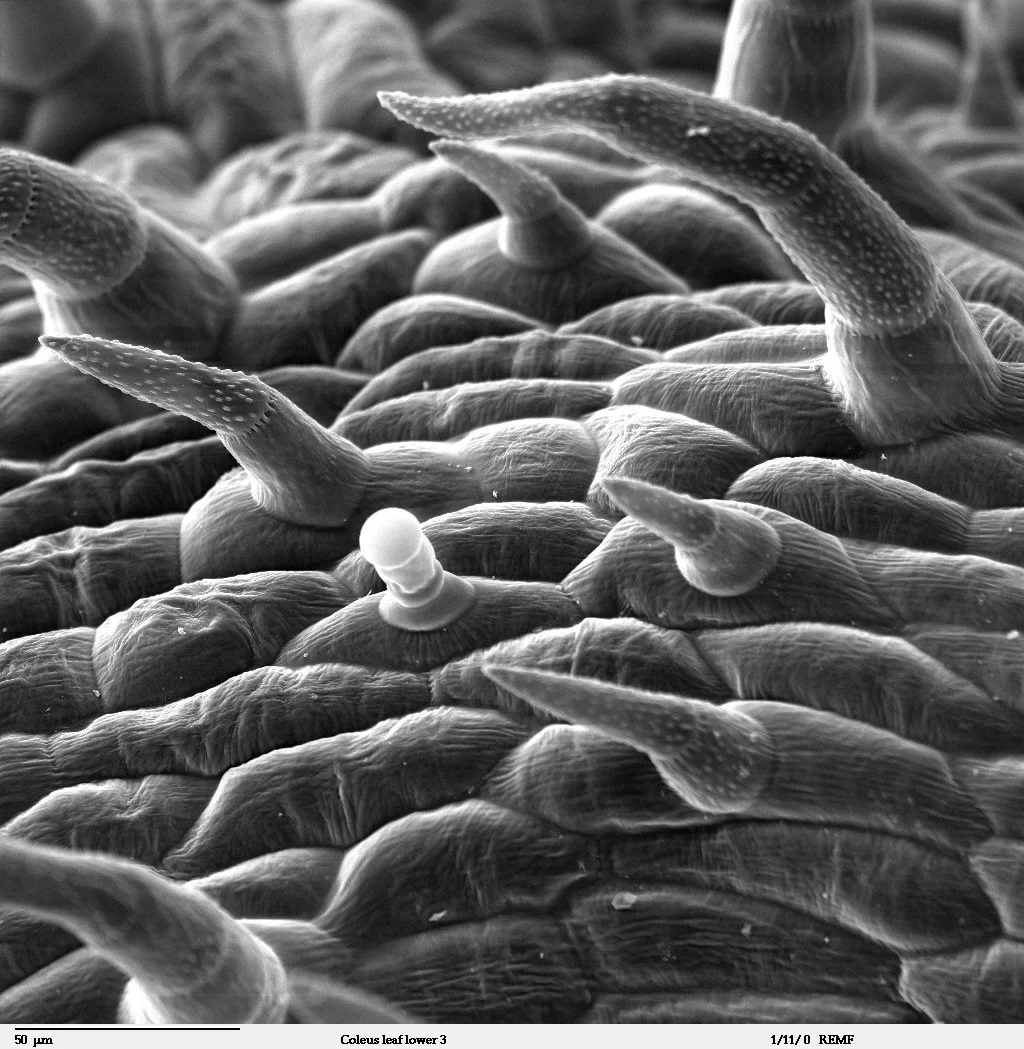
A coleus leaf under the electron microscope (Dartmouth Electron Microscope Facility). Coleus stands in the same mint family as this lesson's herbs. The leaf's surface is a field of hairs; the small stalked knob near the center is a glandular trichome — the microscopic oil sac this lesson's bruise test breaks open. Most of the hairs in the frame are plain protective hairs, not glands: the gland is the exception, which is why a leaf can look merely fuzzy and still hold its scent in thousands of tiny sacs.
Public domain, Dartmouth Electron Microscope Facility, Dartmouth College, via Wikimedia Commons, "Coleus leaf trichomes SEM.jpg."
A plant's scent is not a decoration. It is chemistry, released into the air.
Every fragrance you will meet in this lesson is made of volatile organic compounds: small, light molecules that evaporate readily at ordinary temperatures. "Volatile" here means quick to take flight, not quick to anger. When a molecule leaves the leaf surface and drifts into the air around it, your nose can intercept it, and that interception is what you experience as smell.
★ In aromatic herbs, these compounds are gathered into mixtures we call essential oils, stored in specialized structures so the plant can keep them until they are needed. The most important of these structures for our work is the glandular trichome: a tiny, hair-like gland on the surface of the leaf, visible as a fine fuzz on plants like mint, sage, and basil. Each trichome is a microscopic oil sac. Citrus peels store their oils in similar rind glands, which is why a twisted lemon peel sprays fragrance across a room.
Plants did not evolve these compounds for our pleasure. Scent is a working tool. Flowers use fragrance to summon pollinators, advertising nectar across distances no color could cross. Leaves use it as defense: the sharp oils of thyme and oregano discourage grazing animals and browsing insects, and some compounds slow the growth of competing seedlings nearby. A few aromatic compounds even help the plant survive heat and strong sun. When you smell rosemary on a hillside, you are smelling a plant's armor and its advertisements at once.
★ This is worth stating plainly because it shapes everything that follows: fragrance is information about the plant's chemistry and ecology. It is not a measure of healing power, and this lesson makes no claims about remedies. We are studying how scent behaves as a material property, the way a metallurgist studies how metal behaves in heat. What a scent can do for a human body is a question for other disciplines, asked with other evidence, and it does not enter this laboratory.
Check in: Where does a mint leaf keep its scent until the leaf is touched — and in one sentence, what is fragrance information about?
❦ In your workbook: record what makes a plant fragrant in your own way — the volatile compounds, the oil sacs on the leaf, and scent as the plant's working tool — copy, sketch, or note what matters.
Step Two: The Vocabulary of Scent
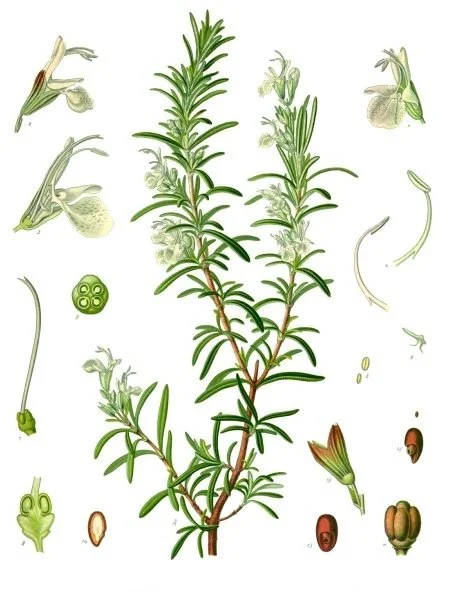
Rosemary, Rosmarinus officinalis, plate 258 of Köhler's Medizinal-Pflanzen (1897). The lesson names rosemary's warm herbal character as the heart note a scholar should learn to hear after the top notes fade. Its oils sit in the needle leaves this plate draws at natural size.
Public domain (PD-old), Wikimedia Commons, "Rosmarinus officinalis - Köhler–s Medizinal-Pflanzen-258.jpg"; source work: Köhler's Medizinal-Pflanzen, 1897.
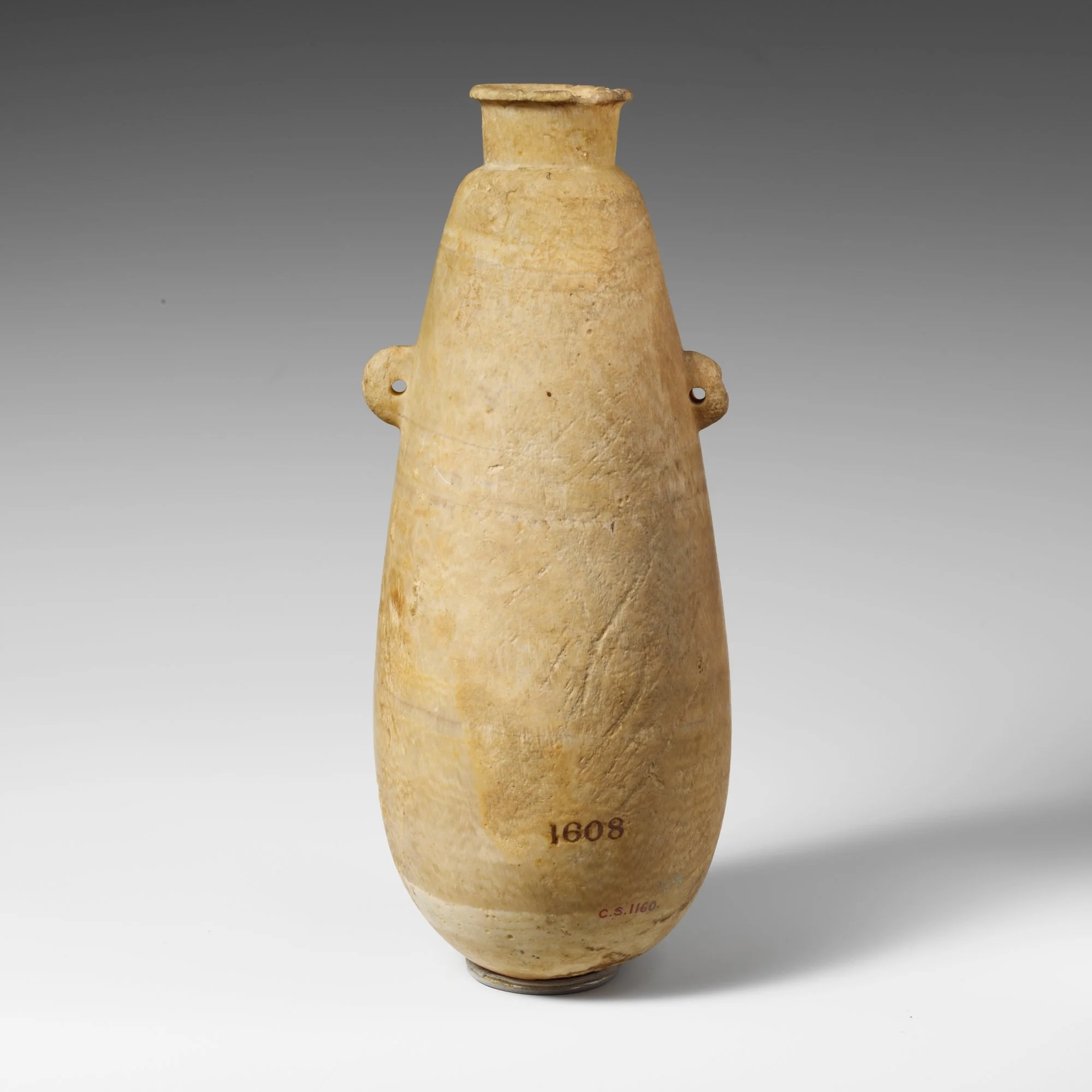
An alabaster alabastron — a perfume vase — Cypriot, 6th–5th century BCE. Long before perfumers spoke of notes, fragrance was already precious enough to be stored in stone: a narrow mouth to slow evaporation, a body sized to a costly content. The perfumer's vocabulary of Step Two is a late name for a very old care.
The Metropolitan Museum of Art, Open Access (CC0). Object 243969, "Alabaster alabastron (perfume vase)," calcite (alabaster), Cesnola Collection.
Apothecaries and perfumers needed words for what they smelled, so they built a vocabulary. Ours comes largely from the nineteenth century, when a London perfumer named Septimus Piesse published The Art of Perfumery and proposed that odors could be arranged like notes of music, each with its pitch and duration. His musical metaphor stuck, and perfumers still speak of top notes, heart notes, and base notes.
★ - Top notes are the first impression: bright, sharp, quick to arrive and quick to leave. The citrus lift of lemon balm, the cool rush of crushed mint, the green snap of fresh basil. They evaporate fastest because their molecules are the lightest. - Heart notes are the body of the fragrance: the warm, herbal middle that remains after the top notes fade. The true character of rosemary, the round fullness of lavender, the steady green of sage. They arrive a little later and stay a little longer. - Base notes are the long farewell: deep, heavy, slow to evaporate. Resins carry the classic base notes, and in our herbs the faint warm or woody residue that lingers on the fingers after the brightness is gone.
Two more terms complete the working vocabulary. Aromatic intensity is simply how strong a fragrance presents itself, which you will rate on a simple one-to-five scale in your log. Fragrance layering is what happens when several scented materials are present at once and their notes interleave, the way rosemary beside lavender in a garden bed creates a combined scent neither plant makes alone. Layering is why the laboratory smells different from any single jar on its shelf.
★ A final caution from your professor: intensity is not quality. A loud scent is not a better specimen, a stronger preparation, or a more virtuous plant. Intensity measures how quickly molecules are leaving the leaf. Nothing more. Record it honestly and let it be what it is.
Check in: A fragrance opens bright, settles into a warm herbal middle, and leaves a faint woody trace on your fingers. Name its three stages in order — and say what decides which stage arrives first.
❦ In your workbook: record the vocabulary of scent in your own way — Piesse's musical notes, the three stages, and the caution that intensity is not quality — copy, sketch, or note what matters.
In your packet: Exercise I — The Four-Specimen Comparison Log ◐ begins here: its Top / Heart / Base column is this vocabulary at work. Work it now, or mark the place and take it as homework — your choice.
A Note from Professor Muddlenook
Scholars, a confession from behind the bench. When I was an apprentice, I believed a strong smell meant a strong ingredient, and I sorted my whole shelf by loudness. My master let me keep the error for a full season. Then she had me compare two jars of dried mint: one that smelled powerfully of almost nothing in particular, and one with a quiet, clean, unmistakable mint character. The quiet jar made the better preparation in every trial that followed.
Intensity is volatility wearing a loud coat. Character is what remains when you listen past it. Train yourself to hear the quiet notes. They are usually telling the truth.
— Professor Crimblebrew Muddlenook, Potions Laboratory • Master Apothecary • Head of House Meridies
❦ In your workbook: record the professor's confession in your own way — the loud jar, the quiet jar, and which one made the better preparation — copy, sketch, or note what matters.
Step Three: The Bruise Test
Here is the experiment I promised. It takes fifteen minutes, it requires nothing you do not already have, and it demonstrates the single most useful fact in this lesson.
Procedure.
- Choose one fresh aromatic leaf, mint is ideal. Hold it a few inches below your nose and sniff gently without touching it. Record your impression: intensity from one to five, and three words for character. This is your baseline.
- Now bruise the leaf. Fold it, press it firmly between thumb and forefinger, roll it gently. You are rupturing the glandular trichomes, breaking open the microscopic oil sacs. Sniff again immediately and record: intensity, character, and which notes seem loudest now.
- Set the bruised leaf on a paper strip, start your timer, and sniff again at five minutes and at fifteen minutes. Record each reading. Do not re-bruise between readings.
★ What you will observe. The bruised leaf smells markedly stronger at once: the top notes surge as the freed oils evaporate in a rush. By five minutes the brightness has softened. By fifteen minutes the scent is quieter, rounder, and different in character, because the lightest molecules have already left and the heavier heart notes now dominate. You have just watched a fragrance move through its notes in miniature.
This is why cooks bruise basil at the last moment, why a walked-through lavender field smells stronger where feet have pressed the plants, and why your handling of every aromatic specimen in this course changes what you are smelling. The observer affects the observed. A disciplined observer writes down how.
No-plant alternative: if you are working with an adopted plant you may visit but not pick from, perform the bruise test on a fallen leaf at the site, or on a single grocery-store herb sprig kept for the purpose. The method is identical; only the leaf's home differs.
Check in: At fifteen minutes the bruised leaf smells quieter and rounder than it did at once. Which molecules have already left by then, and which notes now dominate?
❦ In your workbook: record the bruise test in your own way — the baseline, the rupture, and the scent at once, at five minutes, and at fifteen — copy, sketch, or note what matters.
In your packet: Exercise II — The Timed Bruise Test ◐ begins here. Work it now, or mark the place and take it as homework — your choice.
Step Four: The Fragrance Comparison Log
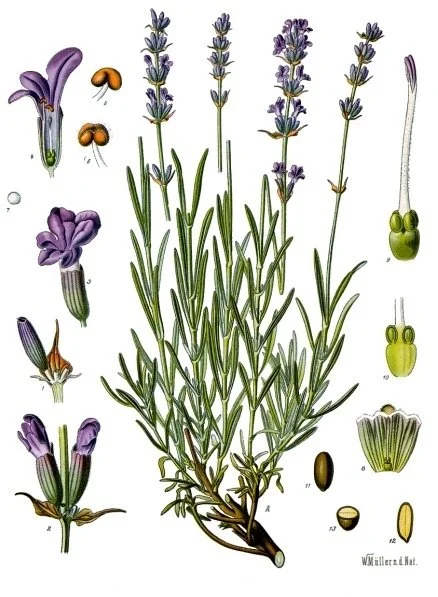
Lavender, Lavandula angustifolia, plate 87 of Köhler's Medizinal-Pflanzen (1897). Lavender is the lesson's standing example of a heart note — "the round fullness of lavender" — and one of the four specimens a scholar's comparison log may hold. The plate's dissections show the flower structure the fragrance comes from.
Public domain (PD-old), Wikimedia Commons, "Lavandula angustifolia - Köhler–s Medizinal-Pflanzen-087.jpg"; source work: Köhler's Medizinal-Pflanzen, 1897.
★ The comparison log is the permanent record of this lesson, and it will live in your potions journal. Rule your page into columns before you begin:
| Specimen | Source and date | Dry sniff (intensity 1–5, three words) | Bruised sniff (intensity, notes) | Palm-warmed (intensity, change) | Top / Heart / Base impression | Environmental notes |
|---|
Work through your specimens one at a time, in this order for each:
- Dry sniff. The untouched specimen, a few inches below the nose, gentle breath. Record intensity and three character words. Be specific: "green" is honest but vague, "crushed green apple peel" is a record someone can use.
- Bruised sniff. Bruise as in Step Three, sniff at once, record intensity and which notes dominate.
- Palm-warmed. Place a fresh piece of the specimen on a paper strip, cover it loosely with your cupped palm for thirty seconds, then sniff. Warmth accelerates evaporation, and you will usually find the intensity rises and the character shifts toward the top notes. Record what changed.
- Notes over time. After finishing all specimens, return to the first bruised leaf and take one final reading. Note how it has changed since the bruised sniff.
Compare your columns when you are done. You will find that specimens differ not only in strength but in architecture: some are all top notes and fade quickly, some have little brightness but a long, steady heart, and a few carry a genuine base warmth. Write one sentence at the bottom of the log naming which specimen had the most interesting architecture and why. That sentence is the beginning of judgment, and judgment built on recorded observation is the whole of the apothecary's art.
Check in: Why is "green" an honest but weak record — and what turns a character note into a record someone else can use?
❦ In your workbook: record the comparison log in your own way — the seven columns, the four passes over each specimen, and the architecture sentence at the foot — copy, sketch, or note what matters.
In your packet: Exercise I — The Four-Specimen Comparison Log ◐ begins here. Work it now, or mark the place and take it as homework — your choice.
Step Five: Reading the Air
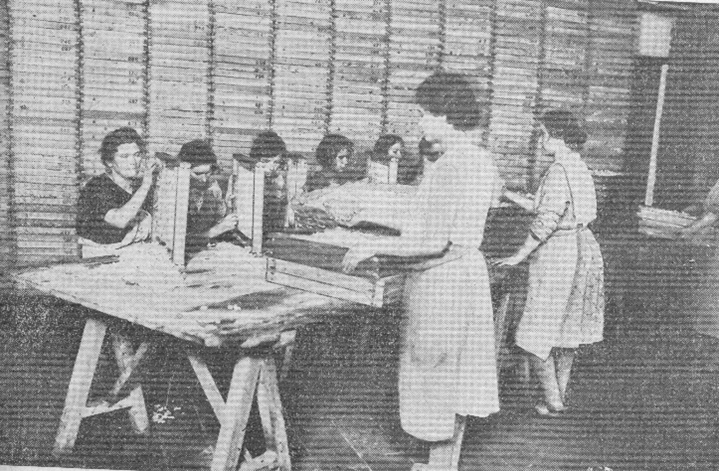
Enfleurage at the A. Chiris factory, Grasse, France: workers laying fresh blossoms on fat-spread glass frames, the frames stacked high behind them for the daily changes the method demanded — for weeks at a time, exactly as the lesson describes. No heat, no haste: the gentlest extraction ever devised, photographed at its work.
Public domain, Wikimedia Commons, "Enfleurage.png" (A. Chiris Factory, Grasse).
Fragrance does not happen in a vacuum. It happens in air, and air has moods.
★ Heat is the great accelerator. Warm air gives volatile molecules more energy to escape the leaf, which is why a herb garden smells stronger on a hot afternoon than on a cool morning, and why your palm-warmed test released more scent. Historical harvesters knew this: many aromatic herbs were gathered in the cool of the morning precisely to keep their volatile oils in the leaf rather than lose them to the midday air. You met this principle in Herbology's harvest lessons; here is its laboratory twin.
Humidity and air movement are the carriers. Moist, moving air lifts and transports scent molecules, which is why fragrance hangs heavier before rain and why a breeze through a lavender row carries the field to you before you reach it. Still, dry air lets scent dissipate thinly and quickly.
Time of day combines all of these. A specimen sniffed at dawn, at noon, and at dusk is three slightly different specimens. When your log records environmental notes, include the temperature as you felt it, the humidity as you judged it, and the hour. Future you, comparing logs across seasons, will be grateful.
★ There is an old observation among perfumers worth recording here: the flowers that defeated every hot method of extraction were the delicate ones. Jasmine and tuberose, picked at dawn in the fields around Grasse in France, were too fragile for steam or boiling water, which would have destroyed exactly the fragrance being sought. So the perfumers pressed the fresh blossoms into purified fat spread on glass frames, replaced the spent flowers daily for weeks, and let the fat drink the scent slowly. The method was called enfleurage, and it is the gentlest extraction ever devised: no heat, no haste, only patience and fat. We will not be performing enfleurage in this course, but remember its lesson. The most delicate materials demand the gentlest methods. Force is not a laboratory virtue.
Check in: The same herb reads faint on a cool, still morning and strong on a warm, breezy afternoon. Name the three things Step Five gives for the difference.
❦ In your workbook: record the reading of the air in your own way — heat the accelerator, moisture and movement the carriers, and enfleurage as the lesson in gentleness — copy, sketch, or note what matters.
In your packet: Exercise III — The Weather Reading ◐ begins here. Work it now, or mark the place and take it as homework — your choice.
Cleanup
- Return unused fresh specimens to water or to the compost; do not leave bruised, damp plant material sitting in closed jars, where it will mold.
- Wash jars and dishes with hot soapy water. Fragrance oils cling to glass and will contaminate your next test if you are careless.
- Wash your hands thoroughly. Essential oils transfer easily from fingers to eyes, and eyes object.
- Air the room. Open the window wide for ten minutes after fragrance work, even in winter. Your nose will thank you, and so will the next person who enters.
- File your comparison log in the archive before you leave the bench. A log left loose on the bench is a log halfway to lost.
❦ In your workbook: record the cleanup in your own way — the specimens returned, the glass washed, the hands washed, the room aired, and the log filed — copy, sketch, or note what matters.
Archive Entry
Every fragrance log you complete becomes a permanent page in your potions journal, filed under the specimen's name with the date prominent. Over the course of this unit, these pages will accumulate into a reference no book can give you: the scent behavior of real materials, observed by you, under recorded conditions.
Label each entry with the specimen name, the date, fresh or dried, and the conditions (approximate temperature, humidity, hour). When you revisit a specimen in a later lesson, for drying, for extraction, for formulation, open its fragrance page first. You will know what you are working with before the vessel is even warmed.
❦ In your workbook: record the archive entry in your own way — the log filed under the specimen's name, dated, with its conditions labeled — copy, sketch, or note what matters.
Guided Observation: The Final Reading
Before the bench is cleared from your mind, observe once more — this time, observe your own record.
Return to the first leaf you bruised, as Step Four directs, and take the final reading beside its first: the same specimen at two moments of its scent's life. Then read your whole log the way a stranger would. Columns compared, the specimens stop being a row of smells and become architectures: which one was all top notes and gone, which one held a long steady heart, which one kept a genuine base warmth on the fingers.
Write the log's closing sentence with that stranger in mind: which specimen had the most interesting architecture, and why — in recorded evidence, not in loudness. Then file the page under the specimen's name, dated, with its conditions labeled, exactly as the Archive Entry directs. A fragrance observed and not filed is a fragrance observed once and lost; a fragrance filed is one your future self can stand on when the extractions begin.
Check in: Which specimen in your log had the most interesting architecture — and what recorded evidence, not loudness, supports the judgment?
❦ In your workbook: record the guided observation in your own way — the final reading, the compared columns, and the closing sentence — copy, sketch, or note what matters.
Materials
Everything in its place, before we begin. For this fragrance lesson you will need:
Required (Level One — household items)
- Three or four aromatic herbs, fresh if possible: mint, basil, rosemary, thyme, sage, lemon balm, or lavender sprigs from a kitchen garden, grocery store, or windowsill pot. Dried herbs from sealed jars will do if fresh is unavailable; note which you used.
- Small lidded jars or cups, one per specimen, to hold each herb during testing.
- Paper strips or plain white index cards, for wafting and for the palm-warm test.
- A timer, a phone timer is perfect.
- Your fragrance comparison log pages, ruled into columns before you begin (see Step Four).
- A pencil, because pens smear when hands are damp from bruised leaves.
Suggested (Level Two — historically closer)
- Fresh specimens gathered the same morning, as the perfumers of Grasse insisted on, with stems in water until testing.
- A scented geranium leaf (rose, lemon, or peppermint scented), the classic teaching plant of the old perfumery schools.
- A small glass dish with a lid, the laboratory version of the perfumer's testing vessel.
- Your potions journal, open to receive the finished logs.
Reflection Questions
Answer the following questions in your workbook.
- Why does a bruised mint leaf smell stronger than an untouched one? Name the structures involved.
- Describe the top, heart, and base notes of a single herb you tested, and explain what makes each group arrive and fade on its own schedule.
- Why do your fragrance logs require temperature, humidity, and hour alongside the scent description?
- What is enfleurage, and why was it reserved for delicate flowers rather than sturdy herbs?
- A classmate insists that a louder scent means a better specimen. Answer as Professor Muddlenook's student.
Workbook Checklist — Lesson 14
In my workbook I have:
- ☐ stated where a plant's fragrance comes from: volatile organic compounds, gathered as essential oils in glandular trichomes, and why bruising releases more scent
- ☐ described a tested fragrance in the perfumer's vocabulary — top, heart, and base notes — and said what makes each group arrive and fade on its own schedule
- ☐ carried out the timed bruise test with full discipline: baseline, bruise, and readings at once, five minutes, and fifteen minutes, each recorded
- ☐ completed the fragrance comparison log for at least four specimens — dry sniff, bruised sniff, palm-warmed test, notes impression, and environmental notes for each — and closed it with the architecture sentence
- ☐ read the same specimen under two clearly different conditions and explained the difference by heat, humidity, and air movement
- ☐ filed the finished log in my potions journal, labeled with specimen name, date, fresh or dried, and conditions
- ☐ stated the laboratory boundary in my own words: fragrance is information about chemistry and ecology, not a measure of healing power, and intensity is not quality
☐ Lesson completed Date: ___ Signature: ___
The Professor's Closing Note
You came into my laboratory to learn potions, and I have had you sniffing leaves like a hound on a trail. There is a reason, and it is the same reason I insist on labeled jars and dated pages.
Every preparation you will ever make in this course begins as an observation. The apothecary who cannot tell a fresh mint from a tired one by scent will waste good solvents — liquids able to dissolve or draw out other materials — on poor material. The apothecary who records what she smells, when, and under what sky, will know her shelf the way a shepherd knows her flock: individually, and by heart.
Your logs are coming along well. I have seen the early ones, and the discipline is there. Keep it. The extractions of Unit IV will reward every careful page you file now.
— Professor Crimblebrew Muddlenook, Potions Laboratory • Master Apothecary • Head of House Meridies
Cross-Class Connections

Herbology · Unit IV, Lesson 27 — Timing the Harvest
Come up to the Greenhouse in the cool of the morning, scholars, and bring your noses with you. Professor Muddlenook has taught you what a volatile oil is and where the leaf keeps it; here you will learn when to gather so the keeping is not wasted — why the same herb cut at nine and cut at noon are two different harvests, and how to read a plant for the hour its fragrance is fullest. He will teach you to smell what the morning kept; I will teach you to be there while it is still keeping it.
Further Reading & Sources
- Perfume — Encyclopaedia Britannica — history of perfumery from ancient unguents through the modern industry, with the classical world well covered.
- Extraction with Cold Fat (Enfleurage) — a detailed walkthrough of the Grasse enfleurage process: fat preparation, daily flower changes, and the alcohol washing of the pommade.
- The Art of Perfumery by Septimus Piesse (free text) — Piesse's own 1850s manual, including his musical classification of odors into notes.
- Essential Oil — Wikipedia — a solid overview of how essential oils are defined, stored in plant structures, and obtained.
- Volatile Organic Compound — Wikipedia — the chemistry behind volatility: why small molecules take flight at room temperature.
Browse the Potions shelf in the school Library for readable editions of these works.
Submit your work for this lesson using the form below.
CONTINUE IN THE POTIONS LABORATORY
← Previous · Lesson 13: Seeds, Spices & Culinary Botanicals Next · Lesson 15: Receiving & Judging Dried Botanicals →
Unit II — Materia Botanica, Delicate Structures Potions Laboratory — All 52 Lessons
The rest of Unit II: Lesson 10 · Surface Matrix · Lesson 11 · Sensory Profile · Lesson 12 · Flowers & Petals · Lesson 13 · Seeds & Spices · Lesson 15 · Receiving & Judging · Lesson 16 · Stability & Storage · Lesson 17 · Consolidating the Journal