

POTIONS
Unit II · Lesson 15RECEIVING & JUDGING DRIED BOTANICALS
Professor Crimblebrew Muddlenook
Master Apothecary • Potions
Head of House Meridies • School of Evershade
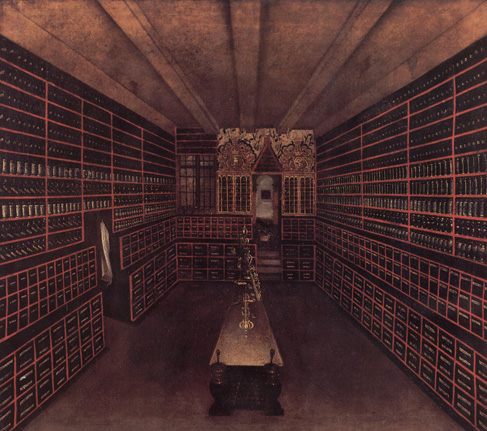
Inside the royal Elefant pharmacy (Elefantapoteket), Copenhagen, in a painting of the 17th or 18th century: walls of labeled drawers and bottled stores, every vessel in its place. A storehouse like this is what the receiving bench protects — nothing joins shelves like these unjudged.
Unknown artist, interior of the Elefantapoteket, Copenhagen, 17th or 18th century, via Wikimedia Commons (via the Royal Danish Library exhibition page). Public domain.
Professor's Introduction

Welcome to the receiving bench, scholars.
In Herbology you have learned how plants are grown, harvested, and dried. That is the grower's craft, and Professor Fernfoot owns it entirely. This lesson begins where hers ends. The apothecary does not always dry what the laboratory uses. Botanicals arrive at our door purchased from traders, traded with fellow scholars, or carried in from the Greenhouse harvest. Before a single leaf joins our shelves, someone must answer one question: is this batch worthy of the archive?
That someone is you.
★ Today you will learn the incoming inspection: the orderly examination every batch endures before it earns a place in our stores. You will judge dried botanicals by color, aroma, texture, and label. You will learn the snap test, the four fault checks, and the grading decision. You will learn when to accept a batch, when to quarantine it, and when to reject it outright. No drying methods will be taught here. Herbology Unit IV holds that knowledge, and we do not duplicate our sister department's work. We receive. We judge. We record.
A tidy bench, a clear head, and your senses in good order. Let us begin.
— Professor Crimblebrew Muddlenook, Potions Laboratory • Master Apothecary • Head of House Meridies
❦ In your workbook: record the receiving bench in your own way — where the grower's craft ends and the apothecary's judgment begins, and the one question every batch must answer — copy, sketch, or note what matters.

Potions map — the class base map, unmarked for this lesson.
Lesson Objectives
By the end of this lesson, you will be able to:
- Explain the apothecary's receiving inspection and why it comes before storage
- Judge dried botanicals by color, aroma, texture, and labeling
- Perform the snap test and the crumble test correctly
- Detect the four faults: excess moisture, mold, aroma loss, and age
- Grade a batch as prime, acceptable, quarantined, or rejected
- Record a complete intake log entry in your potions journal
Reading this lesson: ★ marks the passages to remember. They return on the unit quiz and the class test. Check in questions ask the material back as you go; answer them in your workbook when you meet them.
Working this lesson: Your assignment packet is the first download on this page. Work in it as the lesson moves along, answering each exercise as its subject is taught — or read the lesson through for your notes and take the exercises as homework afterward. Both are proper ways to sit this class. Signposts in the reading tell you where each exercise belongs. Written answers are short answers in your own words; a few honest lines are worth more than a filled page.
Your Assignment Packet
This lesson's exercises live in its packet: the Lexicon Handout (every term, course terms marked ◆), Materials, Guided Practice — which carries the five-step incoming inspection, the four faults, and the four grades — the Assignment Manual with its answer key for self-checking, the Reflection Questions, and the Workbook Checklist. Download the packet before you begin and keep it beside you as you read.
Safety Briefing
Read this section completely before you touch any material. Professor Muddlenook insists, and he is right to insist.
★ Mold means the whole batch goes. If you find fuzzy spots, musty smells, or any sign of mold on dried botanicals, discard the entire batch. Do not pick out the moldy pieces and keep the rest. The visible fuzz is only the fruiting surface; the mycelium, the threadlike body of the fungus, has already spread invisibly through the material. Bag the batch, put it in the household trash, and wash your hands. Do not compost moldy material you cannot identify with certainty, and never hold moldy material close to your face to sniff it.
Protect your lungs. Crumbly dried botanicals release fine dust when handled. Work in a ventilated area, and wear a dust mask or a folded cloth over your nose and mouth when you crumble, sort, or pour larger quantities. If you have asthma, allergies, or fragrance sensitivities, keep sessions short and ask an adult to help with the dustiest steps.
Do not taste to test. In this lesson we judge with eyes, nose, and fingers only. Never taste a dried botanical you cannot positively identify, and even with familiar kitchen herbs, tasting is not part of the inspection. Wash your hands after handling material, and keep your work surface clean.
Label everything, immediately. An unlabeled jar is a failed inspection before it begins. Keep unknown or doubtful material physically separate from your good stores until its identity and condition are settled.
Younger scholars should do the inspection alongside an adult, especially the steps involving pouring, crumbling, and disposal.
No dosage recipes appear in this lesson. No medicinal claims are made. Decorative or display preparations are marked as such wherever they occur.
Check in: Mold shows on only one corner of a batch. Why does the whole batch go — what has already happened inside the material that your eyes cannot see?
❦ In your workbook: record the safety briefing in your own way — mold discarded whole, lungs protected, no tasting to test, everything labeled immediately — copy, sketch, or note what matters.
Mise en Place: Setting the Receiving Bench
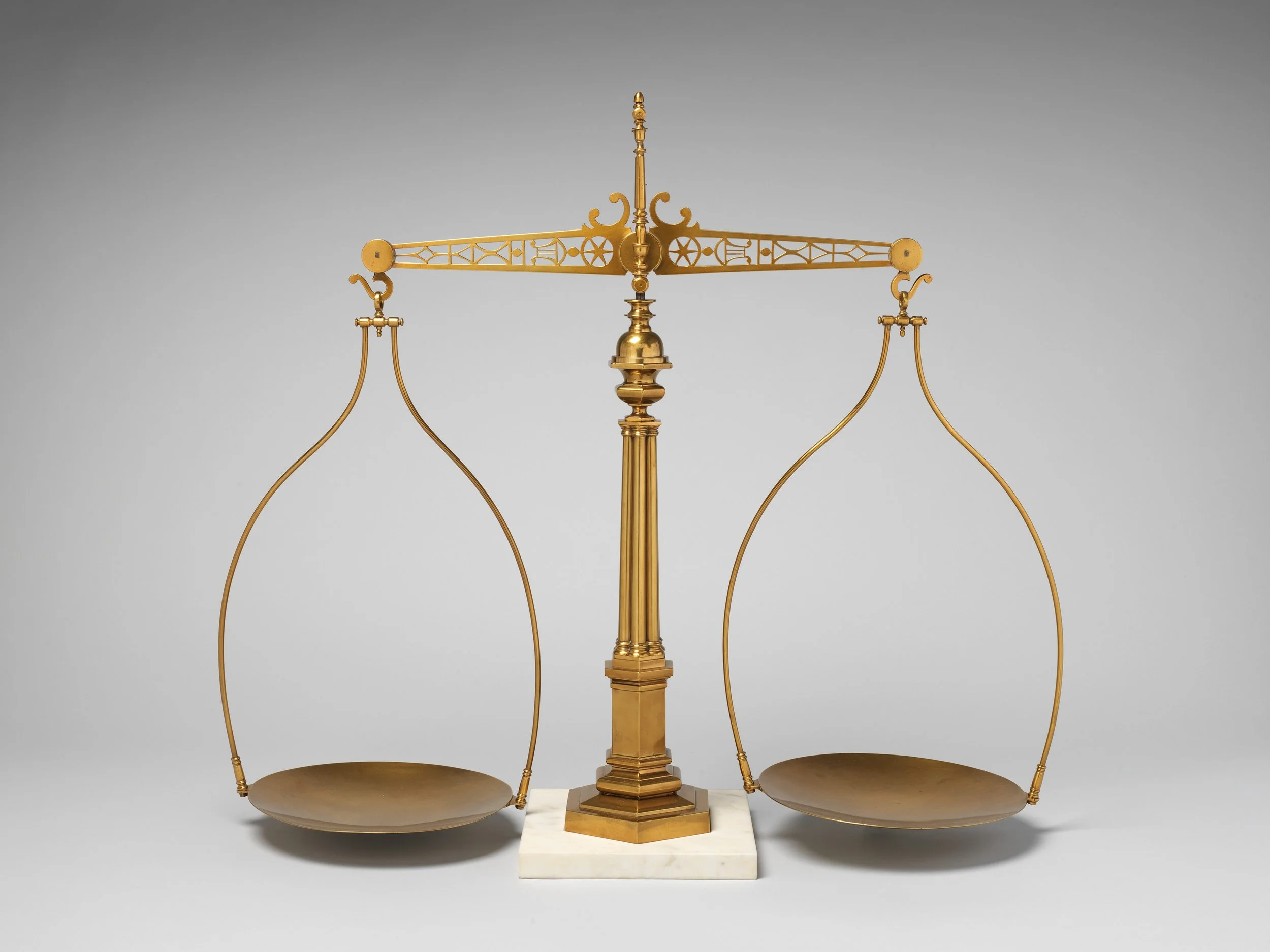
A balance scale (brass, steel, and marble, c. 1845–55) of the kind the Level Two bench keeps for weighing batches on receipt — the receiving bench's one brass instrument, weighing what the senses then judge.
Balance scale, American, c. 1845–55, brass, steel, and marble, The Metropolitan Museum of Art, New York (object 629597). CC0 (Met Open Access).
Every inspection begins before the first sample is opened. A receiving bench is a clean, well-lit table with everything the inspector needs within reach and nothing else.
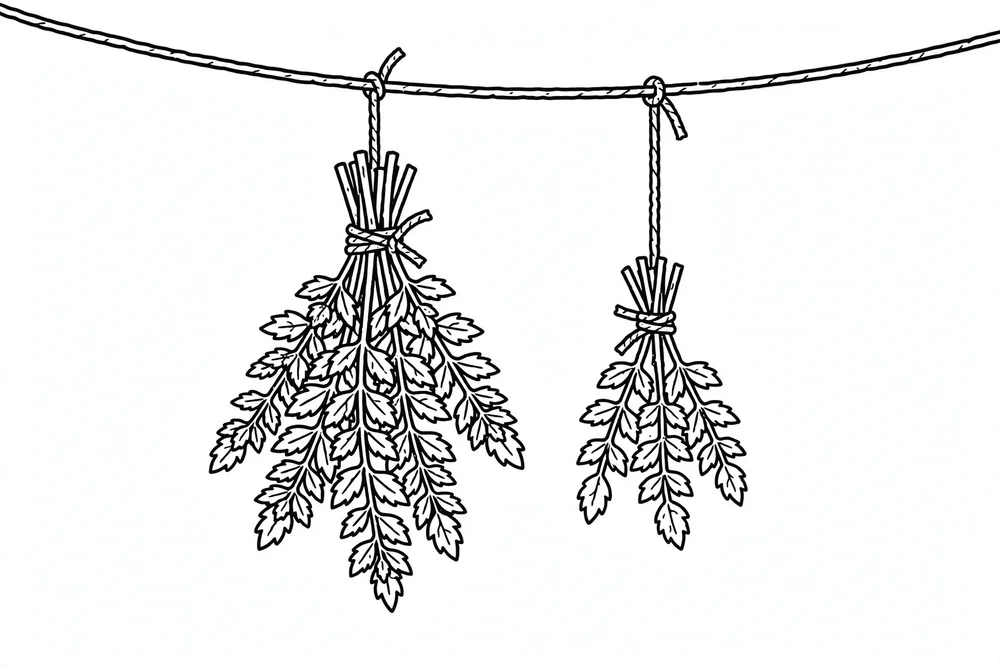
Arrange your samples in a row, left to right, in the order you will inspect them. Labels face forward. Hands washed. Bench clear. This orderliness is not fussiness. It is the method.
Check in: What does a receiving bench hold — and what does it hold nothing of?
❦ In your workbook: record the receiving bench in your own way — clean, well-lit, samples in a row, labels forward — copy, sketch, or note what matters.
The Procedure: The Incoming Inspection
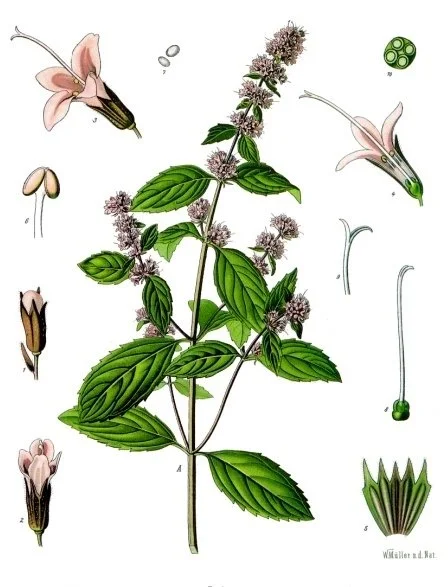
Peppermint (Mentha × piperita), plate 95 of Köhler's Medizinal-Pflanzen — a study portrait of the plant behind the kitchen's dried mint and the peppermint tea bag. Study the portrait here; judge the sample on your white paper by color, aroma, and crumble, never by a picture.
Franz Eugen Köhler, Köhler's Medizinal-Pflanzen (1887–1914), plate 95 (artist: Walther Otto Müller), via Wikimedia Commons. Public domain.
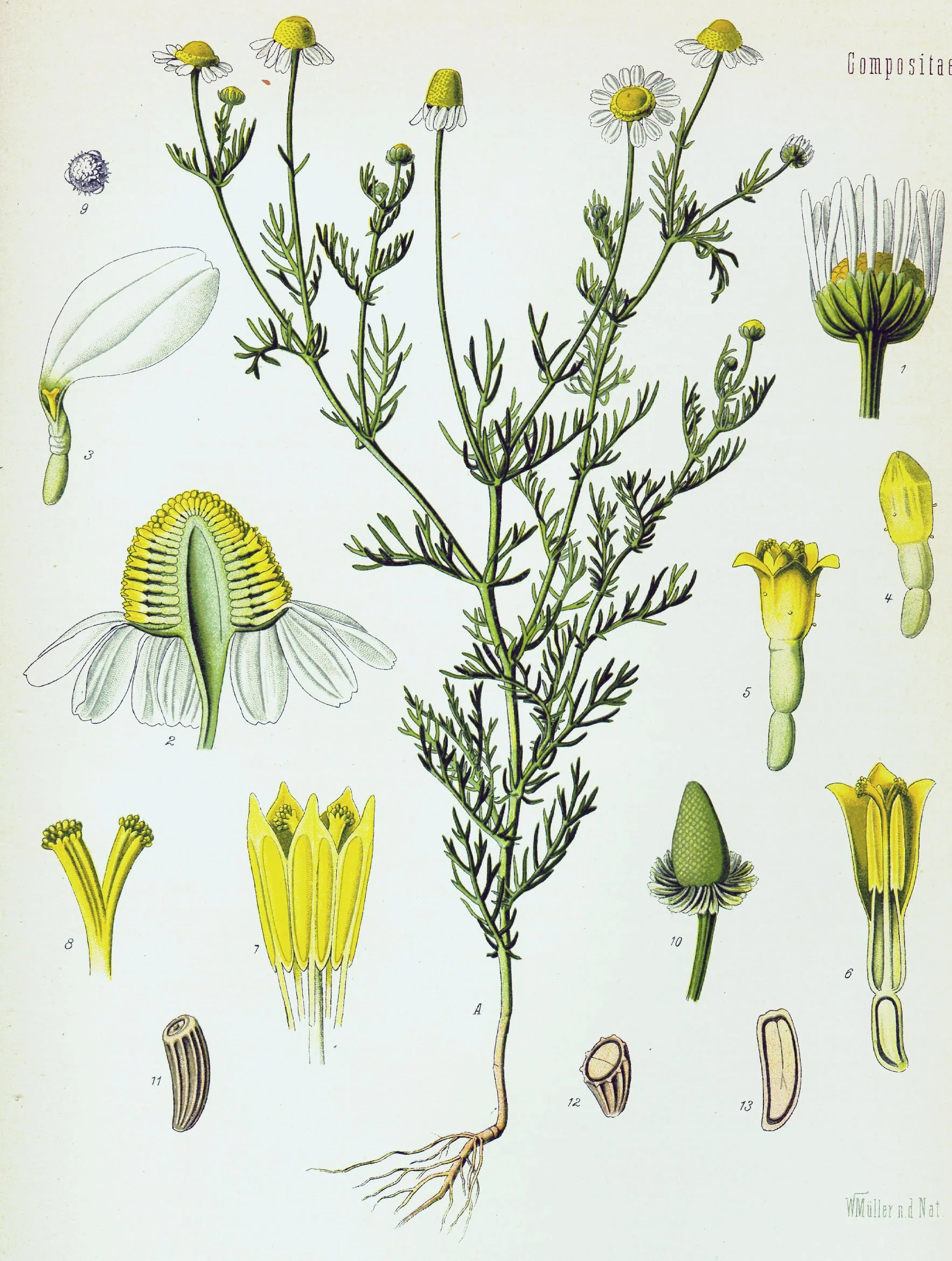
Chamomile (Matricaria recutita), plate 91 of Köhler's Medizinal-Pflanzen — a study portrait of the plant inside the tea bag, flower heads and all. The portrait shows the living plant in the tradition's record; your inspection judges the dried contents in your hand, and a picture alone never names them.
Franz Eugen Köhler, Köhler's Medizinal-Pflanzen (1887–1914), plate 91 (artist: Walther Otto Müller), via Wikimedia Commons. Public domain.
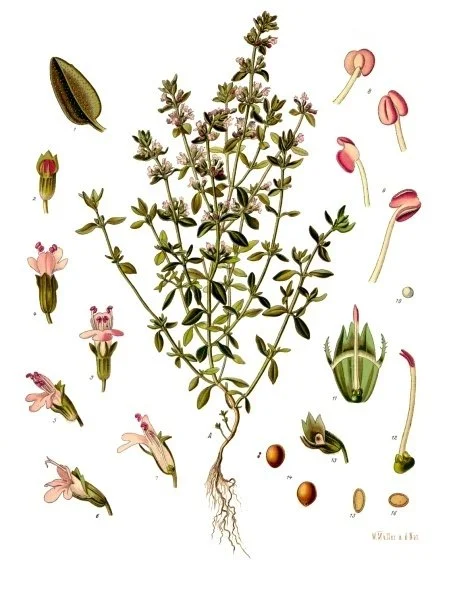
Thyme (Thymus vulgaris), plate 271 of Köhler's Medizinal-Pflanzen — a study portrait of the leafy herb your bench receives dried. The dried sample is judged by the snap of its stems and the crumble of its leaves; the portrait is the tradition's record of the living plant, not an identification guide.
Franz Eugen Köhler, Köhler's Medizinal-Pflanzen (1887–1914), plate 271, via Wikimedia Commons. Public domain.
★ Professor Muddlenook performs the same inspection on every batch, whether it arrives from a merchant's cart or from the Greenhouse across the courtyard. Memorize the order. The order is the protection.
Step one: the label. Read it before you open anything. A proper label names the material, the source, and the date it was dried or received. A batch with no label, no date, or a label you cannot read begins the inspection already in doubt. Note the age: properly stored dried herbs generally keep good quality for about a year, and a batch older than that deserves closer scrutiny even if it looks well.
Step two: the look. Pour a small amount onto white paper. In good light, examine the color. Dried botanicals should show color appropriate to the plant: greens should still read as green, not brown or grey; flowers should hold their characteristic hue. Fading, browning, or grey casts suggest age, heat damage, or poor storage. Look for uniformity: pieces should be reasonably even, with no foreign matter, no insects, no webbing, and no fuzzy patches. Any visible mold ends the inspection immediately. Reject the batch.
Step three: the smell. Hold the sample a hand's width from your nose and waft gently. Do not bury your nose in it. A good dried botanical smells like a concentrated version of itself: the aroma should be recognizable and pleasant. A flat, dusty, or absent aroma tells you the volatile compounds have escaped through age, heat, light, or poor storage. A musty, sour, or off smell is a fault. Mustiness in particular suggests moisture and possible mold, even where none is visible.
★ Step four: the feel. This is the heart of the inspection. Take a stem, if stems are present, and bend it. A fully dried stem snaps cleanly. A stem that bends without breaking still holds moisture inside and is not dry enough for safe storage. Now take a leaf and rub it between your fingers. Properly dried leaves crumble easily into fragments. Leaves that feel leathery, limp, or pliable are under-dried. This pair of checks, the snap test and the crumble test, is the buyer's oldest instrument, and it has judged harvests for centuries.
Step five: the decision. With label, look, smell, and feel complete, you grade the batch and record it. The grades are explained below.
Work through your samples one at a time, cleaning the white paper between samples so colors and aromas do not mix. Record as you go, not from memory afterward.
Check in: Name the five steps of the incoming inspection in their order — and say what ends an inspection on the spot, at step two.
❦ In your workbook: record the incoming inspection in your own way — label, look, smell, feel, decision, in that order — copy, sketch, or note what matters.
In your packet: Exercise I — The Intake Inspection ⚒ begins here. Work it now, or mark the place and take it as homework — your choice.
The Professor's Mid-Lesson Note
Pause a moment, scholars, and consider what your hands have just learned.
You have not needed a single instrument you did not already own. Your eyes, your nose, your fingers: these are the original laboratory equipment, and no brass or glass has ever replaced them. The snap test you just performed is older than any written pharmacopoeia. Somewhere, centuries ago, an apothecary bent a stem exactly as you did and made exactly the judgment you are making now.
Trust the method, and trust your senses once the method has trained them. The rest of this lesson is decision: what to do with what you have found. Take it in order, as always.
— Professor Crimblebrew Muddlenook, Potions Laboratory • Master Apothecary • Head of House Meridies
❦ In your workbook: record the mid-lesson note in your own way — your senses as the original laboratory equipment, and the snap test older than any written pharmacopoeia — copy, sketch, or note what matters.
Guided Observation: Reading What the Senses Report
Each sense reports on a different part of the batch's history. Learn to read the reports.
Color reports on age and storage. Chlorophyll breaks down with time, heat, and light, so greens fade toward brown and olive as months pass. This fading is natural and gradual; a batch dried last month looks different from a batch dried last year. Sudden darkening or blackened patches, however, suggest heat damage during drying or the beginnings of decay. Compare your sample against your memory of the fresh plant, or against a known-good sample if you have one.
Aroma reports on the volatile compounds. The scent of a dried herb lives in compounds that evaporate readily at room temperature. Every hour a batch spends in warmth, light, or open air, more of these compounds escape. A batch that smells of little or nothing may be perfectly safe, but it is past its prime: the character that made it worth storing has left. Whole leaves hold aroma longer than crushed or powdered material, because less surface is exposed to the air. This is why the careful apothecary stores leaves whole and crushes only what the day's work requires.
★ Texture reports on moisture, the great enemy. Moisture is what you are truly hunting. A batch that looks dry on the surface may still hold water inside. Dried too quickly or too hot, leaves and roots can suffer case hardening: the outside seals into a hard shell while moisture stays trapped within. Case-hardened material feels dry, passes a careless glance, and then spoils in the jar. The snap test defeats it. Bend the thickest stem in the sample, not the thinnest. Crumble the largest leaf, not the smallest. Test the worst piece, and let it speak for the batch.
Weight and sound give quiet testimony. A jar of properly dried herbs feels light for its size. Shake it gently near your ear: fully dried material rustles and rattles. A dull thud or a feeling of heaviness suggests moisture. These are secondary checks, but the experienced inspector uses them without thinking.
Check in: Why does the snap test use the thickest stem and the largest leaf — what fault is it built to defeat?
❦ In your workbook: record what the senses report in your own way — color for age and storage, aroma for the volatile compounds, texture for moisture — copy, sketch, or note what matters.
In your packet: Exercise II — The Four Faults Drill ⚒ begins here. Work it now, or mark the place and take it as homework — your choice.
The Four Faults
★ Memorize these. Any one of them can fail a batch.
1. Excess moisture. The stem bends instead of snapping. Leaves feel leathery or pliable. The jar feels heavy, or you spot condensation inside the container. Moisture is the root fault from which mold grows. Under-dried material must never join the main stores.
2. Mold. Fuzzy patches in white, grey, green, or black. A musty smell even where no fuzz is visible. Remember the safety section: mold anywhere means the entire batch is discarded. Invisible mycelium precedes visible mold, so salvaging the "good parts" is self-deception, not thrift.
3. Aroma loss. The material looks correct and feels dry, but smells of dust or nothing at all. The batch is safe but spent. Grade it down. It may serve for decorative work or practice, but it should not represent your stores.
4. Age and poor labeling. No date, no source, no name you trust. A batch older than about a year, or a batch whose history you cannot verify, cannot be graded prime no matter how good it looks. The archive depends on provenance.
Check in: Name the four faults from memory — then say which one is the root fault from which another grows.
❦ In your workbook: record the four faults in your own way — excess moisture, mold, aroma loss, and age and poor labeling — copy, sketch, or note what matters.
The Grading Decision
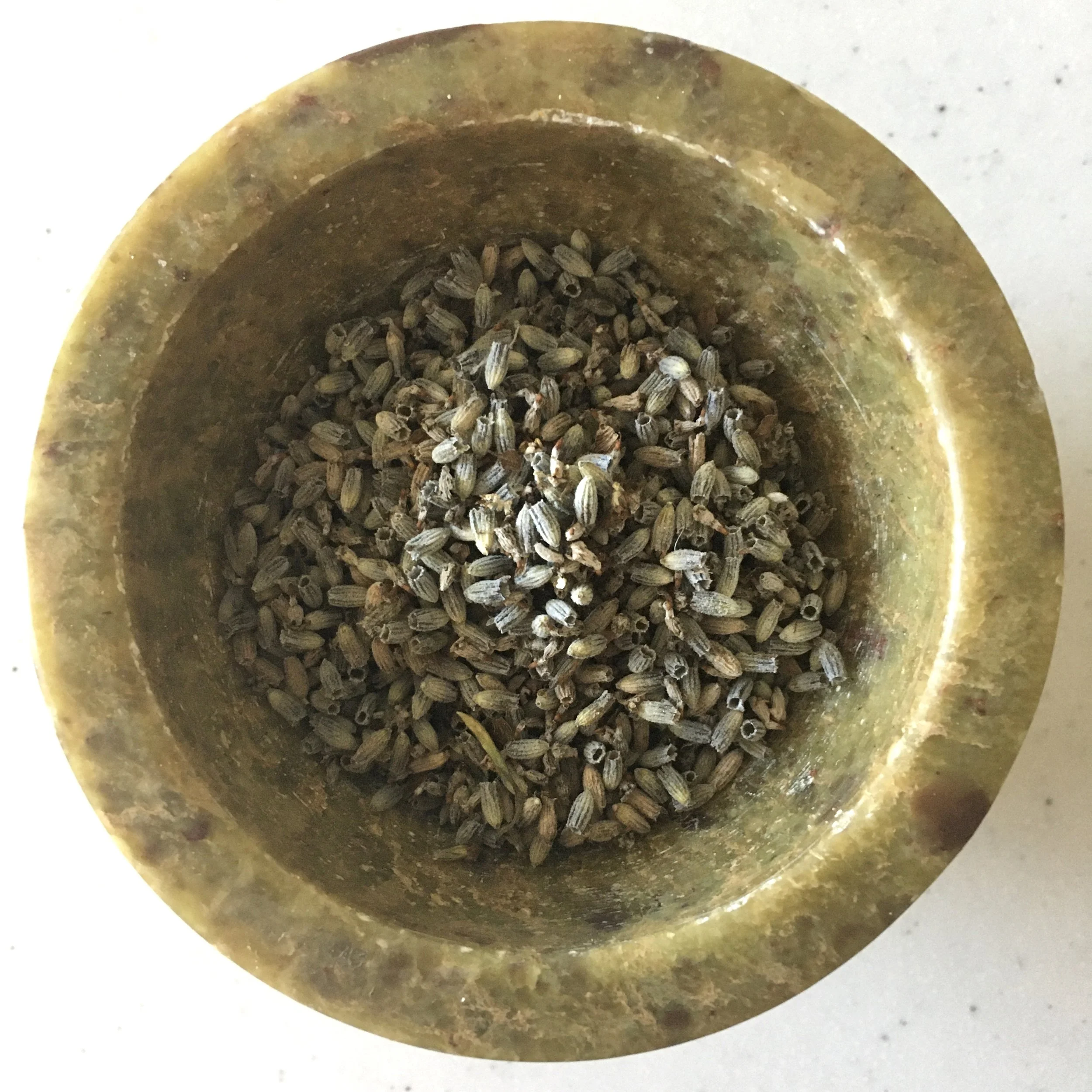
Dried lavender buds in a stone bowl, photographed from above: the ribbed buds gone grey-green and muted, as dried material truly arrives at a bench. A study portrait of dried botanicals as received — the grade is decided by aroma, snap, and label at the bench, never from a photograph.
Photograph by Misterneedlemouse, "Whole, dried lavender buds from California, USA in a bowl," via Wikimedia Commons. CC0.
★ Every batch that crosses the receiving bench leaves with a grade, written in the intake log. Professor Muddlenook uses four grades. Use them exactly.
Prime. The label is complete and the date is recent. Color is true, aroma is strong and characteristic, stems snap, leaves crumble. This batch joins the main stores and is used first for the finest work.
Acceptable. Sound and safe, but imperfect: aroma somewhat faded, color slightly dulled, pieces uneven, or the date approaching a year. This batch joins the stores in a marked jar and is used for everyday work and practice.
Quarantine. You are unsure. Perhaps a faint mustiness you cannot confirm, stems that mostly snap but not all, a label with a date you doubt. A quarantined batch is sealed, labeled "QUARANTINE" with the date, and stored physically apart from good stock, never beside it. Re-inspect in one week. If the doubt remains, reject.
Rejected. Mold found, moisture confirmed, contamination present, or identity in doubt. Rejected material never enters the stores. Moldy batches are bagged and trashed; merely poor-quality batches may be set aside for decorative use, clearly marked, or discarded.
Write the grade in ink. A grade written in pencil is a decision not yet made.
Check in: A batch is sound but its aroma has faded and its date is approaching a year. What grade does it earn, and where does it live?
❦ In your workbook: record the four grades in your own way — prime, acceptable, quarantine, rejected, and what sends a batch to each — copy, sketch, or note what matters.
Cleanup & the Archive Entry
The inspection ends as it began: with order.
Return each accepted batch to a clean, dry, airtight container. Glass jars with tight lids are the traditional choice; they show the contents, seal against moisture, and take a label well. Store jars in a cool, dark, dry place, away from heat and sunlight. Fill containers sensibly: a jar mostly full keeps better than a jar mostly empty, since less trapped air means less moisture to migrate.
Wipe down the bench. Brush crumbs into the trash, not back into any jar. Wash your hands. Put the dust mask away.
Then open your potions journal and write the intake entry. Every batch, including rejected ones, gets an entry. The archive remembers what the shelves no longer hold, and a record of a rejected batch protects you from accepting the same poor material twice. The entry records: the date, the source, the material name, the condition found at each step of the inspection, the grade assigned, and the storage location. This page is the beginning of that batch's history in your laboratory. Future preparations will cite it.
Dried botanicals arrive at the laboratory door as strangers. The intake inspection is how they earn their names in the archive.
Check in: Why does even a rejected batch get an intake entry — what does its record protect you from?
❦ In your workbook: record the cleanup and archive entry in your own way — jars filled sensibly, the bench wiped, every batch entered, rejected ones included — copy, sketch, or note what matters.
In your packet: Exercise III — The Intake Log Entry ◐ begins here. Work it now, or mark the place and take it as homework — your choice.
Materials
Required (Level One — household items)
- Three or more samples of dried botanicals from the kitchen: dried oregano, dried mint, bay leaves, a chamomile or peppermint tea bag, dried thyme, or similar. Different forms are ideal: one leafy herb, one in a tea bag, one whole (like bay leaves or cloves).
- Clean white paper or white plates, one per sample, so color shows truly.
- Small clean jars or zip bags for re-packing, plus blank labels and a pen.
- A dust mask or folded bandana.
- A magnifying glass if you have one.
- Your laboratory journal or potions journal, open to a fresh intake page.
Suggested (Level Two — historically closer)
- Whole dried botanicals from a bulk bin or market, in their original packaging.
- Glass jars with handwritten paper labels, the apothecary's traditional intake vessel.
- A simple balance scale for weighing batches on receipt.
- A parchment or paper intake ledger ruled into columns: date, source, material, condition, grade, storage location.
Reflection Questions
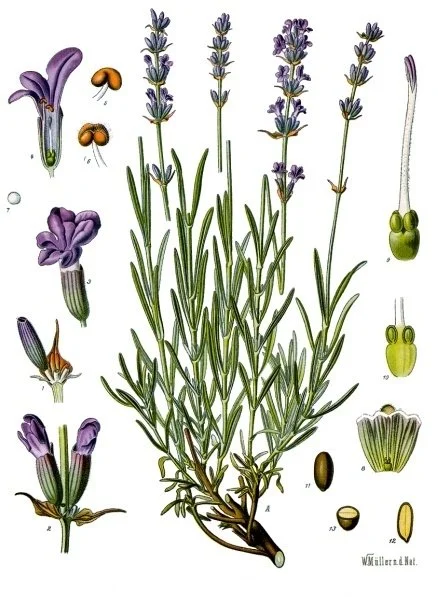
Lavender (Lavandula angustifolia), plate 87 of Köhler's Medizinal-Pflanzen — a study portrait of the plant in its prime, purple spikes full. Set it beside the bench's faded, scentless bargain and the reflection question answers itself: the grade follows the batch, not the price. A portrait of the tradition, not an identification guide.
Franz Eugen Köhler, Köhler's Medizinal-Pflanzen (1887–1914), plate 87 (artist: Walther Otto Müller), via Wikimedia Commons. Public domain.
Answer the following questions in your workbook.
- Why must an entire batch be discarded when mold appears on only part of it?
- Why is the snap test more trustworthy than judging dryness by appearance alone?
- A trader offers you dried lavender at a bargain price, but the buds are brown and nearly scentless. What is your intake decision, and why?
- Why should a doubtful batch be quarantined rather than shelved with good stock?
- How does the intake log entry connect this lesson to the potions journal you are building?
Workbook Checklist — Lesson 15
In my workbook I have:
- ☐ read the safety briefing completely before touching any material: mold discarded whole, lungs protected, no tasting to test, everything labeled immediately
- ☐ set the receiving bench — clean, well-lit, samples in a row in inspection order, labels forward, hands washed
- ☐ inspected three samples in the full order — label, look, smell, feel, decision — cleaning the white paper between samples and recording as I went
- ☐ applied the snap test to the thickest stem and the crumble test to the largest leaf, and run the four fault checks on my most doubtful sample
- ☐ graded every batch — prime, acceptable, quarantined, or rejected — and written each grade in ink
- ☐ returned accepted batches to clean, dry, airtight containers in a cool, dark, dry place, wiped the bench, and washed my hands
- ☐ written the intake log entry for my best batch, with its two- or three-sentence archive note
☐ Lesson completed Date: ___ Signature: ___
The Professor's Closing Note
You have done proper laboratory work today, scholars, and I want you to see the shape of it.
Safety first, bench prepared, procedure followed in order, observations recorded honestly, the bench cleaned, the archive entered. That rhythm will carry you through every lesson in this course, from the simplest sorting to the most demanding formulation. The techniques will grow more complex. The rhythm will not change.
One caution before you go. Do not become so eager to fill your shelves that you lower your standards at the receiving bench. An archive built on unjudged material is a cellar, not a laboratory. Judge every batch. Write every grade. Your future self, reaching for prime material in the middle of a demanding preparation, will thank you.
The bench is clean. The ledger is entered. Well done.
— Professor Crimblebrew Muddlenook, Potions Laboratory • Master Apothecary • Head of House Meridies
Cross-Class Connections

Herbology · Unit IV, Lesson 28 — Drying Herbs the Traditional Way
Come to the Greenhouse, receiving scholars, and learn how the dryness you judge is made. Here we hang small bundles and spread screens in a dark, airy place, test the leaves with the crispness test — crisp and crumbling, stems snapping, never bending — condition the batch so its moisture evens out, and only then seal it into labeled, dated, airtight jars. Dry a batch well in my room, and it will pass Professor Muddlenook's bench with its head high; dry it hastily, and his snap test will find you out, as it should.
Herbology · Unit V, Lesson 36 — The Materia Botanica: Building Your Herbal
Your intake log entry is the first page of a batch's history — and here is the book that history belongs to. In the Greenhouse we build the one shared Materia Botanica: one plant, one entry, eight fields, my growing notes beside the laboratory's preparation notes. The sixth field is yours to begin at the receiving bench: how the material is judged ready for use. Bring the batch you graded prime, and let us give its whole life — growing, harvest, and judgment — a single home.
Further Reading & Sources
- Drying Fall Herbs: A Simple Guide to Preserving the Harvest: Ohio State University Extension, on the dryness test (leaves crumble, stems snap) and proper storage
- Judging Dried Herbs Score Sheet: Kansas State University Extension, the official criteria judges use: color, mold, moisture, texture, odor, and labeling
- Judging Home Preserved Foods: Montana State University Extension, with the National Center for Home Food Preservation criteria for dried herbs
- Professor Discusses How to Dry Fresh Herbs: University of Georgia, an extension food safety specialist on moisture, mold risk, and storage
- Drying Vegetables (MontGuide): Montana State University Extension, on post-drying handling: cooling before packing, mold prevention, and storage life
Browse the Potions shelf in the school Library for readable editions of these works.
Submit your work for this lesson using the form below.
CONTINUE IN THE POTIONS LABORATORY
← Previous · Lesson 14: Fragrant Botanicals & Aromatics Next · Lesson 16: Ingredient Stability & Storage Behavior →
Unit II — Materia Botanica, Delicate Structures Potions Laboratory — All 52 Lessons
The rest of Unit II: Lesson 10 · Surface Matrix · Lesson 11 · Sensory Profile · Lesson 12 · Flowers & Petals · Lesson 13 · Seeds & Spices · Lesson 14 · Fragrant Botanicals · Lesson 16 · Stability & Storage · Lesson 17 · Consolidating the Journal