

POTIONS
Unit IV · Lesson 28GLYCERITES & SYRUP BASES
Professor Crimblebrew Muddlenook
Master Apothecary • Potions
Head of House Meridies • School of Evershade
Professor's Introduction

Sealed with the teal wax of Professor Crimblebrew Muddlenook, Master Apothecary of the Potions Laboratory, Head of House Meridies.
Scholars, Unit IV has given you oils and waters and the patience of steeping. Today we turn to the gentle menstrua (the liquids that do the extracting): glycerin, syrup, and honey. These are the solvents — liquids able to dissolve or draw out other materials — for delicate work, for botanicals too fragile for strong spirits, and for every student who prefers to keep alcohol out of the laboratory altogether.
There is an old laboratory saying: the strong solvent takes what it wants, but the gentle solvent takes what it is given. Glycerin does not rush. Honey does not hurry. What they lack in speed they repay in care, and the preparations they yield are sweet, stable, and kind to fragile aromatics.
Mind the stickiness. Label everything. And give these slow workers the time they deserve.
— Professor Crimblebrew Muddlenook, Potions Laboratory • Master Apothecary • Head of House Meridies

Potions map — the class base map, unmarked for this lesson.
Lesson Objectives
By completing this lesson, you will be able to:
- Explain why glycerin, syrup, and honey serve as non-alcoholic menstrua
- Describe how viscosity and sugar concentration preserve a preparation
- Prepare a glycerite following the full laboratory procedure
- Prepare a honey-based preparation in the oxymel tradition for study
- Record viscosity observations and preservation behavior in your extraction ledger
Reading this lesson: ★ marks the passages to remember. They return on the unit quiz and the class test. Check in questions ask the material back as you go; answer them in your workbook when you meet them.
Working this lesson: Your assignment packet is the first download on this page. Work in it as the lesson moves along, answering each exercise as its subject is taught — or read the lesson through for your notes and take the exercises as homework afterward. Both are proper ways to sit this class. Signposts in the reading tell you where each exercise belongs. Written answers are short answers in your own words; a few honest lines are worth more than a filled page.
Your Assignment Packet
This lesson's exercises live in its packet: the Lexicon Handout (every term, course terms marked ◆), Materials, Guided Practice — the two practicals' procedures and observation routines, printed in full so you can work them at your own bench — the Assignment Manual with its self-check, the Reflection Questions, and the Workbook Checklist. Download the packet before you begin and keep it beside you as you read.
About this lesson's assessment, plainly: the original packet's Assignment I was a Lesson Quiz. Per the classroom model, per-lesson quizzes leave the manual and pool into the Unit IV Quiz; its questions are preserved whole in the unit quiz pool. The exercises below keep their source words and numbering — Exercise I, Exercise II, Exercise III (the original packet numbered them Assignments II–IV behind the quiz).
Safety Briefing
Read this entire section before you touch a single vessel.
- Gentle heat only. Warm mixtures in a water bath, never over direct high flame, and never leave warming vessels unattended.
- Sticky spills happen. Wipe them immediately. Spilled glycerin, syrup, or honey attracts dust and insects and turns floors treacherous.
- Label before you fill. Every vessel gets contents, preparation type, and date before anything goes in. Every preparation in this lesson is labeled STUDY ONLY. Nothing here is made to be consumed.
- No tasting. The honey preparation is a laboratory exercise in observation, not food and not medicine.
- Honey and infants. Honey is never given to children under one year of age, because of the risk of infant botulism. Keep all honey preparations out of the reach of very young siblings, and write it on the label.
- Adult supervision for any step involving heat. Younger students: ask an adult to manage the water bath.
Check in: Which label must every preparation in this lesson carry — and what two things must the honey label add: who must never be given honey, and where must honey preparations be kept?
❦ In your workbook: record the safety briefing in your own way — gentle heat in a water bath only, sticky spills wiped at once, label before you fill and STUDY ONLY on everything, no tasting, and the infant honey rule written on the label — copy, sketch, or note what matters.
In your packet: Guided Practice — the two practicals begin here in print. Work them as you reach them in the reading, or mark the place and take them as homework — your choice.
Why the Gentle Path?
Alcohol is the great workhorse of extraction. It is strong, fast, and thorough. But strength is not always what the material needs. Delicate flower petals, with their fragile aromatics, can be overwhelmed by strong spirits, and their finest notes vanish under the sharpness. Some students, for reasons of household rules or personal choice, prefer to keep alcohol out of their laboratory entirely. And history offers older, gentler roads.
Glycerin, syrup, and honey are the gentle menstrua. They extract slowly. They preserve by sweetness and thickness rather than by strength. ★ They ask for weeks where alcohol asks for days, and they repay the wait with preparations that are stable, sweet, and kind to fragile material.
This lesson teaches all three, with two full practicals. You will make a glycerite. You will make a honey preparation in the ancient oxymel tradition. Both will macerate on your shelf for weeks, and both will teach you the laboratory virtue this unit most wants you to learn: patience, recorded.
Check in: What do delicate flower petals lose under strong spirits — and what two things do the gentle menstrua preserve by, instead of strength?
❦ In your workbook: record why the gentle path in your own way — alcohol strong, fast, and thorough, the fragile aromatics it can overwhelm, and the weeks the gentle menstrua ask for — copy, sketch, or note what matters.
Glycerin: The Sweet Principle of Fats
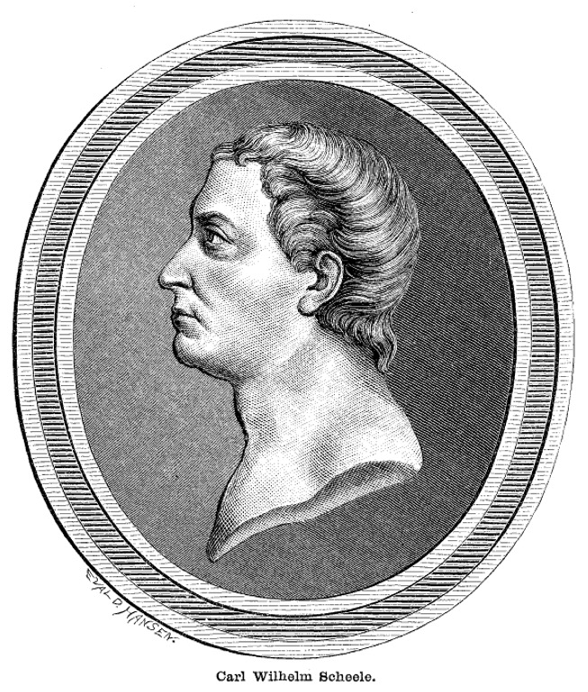
Carl Wilhelm Scheele, who in 1779 heated olive oil with litharge and isolated the clear, sweet liquid he called the sweet principle of fat — the discovery this lesson's first menstruum descends from.
Engraving from Familj-Journalen (1874), via Wikimedia Commons. Public domain.
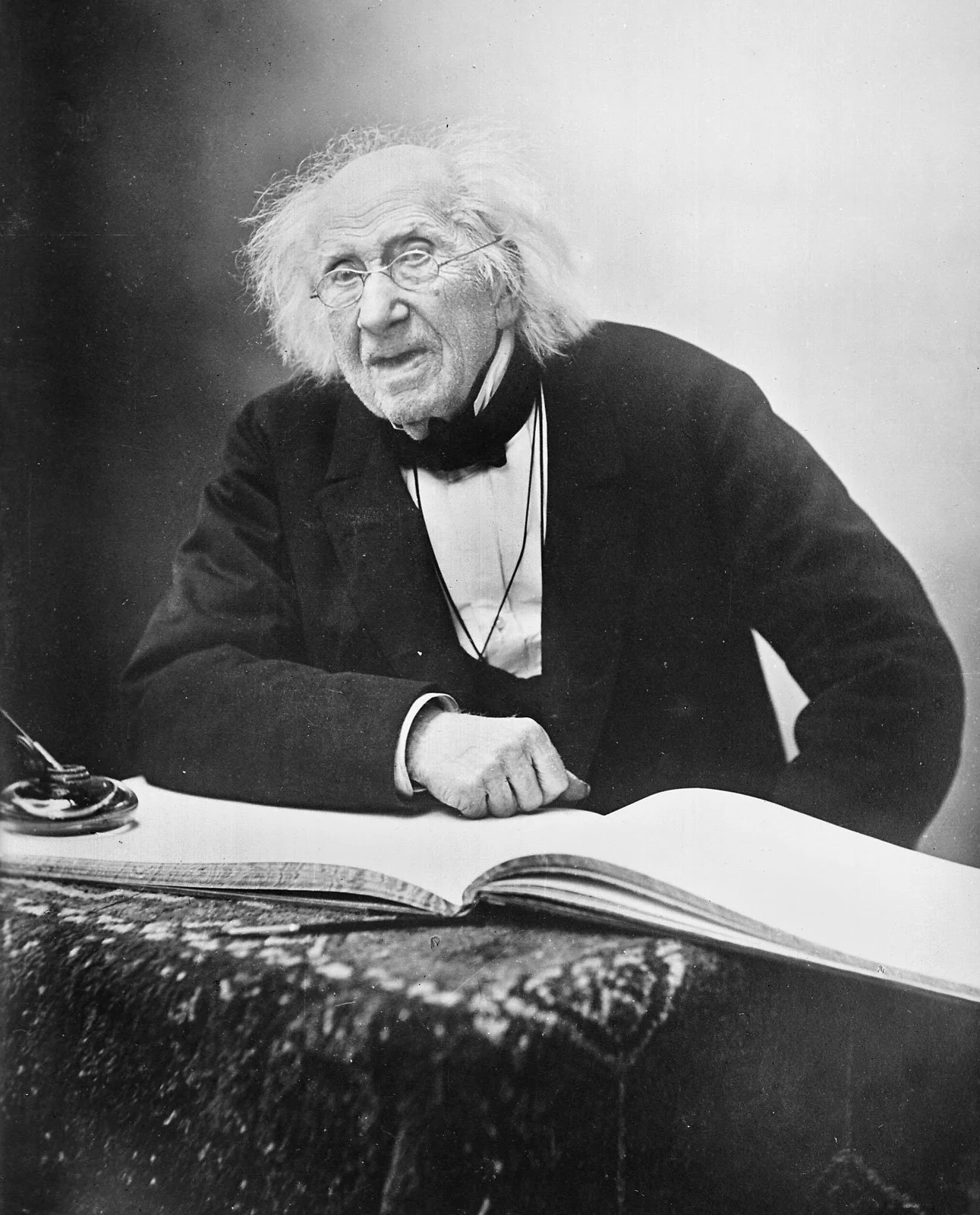
Michel Eugène Chevreul in old age, photographed at his desk: the chemist who gave Scheele's sweet principle its proper name — glycérine, from the Greek glykys, sweet — from his saponification research, the same reaction that makes glycerin soapmaking's byproduct.
Photograph of Michel Eugène Chevreul (Nadar studio tradition), via Wikimedia Commons. Public domain.
In 1779, the Swedish chemist Carl Wilhelm Scheele was heating olive oil with lead monoxide, a substance then called litharge. From the mixture he isolated a clear, sweet-tasting liquid. He called it the sweet principle of fat. He had discovered glycerin.
Decades later, the French chemist Michel Eugène Chevreul gave it a proper name: glycérine, from the Greek glykys, meaning sweet. In modern chemistry it is called glycerol, with the -ol ending that marks it as an alcohol. The two names describe one substance.
Glycerin is woven through the laboratory's history because it is a natural byproduct of soapmaking. When fats are heated with an alkali, the reaction called saponification splits them into soap and glycerin. Every bar of traditionally made soap once held glycerin within it. You will meet this reaction face to face in Unit V, when we make soap ourselves.
As a material, glycerin is remarkable: clear, nearly colorless, odorless, very viscous, and completely mixable with water. It is hygroscopic, meaning it pulls moisture from the air, so the laboratory keeps it stoppered. Chemically it is a trihydric alcohol, which is a precise way of saying its molecule carries three hydroxyl groups. What matters for our work is simpler: it is thick, sweet, stable, and gentle.
★ Why gentle? Because glycerin moves slowly. Poured over prepared botanical material, it does not rush through the way water does, nor bite the way alcohol can. It settles around the material and coaxes compounds out over days and weeks. For delicate aromatics, that slowness is a virtue. The volatile notes that strong solvents scatter survive in glycerin's patient embrace.
Modern herbalists buy vegetable glycerin, made from plant oils, for alcohol-free extracts. It is the same substance Scheele found, cleaned and standardized, and it behaves exactly as he described: sweet, thick, and mild.
Check in: What was Scheele heating in 1779, what did he call what he found — and what reaction, met again in Unit V, releases glycerin as its byproduct?
❦ In your workbook: record glycerin in your own way — Scheele's sweet principle of fat, Chevreul's name from glykys, the saponification byproduct, and the slow coaxing that makes it gentle — copy, sketch, or note what matters.
In your packet: Exercise I — The Glycerite ⚒ begins here. Work it now, or mark the place and take it as homework — your choice.
Syrups: Preservation by Sweetness
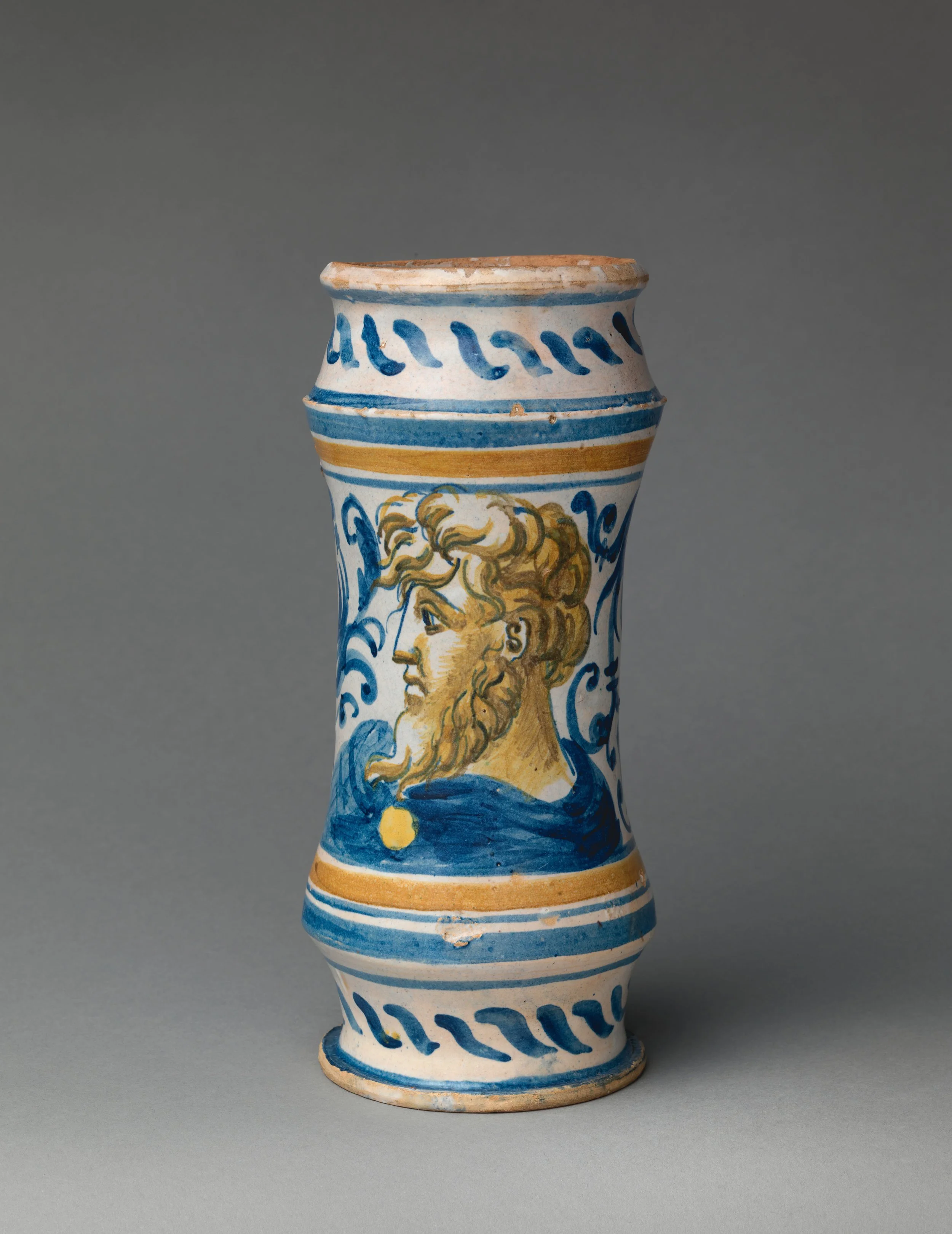
A pharmacy jar of the syrup tradition: maiolica painted with a portrait head and scrollwork, its decoration carrying no inscription at all. The vessel cannot tell you what it holds or when it was made — which is why this lesson's labeling law, contents and type and date and STUDY ONLY before filling, does the telling.
Albarello, The Metropolitan Museum of Art, via Wikimedia Commons. CC0.
Long before anyone understood why, apothecaries knew that sugar preserves. Fruits kept in heavy syrup lasted. Honeyed preparations endured. The mechanism, understood much later, is osmosis.
Osmosis is the movement of water from where it is more concentrated to where it is less concentrated, across any barrier that lets water pass but not dissolved substances. A microbe is mostly water wrapped in a membrane. Surround it with concentrated sugar syrup, and osmosis pulls water out of the microbe toward the sweeter surroundings. Without available water, the microbe cannot grow. ★ This is why the laboratory speaks of water activity: the fraction of water in a material that microbes can actually use. Lower the water activity far enough, and the preparation keeps.
A syrup, in laboratory language, is a concentrated solution of sugar in water. As a menstruum it draws out compounds less powerfully than glycerin, but as a preservative vehicle it is superb. Historical apothecaries made syrups to carry botanical preparations, and the tradition runs unbroken into the modern pharmacy.
For our purposes, the syrup base is a study in preservation by sweetness: a menstruum that protects what it holds.
Check in: A microbe is mostly water wrapped in a membrane. What does concentrated syrup do to that water — and what can the microbe then not do?
❦ In your workbook: record syrups in your own way — osmosis pulling water toward the sweeter surroundings, water activity lowered, and the syrup as a menstruum that protects what it holds — copy, sketch, or note what matters.
Honey: The Ancient Preservative
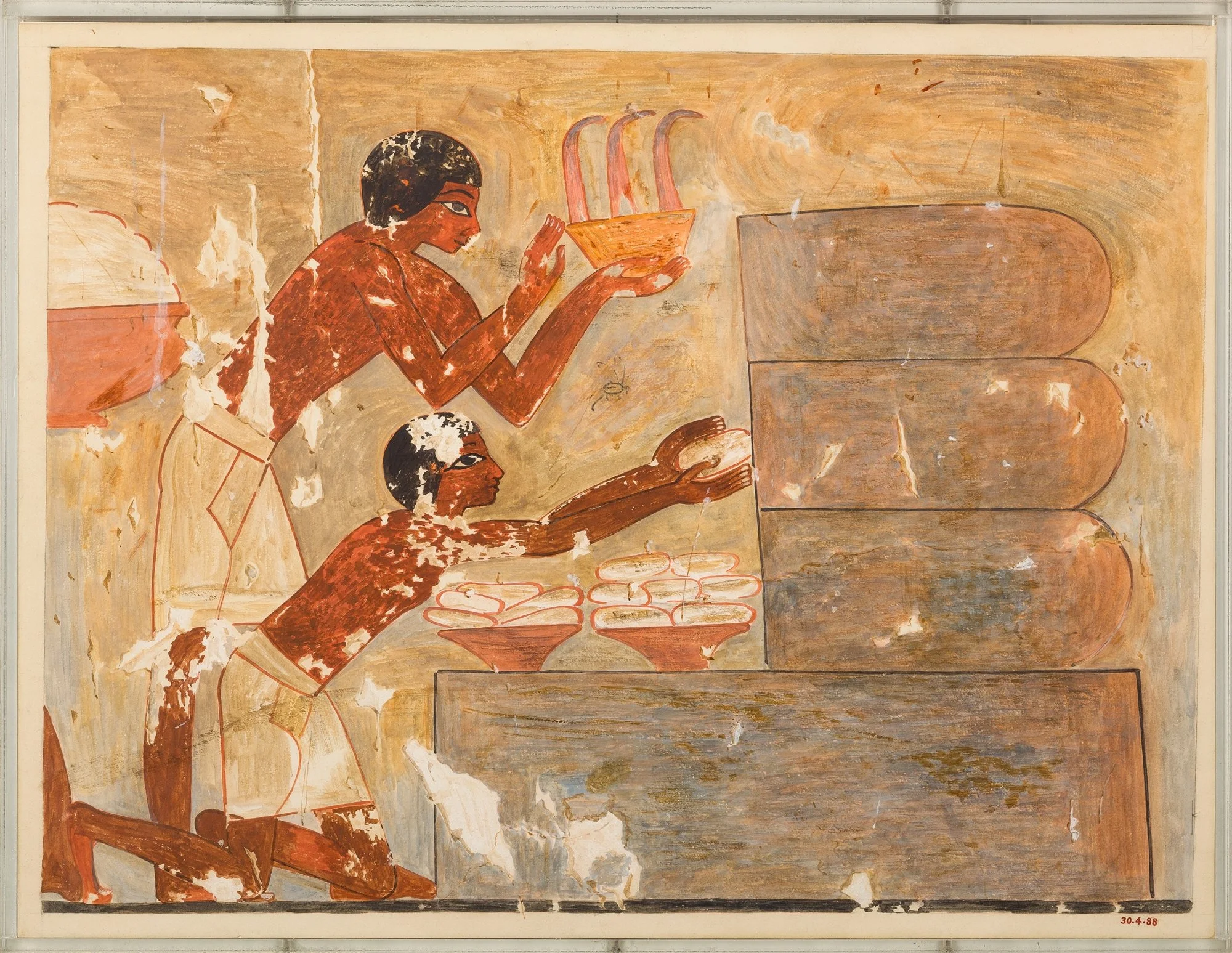
Gathering honey, copied from the tomb of Rekhmire: hives stacked at the right, one keeper calming the bees with smoke, another drawing out the combs. Honey-keeping is drawn this carefully because honey keeps — the ancient preservative whose stability this lesson measures in water activity.
Facsimile painting after the Tomb of Rekhmire, The Metropolitan Museum of Art, via Wikimedia Commons. CC0.
Honey is the oldest preservative in this lesson, and its history is the longest.
Oxymel, from the Greek oxys (acid, sharp) and meli (honey), is a mixture of honey and vinegar. It was already old when Hippocrates prescribed it around 400 BC. It appears in Dioscorides, in Galen, and in Cato the Elder's writings on country life. For two thousand years, whenever a healer wanted to keep a preparation and make it palatable, honey and vinegar were within reach.
Honey preserves for several reasons working together. It is a supersaturated sugar solution, so osmosis works in it exactly as in syrup. Its water activity sits around 0.5 to 0.6, far below what most microbes need. It is naturally acidic, near pH 3.9. And it is hygroscopic, pulling moisture from its surroundings rather than giving it up. Archaeologists have widely reported finding pots of honey in Egyptian tombs, thousands of years old, still preserved and recognizable. The underlying fact is sound: honey is one of the most stable foods known.
★ One safety rule stands above the rest with honey, and I insist you learn it now: honey is never given to children under one year of age, because of the risk of infant botulism. Label your honey preparations clearly and keep them away from very young siblings.
Our honey preparation follows the oxymel tradition: honey, vinegar, and a dried botanical, macerated together. It is made for study and observation. Like everything in this lesson, it is labeled STUDY ONLY.
Check in: Name the four preservative facts that work together in honey — and the one safety rule that stands above the rest.
❦ In your workbook: record honey in your own way — the oxymel tradition from Hippocrates, the supersaturated solution at water activity 0.5 to 0.6, the acidity and the hygroscopic pull, and the infant rule — copy, sketch, or note what matters.
In your packet: Exercise II — The Honey Preparation ⚒ begins here. Work it now, or mark the place and take it as homework — your choice.
A Note from Professor Muddlenook
Scholars, a word about stickiness, because this is the lesson where the laboratory gets sticky and I would rather warn you than scrub with you.
Glycerin on a shelf edge will still be there tomorrow, collecting dust and looking reproachful. Honey on a jar thread will seal the lid tighter than any wax. Wipe every drip the moment it happens, with a damp cloth kept for the purpose. The orderly laboratory is not the one that never spills. It is the one that cleans the spill at once.
And patience, please. These preparations will sit for weeks. The student who opens the jar daily to check is the student who introduces air, dust, and doubt. Shake gently, observe through the glass, and write down what you see. The ledger is where the work happens while you wait.
— Professor Crimblebrew Muddlenook, Potions Laboratory • Master Apothecary • Head of House Meridies
Check in: The student who opens the jar daily to check introduces three things. What are they — and what three actions replace opening?
❦ In your workbook: record the note in your own way — every drip wiped the moment it happens, the orderly laboratory defined by cleaning at once, and the ledger as the place the work happens while you wait — copy, sketch, or note what matters.
Viscosity and Flow
Viscosity is defined in Scrollwork Unit II, Lesson 5, and referenced in our own Lesson 19. It is the thickness or resistance of a liquid as it flows.
In extraction work, viscosity is not decoration. It governs how the menstruum behaves around the material. Water is thin: it rushes through, touches everything quickly, and leaves. Glycerin is thick: it moves slowly, clings, and gives long, gentle contact. Syrup sits between, depending on its concentration. Honey barely flows at all at room temperature.
This matters twice: once in the jar, where thickness sets the pace of extraction, and once at the bench, where thickness sets the pace of your work. Thick menstrua pour slowly, strain slowly, and need wider-mouthed vessels. Plan for it. The exercise below will have you time the flow of three liquids, and you will never again guess at what viscous means.
Check in: Rank the lesson's four liquids by flow as the text gives them — water, syrup, glycerin, honey — and name the two places thickness matters.
❦ In your workbook: record viscosity and flow in your own way — water rushing, glycerin clinging, syrup between, honey barely flowing, and thickness setting the pace in the jar and at the bench — copy, sketch, or note what matters.
In your packet: Exercise III — The Viscosity Trials ◐ begins here. Work it now, or mark the place and take it as homework — your choice.
Practical I: The Glycerite
Safety check. Review the lesson Safety Briefing before beginning. No heat is required for the basic glycerite, which makes this our gentlest practical. The rules that remain: label before filling, no tasting, wipe spills at once, and keep the jar away from young children.
Mise en place, Level One (household items).
- Vegetable glycerin, food or cosmetic grade, from a pharmacy or craft supplier
- Dried botanical: dried chamomile flowers or dried rose petals, one small handful
- A clean glass jar with a tight lid, small
- Labels and a pen
- A spoon, a small funnel, and a damp cloth for drips
- Your extraction ledger
Mise en place, Level Two (historically closer).
- A small scale, to weigh botanical and menstruum in the apothecary's manner
- An amber glass jar, which shields the contents from light as old shop jars did
- A parchment label, tied with string
Procedure.
- Inspect your botanical as Lesson 15 taught you: color, aroma, brittleness. Reject anything musty or damp. Record the inspection in your ledger.
- Label the jar BEFORE filling: contents, "Glycerite," today's date, and STUDY ONLY.
- Fill the jar loosely one-third full with the dried botanical. Do not pack it tight; the menstruum must circulate.
- Mix three parts glycerin to one part water in a cup. This thins the glycerin just enough to penetrate the material while keeping its preservative strength.
- Pour the mixture over the botanical until it is covered by a finger's width. Poke gently with the spoon handle to release trapped air bubbles.
- Seal the jar. Wipe the outside clean. Place it somewhere cool and dark, but where you will see it daily.
Observation. For the next two to four weeks, shake the jar gently once a day and observe through the glass. Record in your ledger: the color of the liquid (it will deepen), the aroma when you open it briefly once a week, and the behavior of the botanical (it will darken and settle). Note the viscosity each time you handle it: how slowly does it move when you tilt the jar?
Cleanup. Wash the cup, spoon, and funnel in hot soapy water; glycerin rinses clean. Wipe the work surface. Return the glycerin bottle stoppered to its shelf.
Archive entry. Enter in your extraction ledger: botanical name and inspection notes, glycerin-to-water ratio, date sealed, and your first observation. This entry will grow over the coming weeks. That is the point.
Check in: Why is the botanical filled loosely, one-third full, and never packed tight — and what four things does the archive entry open with?
❦ In your workbook: record the glycerite practical in your own way — the inspection first, the label before filling, three parts glycerin to one part water, and the daily shake-and-observe routine — copy, sketch, or note what matters.
Practical II: The Honey Preparation
Safety check. The honey rules: no tasting, STUDY ONLY labeling, and the infant rule. Keep honey preparations away from children under one year and write it on the label. Vinegar is acidic; wipe spills and keep it off unsealed stone.
Mise en place, Level One.
- Plain honey, a few spoonfuls
- Vinegar: plain apple cider vinegar or white wine vinegar
- Dried botanical: dried thyme or dried rose petals
- A clean glass jar with a lid, small
- Wax paper or parchment, to protect the lid from the vinegar's acidity
- Labels and a pen
- Your extraction ledger
Mise en place, Level Two.
- A scale for the traditional proportions
- A stoneware or glass jar in the old manner
Procedure.
- Label the jar BEFORE filling: contents, "Honey Preparation (oxymel tradition)," today's date, STUDY ONLY, and "keep away from infants under one year."
- Place a spoonful of the dried botanical in the jar.
- Add roughly two parts honey to one part vinegar. Stir slowly until the honey loosens into the vinegar. The mixture will be sharp-smelling and sweet at once; that is the oxymel character.
- Pour over the botanical, cover, and place a square of wax paper under the lid to shield it from the vinegar.
- Seal, wipe clean, and shelve beside your glycerite in the cool and dark.
Observation. Over two weeks, observe: does the honey stay mixed with the vinegar, or does it settle? How does the aroma change? Compare its viscosity to your glycerite by tilting both jars. Record everything. You are watching two different menstrua do the same slow work.
Cleanup. Hot soapy water for everything; honey dissolves readily. Wipe the bench.
Archive entry. Log the preparation exactly as you did the glycerite: materials, proportions, date, first observations. Note the differences between the honey menstruum and the glycerin menstruum. Comparison is the beginning of judgment.
Check in: What five things does this jar's label carry before filling — and what shields the lid from the vinegar?
❦ In your workbook: record the honey practical in your own way — the label with its infant warning, two parts honey to one part vinegar, the wax paper under the lid, and the two jars compared by tilting — copy, sketch, or note what matters.
Storage, Labeling, and the Extraction Ledger
Both preparations now sit on your shelf for weeks. Your work is not done; it has changed shape. Once a week, inspect each jar: check the seal, look for any cloudiness or off-odors that would signal a failed batch (discard without debate if you find them), and write a dated ledger line.
★ My labeling law, learned in Unit I and binding forever: contents, preparation type, date, and STUDY ONLY on every vessel, before filling. A laboratory where every jar speaks for itself is a laboratory where mistakes grow rare.
When the maceration is complete, you will strain both preparations through cloth, as Lesson 22 taught, into clean labeled bottles. That straining day is still weeks away. The ledger you keep until then is the real product of this lesson.
Check in: Once a week you inspect each jar for three things. What are they — and what do you do, without debate, if cloudiness or off-odors appear?
❦ In your workbook: record storage and labeling in your own way — the weekly inspection, the discard rule, the labeling law's four items before filling, and the ledger as the real product — copy, sketch, or note what matters.
Guided Observation: Tilting Two Jars
This lesson's observation is slow work, done through glass: you watch two different menstrua do the same slow work, and you let the ledger — not the opened jar — carry the watching.
Work through it in order.
Watch the glycerite through the glass. For the next two to four weeks, shake the jar gently once a day and observe through the glass. Record in your ledger: the color of the liquid (it will deepen), the aroma when you open it briefly once a week, and the behavior of the botanical (it will darken and settle). Note the viscosity each time you handle it: how slowly does it move when you tilt the jar?
Watch the honey preparation beside it. Over two weeks, observe: does the honey stay mixed with the vinegar, or does it settle? How does the aroma change? Compare its viscosity to your glycerite by tilting both jars. Record everything.
Inspect weekly, as the storage rule requires. Once a week, inspect each jar: check the seal, look for any cloudiness or off-odors that would signal a failed batch (discard without debate if you find them), and write a dated ledger line.
Consider:
- Which jar changes first, and in what visible way — color, settling, aroma — and what does the ledger show that a single glance could not?
- When you tilt both jars together, what does the difference in their flow tell you about the pace each menstruum will keep?
- What single ledger line, written this week, will matter most on straining day, still weeks away?
❦ In your workbook: record the guided observation in your own way — the glycerite deepening and settling, the honey mixture watched for settling and aroma change, and the two flows compared by tilting — copy, sketch, or note what matters.
Materials
Everything in its place, before we begin. The two practicals each carry their own mise en place in the lesson above; they are gathered here as one list, in the practicals' own words.
Level One (household items) — Practical I: The Glycerite
- Vegetable glycerin, food or cosmetic grade, from a pharmacy or craft supplier
- Dried botanical: dried chamomile flowers or dried rose petals, one small handful
- A clean glass jar with a tight lid, small
- Labels and a pen
- A spoon, a small funnel, and a damp cloth for drips
- Your extraction ledger
Level One — Practical II: The Honey Preparation
- Plain honey, a few spoonfuls
- Vinegar: plain apple cider vinegar or white wine vinegar
- Dried botanical: dried thyme or dried rose petals
- A clean glass jar with a lid, small
- Wax paper or parchment, to protect the lid from the vinegar's acidity
- Labels and a pen
- Your extraction ledger
Level Two (historically closer)
- A small scale, to weigh botanical and menstruum in the apothecary's manner
- An amber glass jar, which shields the contents from light as old shop jars did
- A parchment label, tied with string
- A scale for the traditional proportions
- A stoneware or glass jar in the old manner
Safety Notes
- Gentle heat only. Warm mixtures in a water bath, never over direct high flame, and never leave warming vessels unattended.
- Sticky spills happen. Wipe them immediately. Spilled glycerin, syrup, or honey attracts dust and insects and turns floors treacherous.
- Label before you fill. Every vessel gets contents, preparation type, and date before anything goes in. Every preparation in this lesson is labeled STUDY ONLY. Nothing here is made to be consumed.
- No tasting. The honey preparation is a laboratory exercise in observation, not food and not medicine.
- Honey and infants. Honey is never given to children under one year of age, because of the risk of infant botulism. Keep all honey preparations out of the reach of very young siblings, and write it on the label.
- Adult supervision for any step involving heat. Younger students: ask an adult to manage the water bath.
Reflection Questions
Answer the following questions in your workbook.
- Why would an apothecary choose glycerin over alcohol for a delicate flower?
- Explain in your own words how sugar preserves a syrup.
- What does Scheele's discovery of glycerin teach about observation in the laboratory?
- Why does Professor Muddlenook insist the honey preparation be labeled STUDY ONLY?
- How does a liquid's viscosity change the way you handle it at the bench?
Workbook Checklist — Lesson 28
In my workbook I have:
- ☐ explained why glycerin, syrup, and honey serve as non-alcoholic menstrua, and what the gentle solvent takes that the strong one does not
- ☐ recorded Scheele's 1779 discovery and Chevreul's naming of glycerin, and glycerin's place as the byproduct of saponification
- ☐ explained how sugar preserves — osmosis drawing water out of microbes and water activity lowered until the preparation keeps — in syrup and in honey alike
- ☐ written out the honey safety rule in full: never given to children under one year of age, labeled clearly, and kept away from very young siblings
- ☐ made the glycerite to Practical I (or completed its workbook rehearsal): botanical inspected, jar labeled before filling, three parts glycerin to one part water, and the daily shake-and-observe routine begun
- ☐ made the honey preparation to Practical II (or completed its workbook rehearsal): label carrying STUDY ONLY and the infant warning, two parts honey to one part vinegar, wax paper under the lid, and its observation log begun
- ☐ run the Viscosity Trials (or the workbook comparison): three liquids timed, dripped, and ranked, with the paragraph on pouring, straining, and storing
- ☐ kept the weekly storage discipline: seals checked, cloudiness or off-odors acted on without debate, and a dated ledger line written for every inspection
☐ Lesson completed Date: ___ Signature: ___
The Professor's Closing Note
Patience, scholars: you have now set two slow preparations to work, and learned the three gentle menstrua of the laboratory. Glycerin, the sweet principle Scheele found in fat. Syrup, sweetness as preservation. Honey, the ancient keeper that outlasts tombs.
Strong solvents will come later in this unit, and they have their place. But remember what the gentle ones taught you: that slowness is a technique, that thickness is information, and that a labeled jar, patiently watched, is worth more than a hasty one.
Shake gently. Write everything down. I will see your ledgers next lesson.
— Professor Crimblebrew Muddlenook, Potions Laboratory • Master Apothecary • Head of House Meridies
PROFESSOR CRIMBLEBREW MUDDLENOOK
Potions Laboratory
Master Apothecary • Head of House Meridies
Cross-Class Connections

Scrollwork · Unit II, Lesson 5 — Soot & Charcoal Ink
Your glycerin clings and your honey barely flows, scholars, and in my Scriptorium we keep the word that measures exactly that. Here viscosity is defined where it was first needed — at the nib, where an ink too thin feathers into the fibers and an ink too thick sulks and will not leave the pen. Come and mix the carbon ink that lives between those failures, and you will never again use your professor's bench word without knowing the room it was coined in.
PROFESSOR QUILLBERRY NOCTURNE
Scrollwork Library

Herbology · Unit IV, Lesson 28 — Drying Herbs the Traditional Way
Come up to the Greenhouse before your jars are filled, glycerite-makers, and learn how the botanical got dry enough to deserve them. Here we hang our bundles and lay our screens in moving air and darkness, judge dryness by the crispness test, and condition what we have dried before it is stored — because a musty or damp botanical is one Professor Muddlenook's Lesson 15 rule will refuse at his door, and rightly. Dry it well here, and his gentle menstrua will do the rest.
PROFESSOR BERYL FERNFOOT
Herbology Greenhouse • Master Herbalist • Head of House Oriens
Further Reading & Sources
- Glycerine — Wikipedia — discovery, properties, and the glycerin/glycerol naming history.
- Oxymel — Wikipedia — the honey-and-vinegar tradition from ancient Greece through the pharmacopoeias.
- What Is Glycerol? — HowStuffWorks — Scheele's 1779 discovery and glycerin's many uses, including soapmaking.
- Sweet Sour Synergy — University of Warwick — modern research on honey and vinegar combined, in the oxymel tradition.
- Carl Wilhelm Scheele — 1902 Encyclopedia — Scheele's discoveries, including glycerine in 1779.
Browse the Potions shelf in the school Library for readable editions of these works.
LESSON 28 · GLYCERITES & SYRUP BASES
Try It in the Laboratory
The lesson taught the sweet vehicles — sugar, honey, glycerin. The Experiment builds your own syrup or glycerite, and keeps honey off the heat, as it should.
— Professor Crimblebrew Muddlenook, Potions Laboratory
Submit your work for this lesson using the form below.
CONTINUE IN THE POTIONS LABORATORY
← Previous · Lesson 27: Hydro-Infusions Next · Lesson 29: Decoctions →
Unit IV — Botanical Extractions Potions Laboratory — All 52 Lessons
The rest of Unit IV: Lesson 26 · Infused Lipids · Lesson 27 · Hydro-Infusions · Lesson 29 · Decoctions · Lesson 30 · Herbal Acetums · Lesson 31 · Resin Fusion · Lesson 32 · Tinctures · Lesson 33 · Distillation · Lesson 34 · Extraction Ledger