POTIONS
Unit VI · Lesson 52THE APOTHECARY'S CONTINUING LEDGER
Professor Crimblebrew Muddlenook
Master Apothecary • Potions
Head of House Meridies • School of Evershade
Professor's Introduction

Sealed with the teal wax of Professor Crimblebrew Muddlenook, Master Apothecary of the Potions Laboratory, Head of House Meridies.
Scholars, this is the last formal lesson of our course, and I find myself in the unusual position of having nothing left to teach you and a great deal left to say.
Fifty-one lessons ago, you walked into the Lower Lantern Laboratories with empty shelves and an empty ledger. Look at your bench now. Your potions journal holds classified specimens from every unit. Your extraction — drawing compounds out of a material with a liquid — ledgers carry solvent — a liquid able to dissolve or draw out other materials — comparisons across six systems. Your formulation records hold successes, instructive failures, and at least one formula of your own design. Your archive is not a school exercise. It is the beginning of a working apothecary's library, and it is yours.
Today we do not learn a new technique. We audit what we have built, we plan what comes next, and we close the ledger of formal study in good order. An apothecary's education never ends; it only changes keepers. From here, you keep it yourself.
Let us finish as we began: in good order, with every entry touched and every shelf accounted for.
— Professor Crimblebrew Muddlenook, Potions Laboratory • Master Apothecary • Head of House Meridies

Potions map — the class base map, unmarked for this lesson.
Lesson Objectives
By completing this lesson, you will be able to:
- Conduct a complete audit of your course archive, from Unit I's workspace records through Unit VI's pigment and fragrance studies.
- Identify the gaps, inconsistencies, and unfinished entries in your potions journal and repair them to archive standard.
- Write a personal continuing-study roadmap covering the next year of independent practice.
- Reflect in writing on what the discipline of the laboratory has taught you beyond technique.
- Close your formal course archive with a signed completion record.
There is no quiz in this lesson and no new practical. Your work is consolidation, planning, and reflection.
Reading this lesson: ★ marks the passages to remember. They set the ledger standard this lesson is assessed by, and they return at the capstone. This lesson contributes no items to the Unit VI Quiz — its assessment is the ledger work itself, set out in the Assignment Manual below. Check in questions ask the material back as you go; answer them in your workbook when you meet them.
Working this lesson: Your assignment packet is the first download on this page. Work in it as the lesson moves along, answering each assignment as its subject is taught — or read the lesson through for your notes and take the assignments as homework afterward. Both are proper ways to sit this class. Signposts in the reading tell you where each assignment belongs. Written answers are short answers in your own words; a few honest lines are worth more than a filled page.
Your Assignment Packet
This lesson's assignments live in its packet: the Lexicon Handout (every term, course terms marked ◆), Materials, Guided Practice — the twelve-item Audit Checklist, printed in full so you can work through it at your own shelves — the Assignment Manual with its self-check, the Reflection Questions, and the Workbook Checklist. Download the packet before you begin and keep it beside you as you read.
About this lesson's assessment, plainly: this lesson has no quiz, and no quiz items are taken from it for the Unit VI Quiz. The ledger work itself is the assessment: Assignments I–III in the manual below — the Final Consolidation Project: the full-course archive audit closed by its signed completion record, your first-year continuing-study roadmap, and the valedictory reflection with its self-assessment rubric — stand beside the Unit VI Quiz as the unit's practical layer. The lesson's course-◆ terms do travel to the Unit VI Quiz, where they belong to its vocabulary matching.
Safety Briefing
This lesson adds no new hazards, but a graduating student should carry the full safety record in one place. These are the standing rules of the Potions Laboratory, learned across fifty-two lessons:
- Heat, steam, and flame. Heat-safe vessels always. Never leave heating unattended. Steam burns faster than dry heat; treat every simmering vessel with respect. Never seal a heating vessel airtight.
- Alcohol and flammable solvents. No open flame anywhere near alcohol. Sealed, labeled containers, stored away from heat and out of reach of children. Every alcohol preparation is labeled not for consumption, full stop.
- Lye and saponification. From Lesson 41: goggles, gloves, long sleeves, ventilation, competent adult present. Lye burns are chemical burns: flush with water, seek help. This rule never relaxes.
- Dusts and powders. Ventilation and dust discipline for grinding, pigments, clays, and dried botanicals. Do not inhale directly over powders.
- Labeling and storage. Every container labeled with contents, date, and purpose. Unknown substances are discarded, never investigated by tasting. Store all preparations away from children and pets.
- Skin and surfaces. Gloves where the lesson calls for them. Wash hands after handling botanicals, pigments, waxes, and chemicals. Protect work surfaces from staining.
- No consumption, no dosages, no medicinal claims. Nothing in this course is medicine. Decorative and study preparations are display-only and marked as such. This was true in Lesson 1 and it is true now.
Carry these rules into independent practice. They are the difference between a laboratory and an accident waiting for a room.
Check in: Which three of these standing rules bear directly on audit day itself — the day you open every jar, tin, and packet in your storage — and what does each one require of you while you work?
❦ In your workbook: record the safety briefing in your own way — heat and steam, alcohol away from flame, the lye rule that never relaxes, dust discipline, labeling and storage, skin and surfaces, and no consumption, no dosages, no medicinal claims — copy, sketch, or note what matters.
In your packet: Guided Practice — the Audit Checklist begins here. Work it as you reach it in the reading, or mark the place and take it as homework — your choice.
Looking Back: What the Laboratory Taught You
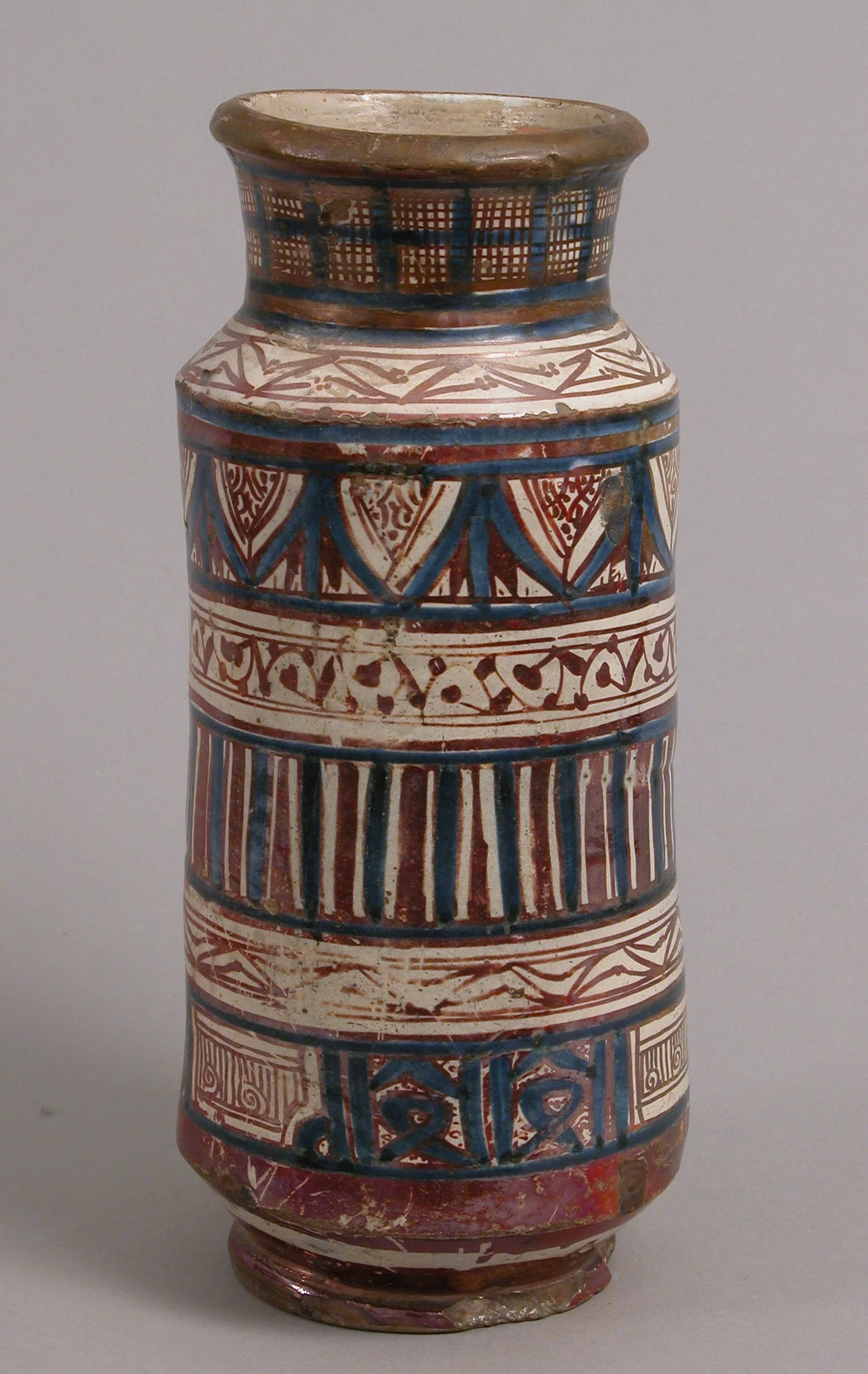
A pharmacy jar of 1400–1450, Spanish tin-glazed earthenware: older than any lesson in this course, and emptied of everything except its own survival. Six units of your work now stand in vessels like this one. The audit that follows asks the only question that matters about each of them: does its record say what it is?
Pharmacy Jar, Spanish, 1400–1450, tin-glazed earthenware, The Metropolitan Museum of Art (Object 463086). Public domain.
Before the audit, walk the whole course once in memory. Each unit built one layer of the apothecary's craft, and each layer rests on the one before it.
Unit I: Academy Initiation and Vault Setup (Lessons 1 through 9). You built the laboratory itself before you touched an ingredient. Workspace zoning, vessel selection, labels and wax seals, recipe journals, weights and measures, grinding foundations, the Simples Census that began your potions journal, and the Hearth Clearance that certified your bench ready. The lesson of Unit I was order: the archive must exist before the work can be trusted.
Unit II: Materia Botanica, Delicate Structures (Lessons 10 through 17). You learned to see. The Surface Matrix, sensory profiling, the receiving inspection of flowers and leaves, the pantry as specimen shelf, fragrance behavior, judging dried botanicals, stability and storage, and the archive-building consolidation. The lesson of Unit II was observation: no preparation can succeed on a specimen you have not truly examined.
Unit III: Dense Materials and Preparation (Lessons 18 through 25). You learned to prepare. Roots, bark, and resins; oils, waxes, and bases; salts, clays, and minerals; grinding and crushing; filtration and separation; conditioning for extraction; the portfolio and the Preparation Manifest. The lesson of Unit III was readiness: extraction punishes the unprepared.
Unit IV: Botanical Extractions (Lessons 26 through 34). You learned to transform. Infused lipids, hydro-infusions, glycerites and syrups, decoctions, acetums, resin fusion, tinctures, distillation and hydrosols, and the Extraction Ledger that bound them together. The lesson of Unit IV was patience: solvents work on their own schedule, and the apothecary's job is to observe it faithfully.
Unit V: Botanical Formulations (Lessons 35 through 44). You learned to compose. Balms and salves, candles, sachets, emulsions, scrubs, two schools of soapmaking, the honest study of failure, your own experimental formula, and the Formulation Matrix. The lesson of Unit V was responsibility: finished preparations carry your name, and your name must mean something.
Unit VI: Fragrance, Pigments, and Botanical Arts (Lessons 45 through 52). You learned that the laboratory is also an atmosphere. Pomanders, volatile spirits, burn blends, inks, stains, manuscript aging, wax seals, and now this closing ledger. The lesson of Unit VI was that craft and beauty are not decorations on the work. They are part of the record, and the record is the work.
Six units. Fifty-two lessons. One archive. Yours.
Check in: Name each unit's lesson in order — order, observation, readiness, patience, responsibility, and the lesson of Unit VI — and say which layer your own archive stands thinnest on today.
❦ In your workbook: record the walk back in your own way — six units, six lessons-of-the-unit, one archive — copy, sketch, or note what matters.
The Full-Course Archive Audit
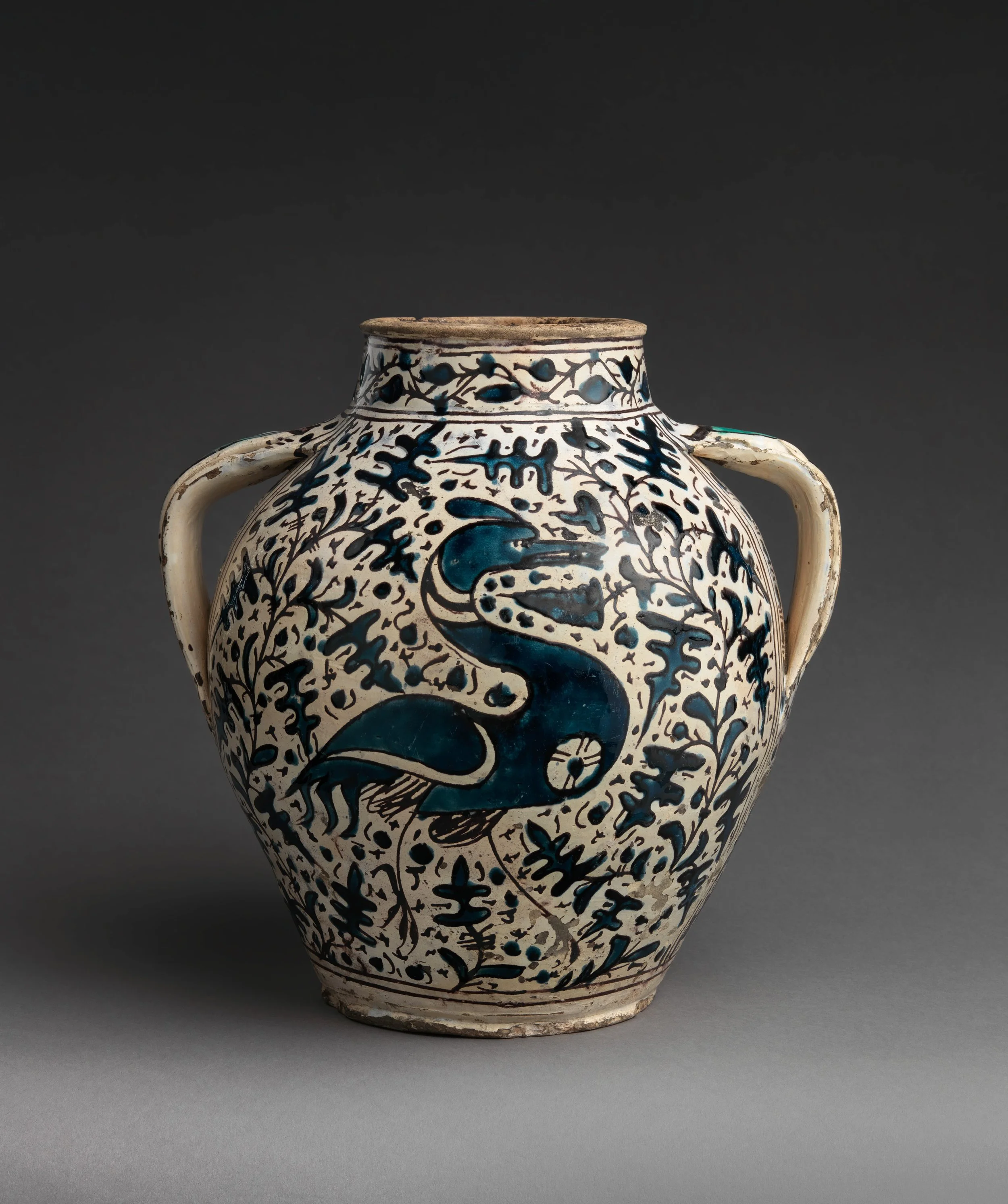
An apothecary jar (orciuolo), probably 1431, by Giunta di Tugio: the bird is magnificent, and it does not tell you what the jar held, when, or what it was for. That is the label's whole job — contents, date, lesson of origin, and purpose — and item 4 of the audit exists because no vessel, however fine, can speak for its own record.
Apothecary jar (orciuolo), Giunta di Tugio, probably 1431, maiolica (tin-glazed earthenware), The Metropolitan Museum of Art (Object 460129). Public domain.
An audit is a formal inspection against a standard, and our standard is simple: ★ could another careful student pick up your archive and continue your work without asking you a single question? If the answer is yes, your archive is complete. If the answer is no, the audit has found your work for the day.
Work through the checklist below in order. This is the spine of Assignment I, and Muddlenook's rule holds to the very end: touch every entry.
The Audit Checklist
- Gather every component. Collect your potions journal, extraction ledgers, formulation records, preparation manifests, laboratory journals, and all six unit consolidation packets into one place. Nothing audits from a scattered shelf.
- Verify the lesson sequence. Confirm that you hold records for all fifty-two lessons plus the six unit consolidations. List any lesson with no entry and write the entry now, even if briefly, noting what you did and what you observed.
- Test every index. Each unit archive should have its own index. Run the random-retrieval test from Lesson 17 on each: pick three entries at random per unit and time your retrieval. Repair any index that fails the one-minute standard.
- Check every label. Open every jar, tin, and packet in your physical storage. Every container must carry: contents, date, lesson of origin, and a clear statement of what it is for. Relabel anything incomplete. Discard anything you cannot identify with certainty.
- Review the stability logs. Read your Lesson 16 stability log and every later stability note end to end. Note what changed, what surprised you, and what the changes taught you about storage. Update any preservation category that the evidence no longer supports.
- Reconcile the extraction ledgers. For each extraction you prepared (Unit IV), confirm the ledger holds: material, preparation method, solvent, ratio, dates, observations, and final disposition. Note which solvent system performed best for which material class, in your own words.
- Reconcile the formulation records. For each formulation (Unit V), confirm the record holds: formula, procedure, observations, stability notes, and the honest verdict, including failures. Failures with good records are assets. Failures with no records are just messes.
- Audit the safety record. Confirm that every lesson's safety notes are present and that your storage, labeling, and disposal practices match them. Pay special attention to: alcohol-based preparations (sealed, labeled, stored safely), any lye-related records from Lesson 41, and heated-oil and wax work.
- Check your potions journal against the shared Materia Botanica. Your potions journal should hold an entry for every plant you studied in both Herbology and Potions, cross-checked against the shared Materia Botanica and your Herbology records. Fill the gaps.
- Review the fragrance and pigment studies. Confirm your Unit VI records hold: fragrance observations, ink and stain experiments, and manuscript work, each with materials, procedure, and results.
- Read your own reflections. Reread every reflection you wrote across the course. Mark the three observations you are proudest of and the three questions you still cannot answer. The unanswered questions are the beginning of your roadmap.
- Sign the completion record. When every item above is genuinely complete, sign and date the completion record in Assignment I. An apothecary signs their work. This is yours.
One caution from your professor, and it is the last strict one I will give you: do not rush the audit to reach the signature. A signed audit with unexamined gaps is a fiction, and fictions have no place in a laboratory. The signature is worth exactly the honesty behind it.
Check in: Item 7 draws the lesson's sharpest line: failures with good records are assets, and failures with no records are just messes. What makes the difference — and which of your own failures changes sides under it?
❦ In your workbook: record the audit in your own way — the stranger standard it is judged against, the twelve items in their order, and the signature that is worth exactly the honesty behind it — copy, sketch, or note what matters.
In your packet: Assignment I — The Full-Course Archive Audit ◐ begins here. Work it now, or mark the place and take it as homework — your choice.
A Sealed Note on the Audit
Scholars, the audit you have just completed is the most honest document you will ever file in this course, because no one assigned it except you. Every gap you found and marked is a place where your archive tells the truth about itself. An archive that tells the truth about its gaps is one a stranger could trust.
Keep that habit. Long after this course ends, whenever you begin a new preparation, ask the audit's questions first: is it labeled, is it dated, is it stable, is it safe, and would I believe my own record a year from now? The laboratory you carry forward is not a room. It is a discipline.
— Professor Crimblebrew Muddlenook, Potions Laboratory • Master Apothecary • Head of House Meridies
Check in: Name the audit's five questions — the ones to ask before every new preparation, long after this course ends.
❦ In your workbook: record the sealed note in your own way — the archive that tells the truth about its gaps, and the five questions carried forward — copy, sketch, or note what matters.
The Continuing-Study Roadmap
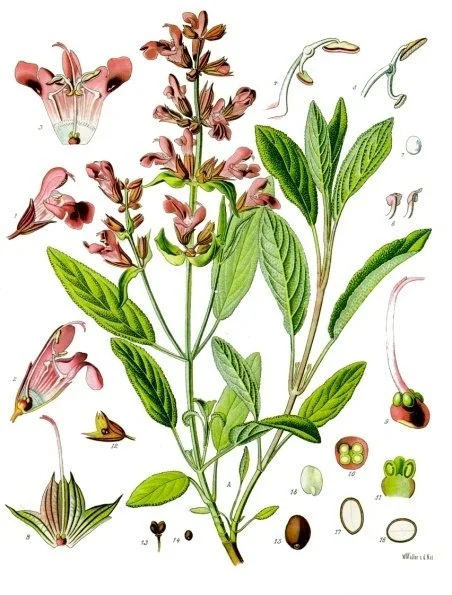
Salvia officinalis in Köhler's Medizinal-Pflanzen: the study portrait of a single plant, drawn to the standard a specimen record is written to. The roadmap's Materia Botanica commitment asks for twelve such plants in your first year — twelve complete specimen records, each to full archive standard. This plate is what "complete" looks like to the eye.
Salvia officinalis plate, Köhler's Medizinal-Pflanzen, via Wikimedia Commons. Public domain.
Formal lessons end. Study does not. What follows is a framework for your first year of independent practice. Assignment II asks you to fill it with your own plans, but here is the shape of it.
Deepen, don't scatter
★ The most common mistake of the newly graduated student is to chase novelty: a new technique every week, a shelf of half-understood experiments. Resist it. Choose two areas from the course to deepen in your first year, and give each a full season. Depth teaches what breadth cannot.
Candidate deepening areas, with what deepening looks like:
- Extraction mastery. Repeat one solvent system across six different materials and write the comparative study your Unit IV ledger only began.
- Formulation discipline. Take your Lesson 43 experimental formula through three deliberate revisions, changing one variable each time, and document all three.
- The potions journal as lifelong work. Add one new plant entry per month for a year: twelve plants, twelve complete specimen records, each to full archive standard.
- Historical reconstruction. Choose one historical text from the Further Reading lists and reconstruct one of its preparations using period-appropriate methods, documenting every deviation you had to make and why.
- The sensory library. Build a reference set of twenty labeled fragrance and texture standards (dried specimens, clearly dated) that future formulations can be judged against.
Keep the disciplines that kept you
Three habits carried you through fifty-two lessons. They will carry you through everything after:
- Label everything, immediately. The habit does not retire with the course.
- Write the observation before the interpretation. What happened first, what you think it means second. In that order, always.
- Review on schedule. Your stewardship plan from Lesson 17 does not expire. Keep the monthly review cycle. An unreviewed archive rots exactly like an unreviewed storeroom.
Find your company
Apothecaries historically worked in communities: guilds, workshops, correspondence networks. Your company can be a local herb society, a historical reenactment group, an online forum of serious practitioners, or one friend who will trade specimens and compare notes. Study alone as much as you like, but compare notes with someone. Other eyes catch what yours miss.
Check in: Why two deepening areas and a full season each — and which three habits does the roadmap order you to keep, in their order?
❦ In your workbook: record the roadmap's shape in your own way — deepen, don't scatter; the five candidate areas; the three disciplines that kept you; and company to compare notes with — copy, sketch, or note what matters.
In your packet: Assignment II — The Continuing-Study Roadmap ✎ begins here. Work it now, or mark the place and take it as homework — your choice.
Reflection: The Apothecary's Questions
Scholars, technique can be taught. What follows cannot be taught, only noticed. I have watched fifty-one lessons of your work, and I have three questions I ask every graduating student. Answer them in writing, for your archive and for yourself. There are no correct answers. There are only honest ones.
First: what did the laboratory teach you about patience? Name one specific moment when waiting, watching, or repeating taught you something that hurrying could not.
Second: what was your most instructive failure? Not your most embarrassing one, your most instructive. What did it cost you, and what did it buy?
Third: what will you make next, and why does it matter to you? Not what the course suggests. What you want, for your own reasons.
File your answers in the archive. They are as much a part of your education as any formula.
— Professor Crimblebrew Muddlenook, Potions Laboratory • Master Apothecary • Head of House Meridies
Check in: The second question draws a distinction students blur: not your most embarrassing failure, your most instructive. What two things must an honest answer to it name?
❦ In your workbook: record the three questions in your own way — patience and its named moment, the instructive failure and what it cost and bought, and what you will make next, for your own reasons — copy, sketch, or note what matters.
In your packet: Assignment III — The Valedictory Reflection and Self-Assessment ◐ begins here. Work it now, or mark the place and take it as homework — your choice.
Guided Observation: Reading Your Archive as a Stranger
This lesson's observation is desk work, done at the shelves with the whole archive gathered into one place: you read your own fifty-two lessons of records the way another careful student would, and you test whether the archive can be continued without asking you a single question — because that stranger test is the audit's standard, and the continuing ledger begins where it passes.
Work through it in order.
Gather every component. Collect your potions journal, extraction ledgers, formulation records, preparation manifests, laboratory journals, and all six unit consolidation packets into one place. Nothing audits from a scattered shelf.
Test every index. Each unit archive should have its own index. Run the random-retrieval test from Lesson 17 on each: pick three entries at random per unit and time your retrieval. Repair any index that fails the one-minute standard.
Read your own reflections. Reread every reflection you wrote across the course. Mark the three observations you are proudest of and the three questions you still cannot answer. The unanswered questions are the beginning of your roadmap.
Consider:
- What did the stranger's reading find that your keeper's memory had been silently supplying — a missing date, an unlabeled jar, an entry only you could decode?
- Which unit's index came closest to failing the one-minute standard — and what in that index made retrieval slow?
- Which of your three unanswered questions belongs at the head of your roadmap, and why that one?
❦ In your workbook: record the guided observation in your own way — the gathered archive, the timed retrievals, and the proudest observations beside the unanswered questions — copy, sketch, or note what matters.
Materials
Everything in its place, before we begin. For this closing ledger lesson you will need:
Required (Level One — household items)
- Your complete course archive, gathered into one place: your potions journal, extraction ledgers, formulation records, preparation manifests, laboratory journals, and all six unit consolidation packets
- A pen and a pencil
- Fresh labels and a marker, for the relabeling the audit will certainly find
- A timer or clock, for the random-retrieval test: three entries per unit, each found in under a minute
- A clean, clear table and the shelves themselves, walked with every index in hand
Suggested (Level Two — historically closer)
- An archival binder with tab dividers, one tab per unit, to house the continuing ledger as it grows beyond the course
- Acid-free paper for the completion record and the roadmap — the two pages this lesson signs
- Spare jars, lids, and corks, for any specimen whose storage the audit finds wanting
Reflection Questions
Answer the following questions in your workbook.
- The audit's standard asks whether another careful student could continue your work without asking you a single question. Which part of your archive came closest to failing that test — and what repaired it?
- Why does the roadmap direct you to deepen two areas for a full season each rather than sample many? What does depth teach that breadth cannot?
- Of the three disciplines that kept you — labeling immediately, observation before interpretation, and scheduled review — which will your first year test most, and what have you written into your roadmap to hold it?
- Muddlenook calls a signed audit with unexamined gaps a fiction. What is the difference between a gap honestly marked and a gap hidden — and why does the archive reward the first?
- "An apothecary's education never ends; it only changes keepers." What will you keep reviewing on schedule now that no unit will remind you — and when is your first review?
Workbook Checklist — Lesson 52
In my workbook I have:
- ☐ gathered every archive component into one place and worked the twelve-item Audit Checklist in order, initialing each item only when it was genuinely complete
- ☐ verified records for all fifty-two lessons plus the six unit consolidations, and written any missing entry, however briefly
- ☐ tested every unit index with the random-retrieval test — three entries per unit, under one minute each — and repaired every index that failed
- ☐ checked every container label — contents, date, lesson of origin, and purpose — relabeled the incomplete, and discarded the unidentifiable
- ☐ reconciled my extraction ledgers and formulation records, with honest verdicts including failures, and audited my safety record against the standing rules
- ☐ cross-checked my potions journal against the shared Materia Botanica and my Herbology records and filled the gaps, and confirmed my Unit VI fragrance, ink, stain, and manuscript records
- ☐ signed and dated the completion record, with the honesty the signature is worth
- ☐ written my first-year continuing-study roadmap: two deepening areas with seasonal plans, the twelve-plant potions journal commitment, my standing disciplines and review cycle, my company, and my first milestone
- ☐ answered Professor Muddlenook's three questions in writing and scored my consolidation against the rubric, honestly
☐ Lesson completed Date: ___ Signature: ___
The Professor's Closing Note
Sealed with the teal wax of Professor Crimblebrew Muddlenook, Master Apothecary of the Potions Laboratory, Head of House Meridies.
When I first addressed you, I spoke of empty shelves and empty ledgers. I will not pretend sentiment comes naturally to a toad of my habits, but I will say this plainly: you have done the work.
You have measured carefully. You have labeled honestly. You have watched tinctures — alcoholic preparations made by soaking a botanical in spirit — darken and emulsions — mixtures in which droplets of one liquid are dispersed through another liquid it does not mix with — separate and candles cool, and you have written down what you saw instead of what you wished you had seen. That last discipline is the whole of it. Anyone can follow a recipe. An apothecary records the truth.
★ Keep your bench clean. Keep your labels legible. Keep your archive growing. And when you are uncertain, which will be often, return to the first rule of this laboratory: observe first, conclude later, and write it all down.
The Lower Lantern Laboratories will keep a shelf for you, should you ever wish to return. The door is never locked to a careful student.
In good order, always,
— Professor Crimblebrew Muddlenook, Potions Laboratory • Master Apothecary • Head of House Meridies
Cross-Class Connections

Herbology · Unit V, Lesson 36 — The Materia Botanica: Building Your Herbal
Come up to the Greenhouse, ledger-keepers, and complete the audit Professor Muddlenook has just set you. His ninth item asks whether your shared Materia Botanica holds every plant from both our classes — here is where the growing half of those entries was written: one entry per plant, my growing notes beside his keeping notes, in a fixed order of fields. Bring your gap list from the audit, and we will fill it from the living side.
PROFESSOR BERYL FERNFOOT
Herbology Greenhouse • Master Herbalist • Head of House Oriens
Scrollwork · Unit VI, Lesson 23 — Archive Labels & Library Systems
You have audited an archive of jars, ledgers, and packets. Now come and audit a library. In my Scriptorium we take up the label, the list, and the shelfmark at the scale of whole collections — how the medieval librarians made a memory that outlived its makers, and why a record that cannot be found is a record that does not exist. Your one-minute retrieval test has a thousand-year pedigree, scholars. Come and meet its ancestors.
PROFESSOR QUILLBERRY NOCTURNE
Scrollwork Library

Creative Arts · Unit II, Lesson 11 — Case Binding & Archival Boxes
A ledger that will be opened every month for years deserves a housing built to be opened, scholars. In my workshop you will learn to case a book to measure and to build the archival box in which a great record rests: boards cut square, a case built to fit the book it houses, a box that will outlast everyone in the room. Build the practice corner first, on scrap, as always. Then bring your continuing ledger when its pages have grown into a book, and we will house it properly.
PROFESSOR COGBRANCH TIMBERCLANK
Creative Arts Workshop
Further Reading & Sources
- Wellcome Collection: History of pharmacy and apothecaries
- Science History Institute: Museum and library collections
- The Metropolitan Museum of Art: Heilbrunn Timeline of Art History
- Smithsonian Libraries and Archives: Digital collections
- Royal Botanic Gardens, Kew: Herbarium and library
- U.S. National Library of Medicine: Digital Collections
Browse the Potions shelf in the school Library for readable editions of these works.
Submit your work for this lesson using the form below.
THE UNIT VI QUIZ
POTIONS LABORATORY · UNIT VI: FRAGRANCE, PIGMENTS & BOTANICAL ARTS
Unit VI is complete: pomanders and solid perfumery, volatile spirits watched as they flee, resins burned under rule, carbon and oak gall inks made and judged, plant colors drawn and tested, paper aged honestly, and seals pressed in colored wax. This quiz gathers the whole unit into one sitting. Take it from memory first, before you look back at your notes, because it measures what has stayed with you. If you completed the work marked ★ in your lesson packets, you have already practiced most of what it asks.
It stands beside this lesson's own Full-Course Archive Audit — the first of its Assignments, in which the whole course's records are retrieved, checked, and signed for. The audit is the course verified; the quiz is the unit remembered. Two different kinds of proof, both worth having.
The quiz packet is a single download. Part I gathers questions from across the unit, Part II matches the unit's vocabulary, and the answer key waits at the back for self-checking. When you have finished, score it honestly, note the result in your workbook, and revisit any lesson whose questions went wrong before you move on to the capstone.
CONTINUE IN THE POTIONS LABORATORY
← Previous · Lesson 51: Wax Seals & Colored Matrix Blends Next · The Capstone: The Apothecary's Signature Formula →
Unit VI — Fragrance, Pigments & Botanical Arts Potions Laboratory — All 52 Lessons
The rest of Unit VI: Lesson 45 · Pomanders · Lesson 46 · Volatile Spirits · Lesson 47 · Burn Blends · Lesson 48 · Carbon & Oak Gall Inks · Lesson 49 · Plant & Berry Stains · Lesson 50 · Paper Aging · Lesson 51 · Wax Seals · The Capstone · The Apothecary's Signature Formula
From the Apothecary Cabinet
The printed companions to this lesson, from Professor Muddlenook’s shelf in the shop.