

POTIONS
Unit V · Lesson 38THE WHIPPED EMULSION
Professor Crimblebrew Muddlenook
Master Apothecary • Potions
Head of House Meridies • School of Evershade
Professor's Introduction

Scholars, every formulation you have built so far has obeyed one quiet rule: like dissolves like. Oil carries oil-soluble things. Water carries water-soluble things. They do not carry each other, and no amount of wishing changes that.
Today we break the rule on purpose, and we break it honestly. An emulsion — a mixture in which droplets of one liquid are dispersed through another liquid it does not mix with — is oil and water held together against their nature. It only holds because something stands between them and negotiates the peace. That something is the emulsifier (a substance that holds an emulsion's droplets apart so they do not merge back together), and this lesson is about the negotiation.
You will whisk. You will watch. And you will learn the most important sentence in all of formulation work: without a preservative, water plus time equals spoilage. Your emulsion — a mixture in which droplets of one liquid are dispersed through another liquid it does not mix with — today is a laboratory study, not a cosmetic. It will be labeled, observed, and then discarded with thanks. Everything in its place, scholars, including the finished jar, which belongs in the waste bin and nowhere else.
Measure twice. Pour once. Whisk without stopping.
— Professor Crimblebrew Muddlenook, Potions Laboratory • Master Apothecary • Head of House Meridies

Potions map — the class base map, unmarked for this lesson.
Lesson Objectives
By completing this lesson, you will be able to:
- Explain, in your own words, why oil and water separate instead of mixing.
- Describe how an emulsifier works as a go-between for oil and water.
- Name two historical emulsifiers and the traditions that used them.
- Prepare a small whipped emulsion using the steady-stream whisking technique.
- Observe and record separation behavior over several days in your archive.
- Explain why a homemade emulsion is display-only and must never be used on skin.
Reading this lesson: ★ marks the passages to remember. They return in the Unit V Quiz and on the class test. Check in questions ask the material back as you go; answer them in your workbook when you meet them.
Working this lesson: Your assignment packet is the first download on this page. Work in it as the lesson moves along, answering each exercise as its subject is taught — or read the lesson through for your notes and take the exercises as homework afterward. Both are proper ways to sit this class. Signposts in the reading tell you where each exercise belongs. Written answers are short answers in your own words; a few honest lines are worth more than a filled page.
Your Assignment Packet
This lesson's exercises live in its packet: the Lexicon Handout (every term, course terms marked ◆), Materials, Guided Practice — the Two-Jar Trial procedure and the five-day observation, printed in full so you can work at your own bench — the Assignment Manual with its self-check, the Reflection Questions, and the Workbook Checklist. Download the packet before you begin and keep it beside you as you read.
Safety Briefing
- All heating uses a water bath, never direct flame. Melted wax and warm oil cause burns; handle warm bowls with a dry cloth and keep an adult present for every heating step.
- Work in a ventilated area. Beeswax has a mild honey scent when melted; anyone sensitive to fragrances should keep distance.
- Label every jar before you fill it. The finished emulsion must read DISPLAY ONLY with the date.
- Do not apply the emulsion to skin, lips, or hair. Do not ingest it. Do not share it.
- Discard the emulsion after the five-day observation. Wash jars in hot soapy water before reuse.
- Keep all preparations away from children and pets, and store them out of reach between observations.
Before any preparation touches more than a fingertip: test a little on the inside of your wrist, wait a full day, and do not use it if the skin reddens, itches, or stings. Never use a preparation on broken or irritated skin.
Check in: What must every finished jar read, and what happens to it when the five-day observation ends?
❦ In your workbook: record the safety briefing in your own way — the water bath and the dry cloth, the adult present for every heating step, the DISPLAY ONLY label with its date, nothing on skin, nothing ingested, nothing shared, and the discard after five days — copy, sketch, or note what matters.
Why Oil and Water Refuse Each Other
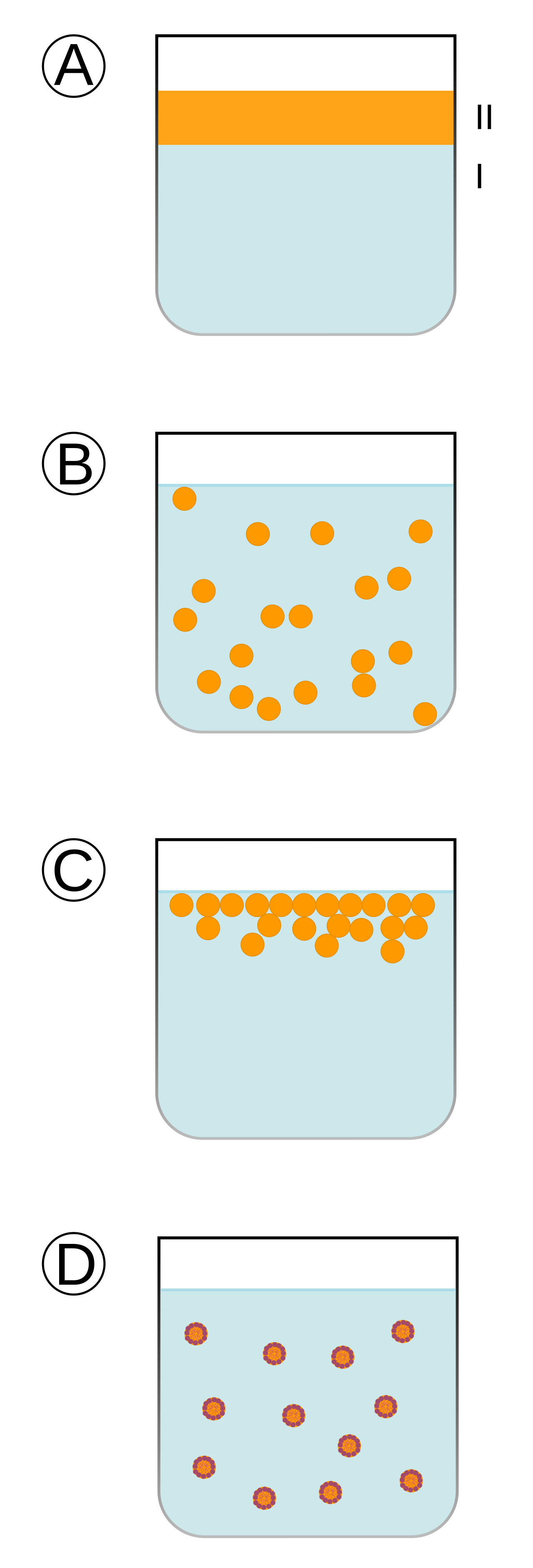
An emulsion in four states, after the standard diagram: unmixed layers; droplets dispersed; droplets creamed at the top; and droplets held apart by the emulsifier standing at each boundary — the fence this lesson builds with a whisk.
"Emulsions.svg" diagram, via Wikimedia Commons. Public domain.
Pour oil into water and watch. The oil does not dissolve. It gathers itself into shining beads, the beads merge into lenses, and the lenses rise and join into a single floating layer. Shake the jar and the layer shatters into droplets, but set it down and within minutes the droplets find each other again and the two layers return. This is not stubbornness. It is physics, and the apothecary who understands it can work with it instead of against it.
Water molecules are polar. Each one carries a slight positive charge at one end and a slight negative charge at the other, and they cling to each other through these charges in a constant shifting network. Oil molecules are nonpolar. They carry no such charges, so the water network has nothing to grip. When oil meets water, the water molecules would rather hold onto each other than make room for the oil, and the oil is squeezed out into its own layer. Scientists call this the hydrophobic effect: not that water fears oil, but that water prefers itself.
There is a second force at work. The surface of water behaves like a stretched skin. This surface tension is why water beads on a leaf and why a careful droplet holds its round shape. When you shake oil and water together, you are tearing that skin apart with mechanical force, and the moment you stop, the skin knits itself back together and the oil droplets are herded into reunion. This is coalescence: droplets merging back into larger drops, then into layers.
Historical apothecaries did not know the word polarity, but they knew the behavior intimately. Every cream, lotion, and ointment that combined a watery ingredient with an oily one fought this same battle. The great creams of history were not mixtures that happened to work. They were truces, negotiated daily at the workbench, and they failed constantly. The most famous cream in history separated on standing. We will meet it shortly.
Check in: Why does the water network squeeze oil out into its own layer — and what is the name for the droplets' merging back into that layer?
❦ In your workbook: record why oil and water refuse each other in your own way — polar water clinging to itself, nonpolar oil with nothing to grip, surface tension, and coalescence — copy, sketch, or note what matters.
The Go-Between: How Emulsifiers Work
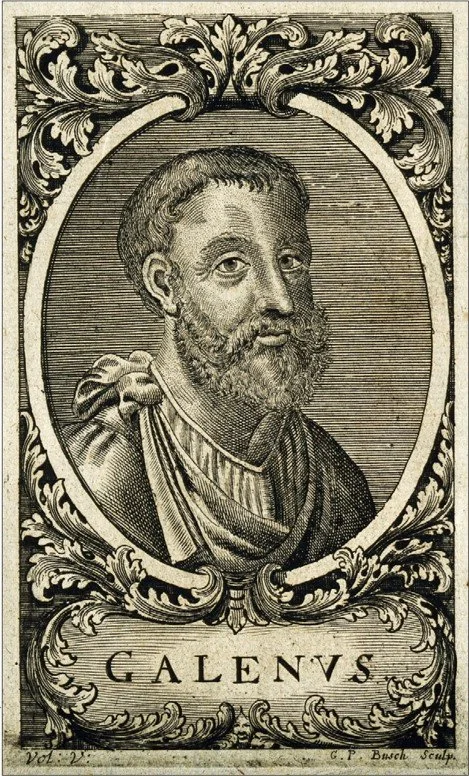
Galen, in the engraving by Georg Paul Busch: the Roman physician credited with the first surviving cold cream recipe — beeswax melted into olive oil, with water beaten in — whose cream separated on standing for a thousand years of pharmacists.
Georg Paul Busch, portrait engraving of Galen, via Wikimedia Commons. Public domain.
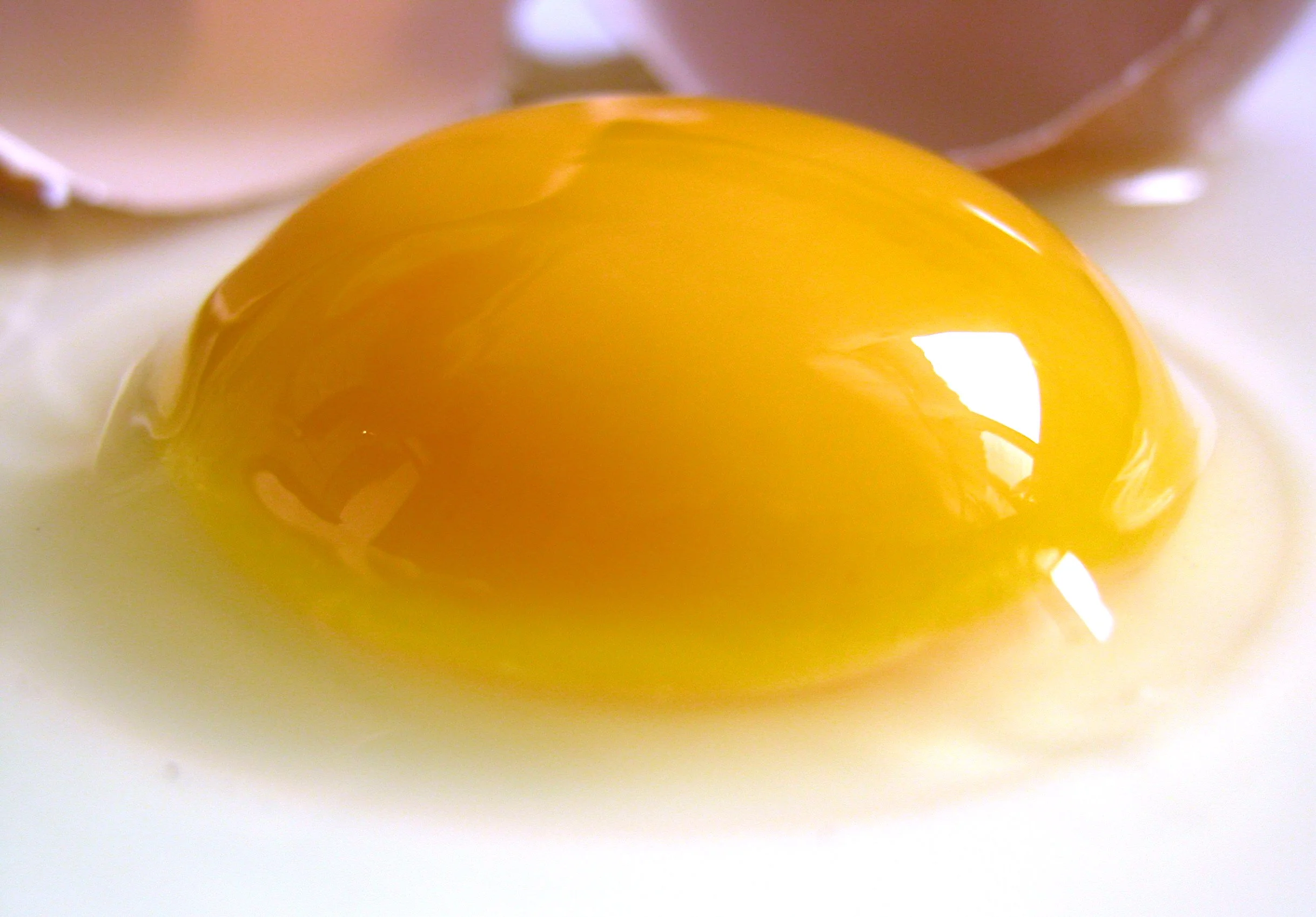
One egg yolk, whole in its white: inside this dome sits the lecithin Gobley isolated in 1846 — the phospholipid whose divided loyalties make mayonnaise, and Exercise II's third jar, possible.
Raw egg photograph, via Wikimedia Commons. Public domain.
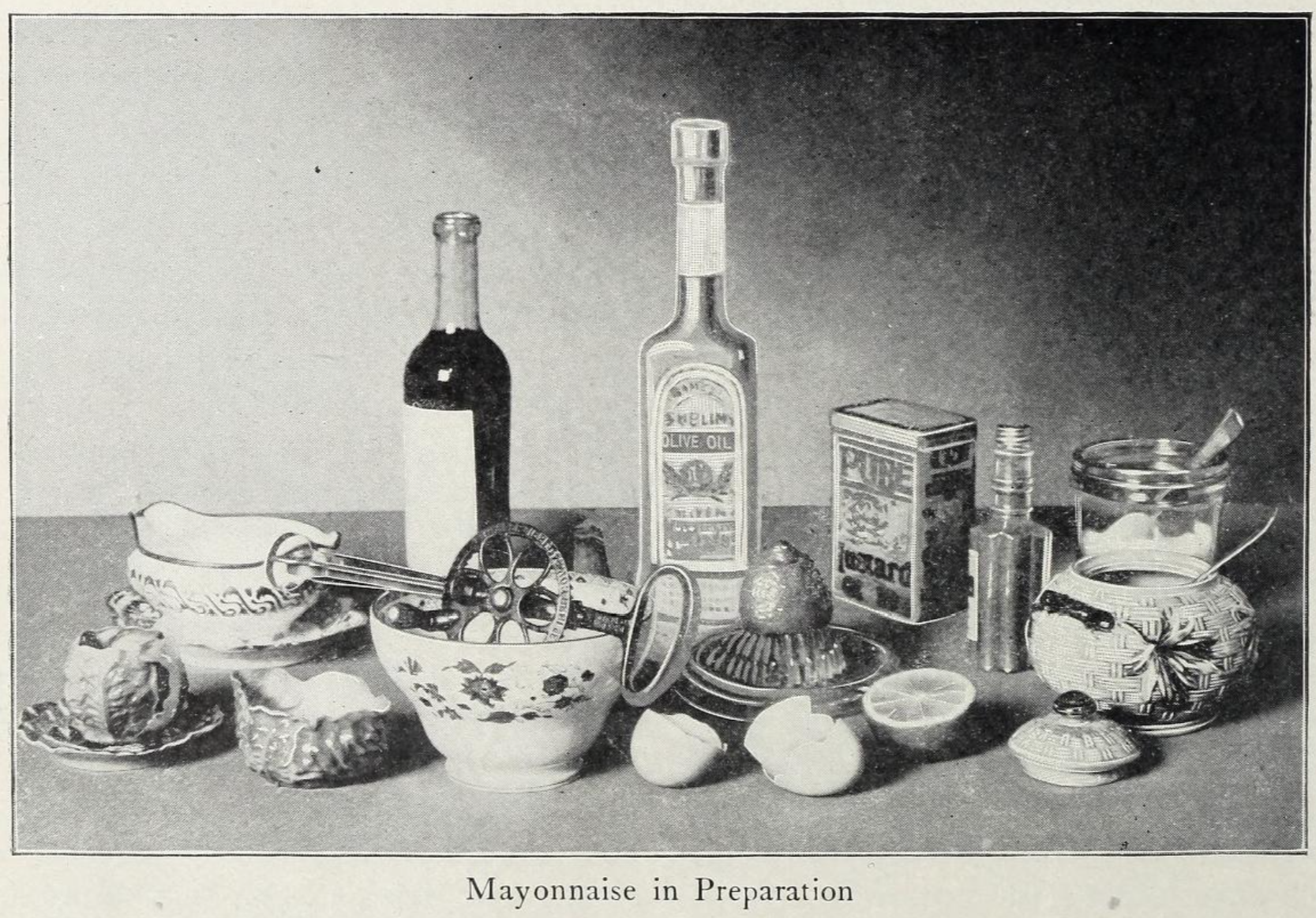
Mayonnaise in Preparation," photographed for a 1903 cookbook: olive oil, vinegar, eggshells, lemon, and the rotary beater — the kitchen performing this lesson's negotiation half a century after Gobley explained why it works.
"Mayonnaise ingredients as of 1903" (cookery book illustration, 1903), via Wikimedia Commons. Public domain.
An emulsifier is a molecule with divided loyalties. One end of it is hydrophilic, meaning it is comfortable in water. The other end is lipophilic, meaning it is comfortable in oil. When such a molecule finds itself at the border between an oil droplet and the surrounding water, it takes up a post there: water-loving end in the water, oil-loving end in the oil. Enough of these molecular sentries, and the oil droplet is wrapped in a protective coat that stops it from merging with its neighbors. The droplets stay small, stay separated, and stay suspended. The mixture holds.
★ This is the whole secret of the emulsion, and it is worth saying plainly because everything else in this lesson is commentary on it. Oil and water do not mix. An emulsifier does not make them mix either. It builds a fence around each droplet so they cannot reunite.
History offers two great emulsifiers, and both were in the apothecary's reach centuries before anyone understood why they worked.
The first is beeswax. Melted beeswax blended with oil, with water then beaten in, produces the ancestor of every cold cream. The Roman physician Galen, practicing around 150 CE, is credited with the first surviving recipe: beeswax melted into olive oil, with water (later rosewater) worked in through long laborious mixing. His ceratum refrigerans, the cooling wax, was state of the art for more than a thousand years, and it appeared in the first Pharmacopoeia Londinensis in 1618. It was also, by every account, barely stable. It tended to separate on standing, it spoiled quickly because vegetable oils mixed with water deteriorate, and it had to be made fresh in small batches by the local pharmacist. The history of cold cream is the history of a brilliant idea that kept almost working.
The second is egg yolk. In 1846 the French chemist and pharmacist Theodore Gobley isolated a substance from egg yolk that he named lecithin, from the Greek lekithos, egg yolk. Lecithin is a phospholipid, a molecule with exactly the divided loyalties described above, and it is the reason mayonnaise holds together: oil beaten into egg yolk and vinegar forms a thick stable emulsion that would be impossible without it. Apothecaries and cooks were using egg yolk as an emulsifier long before Gobley named the active substance. The kitchen knew before the laboratory could explain.
Scholars, a word on honesty in formulation. Beeswax is a weak emulsifier — a substance that holds an emulsion's droplets apart so they do not merge back together — by modern standards. It thickens and structures, and it helps, but a beeswax emulsion — a mixture in which droplets of one liquid are dispersed through another liquid it does not mix with — will always be a temporary truce. That is why Galen's cream separated. That is why your emulsion today will separate too, and that is not failure. It is the lesson. We are studying the truce, not signing a permanent treaty. Observe it honestly, record what you see, and you will understand emulsions — mixtures in which droplets of one liquid are dispersed through another liquid it does not mix with — better than any student who only reads about them.
— Professor Crimblebrew Muddlenook, Potions Laboratory • Master Apothecary • Head of House Meridies
Check in: An emulsifier molecule has two ends with opposite loyalties. Where does it take up its post, and which end sits in which liquid?
❦ In your workbook: record the go-between in your own way — the divided molecule at the border, the fence around each droplet, beeswax and Galen's barely stable cream, and egg yolk's lecithin, named by Gobley in 1846 — copy, sketch, or note what matters.
In your packet: Exercise II: The Emulsifier Comparison ⚒ begins here. Work it now, or mark the place and take it as homework — your choice.
The Whisking Technique
An emulsion is made, not mixed. The difference matters. Mixing stirs ingredients together. Emulsifying tears one liquid into droplets so small that the emulsifier can coat them before they reunite. The tool is agitation, and the technique has three rules.
First, the watery phase goes in slowly. A thin steady stream, not a pour. Each addition must be beaten into the oil before the next arrives, so that no large pool of water ever forms for the oil to retreat from. The old manuals say to add water drop by drop at the start, and they are right: the first additions are the hardest, because there is the least emulsion present to receive them.
Second, the whisking never stops. The moment agitation pauses, coalescence begins. Droplets that were held apart by motion start finding each other. Keep the whisk moving through every addition, steady and continuous, until the last of the water phase is incorporated and the mixture holds its body.
Third, temperature matters. Warm oil flows and accepts droplets more readily than cold oil, and melted beeswax must stay liquid long enough to distribute through the oil before the water arrives. Work warm, not hot: a water bath that feels warm to the hand, never a direct flame. Beeswax melts at 62 to 64 degrees Celsius, and there is no reason to go hotter than necessary.
Watch for the change. A successful emulsion thickens as it forms. The mixture that began as thin oil grows heavier on the whisk, turns paler, and holds soft peaks when the whisk is lifted. That thickening is the sign that droplets have been torn small and coated: the emulsion is telling you the negotiation succeeded.
Check in: What are the technique's three rules — and what does the mixture do when the negotiation succeeds?
❦ In your workbook: record the whisking technique in your own way — the slow steady stream, the whisk that never stops, warm not hot at 62 to 64 degrees, and the thickening that signals success — copy, sketch, or note what matters.
Practical: The Two-Jar Trial
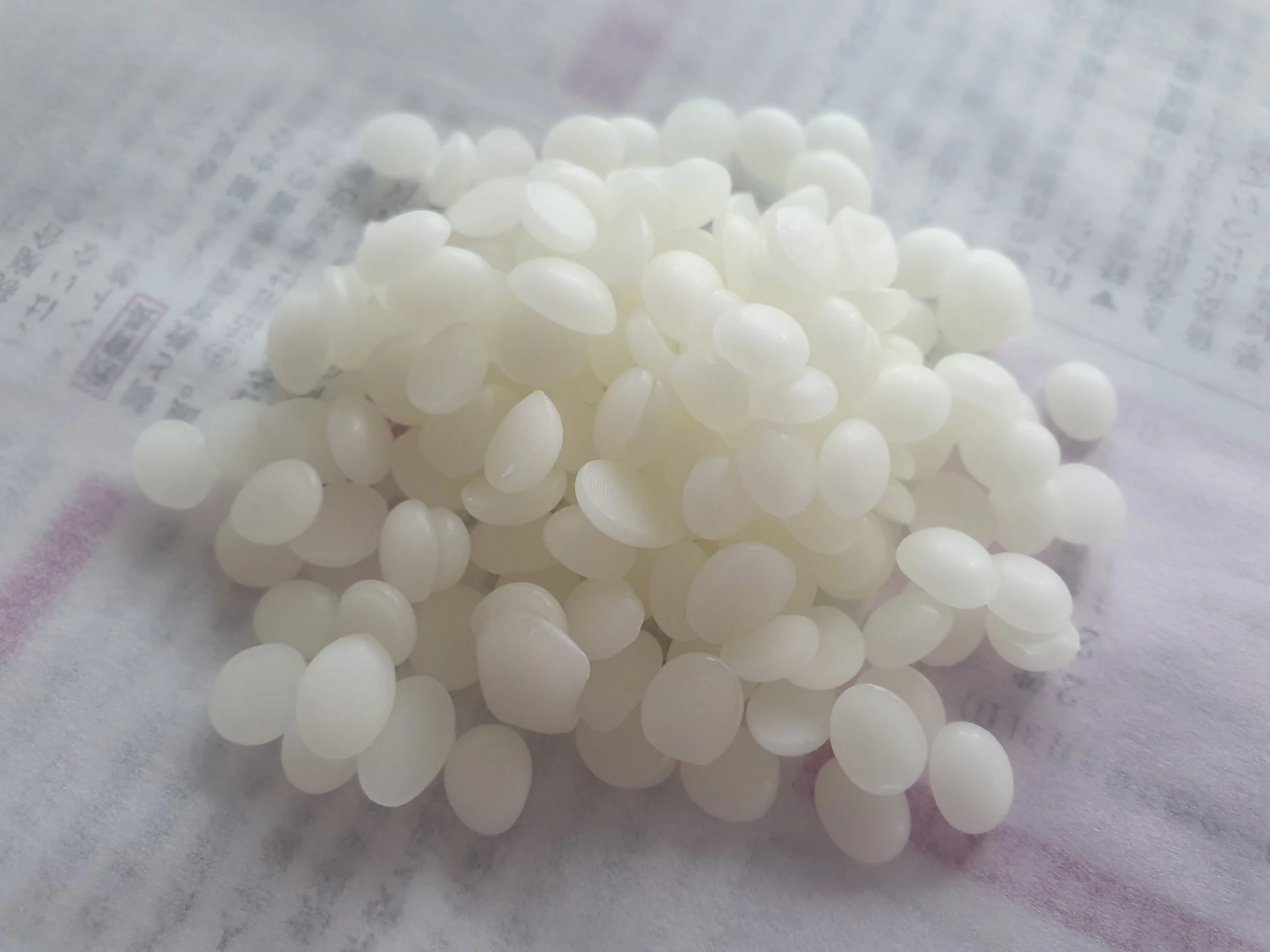
Beeswax in pellets, the household form the lesson's Mise en Place names first: the weak, honest emulsifier of Galen's cream, ready for the water bath.
Beeswax pellets photograph, via Wikimedia Commons. CC0.
Safety Briefing
Read this entire briefing before touching any material. You will work with warm oil and melted wax. Warm means comfortable to hold, never painful. All heating happens in a water bath: a heat-safe bowl set over a pot of simmering water, never a bowl over a direct flame. An adult must supervise every heating step. Keep a dry cloth nearby for handling warm bowls. Tie back long hair and roll up sleeves. Nothing in this lesson is tasted, applied to skin, or ingested. The finished emulsion is a laboratory study. It will be labeled DISPLAY ONLY and discarded after the observation period.
Mise en Place
Level One, household items:
- Two small clean glass jars with lids, the same size.
- Olive oil or another plain cooking oil, about half a cup total.
- Water, about a quarter cup.
- A small piece of beeswax, about a tablespoon of pellets or a thumb-sized chunk. (A plain beeswax candle, wick removed, may serve in a pinch.)
- A heat-safe bowl and a pot for the water bath.
- A small whisk or a fork.
- A spoon, a measuring spoon, and paper labels with a pen.
- Your laboratory journal.
Level Two, historically closer:
- A small brass or copper whisk, the traditional beating tool.
- Yellow beeswax in block form, shaved with a knife.
- Rosewater in place of plain water, as Galen's successors used.
- Small ceramic or glass ointment jars for the finished study.
Procedure
Jar One, the control. Pour two tablespoons of oil and two tablespoons of water into the first jar. Seal it and shake it hard for thirty seconds. Set it down and start your timer. Record what you see at one minute, five minutes, and thirty minutes. This is coalescence happening with no emulsifier present: your baseline.
Jar Two, the emulsion. Set up the water bath: an inch or two of water in the pot, brought to a bare simmer, with the heat-safe bowl resting above it. Add three tablespoons of oil and the beeswax to the bowl. Stir gently until the wax melts completely into the oil and the mixture is uniform. Remove the bowl from the heat but keep it warm.
Now the whisking. With the whisk moving continuously, add the water one teaspoon at a time, beating each addition in fully before adding the next. Do not rush the first three additions; they are the foundation. Continue until all three tablespoons of water are incorporated. The mixture should thicken, pale, and hold together. Transfer it to the second jar, label it clearly with the date and the words DISPLAY ONLY, and seal it.
Observation
Record the appearance of both jars immediately: color, texture, thickness, any visible droplets or layers. Then observe both jars once a day for five days. Note when Jar One fully separates (it will be quick) and track Jar Two day by day: does it hold, does liquid weep from it, does it grain, does it separate into layers? Record honestly. A separating emulsion is data, not disgrace.
Cleanup
Wash all tools in hot soapy water; oil and wax residue comes off with heat and detergent. Wipe the work surface. Return materials to their places.
Archive Entry
File both jars' observation logs in your potions journal under a new section for formulations. Include your whisking notes: how long it took, where you struggled, what the thickening moment looked like. Future formulation lessons will build on this record.
Check in: In Jar One, at what three intervals do you record what you see — and in Jar Two, what three changes of appearance tell you the emulsion has formed?
❦ In your workbook: record the Two-Jar Trial in your own way — the shaken control against the whisked emulsion, the teaspoon-by-teaspoon additions, and the five days of honest observation — copy, sketch, or note what matters.
In your packet: Exercise I: The Two-Jar Trial ⚒ begins here. Work it now, or mark the place and take it as homework — your choice.
Preservation Awareness: Why This Jar Is Display-Only
★ Here is the sentence that governs every formulation containing water, and you must learn it now before Unit V tempts you further: without a preservative, water plus time equals spoilage.
Oil alone keeps. Water alone, sealed cleanly, keeps for a while. But an emulsion of oil and water is a welcoming environment for the microorganisms that drift through every kitchen and laboratory: bacteria, yeasts, and molds find water, find nutrients in the natural ingredients, and multiply. Within days, an unpreserved emulsion can harbor growth you cannot see, smell, or taste in its early stages. Historical apothecaries knew this in practice if not in theory, which is why creams were made fresh in small batches and used quickly. There was no refrigeration and no modern preservative system; the short shelf life was simply the price of the preparation.
Your emulsion contains no preservative. That is a deliberate choice for a study preparation, and it carries a deliberate rule: the jar is for observation only. Do not apply it to skin. Do not let anyone else apply it to skin. Do not taste it. When the five-day observation ends, discard the contents, wash the jar, and record the disposal in your archive. Label everything you make in this unit the same way until a lesson explicitly tells you otherwise.
A final word, scholars. I am a stickler about this because the laboratory rewards the careful and punishes the casual, and there is no appeal. A cream you made yourself feels trustworthy. It is not. Trust the label, trust the rule, and trust the archive entry that says when a preparation's useful life is over. The finest formulation in this course is worthless if it is not safe, and safety begins with the sentence you just read. Water plus time equals spoilage. Memorize it.
— Professor Crimblebrew Muddlenook, Potions Laboratory • Master Apothecary • Head of House Meridies
Check in: Why can an unpreserved emulsion harbor growth you cannot see, smell, or taste — and what three things happen when the five-day observation ends?
❦ In your workbook: record preservation awareness in your own way — water plus time equals spoilage, growth invisible in its early stages, and the deliberate rule: observe, never apply, then discard and record the disposal — copy, sketch, or note what matters.
In your packet: Exercise III: The Preservation Audit ✎ begins here. Work it now, or mark the place and take it as homework — your choice.
Guided Practice: Reading the Two Jars Day by Day
This lesson's guided practice is the observation itself, done with both jars in front of you and your journal open: you read the control against the emulsion the way the lesson teaches — the shaken jar shows coalescence with no emulsifier present, and the whisked jar shows the truce holding, weeping, graining, or failing, day by day.
Work through it in order.
Begin with the control. Pour two tablespoons of oil and two tablespoons of water into the first jar. Seal it and shake it hard for thirty seconds. Set it down and start your timer. Record what you see at one minute, five minutes, and thirty minutes.
Then the emulsion. With the whisk moving continuously, add the water one teaspoon at a time, beating each addition in fully before adding the next. Do not rush the first three additions; they are the foundation.
Record the starting state. Record the appearance of both jars immediately: color, texture, thickness, any visible droplets or layers.
Follow the five days. Then observe both jars once a day for five days. Note when Jar One fully separates (it will be quick) and track Jar Two day by day: does it hold, does liquid weep from it, does it grain, does it separate into layers?
Consider:
- On which day does Jar Two first change, and is the change creaming — droplets gathering without yet merging — or coalescence itself?
- Which jar's record would teach a stranger more, and what single honest sentence in it does the teaching?
- An emulsion can spoil by separation, by rancidity, or by microbial growth. Which failure arrived first in your jars, and how do you know?
❦ In your workbook: record the guided practice in your own way — the control's three timed readings, the emulsion's five daily entries, and which failure arrived first — copy, sketch, or note what matters.
Materials
Everything in its place, before we begin. For this lesson you will need:
Required (Level One — household items)
- Two small clean glass jars with lids, the same size.
- Olive oil or another plain cooking oil, about half a cup total.
- Water, about a quarter cup.
- A small piece of beeswax, about a tablespoon of pellets or a thumb-sized chunk. (A plain beeswax candle, wick removed, may serve in a pinch.)
- A heat-safe bowl and a pot for the water bath.
- A small whisk or a fork.
- A spoon, a measuring spoon, and paper labels with a pen.
- Your laboratory journal.
- One egg, for the emulsifier comparison exercise.
- A dry cloth, for handling warm bowls.
Suggested (Level Two — historically closer)
- A small brass or copper whisk, the traditional beating tool.
- Yellow beeswax in block form, shaved with a knife.
- Rosewater in place of plain water, as Galen's successors used.
- Small ceramic or glass ointment jars for the finished study.
Safety Notes
- All heating uses a water bath, never a direct flame. Melted wax and warm oil cause burns; handle warm bowls with a dry cloth.
- An adult must supervise every heating step. Tie back long hair and roll up sleeves.
- Label every jar before filling it. The finished emulsion must read DISPLAY ONLY with the date.
- Do not apply the emulsion to skin, lips, or hair. Do not ingest it. Do not share it.
- Discard the emulsion after the five-day observation. Wash jars in hot soapy water before reuse.
- Keep all preparations away from children and pets, and store them out of reach between observations.
- Nothing in the Potions Laboratory is medicine, and no lesson gives amounts to take.
Reflection Questions
Answer the following questions in your workbook.
- In your own words, why do oil and water separate instead of mixing?
- What does an emulsifier actually do at the boundary between an oil droplet and water? What does it not do?
- Why did Galen's cold cream tend to separate on standing, and why did apothecaries keep making it anyway?
- During whisking, why must the water be added in a slow steady stream rather than all at once?
- Explain the sentence "without a preservative, water plus time equals spoilage" and why it makes your emulsion display-only.
Workbook Checklist — Lesson 38
In my workbook I have:
- ☐ explained, in my own words, why oil and water separate: polar water clinging to itself, nonpolar oil squeezed out, and coalescence herding the droplets home
- ☐ recorded how an emulsifier works as a go-between — water-loving end in the water, oil-loving end in the oil, a fence around each droplet — and what it does not do
- ☐ named the two historical emulsifiers, beeswax and egg yolk, with Galen's cold cream of around 150 CE and Gobley's lecithin of 1846
- ☐ carried out the Two-Jar Trial under adult supervision, every heating step in the water bath, and recorded the control at one, five, and thirty minutes
- ☐ kept the daily observation log for five full days and filed it in my archive, honest about weeping, graining, and separation
- ☐ written the emulsifier comparison, honest, specific, and free of favoritism, and discarded every jar at the end of the observation period
- ☐ written the one-page Preservation Audit and filed it behind my observation log
- ☐ labeled every jar DISPLAY ONLY with its date, applied nothing to skin, tasted nothing, and recorded the disposal in my archive
☐ Lesson completed Date: ___ Signature: ___
The Professor's Closing Note
PROFESSOR CRIMBLEBREW MUDDLENOOK
Potions Laboratory
Master Apothecary • Head of House Meridies
Cross-Class Connections
Scrollwork · Unit II, Lesson 5 — Soot & Charcoal Ink
You have held oil and water together with a go-between in Professor Muddlenook's laboratory. Now come and hold soot in water at my desk. In the Scriptorium we mix a working carbon ink and learn what gum arabic, viscosity, and suspension do for the line — a solid persuaded to stay in a liquid that does not dissolve it, the mirror image of your droplets in theirs. The stabilization problem is the same, scholars. Come and watch it wear a scribe's apron.
PROFESSOR QUILLBERRY NOCTURNE
Scrollwork Library

Herbology · Unit V, Lesson 36 — The Materia Botanica: Building Your Herbal
Come up to the Greenhouse, formulators, and see the book your new section belongs to. In my greenhouse we keep the shared Materia Botanica: one entry for every plant, my growing notes beside Professor Muddlenook's preparation notes. Your emulsion logs open your journal's first formulation section — file them as formulation entries, not specimen entries, and bring the honesty his five-day watch taught you.
PROFESSOR BERYL FERNFOOT
Herbology Greenhouse • Master Herbalist • Head of House Oriens

Creative Arts · Unit IV, Lesson 15 — Pigments, Paints & Color Charts
That egg yolk of yours works two benches, scholars. In my workshop it is a binder: beaten with pigment, it holds color the way it held your oil — one substance standing between two that would rather part. Come and grind the color chart with me, mind the poisonous shelf as history only, and see your go-between wearing an apron of paint.
PROFESSOR COGBRANCH TIMBERCLANK
Creative Arts Workshop
Further Reading & Sources
- Cold Creams: A History from Galen to the Pharmacopoeia Londinensis — cosmeticsandskin.com; documents Galen's c. 150 CE beeswax emulsion, its tendency to separate, and its 1618 pharmacopoeia entry.
- Retro Beauty: Tracing Galen's Cream Through the Millennia — Global Cosmetic Industry; Galen's ceratum refrigerans recipe and its thousand-year persistence.
- Egg Lecithin — Wikipedia; Gobley's 1846 isolation of lecithin from egg yolk and its emulsifying properties.
- Emulsion — Wikipedia; the science of dispersed and continuous phases, coalescence, and creaming.
- Galen — Wikipedia; the physician behind the first surviving cold cream recipe, c. 150 CE.
Browse the Potions shelf in the school Library for readable editions of these works.
LESSON 38 · THE WHIPPED EMULSION · DEEP SHELF
Try It in the Laboratory
Why oil and water separate, and how an emulsifier plays go-between — that is this lesson, and the Lotion Cauldron is that lesson at work. Light lotion or rich cream, at the laboratory's fixed ratios, fresh or preserved.
— Professor Crimblebrew Muddlenook, Potions Laboratory
Submit your work for this lesson using the form below.
CONTINUE IN THE POTIONS LABORATORY
← Previous · Lesson 37: Sachets & Household Storage Blends Next · Lesson 39: Crystalline Scrubs & Bath Preparations →
Unit V — Botanical Formulations Potions Laboratory — All 52 Lessons
The rest of Unit V: Lesson 35 · Balms & Salves · Lesson 36 · Candles & Wax · Lesson 37 · Sachets & Blends · Lesson 39 · Crystalline Scrubs · Lesson 40 · Melt & Pour Soap · Lesson 41 · Cold-Process Soap · Lesson 42 · The Failed Batch · Lesson 43 · Experimental Formula · Lesson 44 · Formulation Matrix